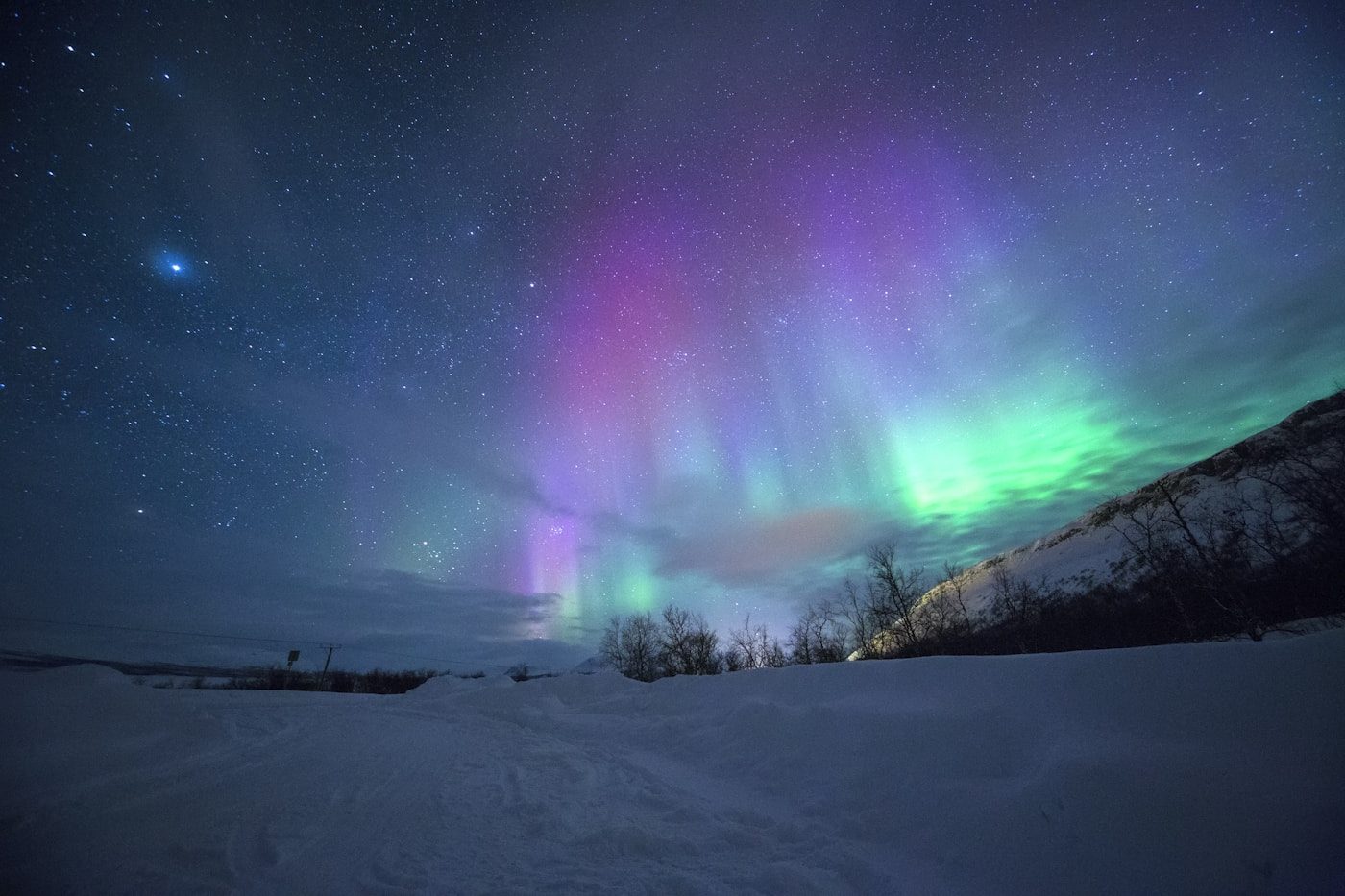
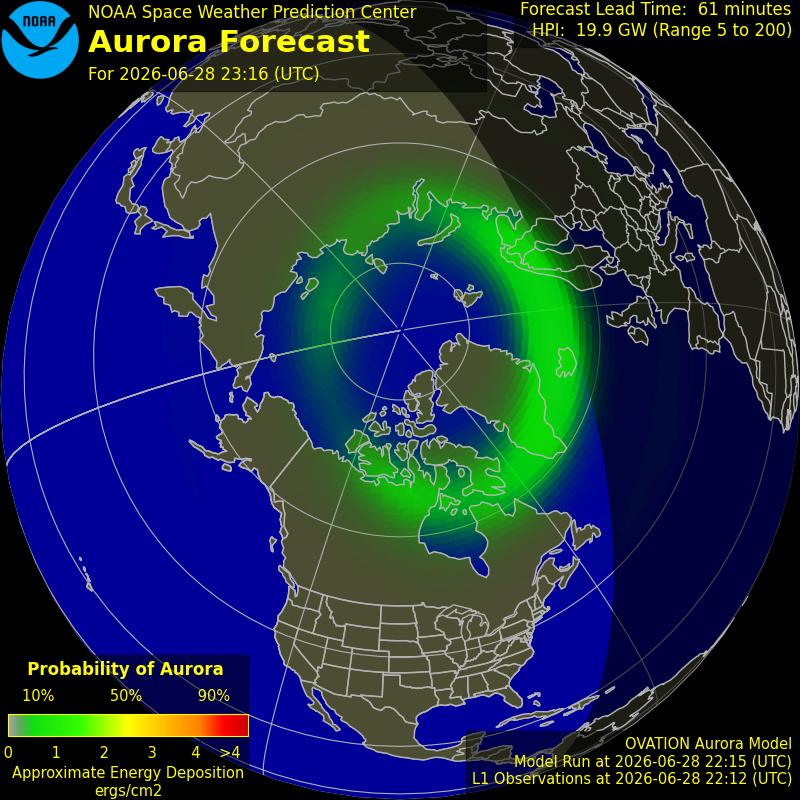
These states represent the best combination of accessible travel, dark skies, and aurora frequency during Solar Cycle 25 maximum. A single 3-night trip during a period of elevated solar activity (watch the KP forecast — NOAA publishes a 3-day outlook) has a realistic 50–70% chance of producing at least one worthwhile display at KP5.
Minnesota — Boundary Waters Canoe Area
KP 4–5
The BWCA in northeastern Minnesota is one of the darkest places east of the Mississippi — stretching for one million acres without roads, powerlines, or artificial light. Ely, Minnesota (the gateway town) sits at 47.9°N geomagnetic latitude. During KP4 events, aurora is visible from the northern horizon; KP5 brings it overhead. The BWCA is accessible year-round but winter camping is extreme. The best aurora access is via canoe into the interior from May–October, when dark nights return after the summer solstice. From mid-August onward, nights are dark enough and aurora frequency from solar activity is high.
Best dark sky sites: BWCA interior (Moose Lake, Knife Lake), Jay Cooke State Park, Lake Vermilion, Tettegouche State Park (Lake Superior North Shore)
Michigan Upper Peninsula — Darkest Midwest Skies
KP 4–5
Michigan's Upper Peninsula (UP) sits at 46–47°N and benefits from its position surrounded by the Great Lakes — which block light pollution from cities to the south and provide stunning aurora reflections on calm nights. The Keweenaw Peninsula (the northernmost point of Michigan, jutting into Lake Superior) has some of the darkest skies in the eastern US. Copper Harbor, at the tip of the Keweenaw, is the prime spot: a dark-sky-adjacent town accessible by car, with lodging, and a north-facing Lake Superior shoreline for aurora photography.
Best dark sky sites: Copper Harbor, Pictured Rocks National Lakeshore, Porcupine Mountains Wilderness State Park, Lake of the Clouds
Idaho — Central Idaho Dark Sky Reserve
KP 4–5
The Central Idaho Dark Sky Reserve is the nation's first IDA-designated dark sky reserve and the only gold-tier sky (the darkest possible designation) in the continental United States. Covering 1,400 square miles of the Salmon River Mountains around the town of Stanley, it combines near-Bortle-1 skies with a geomagnetic latitude of ~52° corrected — enough to see aurora during KP5+ events. Stanley itself is a tiny mountain town at 6,250 feet elevation, meaning fewer aerosols and exceptional sky transparency.
Best dark sky sites: Sawtooth Valley (Stanley), Redfish Lake, Galena Summit, Craters of the Moon National Monument
Montana — Big Sky Aurora Country
KP 4–5
Montana's nickname "Big Sky Country" is earned — the state is defined by enormous open horizons unobstructed by trees, buildings, or mountains to the north, creating an ideal aurora stage. The geomagnetic latitude of Havre or Browning in north-central Montana (~55° corrected) means KP4–5 events produce overhead displays. The Blackfeet Nation lands adjacent to Glacier National Park offer particular promise: flat open prairie, very dark skies, and the Front Range of the Rocky Mountains as a dramatic southern backdrop.
Best dark sky sites: Glacier NP (Many Glacier Valley), Fort Peck Reservoir, CMR National Wildlife Refuge, Plains area of Flathead Valley
Vermont — Northeast Kingdom
KP 5
Vermont's Northeast Kingdom — the rural tri-county region of Essex, Caledonia, and Orleans counties — sits at ~45°N geographic latitude and benefits from Canada's absence of urban light pollution to the north. During the May 2024 KP8–9 superstorm, photographers in Jay, Vermont captured full-sky red aurora visible to the naked eye directly overhead. Jay Peak Ski Resort regularly serves as an aurora viewing point with unobstructed northern panoramas. Vermont is accessible from Boston (2.5 hours) and New York City (4 hours), making it the most accessible eastern option for spontaneous aurora chases.
Best dark sky sites: Jay Peak, Victory State Forest, Brighton State Park, Island Pond, Maidstone Lake
Maine — Northernmost East Coast State
KP 5
Maine's northernmost county, Aroostook ("the County"), extends to 47.5°N and is one of the most sparsely populated regions east of the Rockies. Fort Kent, at the Canadian border, regularly photographs aurora during KP5 events, and Acadia National Park on the southern Maine coast — while at a lower latitude — offers dramatic aurora over the Atlantic Ocean on KP6+ nights. The iconic Bubble Rock at Acadia with aurora reflected in Jordan Pond is one of the most photographed aurora scenes in New England.
Best dark sky sites: Aroostook County (Fort Kent, Presque Isle), Acadia NP (Jordan Pond, Cadillac Mountain), Baxter State Park