Best Stargazing Apps 2026: iPhone and Android Ranked
Telescope Advisor Logo Telescope Advisor
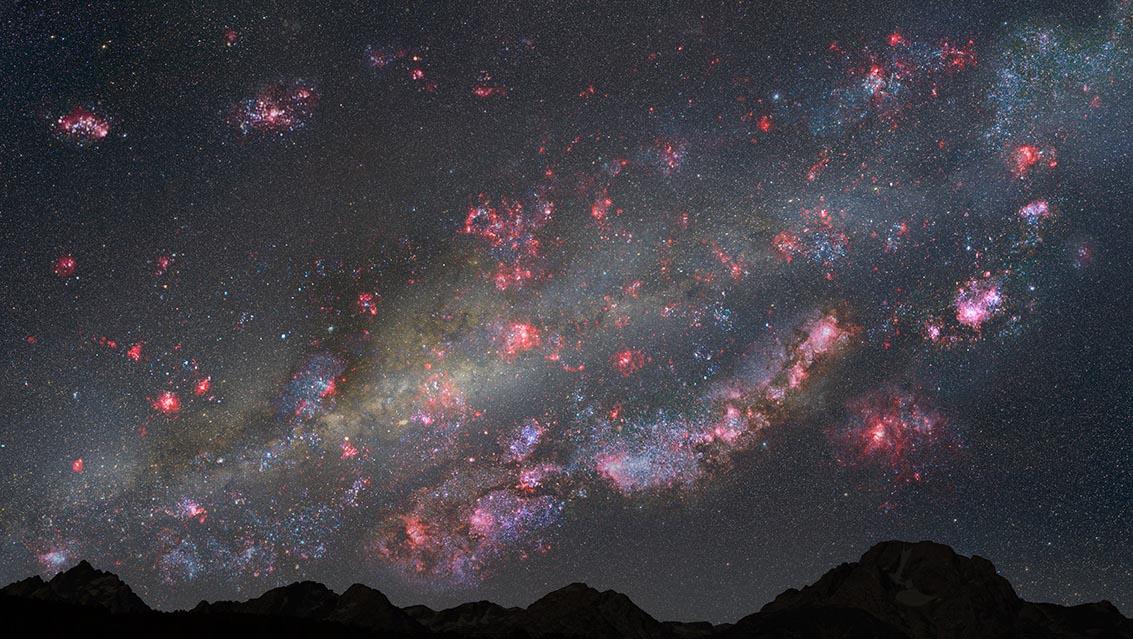
Milky Way photographed at a dark-sky site — stargazing apps help observers identify every star, planet, constellation, and deep-sky object visible in the night sky

Astronomy Guide · Best Apps 2026

Best Stargazing Apps 2026: iPhone and Android Ranked

A good stargazing app transforms your smartphone into an observatory guide — identifying every object you point it at, predicting planetary positions, alerting you to upcoming events, and in the case of the best apps, controlling your telescope directly. These are the apps that serious amateur astronomers actually use in 2026, ranked honestly.

Best overallSkySafari 7 Pro
Best freeStellarium Mobile Free
Best for beginnersStar Walk 2
Best telescope controlSkySafari 7 Pro
By Telescope Advisor Editorial Team Published: Updated: Editorial Standards

Best Stargazing Apps 2026 — Quick Picks

App Platform Cost Best For Rating
SkySafari 7 Pro ← Best OveralliOS + AndroidPaidTelescope control, serious observers, full database★★★★★
SkySafari 7 BasiciOS + AndroidFreeSkySafari experience without cost★★★★½
Stellarium Mobile PlusiOS + AndroidPaid (low)Deep-sky enthusiasts, photorealistic sky★★★★½
Stellarium FreeiOS + AndroidFreeBest free planetarium app available★★★★
Star Walk 2iOS + AndroidFreemiumBeginners, beautiful UI, casual observers★★★★
NASA AppiOS + AndroidFreeNASA missions, news, APOD, launch schedules★★★★
Cartes du CielDesktop (Windows/Mac)FreeDesktop planetarium, serious planning★★★★½


What Stargazing Apps Actually Do

Modern stargazing apps use your phone's GPS location, gyroscope, compass, and clock to calculate the exact position of every star, planet, nebula, galaxy, and solar system object in real time. Point your phone at the sky and the app overlays a map showing what you're looking at. Turn it toward Jupiter and the app labels it, shows its current magnitude, and tells you which moons are visible tonight.

Sky identification

Point the phone camera at any part of the sky and the app overlays constellation lines, star names, planet labels, and deep-sky object markers. Basic feature in all apps — quality varies in accuracy and database completeness.

Event planning

When does Jupiter rise tonight? What time does Saturn transit? Will the ISS pass over your location? When is the next Perseid peak? Good apps provide all of this for any location and date range.

Telescope control

Premium apps connect to GoTo telescopes via WiFi or Bluetooth. Tap any object on the phone screen and the telescope slews to it automatically — the most powerful feature for GoTo telescope owners. Only SkySafari Pro and a few others offer this.

SkySafari 7 — Best Stargazing App Overall

Editor's Pick — Best Stargazing App 2026
iOS + Android Paid (Pro version) Telescope control via WiFi/Bluetooth 46M+ stars, 740K+ deep-sky objects (Pro)

SkySafari 7 Pro is the professional standard for amateur astronomers — the app used by serious observers worldwide for planning, identification, and direct telescope control. It comes in three tiers: Basic (free, limited database), Plus (paid, expanded), and Pro (paid premium, full database and telescope control). For telescope owners with GoTo mounts — NexStar SE, Evolution, Sky-Watcher GTi — SkySafari Pro connects directly and lets you tap any object to slew the telescope to it. The database includes over 46 million stars, 740,000+ deep-sky objects, every known asteroid, comet, spacecraft, and exoplanet.

Key features that distinguish SkySafari Pro over competitors: real-time telescope control via direct WiFi connection; accurate Galilean moon position predictions for Jupiter; the ability to simulate any night sky from any location and date; and the most scientifically accurate planetary rendering of any mobile app. The interface is dense compared to consumer apps like Star Walk, which makes it slightly less approachable for absolute beginners — but for anyone who takes astronomy seriously, SkySafari is the definitive choice. The Basic version (free) provides the same sky identification and interface with a smaller database and no telescope control. See: best GoTo telescopes to pair with SkySafari.

Stellarium Mobile — Best Free-Tier Stargazing App

Stellarium is the gold standard of free planetarium software — the desktop version (Stellarium.org) has been the go-to free planetarium for 20+ years and the mobile app brings that same photorealistic sky simulation to iOS and Android. The free version provides more than most users need; the Plus upgrade adds the DSS (Digitized Sky Survey) image overlays, an expanded deep-sky catalogue, and offline mode.

What Stellarium Mobile does best

  • ✓ Photorealistic sky rendering — the most visually accurate of any app
  • ✓ Excellent constellation art mode — traditional and modern constellation figures
  • ✓ Accurate meteor shower radiant simulation
  • ✓ Deep-sky object overlays from the DSS catalogue (Plus)
  • ✓ Eyepiece field-of-view simulation — see what a specific eyepiece will show
  • ✓ Cross-platform sync with desktop Stellarium planning

Limitations vs SkySafari

  • → No direct telescope control in the mobile app
  • → Smaller star catalogue in the free version
  • → Event notifications less comprehensive than SkySafari
  • → Jupiter moon prediction accuracy lower than SkySafari Pro

For observers without GoTo telescopes who want the best free experience, Stellarium Mobile Free is difficult to beat. The visual quality is genuinely beautiful — worth downloading even if you already use SkySafari.

Star Walk 2 — Best for Beginners and Casual Stargazers

Star Walk 2 is the most visually polished, consumer-friendly stargazing app available. Where SkySafari is built for astronomers, Star Walk is designed for the general public — the interface is intuitive for first-time users, the animations are beautiful, and the daily and weekly "What to see tonight" features require no prior knowledge to use. It functions as the ideal gateway app for people who are curious about the night sky but haven't yet invested in astronomy as a hobby.

Who it's right for: Absolute beginners, casual observers who want to know "what is that bright thing in the sky?", families introducing children to astronomy, and anyone who prioritises beautiful design over technical depth. Star Walk 2 shines as a social stargazing companion — it's the app you show to non-astronomy friends to point out Saturn or Andromeda.

Where it falls short: Star Walk 2's database is limited compared to Stellarium or SkySafari — many deep-sky objects that serious observers search for are absent. It has no telescope control capability. The freemium model limits some features behind a subscription. For observers who progress beyond casual stargazing, it is quickly outgrown — most serious astronomers eventually move to SkySafari or Stellarium.

NASA App — Best for Space News, Missions, and APOD

The official NASA app is not a sky-map or planetarium app — it is a space news and content hub. It provides real-time access to NASA mission data, the Astronomy Picture of the Day (APOD), ISS tracking, launch schedules, and imagery from every active NASA mission. For observers who want to understand the scientific context of what they're observing — seeing Jupiter in the eyepiece and then viewing Juno spacecraft imagery from orbit, or watching a lunar eclipse and reading about lunar geology — the NASA app is an excellent companion to a sky-map app.

The NASA app is completely free, requires no registration, and is available on both iOS and Android. It does not require internet access for the basic features once downloaded. ISS pass predictions (shows the exact path of the ISS over your location on any given night) are one of its most practically useful features for amateur astronomers. The ISS is visible with the naked eye from most locations on Earth on any clear night it passes overhead — the NASA app tells you exactly when to look and in which direction. More space science content: Event Horizon Telescope guide · Hubble vs Webb vs Roman.

Desktop Planetarium Apps for Serious Planning

For session planning that benefits from a large screen — mapping targets for a dark-sky trip, calculating optimal observation windows, or running simulations — desktop planetarium applications offer capabilities that phone apps cannot match. All three below are free.

Stellarium Desktop (stellarium.org) — Best Free Desktop Planetarium

The same photorealistic sky simulation as the mobile app, running natively on Windows, Mac, and Linux with no subscription required. Full telescope control via ASCOM/INDI protocol (the professional standard for telescope software control). Unlimited deep-sky catalogue expansion via Stellarium plugins. Widely used by professional observatories for visitor presentation. Every amateur astronomer should have this installed.

Cartes du Ciel (Sky Charts) — Best for Telescope Control and Planning

Cartes du Ciel (French for "Sky Charts") is a veteran desktop planetarium focused on practical telescope control and observation planning. Less visually polished than Stellarium but more functional for generating observing lists, calculating optimal timing for multiple targets, and controlling GoTo telescopes via ASCOM. Particularly good for deep-sky marathons and systematic Messier/NGC/Herschel 400 observing programmes.

AstroPlanner — Dedicated Observing Log and Planning

AstroPlanner (paid) is purpose-built for systematic observing programmes — creating observing lists, logging completed objects with notes and sketches, and tracking progress through catalogues. Less of a sky-map and more of an astronomer's logbook with planning capabilities. Popular with Astronomical League observers working through specific observing award programmes.

StarSense Explorer: When the App IS the Telescope Navigation System

Celestron's StarSense Explorer system turns your smartphone into the telescope's navigation computer — not just showing you what's in the sky, but actively directing you to point the telescope at specific objects. A physical dock clips onto the telescope tube and the StarSense app uses the phone's camera to photograph the star field, identify its position, and display an on-screen arrow directing you to any object in the database. No star-hopping, no manual alignment — just follow the arrow.

This is fundamentally different from a standard stargazing app: rather than just showing what's in the sky, StarSense actively interfaces with the telescope to solve the "where do I point?" problem that defeats most beginners. The StarSense Explorer LT 114AZ is the entry-level telescope that includes this system, and the StarSense Explorer DX 130AZ is the step-up. The app itself is free; the dock hardware (for use with existing telescopes) is sold separately. See our full guide: new telescopes 2026 which covers StarSense Explorer in detail.

Which Stargazing App Is Right for You?

If you are… Best App Why
A complete beginner with no telescopeStar Walk 2 or Stellarium FreeBeautiful, easy to use, teaches the sky without overwhelming
A telescope owner who wants everythingSkySafari 7 ProTelescope control, full database, event predictions, Galilean moons
A GoTo telescope owner (NexStar, etc.)SkySafari 7 ProOnly app with full NexStar WiFi control — tap to slew
Wanting the best free appStellarium Mobile FreeMost complete free planetarium, photorealistic, excellent database
Planning from a desktop/laptopStellarium DesktopFree, full-featured, large screen planning advantage
Interested in NASA missions and space newsNASA App (companion)Free, official, APOD, ISS passes, mission updates
The practical recommendation: Most serious observers end up with two apps — SkySafari Pro (or Basic) for active telescope sessions, and Stellarium (desktop or mobile) for session planning and visual aesthetics. They complement each other: Stellarium for "what do I want to observe tonight and when?", SkySafari for "now go there." Both Stellarium Free and SkySafari Basic are excellent starting points at no cost.

Stargazing Apps FAQ

What is the best free stargazing app?

Stellarium Mobile (free version) is the best free stargazing app — it provides photorealistic sky rendering, an accurate deep-sky database, constellation lines and art, and smooth augmented reality identification. The free version is significantly more capable than many paid alternatives from less-established developers. SkySafari Basic is also free and excellent, particularly for observers who may eventually want telescope control (available in the Pro upgrade). Both are available on iOS and Android.

Can a stargazing app control my telescope?

Yes — SkySafari 7 Pro connects directly to GoTo telescopes (NexStar SE and Evolution series, Sky-Watcher GTi, and most ASCOM-compatible mounts) via WiFi or Bluetooth. You tap any object on the phone screen and the telescope slews to it automatically. This is the most powerful feature for GoTo telescope owners and the primary reason to choose SkySafari Pro over alternatives. Setup requires enabling WiFi on the NexStar Evolution or using a SkyFi3 WiFi adapter for the standard NexStar SE series. See: best GoTo telescopes for SkySafari control.

Do stargazing apps work offline?

Most premium stargazing apps work offline once downloaded — SkySafari and Stellarium both store their star catalogues locally on the device. The basic sky identification, star charts, and planet positions all work without internet. Features that require internet include: weather forecasting integration, light pollution map overlays, ISS tracking updates (needs live position data), and community features. For dark-sky sites with no data service, the core functionality of all major apps remains fully available.

Is SkySafari Pro worth buying?

Yes, for any serious observer with a telescope — particularly GoTo telescope owners. SkySafari Pro's telescope control feature (tap to slew) alone justifies the purchase for anyone who uses a NexStar or compatible GoTo mount. The 46M+ star database, accurate planetary moon predictions, and comprehensive observing list tools make it the most capable astronomy app available on mobile. SkySafari Basic (free) is an excellent starting point that provides the same interface without the Pro database and telescope control. Upgrade to Pro when you're ready for those features.

What is the difference between SkySafari Basic, Plus, and Pro?

SkySafari Basic (free) includes the core sky map with ~119,000 stars and ~220 deep-sky objects — sufficient for casual observing. SkySafari Plus (paid) expands to ~2.5 million stars and ~31,000 deep-sky objects, adds telescope control for basic mounts. SkySafari Pro (paid premium) includes 46+ million stars, 740,000+ deep-sky objects, full telescope control for all compatible mounts, and the most detailed planetary data including Galilean moon positions and Great Red Spot transit times. For casual observers, Basic is sufficient. For telescope owners or dedicated deep-sky observers, Pro is the right choice.


Related Guides