New Telescopes 2026: Latest Releases & Upcoming Models
Telescope Advisor Logo Telescope Advisor
New telescopes released in 2026 — smart telescopes, refractors, and Dobsonians

Buying Guide · New Telescopes 2026

New Telescopes 2026: Latest Releases & Upcoming Models

The 2026 telescope market has delivered an unusually strong lineup of new models — from the ultra-portable Dwarf 3 smart telescope to Celestron's refined Inspire 100AZ beginner refractor. This guide covers every new telescope released in 2026 so far, what each model does differently, and whether the upgrades are worth your money over established picks.

6+

New 2026 Models

Smart

Biggest Category

Entry

Beginner Refractors

Upgrade

Mid-Range Scopes

By Telescope Advisor Editorial Team Published: Updated: Editorial Standards

Quick Answer: What Are the Best New Telescopes in 2026?

The most significant new telescope releases in 2026 are the Dwarf 3 smart telescope (upgraded 48MP sensor, improved tracking, $399), the Celestron Inspire 100AZ (a refined 100mm beginner refractor with smartphone adapter included), and the ZWO Seestar S30 Pro (a compact smart telescope with 4K dual camera and GoTo). For budget-conscious beginners, the DWARFLAB Dwarf Mini at $249 offers a capable entry into smart telescope astronomy. The trend in 2026 is overwhelmingly toward smart telescopes and beginner-friendly refractors with built-in smartphone connectivity.


🔭

Not sure which telescope actually fits your goals?

Answer 5 quick questions about your budget, observing targets, and experience level — our Telescope Finder Tool recommends a specific model in under 2 minutes.

Find My Telescope →

1. Dwarf 3 Smart Telescope — Best New Smart Scope of 2026

Editor's Pick — Best New Telescope of 2026
Dwarf 3 smart telescope — best new telescope of 2026

DWARFLAB Dwarf 3

The Dwarf 3 is the most significant smart telescope release of 2026. It builds on the Dwarf 2 with a upgraded 48MP Sony IMX camera sensor, a wider field of view, and improved autofocus. The dual-camera system includes a wide-angle camera for star field context and a telephoto camera for detailed deep-sky imaging. The onboard computer stacks images in real time, delivering full-color views of the Orion Nebula, Andromeda Galaxy, and globular clusters within seconds of selecting a target.

What's new in 2026: The Dwarf 3 adds a 48MP main sensor (up from 12MP in the Dwarf 2), a built-in electronic focuser, and an improved battery lasting 4–5 hours. The app has been completely redesigned with a cleaner interface and faster plate-solving for automatic target identification. The Dwarf 3 is also lighter and more compact than the Seestar S50, making it genuinely pocketable for dark-sky trips.

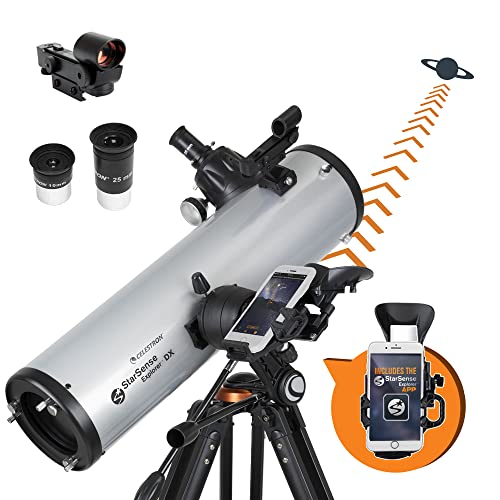
2. Celestron Inspire 100AZ — Best New Beginner Refractor

Celestron Inspire 100AZ — new beginner refractor 2026

Celestron Inspire 100AZ

The Celestron Inspire 100AZ is the most significant new beginner refractor of 2026. It replaces the aging PowerSeeker 100AZ with a modernized design: a 100mm fully-coated achromatic objective, a smartphone adapter in the box, a red-dot StarPointer finder, and a smooth rack-and-pinion focuser. At 100mm of aperture, it gathers 2× more light than the popular 70mm AstroMaster, delivering noticeably brighter and more detailed lunar and planetary views.

Who it is for: Beginners who want a grab-and-go refractor for the Moon and planets without dealing with collimation or complicated setup. The included smartphone adapter is a genuine differentiator — you can capture lunar snapshots on the first night. The mount is the weakest point (wobbly at high power), but the optical quality at this price is excellent. See our full Inspire 100AZ review for detailed testing.

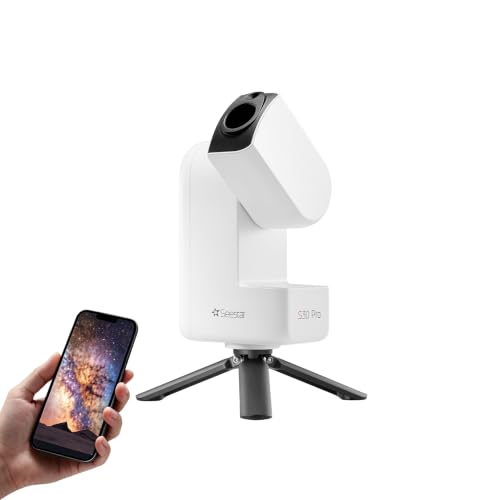
3. ZWO Seestar S30 Pro — Compact Smart Telescope Successor

ZWO Seestar S30 Pro smart telescope

ZWO Seestar S30 Pro

The Seestar S30 Pro is ZWO's 2026 update to the popular S50, now discontinued. The S30 Pro features a 4K dual-camera system with a wide-angle and telephoto lens, built-in electronic autofocus, and a GoTo mount that aligns automatically within 60 seconds. It is smaller and lighter than the S50 (5.2 pounds vs 6.3 pounds), making it genuinely portable for travel.

Key upgrade: The S30 Pro adds a 4K video mode for high-resolution lunar and planetary imaging, which the S50 lacked. The dual-band filter is built in, revealing emission nebulae in vivid detail even from light-polluted skies. The battery lasts 3–4 hours, and the app supports both live stacking and time-lapse modes. The S30 Pro is positioned as the direct competitor to the Dwarf 3, with similar pricing and capabilities. See our S50 vs S30 Pro comparison for details.

4. DWARFLAB Dwarf Mini — Budget Smart Telescope Entry

DWARFLAB Dwarf Mini — budget smart telescope 2026

DWARFLAB Dwarf Mini

The Dwarf Mini is DWARFLAB's entry-level smart telescope, designed to be the most affordable way to experience automated astrophotography. At a significantly lower price than the Dwarf 3, the Mini uses a smaller sensor and simpler optics, but still delivers recognizable images of the Moon, bright nebulae, and star clusters on your phone screen. Setup takes under 2 minutes — place it on a flat surface, connect via Wi-Fi, and select a target.

Trade-offs: The Mini has a smaller aperture than the Dwarf 3, which means fainter objects like galaxies show less detail. The battery lasts 2–3 hours versus 4–5 on the full Dwarf 3. But for a beginner who is not sure if smart telescope astronomy is for them, the Mini represents the lowest risk entry point. See our full Dwarf Mini review.

5. Vaonis Vespera II — Premium Smart Telescope with Best-in-Class App

Vaonis Vespera II smart telescope

Vaonis Vespera II

The Vespera II was released in late 2025 and remains one of the best smart telescopes available in 2026. It features a 50mm f/4.7 APO refractor with a built-in dual-band filter for nebulae, a Sony IMX462 sensor, and the acclaimed Gravity app — widely regarded as the best mobile astronomy app on the market. The Vespera II folds into a compact monopod form factor that is genuinely carry-on friendly.

2026 relevance: While not strictly a 2026 release, the Vespera II remains the benchmark for software experience in the smart telescope category. Its main limitation is the same 50mm aperture as the Seestar S30 Pro at nearly 4× the price. It competes on refinement, not specs. For observatories and serious travelers who value app design above all, it is still the best choice.

FAQ: New Telescopes 2026

What is the best new telescope released in 2026?

The Dwarf 3 smart telescope is the most impressive new release of 2026. Its 48MP sensor, improved tracking, and compact design make it the best value in the smart telescope category. For traditional telescope buyers, the Celestron Inspire 100AZ is the best new beginner refractor.

Is the ZWO Seestar S50 discontinued?

Yes, the ZWO Seestar S50 has been discontinued and replaced by the Seestar S30 Pro. The S30 Pro offers a 4K dual-camera system, improved autofocus, and a lighter design. If you find an S50 still in stock, it remains a capable smart telescope, but the S30 Pro is the better buy for the same price range.

Are smart telescopes replacing traditional telescopes?

No — they serve different purposes. Smart telescopes are best for seeing deep-sky objects in color on a screen, especially from light-polluted skies. Traditional telescopes are better for real-time eyepiece views of the Moon, planets, and brighter deep-sky objects. Most serious astronomers own at least one of each.

What is the cheapest new smart telescope in 2026?

The DWARFLAB Dwarf Mini is the most affordable new smart telescope of 2026. It delivers recognizable deep-sky images on your phone at the lowest price point in the category. The Dwarf 3 at $399 offers significantly better image quality for the extra investment.

What new telescopes are coming in 2027?

Manufacturers are tight-lipped, but industry sources suggest 2027 will see the next-generation Seestar with a larger aperture, a Celestron smart telescope entry, and continued refinement of existing smart telescope platforms. The trend toward smartphone integration in traditional telescopes will also accelerate.


Related Guides