
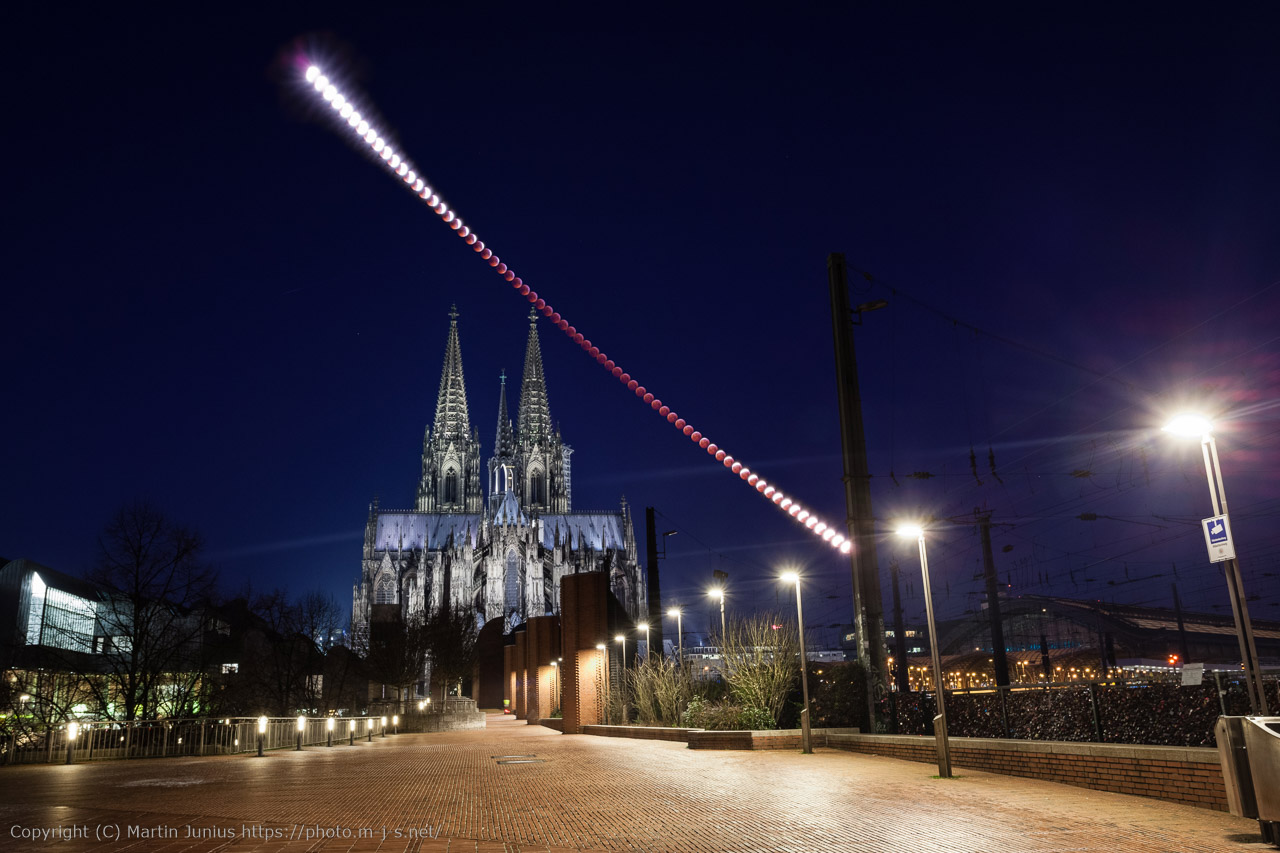

What Is a Blood Moon?
A blood moon is the popular name for a total lunar eclipse — when the Sun, Earth, and Moon align perfectly, with Earth positioned directly between the Sun and the Moon. Instead of going dark, the Moon takes on a deep reddish-brown colour, ranging from bright copper to dark brick-red depending on atmospheric conditions. This striking colour is why the media and the public have embraced the name "blood moon."
The term "blood moon" gained widespread popularity after a 2013–2014 tetrad of four consecutive total lunar eclipses, each visible from parts of North America. While the term is not an official astronomical classification, it has become the most recognisable name for total lunar eclipses in popular culture. Astronomically, the correct term is simply a total lunar eclipse, but the evocative name helps capture public imagination.
Not every full Moon produces a blood moon. Most months, the Moon passes slightly above or below Earth's shadow because its orbit is tilted by about 5 degrees relative to Earth's orbital plane. Total lunar eclipses occur only when the full Moon coincides with the Moon crossing the ecliptic plane — typically two to four times per year somewhere on Earth, though any given location may see a total lunar eclipse only once every two to three years on average.