Telescope Advisor Logo Telescope Advisor
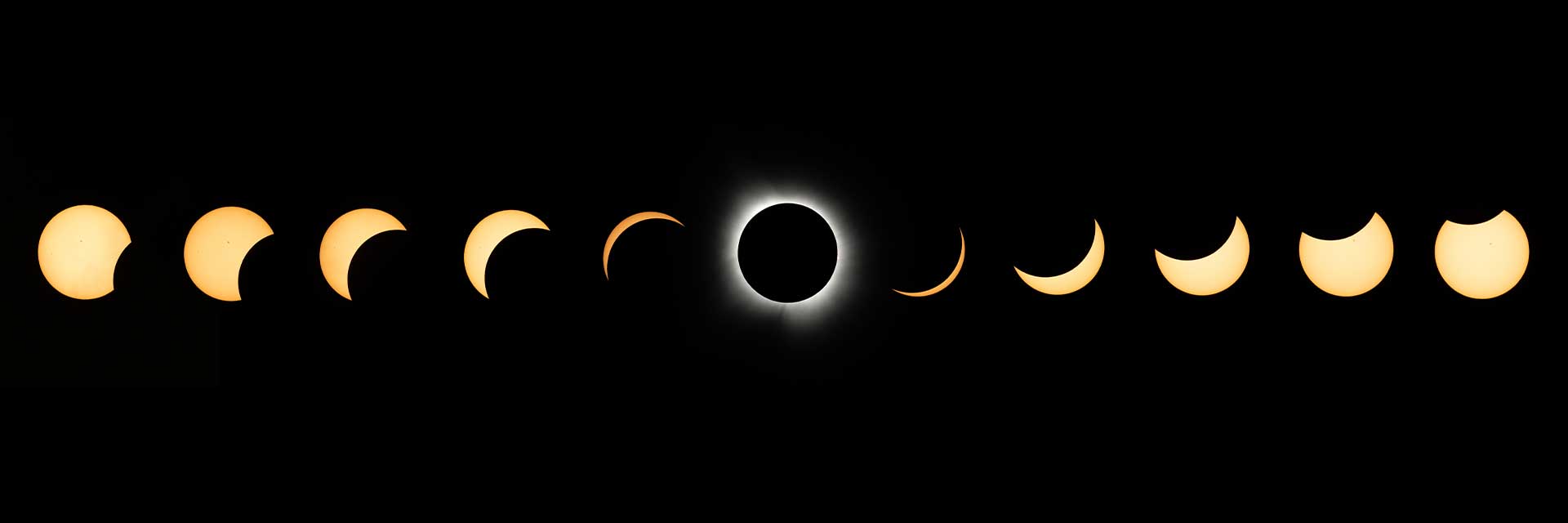
Partial solar eclipse progression — Boston will see a 20-22% partial eclipse on August 12, 2026

City Eclipse Guide · Boston · August 12, 2026

Boston Eclipse 2026: Partial Solar Eclipse Times & Viewing Guide

Boston will experience approximately 20–22% partial solar eclipse coverage on the afternoon of August 12, 2026. The eclipse peaks at 2:04 PM EDT with the Sun at 53° altitude — a comfortable midday observing geometry. Boston’s remarkable astronomy heritage, from the Harvard-Smithsonian Center for Astrophysics to the MIT Astronomy Department, means the city’s science community is well-placed to organize public viewing events. Atlantic coastal weather in August is reliably favorable for this event.

Maximum coverage~20–22%
Maximum time (EDT)~2:04 PM EDT
Duration~3 hours 3 minutes
Sun altitude~53° (high, easy viewing)
By Telescope Advisor Editorial Team Published: Updated: Editorial Standards

Boston Eye Safety Warning

Never look directly at the Sun without ISO 12312-2 certified eclipse glasses during the eclipse. At 20–22% coverage, 78–80% of the Sun remains fully exposed and can cause permanent retinal damage in under a second. The high Sun altitude at 53° means there is no atmospheric dimming to reduce the hazard. See our best eclipse glasses guide for ISO-certified options.


Quick Answer: Will the Eclipse Be Visible From Boston?

Yes, Boston will see a 20–22% partial solar eclipse on the afternoon of August 12, 2026. The Moon will begin crossing the Sun at approximately 12:31 PM EDT, reaching maximum coverage of roughly 20–22% at 2:04 PM EDT, before the eclipse ends at approximately 3:34 PM EDT. At maximum, the Sun will be 53 degrees above the southern horizon — comfortably high in the sky, requiring no special horizon access for viewing. Boston is not in the path of totality, which crosses Spain and Iceland. To experience totality, observers would need to travel to Europe. This guide covers exactly what Boston-area residents can expect, where to watch, and how to do it safely.

Boston’s Eclipse Record: From 2024 to 2026

During the April 8, 2024 total solar eclipse, Boston saw approximately 93% partial coverage — significant enough to notice sky darkening and a distinctly dimmer afternoon light. The August 2026 eclipse at 20–22% is a much more modest event: the sky will not darken, and the effect on ambient light will be nearly imperceptible. However, through ISO-certified eclipse glasses or solar binoculars, the crescent shape of the partially covered Sun is clearly and unmistakably visible, making this a worthwhile observation for anyone with an interest in astronomy or science.

Boston Eclipse Times (EDT) — August 12, 2026

All times are in Eastern Daylight Time (EDT = UTC−4), which is Boston’s local time in August. The eclipse falls entirely within business hours — a lunch break or afternoon outing is sufficient.

Event Time (EDT) Sun Altitude What to Expect
First contact (partial begins)~12:31 PM EDT~51°Put on ISO-certified eclipse glasses. First small notch appears on the upper edge of the Sun.
10% coverage~1:20 PM EDT~54°A clear notch is visible on the Sun’s edge through eclipse glasses.
Maximum eclipse (~21%)~2:04 PM EDT~53°Peak coverage. A distinct crescent bite is visible on the upper-right edge of the Sun.
Coverage declining~2:50 PM EDT~47°The Moon is retreating. The notch is visibly smaller through eclipse glasses.
Fourth contact (eclipse ends)~3:34 PM EDT~40°The Moon fully clears the solar disk. The eclipse is complete.

Cambridge and the Greater Boston Area

Cambridge (home to Harvard and MIT) will see nearly identical eclipse times to Boston, with approximately 21% maximum coverage at the same time. Brookline, Newton, Quincy, and all communities within 30 miles of downtown Boston will experience the eclipse within a few minutes of the times listed above. The coverage percentage varies by less than 1% across the Greater Boston metropolitan area.

Best Boston Viewing Locations

Because the Sun is 53 degrees above the horizon at maximum eclipse, virtually any open outdoor location in Boston will work. The following sites offer the best atmosphere and access for eclipse viewing:

1. Charles River Esplanade

The Charles River Esplanade along the Boston side of the river is the ideal urban eclipse-viewing location. The wide open riverbank has an unobstructed sky in all directions, and the combination of river views, the Longfellow Bridge, and the Cambridge skyline makes for beautiful eclipse photography backgrounds. The Hatch Shell amphitheater area is spacious enough to accommodate large crowds comfortably. The Esplanade is accessible by Red Line (Charles/MGH station) and by the Dr. Paul Dudley White Bike Path, which runs along the entire length. Multiple entrances ensure there are never bottlenecks for a large event. The Boston Pops has held concerts here for decades — the Esplanade is well-equipped for large outdoor gatherings and is the natural choice for any city-sponsored eclipse event.

2. Boston Common and Public Garden

America’s oldest public park, Boston Common provides a large central green space with good sky coverage. The open lawns near the Frog Pond and the Parkman Bandstand offer adequate sky views for eclipse observation. Adjacent to the Common, the Public Garden’s wide central path along the lagoon provides additional open space with good overhead sky access. Both locations are directly accessible from multiple MBTA Green and Red Line stations. The central location means this is the most accessible eclipse-viewing point for tourists and downtown workers.

3. Harvard Observatory Grounds (Cambridge)

The Harvard-Smithsonian Center for Astrophysics, located on Garden Street in Cambridge, is one of the world’s foremost astronomy research institutions. The historic Harvard Observatory building and its grounds are a living symbol of Boston’s deep connection to astronomical science — Henry Draper, Cecilia Payne-Gaposchkin, and countless other landmark astronomers worked here. The CfA may organize a public eclipse viewing event on the observatory grounds or at a nearby location such as Cambridge Common. Following the CfA on social media from June 2026 onward will reveal any planned public events. Harvard’s Science Center Plaza is also a large open space suitable for informal eclipse watching by the campus community.

4. Nahant Beach (North of Boston)

For the cleanest possible sky with minimal urban light and heat interference, Nahant Beach in Lynn is approximately 12 miles north of downtown Boston on the Atlantic coast. The barrier beach faces southeast toward open ocean with no obstructions from horizon to zenith in the southern sky where the eclipse will unfold. Coastal sea breezes in August often suppress cloud formation near the immediate shoreline, giving Nahant a slightly better weather probability than the urban core. Accessible by car via Route 1A/Nahant Road, or by commuter rail to Lynn followed by a short bus ride. The long sand beach accommodates large groups comfortably.

5. Castle Island (South Boston)

Castle Island in South Boston is a peninsula jutting into Boston Harbor with open water views in multiple directions. The historic Fort Independence and surrounding walkways provide ample outdoor space with excellent sky coverage. The combination of harbor views and the Boston skyline in the background makes Castle Island a scenic eclipse-viewing and photography location. Accessible by MBTA bus (11 Broadway / City Point) or by bicycle via the Harborwalk. Sullivan’s seafood shack provides food and drink nearby — making this a full afternoon outing rather than just an eclipse event.

6. MIT Campus (Cambridge)

MIT’s campus along the Charles River in Cambridge offers numerous open spaces — from the wide grass areas behind the main building to the Killian Court — with good sky access. MIT’s Department of Earth, Atmospheric and Planetary Sciences (EAPS) and the MIT Astronomy department may organize formal public viewing events on campus. MIT also has a tradition of student astronomy clubs and informal science outreach. The MIT Museum, open to the public, is nearby for post-eclipse exploration. The Kendall/MIT Red Line station provides direct access to the campus.
Boston August Weather & Eclipse Cloud Probability

Boston’s coastal New England location gives it a significant weather advantage over inland cities for the August 2026 eclipse. Atlantic sea breezes that flow onshore during summer afternoons stabilize the lower atmosphere and suppress convective cloud formation — the type of afternoon thunderstorm development that threatens eclipse viewing in humid inland areas like the Midwest. Historical NOAA climate data for Boston in mid-August shows approximately 35–40% probability of afternoon cloud cover, which is meaningfully lower than comparable inland cities at the same latitude.

Boston summers are warm (average August highs 27–28°C) but the coastal setting keeps humidity more bearable than inland New England or the Mid-Atlantic. The eclipse window of 12:31 PM to 3:34 PM EDT falls in the warmest part of the day, when sea breezes are strongest and cloud suppression is most effective along the immediate coast. Coastal viewing sites like Nahant Beach and Castle Island are likely to have better sky conditions than the urban core on hot afternoons.

The three-hour eclipse duration is a significant buffer against temporary cloud cover. Even if clouds pass through during the peak, there is substantial probability that the sky will clear for portions of the event. Use the National Weather Service Boston forecast and the Clear Outside app for site-specific sky quality predictions in the 24–48 hours before August 12. If Boston proper looks overcast, driving to Cape Cod or the North Shore coast often reveals better conditions, as the ocean moderates cloud development differently than the urban land mass.

Boston’s Astronomy Culture: Harvard, MIT & Public Outreach

No American city has a richer institutional astronomy heritage than Boston. The Harvard-Smithsonian Center for Astrophysics, located in Cambridge, is the largest astronomical research institution in the world by some measures. Its researchers have contributed to discoveries ranging from the cosmic microwave background to the discovery of the accelerating expansion of the universe (work that won the 2011 Nobel Prize in Physics). The CfA operates observatories worldwide and conducts regular public outreach, including star parties and lecture series.

MIT’s Kavli Institute for Astrophysics and Space Research is another world-class institution located on the Cambridge side of the Charles River. The Haystack Observatory in Westford (40 miles northwest of Boston) is a major radio astronomy facility affiliated with MIT that occasionally conducts public events. Together, Harvard and MIT give Greater Boston an unparalleled concentration of professional astronomers who are actively engaged in public science communication.

The Museum of Science on the Charles River Dam is the region’s premier science museum and has hosted eclipse events in the past. The MOS Planetarium screens astronomy programming year-round and is likely to feature programming around the 2026 eclipse event. The New England Amateur Astronomers (NEAA) and the Cambridge Amateur Astronomers are both active clubs with public star parties at sites like Great Meadows National Wildlife Refuge in Concord, MA.

During the April 8, 2024 eclipse, Boston’s scientific community organized dozens of public viewing events that drew thousands of participants. The 2026 eclipse, while more modest, will likely generate similar community engagement. Following the CfA, MIT Astronomy, and Museum of Science on social media from summer 2026 will reveal organized event details, free eclipse glasses distribution, and solar telescope viewings by experts.

Massachusetts Eclipse Coverage: Boston to the Cape

Coverage of the August 12, 2026 eclipse varies across Massachusetts, with the northern and eastern parts of the state seeing slightly more coverage than the southern and western areas. Here is a brief overview of coverage by region within Massachusetts:

Location Approx. Max Coverage Max Time (EDT) Notes
Boston~21%~2:04 PMBest organized viewing events likely here
Cambridge / Somerville~21%~2:04 PMHarvard & MIT viewing events likely
Lowell / Lawrence~22%~2:03 PMSlightly more coverage being further north
Worcester~19%~2:05 PMInland, slightly less coverage
Cape Cod (Barnstable)~19%~2:06 PMExcellent coastal weather; slightly less coverage
Springfield~17%~2:06 PMWestern Massachusetts sees less

Coverage values are approximate and based on geometric eclipse calculations for the August 12, 2026 event. Times are approximate to the nearest minute in EDT. All Massachusetts residents must use ISO 12312-2 certified eclipse glasses throughout the entire event. See the USA eclipse overview for coverage across all northeastern states.

Eclipse Glasses & Safety Gear for Boston

ISO 12312-2 certified eclipse glasses are mandatory throughout the entire Boston eclipse event. Here are the best options for Boston-area observers and event organizers:

Best Value — Eclipse Glasses for Events & Groups
Helioclipse ISO 12312-2 eclipse glasses 12-pack

Helioclipse Solar Eclipse Glasses (12-Pack)

ISO 12312-2 & CE 12 pairs per pack Phone filter included

The Helioclipse 12-pack is ideal for Boston-area families, school groups, and community organizations heading to the Esplanade, Common, or Nahant Beach. At roughly $1.50 per pair, they are affordable enough to order extras to share. The included phone filter enables safe smartphone photography through the glasses. Order in advance — glasses typically sell out in the weeks before major solar events.

Check Price on Amazon

Affiliate link.

Lunt Solar Eclipse Glasses (5-Pack)

Lunt Solar Systems’ 5-pack is ISO 12312-2 and CE certified, with a wide frame that fits over prescription glasses. Ideal for small groups at the Harvard Observatory or MIT campus events.

Celestron EclipSmart 10×25 Solar Binoculars

Built-in front solar filters and 10× magnification make these purpose-built for events like this. The compact size is ideal for the Esplanade or Nahant Beach. No separate filter needed.

Celestron EclipSmart 12×50 Solar Binoculars

The larger 50mm objective delivers brighter, more detailed views than the 25mm model. At 12×, the 21% crescent shape is crisp and unmistakable. Recommended for experienced observers who want the best visual experience.

Celestron EclipSmart Universal Solar Filter

For telescope owners, this universal filter covers a range of tube diameters and enables safe high-magnification solar observation through any telescope. Through a filtered 4–6 inch telescope at 50×, sunspot detail and the sharp crescent edge are stunning.


🔭

Not sure which telescope actually fits your goals?

Answer 5 quick questions about your budget, observing targets, and experience level — our Telescope Finder Tool recommends a specific model in under 2 minutes.

Find My Telescope →

FAQ — Boston Eclipse 2026

How much of the Sun will be covered during the Boston eclipse on August 12, 2026?

Boston will see approximately 20–22% of the Sun covered at maximum eclipse, occurring around 2:04 PM EDT. This means about 79% of the Sun remains fully exposed throughout the event. Through ISO-certified eclipse glasses, the crescent notch is clearly visible on the upper-right edge of the Sun. The sky will not appear to darken noticeably at this coverage level.

What time is the solar eclipse in Boston on August 12, 2026?

The partial eclipse begins at approximately 12:31 PM EDT. Maximum coverage (~21%) occurs at approximately 2:04 PM EDT. The eclipse ends at approximately 3:34 PM EDT. All times are Eastern Daylight Time (EDT = UTC−4). The total duration is approximately 3 hours 3 minutes.

Will Harvard or MIT organize public eclipse viewing events in Boston in 2026?

Both institutions have strong public science outreach traditions. The Harvard-Smithsonian Center for Astrophysics and MIT’s Department of Earth, Atmospheric and Planetary Sciences are likely to organize or co-sponsor public eclipse events, potentially at the CfA grounds in Cambridge, the MIT campus, or a central location like the Esplanade. Check both institutions’ outreach websites and social media starting in June 2026. The Museum of Science on the Charles River Dam is also a strong candidate for organized eclipse activities.

Why is Boston’s weather an advantage for eclipse viewing?

Boston’s coastal location on Massachusetts Bay means Atlantic sea breezes flowing inland during August afternoons suppress convective cloud formation — the type of afternoon cumulus and thunderstorm development that plagues inland areas. Historical data shows Boston has approximately 35–40% afternoon cloud probability in mid-August, which is lower than comparable cities like Albany or Hartford. The coastal viewing sites (Nahant Beach, Castle Island) may have even better conditions due to the immediate ocean influence.

Is the eclipse visible from Cape Cod or the North Shore?

Yes. The partial eclipse is visible from anywhere in Massachusetts. Cape Cod will see approximately 19% coverage at similar times to Boston (about 2:06 PM EDT at maximum). The North Shore (Salem, Gloucester, Newburyport) will see 21–22% coverage. All Massachusetts locations require ISO 12312-2 eclipse glasses. Cape Cod and the North Shore coastlines offer excellent open sky and potentially better weather conditions than inland areas.

Can I use binoculars to watch the Boston partial eclipse?

Yes — but only binoculars with built-in front solar filters (such as the Celestron EclipSmart solar binoculars) are safe. Never use regular binoculars to look at the Sun, as they concentrate sunlight and cause immediate, severe eye damage. Solar binoculars with purpose-built filters provide a dramatically enhanced view of the eclipse — the crescent shape, sunspot detail, and the limb darkening of the solar disk are all visible. Regular astronomy binoculars can be used to project a solar image onto white paper (a technique called solar projection), but should never be aimed directly at the Sun with eyes at the eyepiece.

What was the last solar eclipse visible from Boston?

The April 8, 2024 total solar eclipse was the most recent and most dramatic solar eclipse visible from Boston, with approximately 93% coverage. Before that, the June 10, 2021 annular solar eclipse was visible as a partial eclipse from Boston (maximum ~73% coverage at 5:32 AM EDT — just after sunrise). The 2026 event at 20–22% is more modest than either of these events but is still clearly observable with proper equipment.

Where do I look in the sky to see the eclipse from Boston?

Look south to south-southwest in the sky. At 2:04 PM EDT (maximum eclipse), the Sun will be at approximately 53° altitude above the horizon in the south-southwest direction. This means the Sun is well above the horizon and easily visible from virtually any open outdoor location without needing a special unobstructed horizon. Simply look roughly southward at the bright Sun (only through ISO-certified eclipse glasses) to find the eclipsed Sun at its maximum. Use a planetarium app like Stellarium for precise azimuth and altitude at your exact Boston location and time.

Can I photograph the Boston eclipse with my phone?

Yes. Hold your ISO-certified eclipse glasses in front of your phone camera lens to safely photograph the Sun during partial phases. The Sun will be bright and high in the sky, so use manual settings if available: ISO 100, fast shutter (1/500–1/2000). Digital zoom to maximum will make the Sun appear larger in the frame. For the best results, use a tripod or steady surface — even small hand movements are visible at maximum zoom. The Helioclipse eclipse glasses include a phone filter insert specifically designed for this purpose.

How does the Boston eclipse compare to what NYC and Providence will see?

New York City will see approximately 18–20% coverage at slightly earlier times (maximum around 1:56 PM EDT). Providence, Rhode Island will see about 20–21% coverage at nearly identical times to Boston. Boston sees slightly more coverage than NYC because it is farther north — the eclipse’s shadow geometry favors northern cities in the northeastern US. All three cities are far from totality and require ISO-certified eclipse glasses for the entire event.