What states in the USA can see the solar eclipse on August 12, 2026?
Alaska (up to ~37% coverage at Fairbanks; Anchorage ~28%, Juneau ~17%), Maine (up to ~24% in Bangor, ~19% in Portland), Massachusetts (~16% in Boston), New York (~9% in NYC), Philadelphia (~7%), Washington DC (~4%), and Detroit (~3%). States not in this list — including California, Texas, Florida, Washington, Oregon, and most of the South and Midwest — will not see the eclipse at all.
What time is the solar eclipse on August 12, 2026 in New York?
For New York City, the eclipse begins approximately 1:07 PM EDT, reaches maximum (~9% coverage) around 1:54 PM EDT, and ends around 2:38 PM EDT. The Sun will be high (around 58° altitude) in the southern sky — a clear view to the south is all you need. For upstate New York (Albany, Buffalo, Rochester), coverage and timing vary slightly — generally 5–12% coverage with similar midday timing.
Can I see the total solar eclipse from the USA?
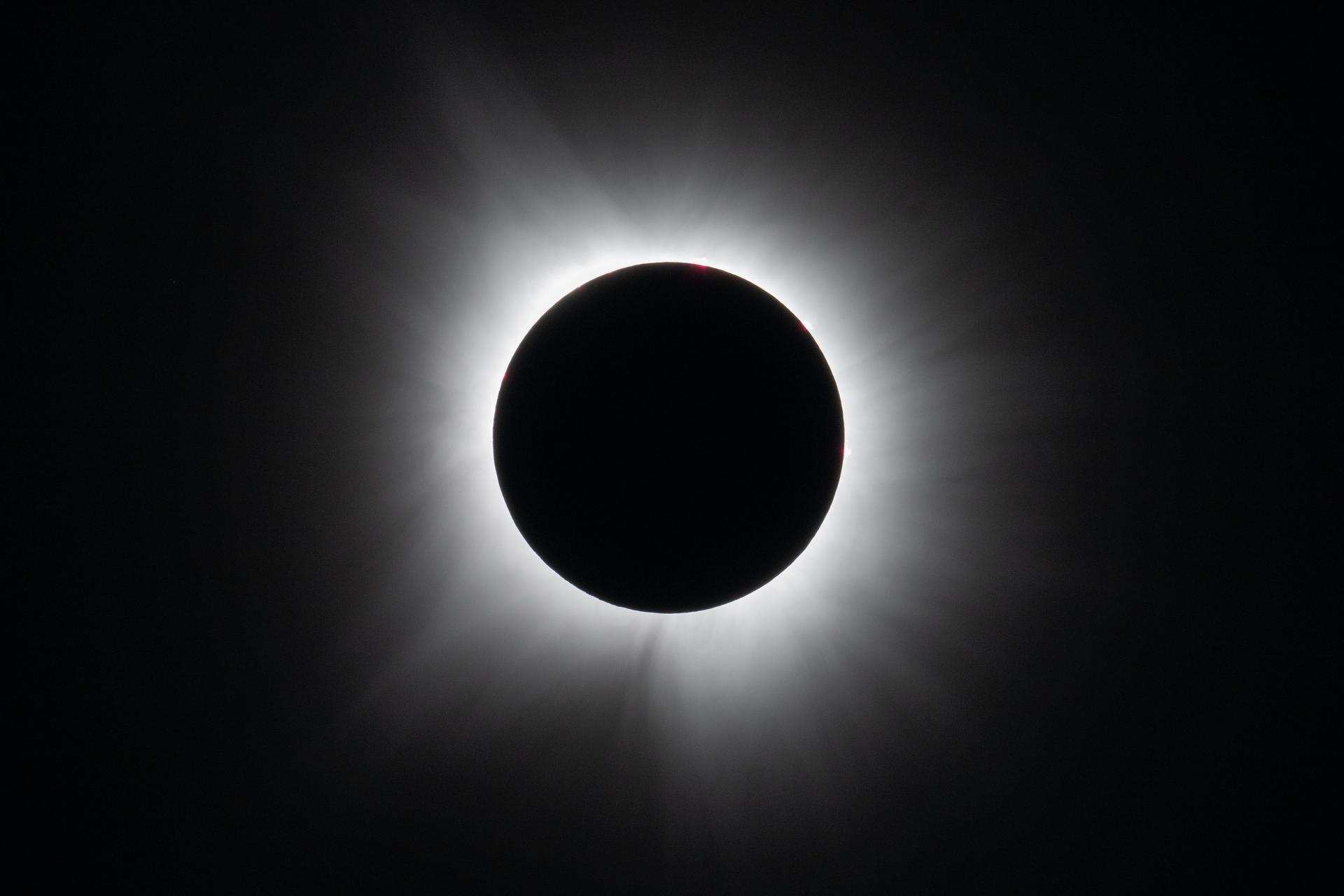
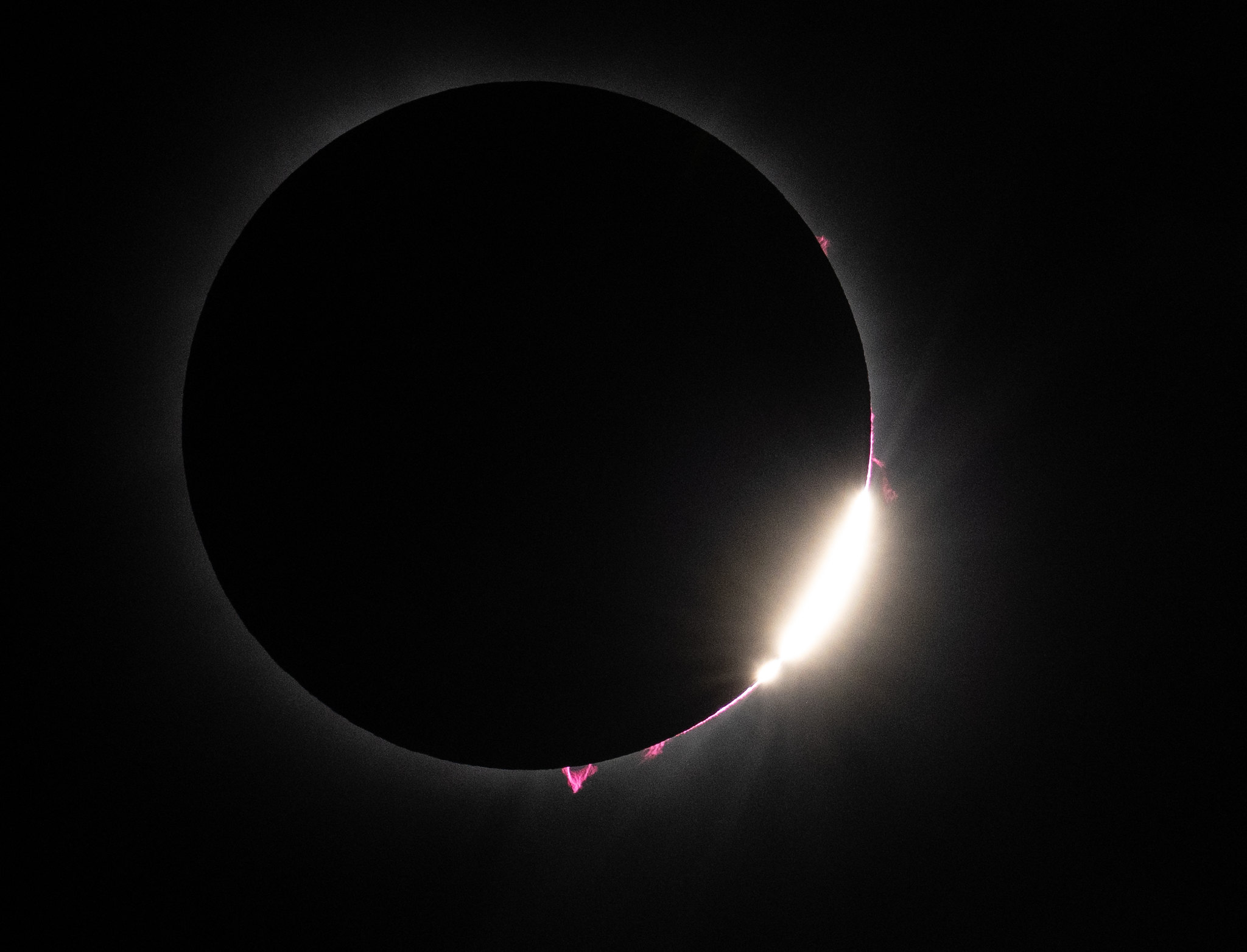
No — totality on August 12, 2026 is only visible from northern Russia, Greenland, Iceland, and Spain/Portugal. The path of totality does not cross any part of the 50 US states. American observers see only partial phases, with Alaska getting the highest coverage (~37% at Fairbanks). The next total solar eclipse visible from the contiguous USA is a partial-to-total event visible in Alaska on August 22, 2044, with totality crossing the western states. The next contiguous US total eclipse is in 2045.
Is a partial solar eclipse worth watching?
Yes — especially through eclipse glasses or solar binoculars where the effect is clearly visible. In Alaska and northern Maine (17–37% coverage), the Sun's disk appears noticeably "bitten" and the crescent is dramatic. Even from Boston (~16%) or New York City (~9%), through 10× solar binoculars the Moon's curved edge crossing the Sun's surface is a striking, unmistakable sight, and sunspot groups often become visible simultaneously. The experience is meaningfully different from a normal day.
What do I need to safely watch the partial solar eclipse?
ISO 12312-2 certified eclipse glasses — the international safety standard for direct solar viewing. These block 99.999% of visible light and 100% of UV and IR radiation. Never use regular sunglasses, stacked sunglasses, camera ND filters, or any improvised solar filter. Solar binoculars (like the Celestron EclipSmart models) provide a enhanced, magnified view and are equally safe with their built-in certified front filters. Do not use binoculars or telescopes without proper full-aperture front solar filters — the heat concentrated by the optics will damage both the instrument and your eyes.
Can I photograph the partial solar eclipse with my phone?
Yes — with a proper solar filter over the phone's camera lens. Holding ISO-certified eclipse glasses in front of your phone camera can work but results vary. The Helioclipse 12-pack includes a dedicated phone camera solar filter that fits over the lens directly, giving consistently clean results. For DSLR photography, use a solar film filter (like Baader AstroSolar) cut to fit over your lens — NOT a camera ND filter, which does not block UV and IR radiation sufficiently. Never point a phone or DSLR at the Sun without proper solar filtration.
Can I see the solar eclipse and the Perseid meteor shower on the same day?
Yes — and August 12, 2026 is the only date in recent years when both occur simultaneously. The partial solar eclipse is visible in the mid-morning in Alaska and at midday in the northeastern USA. After the Sun sets, the same night produces the Perseid meteor shower peak under a completely moonless sky — the best Perseid conditions in years. Observers in the eclipse zone can experience both events by watching the eclipse through ISO glasses during the day, then staying out until the early morning hours for the peak Perseid rate. See our August 2026 night sky guide for a full timeline.
Where is the best place to watch the partial solar eclipse from New York City?
Any location with an unobstructed view to the south. The Sun will be high (around 58° altitude) at maximum eclipse around 1:54 PM EDT, so you just need open sky — no tall buildings, trees, or hills blocking it. Good options in NYC: Central Park's southern lawns, rooftop decks, Hudson River Park, the High Line, or Brooklyn Bridge Park. Avoid street-level locations in Midtown Manhattan where buildings block the southern sky.