Can You See Mercury With a Telescope? Complete Observing Guide (2026)
Telescope Advisor Logo Telescope Advisor
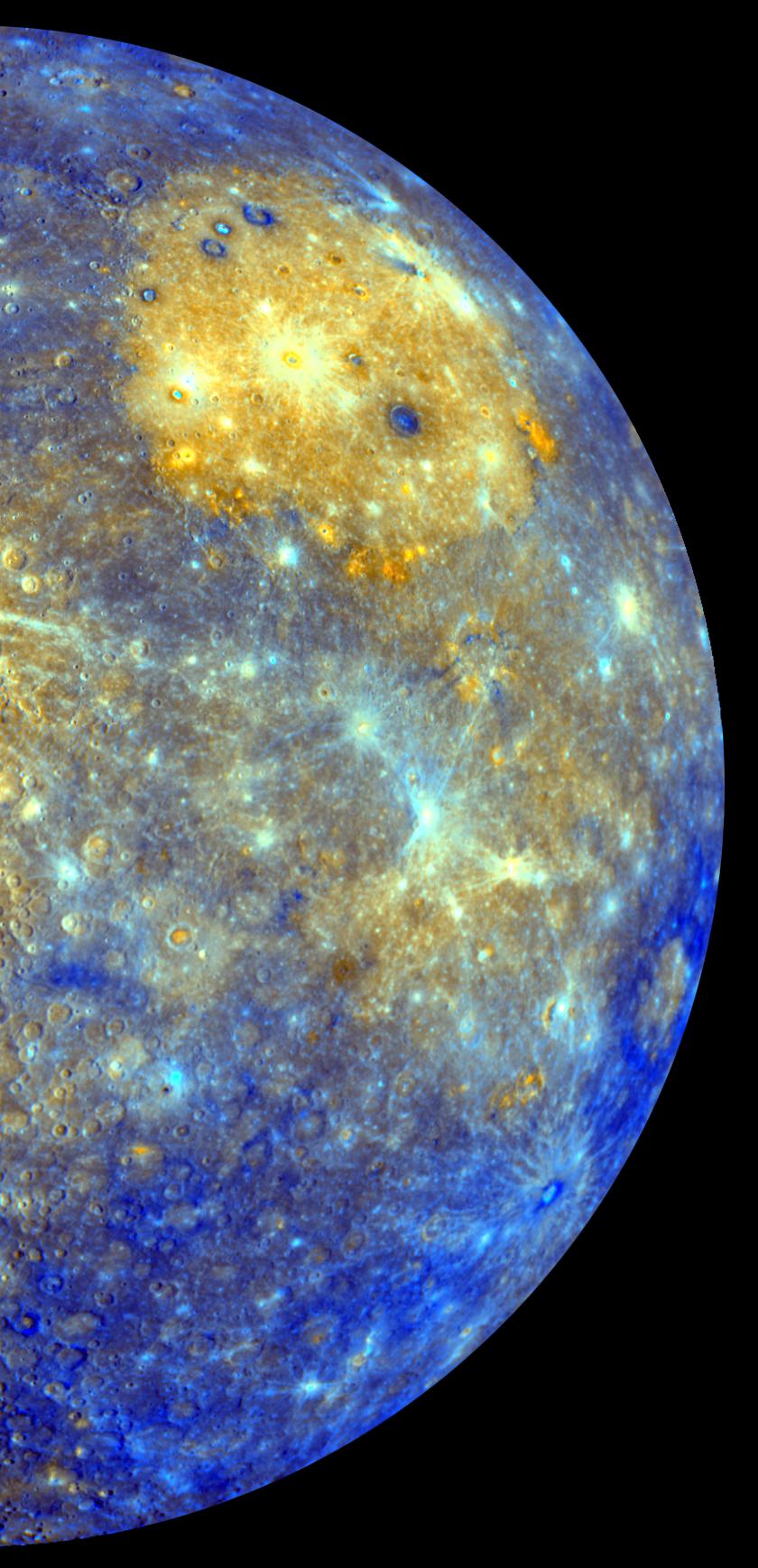
Mercury as seen by NASA's MESSENGER spacecraft showing its cratered surface and grey terrain

Observing Guide · Inner Planets

Can You See Mercury With a Telescope?

Mercury is the most elusive of the naked-eye planets — but with the right timing and technique, it is a rewarding target that shows crescent phases similar to Venus and a subtle peach-grey surface. This guide covers when and where to look, what magnification you need, and how to observe Mercury safely near the horizon.

Visible withNaked eye + telescope
Best magnification80×–150×
Best viewingTwilight, low W/E horizon
2026 elongationApril, August, December
By Telescope Advisor Editorial Team Published: Updated: Editorial Standards

Quick Answer: Yes — But Timing Is Everything

Yes, you can see Mercury through a telescope — but unlike Jupiter or Saturn, Mercury is not a set-it-and-forget-it target. The planet orbits close to the Sun (only 0.39 AU on average), which means it never appears far from the Sun in our sky. From Earth, Mercury is always seen in twilight — either low in the western sky just after sunset (evening apparition) or low in the eastern sky just before sunrise (morning apparition).

At its brightest, Mercury reaches magnitude −1.9 — comparable to Sirius, the brightest star — but its light is washed out by twilight. Through a telescope at 80×–150×, Mercury shows distinct phases like the Moon and Venus, from a thin crescent at inferior conjunction to a nearly full disk at superior conjunction. The surface itself is a subtle peach-grey with faint dark markings — far less contrast than the Moon, but discernible with practice and good conditions.

The key to observing Mercury is timing your session to within 30–45 minutes after sunset (or before sunrise) during one of its greatest elongations — the periods when Mercury reaches its maximum angular separation from the Sun. In 2026, the best evening apparitions occur in April and August, with morning apparitions in January, May, and December.


What Mercury Looks Like Through a Telescope

Mercury is a small planet — only 4,879 km in diameter, smaller than Ganymede (Jupiter's largest moon). At its closest approach to Earth (during inferior conjunction, ~82 million km), Mercury's apparent diameter reaches about 13 arcseconds. For comparison, Jupiter's apparent diameter is typically 35–48 arcseconds. This means Mercury appears small and requires steady atmospheric conditions — "good seeing" — to resolve surface details.

Through 70–80mm Telescope (60×–100×)

Mercury appears as a tiny but distinct disk. The crescent or gibbous phase is clearly visible when the planet is near its greatest elongation. No surface markings are visible at this aperture — the disk appears as a featureless grey-orange crescent. However, simply resolving the phase of a planet that orbits so close to the Sun is a genuinely satisfying observation.

Through 130–150mm Telescope (120×–200×)

At 130mm+, subtle shading becomes visible on Mercury's disk under good seeing conditions. The planet shows a slightly peach-grey hue with faint darker regions — particularly the smooth plains (similar to lunar maria) that appear slightly darker than the surrounding cratered terrain. These markings are subtle and require patience to discern.

When to Look for Mercury in 2026

Mercury has 6–7 apparitions per year, but not all are equally favourable for mid-northern latitude observers. The best evening apparitions occur when Mercury is at greatest eastern elongation during spring (March–April), when the ecliptic angle is steepest relative to the western horizon after sunset.

2026 Mercury Apparitions (Best for Northern Hemisphere)

  • Evening (April 2026): Greatest eastern elongation on April 12. Mercury reaches 19° from the Sun and sets 90+ minutes after sunset. Moderate elongation but favourable ecliptic angle for mid-northern latitudes. Best viewed April 5–20.
  • Evening (August 2026): Greatest eastern elongation on August 10. Mercury is 27° from the Sun — a wide separation — but the shallow evening ecliptic angle in August means it stays low for northern observers. Still the best evening apparition of the year. Best viewed August 3–18.
  • Morning (December 2026): Greatest western elongation on December 5. Mercury reaches 21° from the Sun and rises 90 minutes before sunrise. The steep morning ecliptic in autumn/winter favours northern observers. Best viewed November 28–December 12.

Safety Warning: Never Point at the Sun

Because Mercury is always close to the Sun in the sky, observing it carries a specific risk: the Sun may still be above the horizon or dangerously close to your field of view. Never sweep for Mercury with a telescope or finder scope while the Sun is above the horizon. Even a brief glimpse of the Sun through an unfiltered telescope causes permanent retinal damage.

Safe observing technique: Begin your session after the Sun has fully set (for evening apparitions) or use a solar finder to confirm the Sun's position is well away from your target area. Let the sky darken for at least 15 minutes after sunset before attempting to locate Mercury with binoculars or a finder scope.

For solar observing safety, see our solar eclipse safety guide and our eclipse glasses guide.

Best Equipment for Mercury Observing

Mercury does not require a large telescope to be seen — a 70mm refractor will clearly show the planet's phase. The challenge is not aperture but atmospheric steadiness and precise pointing near the horizon.

Sky-Watcher Heritage 130P for planetary observing

Best Telescope for Mercury: 130mm+ Dobsonian

A 130mm Dobsonian like the Sky-Watcher Heritage 130P at approximately 100×–150× provides the best balance of portability (you may need to move to a clear western horizon) and resolving power. The tabletop design sets up quickly — essential for the narrow twilight window.

Check Price on Amazon →

For more planetary observing recommendations, see our best planetary telescopes guide and our best eyepieces for planets guide.

Frequently Asked Questions

Can you see Mercury without a telescope?

Yes. Mercury is visible to the naked eye as a bright star-like object low in the twilight sky during its greatest elongations. It appears as a magnitude −1 to +1 point of light. Binoculars make it much easier to spot in the bright twilight. A telescope is needed to see its phase or any surface detail.

What magnification do I need to see Mercury's phase?

50×–80× is sufficient to see Mercury's crescent or gibbous phase in any telescope. At this magnification, the planet appears as a tiny disk with a distinct terminator (the line between day and night). Higher magnification (100×–150×) is needed to attempt surface markings, but only under very steady atmospheric conditions.

When is the best time to see Mercury in 2026?

For northern hemisphere observers, the best evening apparition is August 3–18, peaking around August 10. The best morning apparition is November 28–December 12, peaking around December 5. Southern hemisphere observers have more favourable evening apparitions in September–October and March–April.

Is it dangerous to look for Mercury near the Sun?

Yes — if you are not careful. Never point a telescope or finder scope anywhere near the Sun without a proper solar filter. The safest technique is to wait until at least 15 minutes after sunset before starting your search. Use binoculars first to locate Mercury, then switch to the telescope.