
How Big Is the Sun? 1.3 Million Earths, Star Size Comparisons & Mind-Blowing Scale
Telescope Advisor Logo Telescope Advisor
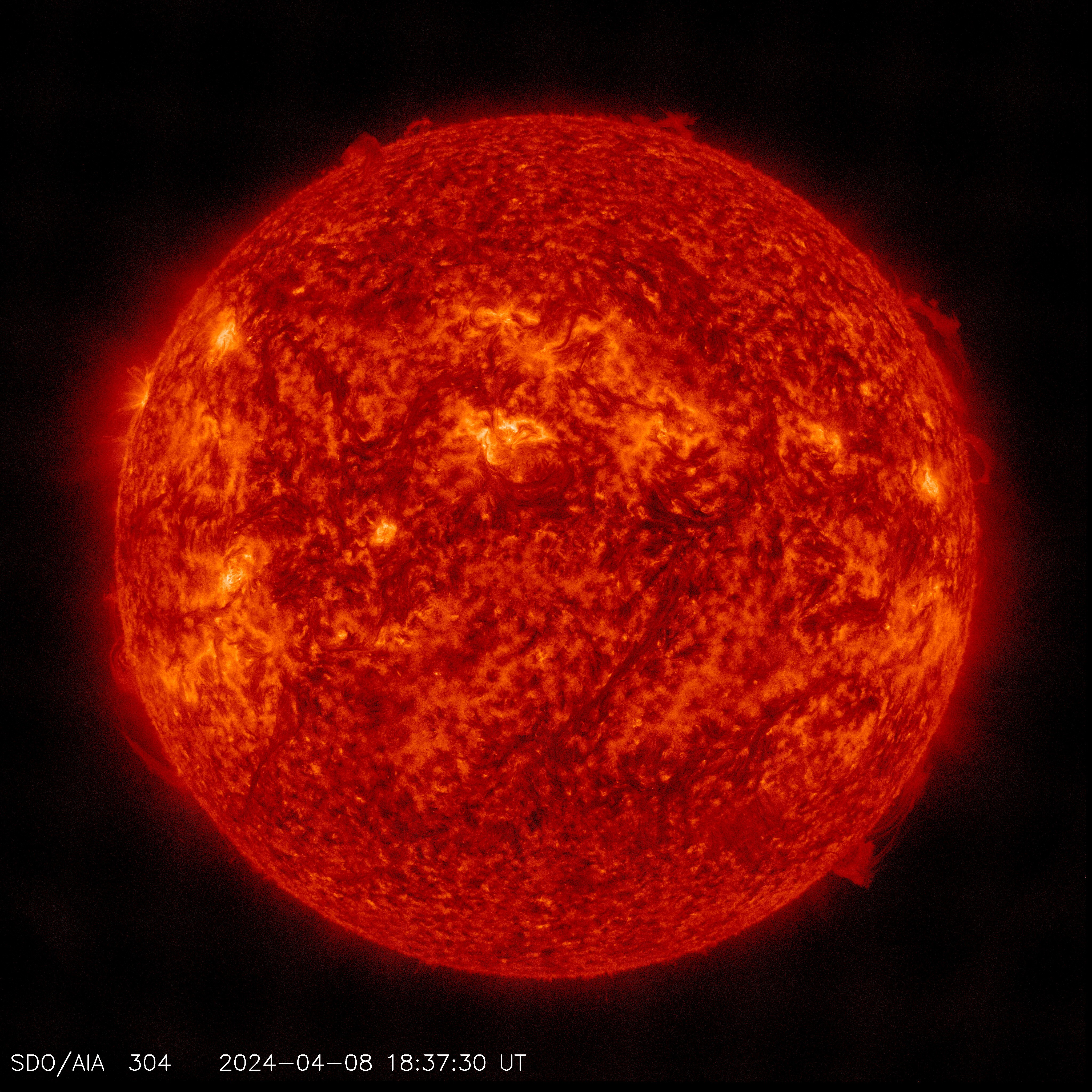
The Sun in extreme ultraviolet light from NASA's Solar Dynamics Observatory — golden swirls of plasma arcing along magnetic field lines against the black of space

Solar System Guide · The Sun

How Big Is the Sun? 1.3 Million Earths, Star Size Comparisons & Mind-Blowing Scale

The Sun contains 99.86% of all mass in the solar system. You could line up 109 Earths across its face and fit 1.3 million Earths inside. But compared to other stars, our Sun is average — UY Scuti is 1,700 times wider. Here is the true scale of our star, with comparisons that make 864,938 miles actually feel real.

Diameter864,938 miles (1.39 million km)
Earths that fit inside1.3 million
Surface temperature5,500°C (9,932°F)
Distance from Earth93 million miles (1 AU)
By Telescope Advisor Editorial Team Published: Updated: Editorial Standards

Quick Answer: How Do I Safely Observe the Sun With a Telescope?

Use a front-mounted full-aperture solar filter — never an eyepiece-end filter, never sunglasses, never improvisation. A Baader AstroSolar safety film filter or a coated glass solar filter that covers the front of your telescope blocks 99.999% of sunlight before it enters the optical system. With this filter in place, you can safely observe sunspots — dark, planet-sized regions of intense magnetic activity — at 40-80× magnification through any 70mm+ refractor or reflector. Solar granulation, the "texture" of the Sun's surface, is visible at 100×+ in 100mm+ scopes under steady daytime seeing. Never point an unfiltered telescope at the Sun — the concentrated light will destroy your retina in a fraction of a second, and you will not feel pain because the retina has no pain receptors. The first sign of damage is permanent blindness.

Sun vs Earth: The 1.3 Million Earths Comparison

Numbers like "1.3 million Earths" are so large they become abstract. Let us make them concrete. The Sun's diameter of 864,938 miles means you could line up 109 Earths (7,926 miles each) across its face. If the Earth were the size of a marble (about 1 cm), the Sun would be a sphere 109 cm across — roughly the size of a large yoga ball. The distance between them at that scale would be about 120 meters — the length of a football field including the end zones.

The Sun's mass is 333,000 times that of Earth. This means the Sun contains more than 99.8% of the entire solar system's mass. Jupiter — the largest planet — is the only object in the solar system whose center of mass with the Sun lies outside the Sun's surface, and even Jupiter is only 0.1% of the Sun's mass. If you gathered every planet, moon, asteroid, and comet in the solar system into a single object, the Sun would still outweigh it by a factor of 750.

The Sun's energy output is equally staggering. Every second, the Sun converts about 600 million tons of hydrogen into helium through nuclear fusion, releasing the energy equivalent of 100 billion one-megaton nuclear bombs. This energy, generated in the core at 15 million degrees Celsius, takes roughly 100,000 years to work its way to the surface through the radiative zone — and then just 8 minutes and 20 seconds to travel the 93 million miles to Earth at the speed of light.

How the Sun Stacks Up Against Every Planet

The Sun dwarfs every planet by orders of magnitude. Mercury — the smallest planet — is a speck by comparison. Jupiter — the largest planet — is still only 1/10th the Sun's diameter. Here is the definitive size comparison:

ObjectDiameter (miles)Diameter (km)Times Smaller Than Sun
Sun864,9381,392,700— (reference)
Jupiter86,881139,820~10× smaller
Saturn72,367116,460~12× smaller
Uranus31,51850,724~27× smaller
Neptune30,59949,244~28× smaller
Earth7,92612,756~109× smaller
Venus7,52112,104~115× smaller
Mars4,2126,779~205× smaller
Mercury3,0324,880~285× smaller

Is the Sun Big Compared to Other Stars?

The honest answer: no, not particularly. The Sun is larger than about 85% of the stars in the Milky Way — most stars are red dwarfs, smaller and cooler than the Sun. But compared to the true giants of the galaxy, the Sun is a grain of sand. Here is the cosmic size hierarchy that puts our star in perspective:

Proxima Centauri (red dwarf) — smaller than the Sun

The nearest star to Earth (4.24 light-years). Diameter: ~125,000 miles — about 1/7th the Sun's diameter. If the Sun were a basketball, Proxima Centauri would be a golf ball. It is so dim that it is invisible to the naked eye despite being the closest star.

Sirius A (A-type main-sequence) — slightly larger than the Sun

The brightest star in Earth's night sky. Diameter: ~1.5 million miles — about 1.7× the Sun. Sirius is twice as massive as the Sun and 25× more luminous. It appears bright primarily because it is close (8.6 light-years), not because it is exceptionally large.

Betelgeuse (red supergiant) — vastly larger than the Sun

The orange-red shoulder star of Orion. Diameter: ~700 million miles — about 800× the Sun's diameter. If Betelgeuse replaced the Sun, its surface would extend past the orbit of Mars. It is the first star (other than the Sun) to have its disk directly imaged. Betelgeuse will explode as a supernova within the next 100,000 years.

UY Scuti (red hypergiant) — one of the largest known stars

Diameter: ~1.5 billion miles — about 1,700× the Sun's diameter. Its volume is roughly 5 billion times that of the Sun. If placed at the center of our solar system, its surface would engulf Jupiter's orbit. UY Scuti is a variable star whose size fluctuates, and it loses mass at an enormous rate through stellar winds. It will end its life as a supernova or possibly collapse directly into a black hole.

The Sun's Size in Everyday Terms

Numbers like "864,938 miles" are hard to visualize. Here are comparisons that make the Sun's scale tangible:

If the Sun were a basketball (9.5 inches)...

Earth would be a peppercorn (2 mm), orbiting 85 feet away. Jupiter would be a cherry tomato, orbiting 440 feet away — more than a city block. Neptune would be a pea, orbiting nearly half a mile from the basketball Sun. The nearest star, Proxima Centauri, would be another basketball 4,500 miles away — roughly the distance from New York to Hawaii.

If Earth were a marble (1 cm)...

The Sun would be a yoga ball 109 cm across, standing 120 meters away. The Moon would be 3 mm across, orbiting 30 cm from the marble Earth. The Great Red Spot on Jupiter would be larger than the entire marble Earth. The entire solar system out to Neptune would span about 5.4 km — a 45-minute walk.

Driving around the Sun...

At 60 mph, it would take 4.9 years of nonstop driving to circle the Sun's equator once. Circling the Earth's equator at the same speed takes 16 days. Flying a commercial jet (550 mph) around the Sun would take 198 days. A passenger in a car driving around the Sun's equator would live through 4.9 years of continuous daylight — the Sun would never set because you would be circling its circumference.

Filling the Sun with Earths...

If you took one Earth and placed it inside the Sun, then added another, then another — one per second, 24 hours a day — it would take 15 days to fill the Sun's volume with Earths. 1.3 million seconds is just over 15 days. To put 1.3 million into perspective: a standard football stadium seats about 70,000 people. You would need 19 full stadiums to reach 1.3 million.

How Do We Know the Sun's Size? A 2,200-Year Journey

The Sun's size was not always known with precision. The first reasonably accurate measurement was made by Aristarchus of Samos around 250 BC, who estimated the Sun was about 7× larger than Earth by diameter — far too small, but revolutionary for its time. The modern value emerged gradually through improvements in measuring the Astronomical Unit — the Earth-Sun distance — which is the key to calculating the Sun's actual size from its apparent angular diameter in the sky (about 0.53°).

The breakthrough came in 1672 when Giovanni Cassini measured the parallax of Mars from two locations on Earth, triangulating its distance and, through Kepler's laws, the Earth-Sun distance. His result of 87 million miles was within 7% of the modern value. The 1761 and 1769 transits of Venus provided the next major refinement — astronomers observed the transit from widely separated locations on Earth and used the parallax effect to calculate the AU with unprecedented accuracy. The modern value of 92.96 million miles was determined through radar ranging to Venus in the 1960s. Scientists bounced radio waves off Venus and measured the round-trip time to within microseconds. Combined with the known value of the speed of light, this gave the Earth-Venus distance to within meters, and from Kepler's laws, the Earth-Sun distance followed.

What If the Sun Were a Different Size? Four Mind Experiments

What if the Sun were the size of a neutron star?

A neutron star is the collapsed core of a dead massive star — about 12 miles across (the size of Manhattan) but containing 1.4× the Sun's mass. A teaspoon of neutron star material weighs 10 million tons. If the Sun were compressed to neutron star density, its entire mass would fit into a sphere just 12 miles wide — you could drive around it in under an hour at highway speed. The surface gravity would be 200 billion times stronger than Earth's. You would be flattened into a film of atoms about one atom thick before you even touched the surface.

What if the Sun were as big as Betelgeuse?

If you replaced the Sun with Betelgeuse — the orange-red star marking Orion's shoulder — its surface would extend past the orbit of Mars and into the asteroid belt. Mercury, Venus, Earth, and Mars would all be inside the star. The "surface" of Betelgeuse is not a sharp boundary — it is a tenuous extended atmosphere that gradually fades into space. The star pulsates, changing size by about 60% over a 400-day cycle. From Jupiter (now the innermost surviving planet), Betelgeuse would fill half the sky — a dim, churning red orb, subtly pulsating, with convection cells the size of Earth's orbit visibly boiling on its surface.

What if the Sun were a white dwarf?

In about 5 billion years, the Sun will exhaust its nuclear fuel, shed its outer layers as a planetary nebula, and end its life as a white dwarf — a dense sphere of carbon and oxygen roughly the size of Earth (7,900 miles across). The white dwarf Sun will have about half its original mass packed into one-millionth of its original volume. It will be incredibly hot initially (~100,000°C) but will slowly cool over trillions of years, eventually becoming a black dwarf — a cold, dark sphere of crystallized carbon: a diamond the size of Earth, floating in the dark. No black dwarfs exist yet because the universe is not old enough for any white dwarf to have cooled that far.

What if the Sun suddenly vanished?

Earth would continue in its orbit for 8 minutes and 20 seconds — the time it takes for light (and gravity) to travel from the Sun to Earth. Then, suddenly, the Sun would blink out of the sky and Earth would fly off in a straight line tangent to its former orbit at 67,000 mph into interstellar space. Within a week, surface temperatures would drop below freezing globally. Within a year, temperatures would reach −100°F. The oceans would freeze solid within a few years. The atmosphere would eventually condense and freeze onto the surface as a layer of nitrogen and oxygen ice. Life on Earth, with a few exceptions around deep-ocean hydrothermal vents, would be extinct within months. The Sun's gravity holds the entire solar system together — without it, the planets would scatter like ball bearings on a suddenly removed table.

Want to See the Sun Through a Telescope? Read This First

Never point an unfiltered telescope at the Sun — the concentrated light will destroy your retina instantly and permanently. Safe solar observing requires a front-mounted full-aperture solar filter that blocks 99.999% of sunlight. With proper equipment, you can observe sunspots larger than Earth, solar granulation, and (with a hydrogen-alpha scope) prominences arcing along magnetic field lines.

We have a complete dedicated guide covering every safe method, the best solar filters for your budget, and exactly what sunspots and solar detail look like through different apertures: How to Safely Observe the Sun: Sunspots, Filters & Equipment Guide →

Frequently Asked Questions

How many Earths can fit inside the Sun?

Approximately 1.3 million Earths would fit inside the Sun by volume. This is calculated by dividing the Sun's volume (1.41 × 10¹⁸ km³) by Earth's volume (1.08 × 10¹² km³). If you packed Earths like marbles in a jar — accounting for the empty space between spheres — the number would be closer to 960,000.

How big is the Sun compared to the biggest star?

UY Scuti, one of the largest known stars, has a radius roughly 1,700 times that of the Sun. Its volume is approximately 5 billion times greater. If placed at the center of our solar system, its surface would extend past Jupiter's orbit. The Sun is larger than ~85% of the stars in the Milky Way (most are red dwarfs), but it is dwarfed by the true supergiants and hypergiants.

How far away is the Sun from Earth?

The Sun is 93 million miles (150 million km) from Earth on average. This distance — called one Astronomical Unit (AU) — varies slightly because Earth's orbit is elliptical. At perihelion (closest, in early January), the Sun is 91.4 million miles away. At aphelion (farthest, in early July), it is 94.5 million miles. Light from the Sun takes 8 minutes and 20 seconds to reach Earth.

Is the Sun getting bigger?

In its current main-sequence phase, the Sun is very slowly growing — its luminosity increases by about 1% every 100 million years as the core hydrogen supply is gradually consumed and the core contracts and heats up. In about 5 billion years, the Sun will exhaust its core hydrogen and expand dramatically into a red giant, its outer layers swelling to engulf Mercury, Venus, and possibly Earth. After the red giant phase, it will shed its outer layers as a planetary nebula and end its life as a white dwarf — a dense, Earth-sized ember of carbon and oxygen.

Can I look at the Sun through a telescope?

Only with a proper front-mounted solar filter that blocks 99.999% of sunlight. Never use eyepiece-end sun filters (they can crack), and never use sunglasses, smoked glass, or CDs. Even a brief unfiltered glance through a telescope at the Sun can cause permanent blindness. For safe observation methods, see the solar observing section of this guide.

How hot is the Sun?

The Sun's surface (photosphere) is about 5,500°C (9,932°F) — hot enough to vaporize any known material. The core, where nuclear fusion occurs, reaches 15 million °C (27 million °F). Paradoxically, the Sun's outer atmosphere — the corona — is much hotter than the surface, reaching 1-3 million °C. The mechanism that heats the corona (likely magnetic reconnection) is one of the major unsolved problems in solar physics.

Related Guides