LEGO Hubble Telescope Review 2026: Worth It for Astronomy Fans?
Telescope Advisor Logo Telescope Advisor
Hubble eXtreme Deep Field — thousands of galaxies visible in a tiny patch of sky, the iconic image made possible by the Hubble Space Telescope's 30-year mission

Astronomy Gift Guide · LEGO Review

LEGO Hubble Telescope Review: Worth It for Astronomy Enthusiasts?

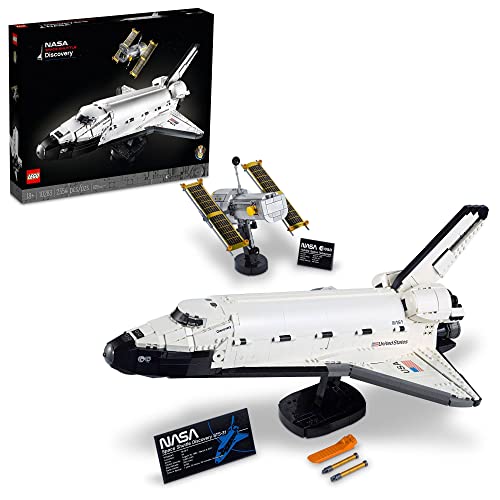
LEGO's NASA Space Shuttle Discovery set includes a scale model of the Hubble Space Telescope — and it's selling out as one of the best astronomy-themed builds in years. We reviewed it from an astronomer's perspective: how accurate is it, who should buy it, and when should you skip it and buy an actual telescope instead?

LEGO SetIcons 10283 — Discovery + Hubble
Pieces2,354 — serious adult build
Age rating18+ (adult Icons series)
Real HubbleLaunched 1990, still operational
By Telescope Advisor Editorial Team Published: Updated: Editorial Standards

Quick Verdict

Buy it if:

  • ✓ You love space history and want a display piece
  • ✓ It's a gift for an astronomy enthusiast aged 14+
  • ✓ You want to learn about both the Shuttle program and Hubble's science mission
  • ✓ You already own a telescope and want a complement
  • ✓ The recipient prefers building models over looking through eyepieces

Skip it if:

  • → The recipient actually wants to observe the night sky
  • → Budget is tight — a real beginner telescope costs less and delivers more astronomy
  • → The recipient is under 12 (set is genuinely complex)
  • → You want a standalone Hubble model without the Shuttle
  • → You're hoping the LEGO Hubble is optically functional (it isn't)


What Is the LEGO Hubble Telescope Set?

The LEGO Hubble Space Telescope is part of LEGO Icons set 10283 — officially called "NASA Space Shuttle Discovery" — released in April 2021 and remaining one of the brand's most popular adult-oriented space sets. The set is actually two builds in one box: a detailed model of Space Shuttle Discovery and a scale model of the Hubble Space Telescope, representing the relationship the two spacecraft shared during Servicing Mission 3B in 2002 and Servicing Mission 4 (SM4) in 2009.

Set 10283 at a glance

Set name

NASA Space Shuttle Discovery

Set number

10283 (LEGO Icons / Creator Expert)

Piece count

2,354 pieces

Age rating

18+ (adult Icons series)

Build time (estimate)

10–14 hours over several sessions

Minifigures

None — this is a display model

Shuttle dimensions (built)

17cm tall × 56cm long × 37cm wide

Hubble dimensions (built)

~20cm long × 9cm wide

The set includes an opening cargo bay that holds the Hubble model, with a working robotic arm (CANADARM) that can be posed to hold the telescope — mimicking the real Shuttle's handling of Hubble during servicing missions. This is one of the more thoughtful design decisions in LEGO's Space catalogue: rather than just building a standalone Shuttle or standalone Hubble, it recreates the relationship between the two spacecraft that made Hubble's 30-year success possible.

Build Experience and Astronomical Accuracy

The 2,354-piece count puts this firmly in the "serious adult build" category — not an afternoon project but a multi-session endeavour over several evenings. LEGO's instruction book for 10283 is substantial, and the complexity is genuinely rewarding: the Shuttle's fuselage uses LEGO's Technic system internally for structural rigidity, while the exterior tiles give the smooth orbiter profile accurately.

The Hubble model specifically

The Hubble model within the set is a simplified but recognisable representation of the real telescope. The silver-grey cylindrical body, gold foil-style Mylar blanket look, and cruciform solar panel arrangement are all correctly captured in LEGO's system. The two solar panels (which on the real Hubble measure 2.4m × 12m each) are rendered as flat brick assemblies with a distinctive look that any astronomy enthusiast will immediately recognise. The aperture door at the forward end — which opens and closes on the real telescope to protect the primary mirror — is hinted at in the model design.

What the model does not include: the internal optical system (obviously), the fine guidance sensors, or the specific science instrument replacements made across Hubble's five servicing missions. This is a display model, not an engineering replica — expectations should be calibrated accordingly.

Shuttle accuracy

The Space Shuttle Discovery model is significantly more detailed than previous LEGO Shuttle models. The delta-wing planform, three main engine nozzles at the rear, orbital manoeuvring system pods, and vertical stabiliser are all faithfully represented. The cargo bay opens to reveal the Hubble and CANADARM, which is a play and display feature that younger builders find particularly compelling. Overall, the proportions are better than any previous official LEGO Shuttle model.

Difficulty and instructions

The instruction manual uses LEGO's full-colour step-by-step format with around 350 building steps. Difficulty is moderate-to-high for experienced adult LEGO builders — novices who haven't attempted a large Icons set before should expect some frustration with the Technic-based internal chassis of the Shuttle. The included illustrated booklet about the real Shuttle and Hubble programs is genuinely educational and adds context that makes the build feel meaningful rather than purely aesthetic.


The Real Hubble Space Telescope: What It Is and What It Has Discovered

The reason people search for a LEGO Hubble Telescope — rather than any other LEGO spacecraft — is because Hubble is genuinely one of the most significant scientific instruments ever built. Understanding what the real telescope does makes the model more meaningful.

Hubble eXtreme Deep Field — 5,500 galaxies in a single image, representing billions of years of cosmic history, captured by the Hubble Space Telescope

Hubble eXtreme Deep Field (XDF) — the deepest image of the Universe ever taken

Each speck of light is an entire galaxy, some over 13 billion light-years away. This image covers a patch of sky 1/32,000,000th the area of the full sky — yet contains 5,500 galaxies. Credit: NASA/ESA/Hubble Heritage Team.

Hubble's vital statistics

  • Launch date: April 24, 1990 (STS-31)
  • Primary mirror: 2.4m (94 inches) diameter
  • Total length: 13.2 metres (43 feet)
  • Weight: 11,110 kg (24,500 lbs)
  • Orbit altitude: ~547 km above Earth
  • Orbital period: ~95 minutes
  • Servicing missions: 5 (STS-61, -82, -103, -109, -125)
  • Images captured: Over 1.5 million
  • Papers published using Hubble data: 22,000+

Hubble's most significant discoveries

  • Age of the Universe: Precisely determined at 13.8 billion years
  • Accelerating expansion: Confirmed dark energy exists (1998, Nobel Prize 2011)
  • Black holes: Established that most large galaxies have central supermassive black holes
  • Protoplanetary disks: Directly imaged planet-forming disks around young stars
  • Exoplanet atmospheres: First characterisation of atmospheres on exoplanets
  • Deep field images: Revealed that the early Universe contained vast numbers of galaxies
  • Gamma-ray bursts: Located the host galaxies of the most energetic cosmic events

Why Hubble's mirror is only 2.4m — and why it still outperformed Earth-based telescopes for decades

Hubble's 2.4m primary mirror is smaller than many ground-based professional telescopes. But above Earth's atmosphere, there is no atmospheric turbulence to distort the light — Hubble achieves the theoretical diffraction limit of its optics without any atmospheric interference. This gives it resolution of ~0.05 arcseconds — roughly 10–50 times sharper than ground-based telescopes of equivalent aperture. That resolution advantage, combined with access to ultraviolet and near-infrared wavelengths blocked by Earth's atmosphere, is why Hubble remained the world's most scientifically productive telescope for three decades.

Why This LEGO Set Represents the SM4 Mission (2009)

The LEGO set depicts Space Shuttle Discovery in its configuration for Hubble servicing missions. Hubble required five Space Shuttle servicing missions over its operational life to replace cameras, install corrective optics (for the infamous mirror manufacturing error discovered in 1990), upgrade gyroscopes, and install new science instruments. The final servicing mission — SM4, conducted by STS-125 in May 2009 — was the last time humans physically touched Hubble and left it in its current, best-ever scientific configuration.

SM4 (STS-125, May 2009)

Installed Wide Field Camera 3 (WFC3), Cosmic Origins Spectrograph (COS), replaced all six gyroscopes, and installed new batteries. After SM4, Hubble achieved its finest optical performance. Discovery was not the SM4 orbiter — that was Atlantis — but the LEGO set uses Discovery's name as it conducted earlier servicing missions.

The mirror error and its fix

Hubble's primary mirror had a spherical aberration of just 2.2 micrometres — about 1/50th the width of a human hair. This caused blurry images. Servicing Mission 1 (STS-61, December 1993) installed COSTAR (Corrective Optics Space Telescope Axial Replacement) which fixed the problem. It remains the most expensive and most consequential optical engineering correction in history.

Hubble today (2026)

As of 2026, Hubble continues to operate and produce science data, though it entered reduced gyroscope operations in 2024 after gyroscope issues — now operating on one gyroscope. It remains scientifically productive and is expected to operate through at least 2030. The James Webb Space Telescope (launched 2021) complements rather than replaces it — Hubble's ultraviolet capability is unique.

Is the LEGO Hubble Set a Good Astronomy Gift?

This is the question most people actually want answered. The honest perspective from an astronomy site:

Excellent gift for space history enthusiasts

If the recipient loves NASA history, the Space Shuttle program, or the story of Hubble's troubled launch and subsequent triumph, this set is deeply satisfying. The build is long enough to be rewarding, and the finished display piece is genuinely impressive. The included educational booklet adds real historical context.

Great complementary gift to a real telescope

If someone already owns a telescope and wants a related hobby project or desk display, this is a thoughtful pairing. They can observe objects Hubble has imaged — Andromeda Galaxy, the Orion Nebula, Saturn — and then appreciate the engineering that produced the definitive views of those objects.

Not a substitute for a real telescope

If the recipient actually wants to observe the night sky — to see Saturn's rings or the Andromeda Galaxy with their own eyes — then this LEGO set will not scratch that itch. The LEGO Hubble cannot look through an eyepiece. If budget is the constraint and the choice is between this set and a real beginner telescope of similar cost, the actual telescope delivers the authentic astronomy experience. See the section below on real telescope alternatives.

18+ rating is real — don't buy it for young children

The 18+ rating isn't marketing — the Technic internal structure, small pieces, and complex build stages genuinely require adult-level patience and dexterity. Confident teenage builders (14–17) who have experience with LEGO Technic or Creator Expert sets can handle it. Younger children will be frustrated. For younger astronomy fans, the LEGO Creator 3-in-1 Space Exploration Telescope (set 31378) is a much more appropriate entry point.

LEGO Space and Telescope Alternatives

If set 10283 isn't quite right — either in price, age appropriateness, or theme — here are the best LEGO alternatives for astronomy-minded builders:

LEGO Creator 3-in-1 Space Exploration Telescope set 31378 — builds into a telescope, microscope or UFO

LEGO Creator 3-in-1 Space Exploration Telescope (set 31378) — Best for ages 8+

278 pieces Ages 8+ 3-in-1: Telescope, Microscope, UFO

A genuinely astronomy-themed build for younger fans — the primary model is a stylised astronomical telescope on an alt-azimuth mount, with the solar system mobile and star chart details included. The 3-in-1 format means the bricks can also build a microscope (fitting the science theme) or a UFO for younger imaginations. At 278 pieces, this is a manageable afternoon build for an 8-year-old with adult assistance. A significant step down in complexity from the 10283 Discovery set — and appropriately so for the age range.

Other LEGO space sets worth considering: LEGO City Space (multiple sets) for younger children; LEGO Technic NASA Mars Rover Perseverance (42158) for engineering-minded builders aged 10+; LEGO Art NASA Apollo 11 Lunar Lander as a framed wall display.


🔭

Not sure which telescope actually fits your goals?

Answer 5 quick questions about your budget, observing targets, and experience level — our Telescope Finder Tool recommends a specific model in under 2 minutes.

Find My Telescope →

Real Telescopes for LEGO Astronomy Fans

If the LEGO Hubble sparked genuine interest in actually looking through a telescope — or if you're choosing between the LEGO set and a real instrument — here are the telescopes we recommend for people inspired by Hubble's discoveries who want to see the night sky for themselves:

Best First Telescope — See What Hubble Studies With Your Own Eyes
Sky-Watcher Heritage 130P tabletop Dobsonian reflector — recommended real telescope for LEGO astronomy fans

Sky-Watcher Heritage 130P

Hubble's most famous targets — the Andromeda Galaxy, Orion Nebula, Saturn's rings, Jupiter's moons — are all visible in a 130mm backyard telescope. The Heritage 130P is the ideal first telescope for someone inspired by Hubble imagery: no tripod, no complicated setup, just place it on a table and look up. At 130× you can see Saturn's rings in detail, Jupiter's cloud bands, and the same deep-sky objects Hubble studies — not with Hubble's resolution, but with your own eyes, in real time. The Pillars of Creation? They're in M16 Eagle Nebula — visible as a faint glow, but identifiable. Full review: Heritage 130P review.

ZWO Seestar S50 smart telescope — captures astrophotos of deep-sky objects similar to Hubble targets

ZWO Seestar S50 — For Hubble-like astrophotography from your backyard

If what excites you about Hubble is the imagery — the stunning nebula photographs, galaxy spirals, stellar nurseries — the Seestar S50 is the closest thing to "personal Hubble experience" available to home observers. It's a smart telescope with a built-in 50mm aperture, colour camera, and automated image stacking that produces colourful deep-sky photos of the same objects Hubble studies. Not with Hubble's resolution, but impressively detailed photos that you actually captured yourself. Paired with the LEGO set, it makes a remarkable gift for a serious space enthusiast. Our review: Seestar review.

Affiliate links. Editorial standards.

LEGO Hubble Telescope FAQ

What LEGO set is the Hubble Space Telescope?

The Hubble Space Telescope is included in LEGO Icons set 10283 — "NASA Space Shuttle Discovery." It's a 2,354-piece adult set (18+) that builds both Space Shuttle Discovery and a scale model of Hubble, representing the servicing missions the Shuttle performed during Hubble's operational life. The Hubble model fits inside the Shuttle's cargo bay, with a CANADARM robotic arm that can hold it. There is also a smaller, simpler standalone telescope build in LEGO Creator 3-in-1 set 31378 for younger builders (ages 8+).

Is the LEGO Hubble set discontinued?

As of 2026, LEGO set 10283 has been available since April 2021 and remains in production, though it periodically sells out on Amazon. LEGO Icons sets typically remain in production for several years before retirement. Check Amazon and the official LEGO website for current availability. If it's out of stock on Amazon, secondary market sellers (LEGO-certified resellers) typically carry it at a premium.

Is the Hubble telescope still working in 2026?

Yes. As of 2026, the Hubble Space Telescope remains scientifically operational, though it entered a reduced-operations mode in 2024 after a gyroscope issue forced NASA to operate it on a single gyroscope. In this mode, Hubble can observe approximately 70% of the sky it previously had access to and continues to produce science data. It is expected to continue operating through at least 2030, complementing the James Webb Space Telescope — Hubble's ultraviolet capability is unique and cannot be replaced by Webb.

How does the LEGO Hubble compare to the James Webb LEGO set?

There is no official LEGO James Webb Space Telescope set as of 2026 — though there are fan-designed IDEAS submissions that have been proposed. The closest official LEGO set to Webb is the NASA Artemis Space Launch System (set 10341, released 2023). For Webb-specific LEGO builds, fan designers on Bricklink Marketplace have created detailed models. The official Hubble-containing set (10283) remains the premier NASA space telescope LEGO build currently in production.

What age is the LEGO Hubble set appropriate for?

LEGO officially rates set 10283 for ages 18+. In practice, confident teenage LEGO builders aged 14–17 with experience in Creator Expert or Technic sets can successfully complete it, ideally with occasional adult guidance. Younger children (under 12) will find the Technic-based Shuttle fuselage frustrating and the small parts difficult to manage. For ages 8–12, the LEGO Creator 3-in-1 Space Exploration Telescope (set 31378) is a far more appropriate alternative.

Should I buy the LEGO Hubble set or a real telescope as a gift?

If the recipient wants to actually observe the night sky — see Saturn's rings, Jupiter's moons, or star clusters — buy a real telescope. The LEGO Hubble is a building toy and display model; it cannot look through an eyepiece. If the recipient loves space history, NASA missions, and LEGO building, the set is genuinely excellent. If you're unsure which category they fall into, a real beginner telescope (like the Sky-Watcher Heritage 130P) paired with a LEGO space set as a secondary gift covers both angles. See our best telescopes for beginners guide.


Related Guides