
Mallorca Eclipse 2026: Total Solar Eclipse Viewing Guide & Times | Telescope Advisor
Telescope Advisor Logo Telescope Advisor
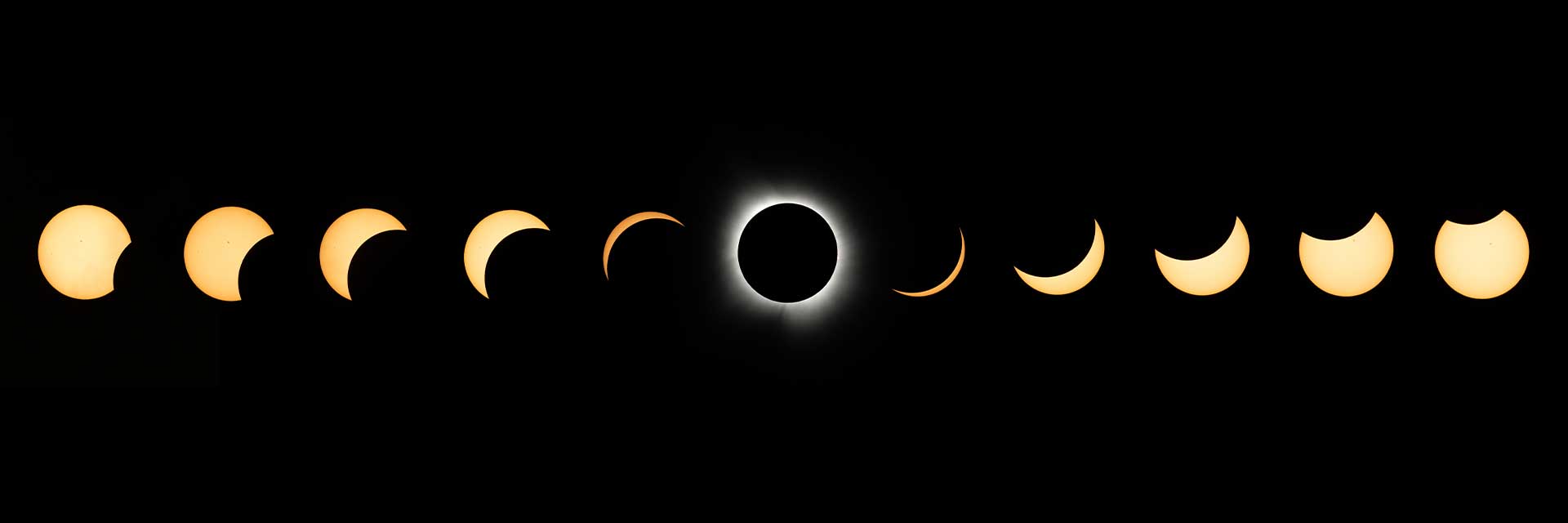
Partial solar eclipse progression composite — similar to what observers on Mallorca's north coast will experience at sunset on August 12, 2026

Eclipse Guide · Mallorca · August 12, 2026

Mallorca Eclipse 2026: Total Solar Eclipse Viewing Guide

Mallorca is the only Mediterranean beach destination where you can experience totality during the August 12, 2026 total solar eclipse. The path of totality crosses the island's northern coast, bringing 25–35 seconds of darkness to the beaches and coves of Alcúdia, Pollença, and the Cap de Formentor peninsula. This guide covers everything you need to plan your eclipse trip to Mallorca: exact timing, the best beaches and viewpoints, weather prospects, and how to combine totality with a Balearic holiday.

Totality duration~30 seconds
Totality time~21:45 CEST
Best locationCap de Formentor
Sun altitude4 degrees
By Telescope Advisor Editorial Team Published: Updated: Editorial Standards

Safety Warning: ISO-Certified Glasses Required

You need ISO 12312-2 certified eclipse glasses for all partial phases before and after totality. The only safe time to remove them is during the brief window of totality (when the Sun is completely blocked). Even on a beach at sunset, the Sun's infrared radiation is intense enough to cause permanent eye damage. See our eclipse glasses guide for recommendations available on Amazon ES and Amazon UK.

Quick Answer: Will the Eclipse Be Visible From Mallorca?

Yes, the total solar eclipse will be visible from Mallorca's northern coast. The path of totality crosses the island from west to east along the northern shoreline. Observers in Alcúdia, Port de Pollença, and the Cap de Formentor peninsula will experience approximately 25–35 seconds of totality at around 21:45 CEST. The Sun will be only 4 degrees above the north-western horizon — extremely low — so a clear view over the Mediterranean is essential. This is not an eclipse you can watch from your hotel balcony in Palma; you must be on the north coast with an unobstructed sea horizon to the north-west.

Mallorca vs. Mainland Spain

Mallorca offers shorter totality (30 sec vs 90 sec in Valladolid) and a lower Sun, but the experience of watching totality from a Mediterranean beach with the sound of waves and a post-eclipse swim is unique. Choose Mallorca if you value atmosphere over duration. Choose Burgos or Valladolid if maximising totality seconds is your priority.

Mallorca Eclipse Times (CEST)

All times are in Central European Summer Time (CEST = UTC+2), which is the local time on Mallorca. The eclipse occurs in the late evening, with totality coming just minutes before the Sun sets into the Mediterranean.

Event Time (CEST) What to Do
First contact (partial begins)20:38 CESTPut on ISO-certified eclipse glasses. Watch the Moon's shadow begin to cross the Sun.
Maximum partial phase~21:30 CESTThe Sun is now a thin crescent. Notice the dimming light and cooling air.
Totality begins21:45 CESTRemove glasses. Observe the corona, 360-degree sunset, and bright stars/planets. Approx 30 seconds.
Totality ends~21:45:30 CESTPut glasses back on immediately. The Sun reappears as a thin crescent.
Sunset (end of eclipse)~21:50 CESTThe partially eclipsed Sun sets into the Mediterranean. Last safe viewing through glasses.

Critical: The 4-Degree Sun

The Sun will be only 4 degrees above the north-western horizon during totality. This is about the width of your three middle fingers held together at arm's length. If there are hills, buildings, or even a modest swell on the sea to the north-west, totality could be partially or completely blocked. Choose a location with the lowest possible north-western horizon — a beach with a flat sea horizon is ideal.

Best Mallorca Viewing Locations

1. Cap de Formentor Lighthouse

The iconic lighthouse at Mallorca's northernmost point offers an unobstructed 270-degree sea horizon. This is arguably the most dramatic eclipse viewing location on the island. The lighthouse sits at the tip of a narrow peninsula, with the Mediterranean stretching to the north and west — perfect for the low Sun. Arrive by 17:00 CEST at the latest to secure a parking spot; the road to the lighthouse is narrow and will be congested. Bring water and sun protection; there are no facilities at the lighthouse itself.

2. Platja de Muro (Alcúdia Bay)

A 5-kilometre stretch of west-facing white sand beach in Alcúdia Bay. The flat sea horizon to the north-west provides an unobstructed view of totality. This is the best choice for families and anyone who wants a comfortable beach-based eclipse experience. The beach has lifeguard facilities, restaurants, and parking within walking distance. The shallow, calm waters mean you can even wade out a few metres for a horizon clear of beach crowds.

3. Port de Pollença Seafront

The promenade along Port de Pollença bay offers clear western views over the Mediterranean. The advantage here is convenience — you can watch the eclipse from a beachfront restaurant or bar terrace, then celebrate totality with dinner. The seafront will be busy, but the atmosphere among fellow eclipse chasers will be part of the experience. Arrive early to secure a table at a west-facing restaurant.

4. Puig de Maria (Near Pollença)

A hilltop viewpoint near the town of Pollença, rising approximately 300 metres above the coast. The elevation provides a wider horizon and lifts you above any coastal haze. The 15th-century sanctuary at the summit is a popular tourist attraction; on eclipse day it will be crowded. The panoramic view from the top encompasses the entire Bay of Pollença and the Tramuntana mountains — a spectacular setting for totality even if the duration is short.

5. Cala Sant Vicenç (North Coast Cove)

A small, sheltered cove on the north coast near Pollença. The rocky cliffs surrounding the cove frame the view to the north-west, creating a natural amphitheatre for the eclipse. This is a quieter alternative to the main beaches and offers a more intimate viewing experience. Access is via a steep road — arrive early as parking is very limited.

Mallorca Weather in August

August is the hottest and driest month on Mallorca, with average daytime temperatures reaching 31°C and sea temperatures around 26°C. The north coast is slightly cooler than Palma due to sea breezes from the Tramuntana mountains. Historical data shows approximately 28% chance of completely clear skies at sunset on the north coast, with 40% partly cloudy and 32% overcast.

The most common weather pattern in August is a hot, sunny day with afternoon cumulus cloud build-up over the mountains, which often clears by evening as the sea breeze subsides. This clearing pattern works in your favour — even if the afternoon looks cloudy, the sky often clears around sunset. The key weather risk is a Mediterranean low-pressure system bringing overcast conditions, which can persist for 2–3 days. Monitor satellite imagery from 48 hours before the eclipse.

Because Mallorca is a relatively small island, your cloud-avoidance options are limited. Your best strategy: if the north coast is cloudy, check the east coast (Cala Ratjada, Capdepera) or the south-west (Andratx, Port d'Andratx) for local clear patches — but remember, only the north coast is in the path of totality. If clouds cover the entire north coast, you will see a deep partial eclipse (about 85–90%) but not totality.

Getting to Mallorca & Getting Around

Mallorca is one of Europe's most accessible Mediterranean islands. Palma de Mallorca Airport (PMI) receives direct flights from across the continent, including numerous UK airports.

Flights from the UK

British Airways, EasyJet, Ryanair, Jet2, TUI, and Vueling operate direct flights to Palma from London (Gatwick, Heathrow, Stansted, Luton), Manchester, Birmingham, Edinburgh, Bristol, and Glasgow. Flight time is approximately 2–2.5 hours. Return flights in early August cost approximately £100–£250. Book by mid-July for the best prices. Eclipse week (August 10–14) will see very high demand — airlines may add extra services, but prices will rise.

Getting to the North Coast

From Palma Airport, the north coast is a 45–60 minute drive via the Ma-13 motorway (toll road to Alcúdia). A rental car is strongly recommended — taxis and ride-sharing will be in extremely high demand on eclipse day. The Ma-13 is a modern dual carriageway that ends at Alcúdia, from where local roads continue to Pollença, Port de Pollença, and Cap de Formentor. Expect heavy traffic on the Ma-13 in the afternoon and early evening of August 12 as eclipse viewers travel north.

Public Transport

The TIB bus network connects Palma to Alcúdia and Pollença, with journey times of about 1 hour. However, buses will be crowded on eclipse day and do not run late. A rental car is strongly recommended for the flexibility it provides.

Where to Stay on Eclipse Night

Accommodation on Mallorca's north coast is already in high demand for August. Booking by mid-June is essential. Here are recommended options by style:

Hotels with Eclipse Views

Several hotels in Port de Pollença and Alcúdia have west-facing rooms or terraces with sea views. The Hoposa Uyal Hotel (Port de Pollença seafront) and the Hotel Illa d'Or both offer direct western sea views. The Iberostar Alcúdia Park is set back from the beach but offers excellent facilities for families.

Rural Fincas

For a quieter experience, rent a countryside finca (villa) in the area between Alcúdia and Pollença. These offer private terraces with unobstructed western horizons, away from the crowds. Check Airbnb, Booking.com, and Mallorca Rural. Prices in early August are typically €150–€400 per night for a 2–4 person finca.

Palma as a Base

If north-coast accommodation is full, consider staying in Palma and driving north for the eclipse. Palma has a much wider range of hotels, and the drive to Alcúdia is only 45–60 minutes. However, factor in heavy eclipse-day traffic and allow at least 2 hours for the return journey after sunset. Palma is also a better option if you want to combine the eclipse with a longer holiday on the island.

What to Pack for Mallorca

  • ISO 12312-2 eclipse glasses — Available on Amazon ES and Amazon UK. See our eclipse glasses guide.
  • Swimwear and towel — For a pre- or post-eclipse swim. The Mediterranean will be 26°C in August.
  • Camera with a telephoto lens (200mm+) — For capturing the low Sun over the sea. A tripod is essential for the dim light near sunset.
  • A folding chair or beach mat — You will be outside for 1.5+ hours. Comfort matters.
  • Sun protection — Sunscreen (SPF 50+), a wide-brimmed hat, and sunglasses (for before the eclipse starts). August sun on Mallorca is intense.
  • Water and snacks — At least 2 litres per person. The north coast has limited services at Cap de Formentor.
  • A red flashlight — Useful if you stay to observe the night sky after the eclipse ends.

Photographing the Eclipse from Mallorca

Mallorca offers some of the most spectacular eclipse photography opportunities in Europe. The combination of a low Sun over the Mediterranean, dramatic coastal cliffs, and the iconic lighthouse at Cap de Formentor creates compositions that are impossible to replicate anywhere else. A telephoto lens of 200mm or longer is recommended for capturing the thin solar crescent as it descends toward the sea horizon during the partial phases. For the 30 seconds of totality, switch to a wide-angle lens to capture the 360-degree sunset effect, the corona, and the darkened seascape.

The key technical challenge on Mallorca is the extremely low Sun altitude of only 4 degrees. At this elevation, atmospheric refraction and turbulence will distort the Sun's shape significantly, creating shimmering and colour fringing effects. Embrace these as part of the coastal eclipse aesthetic — the distorted, rippling solar crescent setting into a turquoise Mediterranean is a uniquely Mallorcan image. A tripod is absolutely essential, as is a remote shutter release or self-timer to minimise camera shake.

For smartphone photographers, the beach locations offer natural advantages. The flat sea horizon provides a clean line that makes composition straightforward. Use the phone filter from the Helioclipse glasses for partial-phase shots. During totality, brace your phone against a steady surface and use manual exposure. The relatively short 30-second totality window means you need to have your settings ready in advance — practice your camera operation during the partial phases so the muscle memory is automatic when totality arrives.

Alternatives If Clouds Block the View

Mallorca is a small island — if the entire north coast is overcast, you have limited options to chase totality. However:

  • Menorca — A 45-minute ferry from Alcúdia. Menorca is not in the path of totality but will see a 98% partial eclipse — almost total, and a dramatic sight. Not as good as totality but far better than a cloudy north-coast view.
  • Barcelona/Mainland Spain — As a last resort, you can take a flight from Palma to Barcelona or Madrid and drive to Burgos or Valladolid (3–4 hours from Barcelona). This is an extreme option but a guaranteed way to reach the path of totality.
  • Live stream — If all else fails, timeanddate.com and the Royal Observatory Greenwich will host live eclipse streams. You can still experience totality virtually.

Eclipse Glasses for Mallorca

ISO 12312-2 certified eclipse glasses are essential for all partial phases before and after totality. The 30-second window of totality is the only time it is safe to remove them — and on Mallorca's beaches, the reflection of the Sun off the sea makes eye protection even more critical. Here are the best options available on Amazon ES and Amazon UK:

Editor's Pick — Best Eclipse Glasses for Mallorca
Helioclipse ISO 12312-2 eclipse glasses 12-pack

Helioclipse Solar Eclipse Glasses (12-Pack)

ISO 12312-2 & CE 12 pairs Phone filter included

The Helioclipse 12-pack is perfect for families and groups travelling to Mallorca. Each pair is independently tested to ISO 12312-2 and CE certified. The phone filter means you can capture smartphone photos of the partial phases safely. At roughly $1.50 per pair, they are affordable enough to bring extras for friends.

Check Price on Amazon

Affiliate link.

Lunt Solar Systems ISO 12312-2 eclipse glasses

Lunt Solar Eclipse Glasses (5-Pack)

Lunt Solar Systems is one of the most respected names in solar observing equipment. Their 5-pack is ideal for smaller families or couples. Each pair comes individually sealed and is certified to both ISO 12312-2 and CE standards. The wider frame is comfortable for adults wearing prescription glasses — useful if you need to keep your prescription glasses on while watching the eclipse.

Check Price on Amazon

Affiliate link.

🔭

Not sure which telescope actually fits your goals?

Answer 5 quick questions about your budget, observing targets, and experience level — our Telescope Finder Tool recommends a specific model in under 2 minutes.

Find My Telescope →

Frequently Asked Questions — Mallorca Eclipse 2026

Is the total solar eclipse visible from Mallorca?

Yes. The path of totality crosses Mallorca's northern coast. Alcúdia, Port de Pollença, and Cap de Formentor are the best viewing locations. The rest of the island sees a deep partial eclipse (90–95%).

How long will totality last on Mallorca?

Approximately 25–35 seconds, depending on your exact location. Cap de Formentor and the northernmost points will experience slightly longer totality than Alcúdia town.

What time is the eclipse on Mallorca?

Partial eclipse begins at 20:38 CEST. Totality occurs at approximately 21:45 CEST. The eclipse ends with sunset around 21:50 CEST.

Can I see the eclipse from Palma?

Palma will see a 90–95% partial eclipse, but not totality. To experience totality, you must travel to the north coast (Alcúdia, Pollença, Cap de Formentor), approximately 45–60 minutes by car.

Do I need a car to see the eclipse on Mallorca?

Strongly recommended. Public transport to Cap de Formentor and the remote north-coast beaches is limited. A rental car gives you flexibility and access to the best viewpoints.

What should I bring to watch the eclipse on Mallorca?

ISO 12312-2 eclipse glasses, swimwear, a camera with a telephoto lens, sunscreen, water, and a folding chair. A red flashlight is useful if you stay to observe stars after the eclipse.