
Manchester Eclipse 2026: Partial Solar Eclipse Guide — Times and Viewing
Telescope Advisor Logo Telescope Advisor
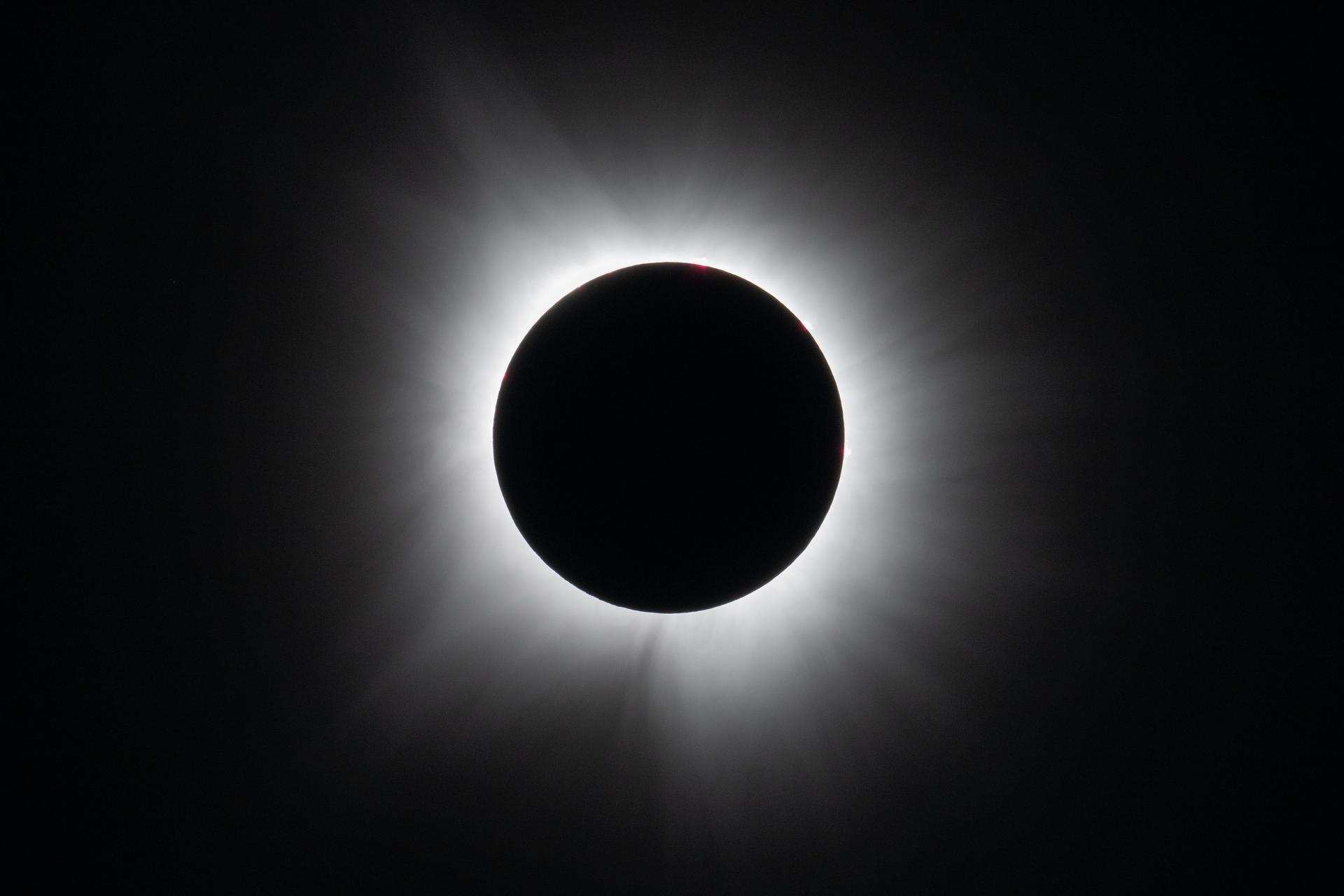
Total solar eclipse corona — the spectacle visible in totality from Iceland and Spain, and as a deep partial from Manchester on August 12, 2026

Eclipse Guide · Manchester · August 12, 2026

Manchester Eclipse 2026: Partial Solar Eclipse Guide — Times, City Viewing & UK Weather Advice

Manchester will experience a deep partial eclipse of approximately 89% coverage on August 12, 2026. With the Sun setting during the maximum phase, the city's parks and elevated spots offer excellent viewing — if the weather cooperates. This guide covers the exact timing, the best Manchester viewing locations, and how to get the most from Britain's most significant solar eclipse in years.

Max. coverage~89% partial
Partial begins~7:48 PM BST
Maximum eclipse~8:58 PM BST
Sunset~8:43 PM BST
By Telescope Advisor Editorial Team Published: Updated: Editorial Standards

Quick Answer: What Will the Eclipse Look Like from Manchester?

Manchester will see approximately 89% of the Sun's diameter covered by the Moon at maximum eclipse — a deep partial that will transform the quality of light and create a memorable evening sky event. The Sun will be reduced to a dramatic crescent, the sky will take on a deep twilight blue, and the temperature will drop noticeably. However, because Manchester is far from the path of totality (which crosses Spain, Iceland, and Greenland), the corona will not be visible and the sky will not go dark enough to reveal stars.

The key challenge for Manchester observers is timing. The maximum eclipse occurs at approximately 8:58 PM BST — about 15 minutes after sunset at 8:43 PM. This means the most dramatic phase of the eclipse will be visible only from locations with a clear, unobstructed view low to the north-western horizon. An elevated viewing spot — a hill, a multi-storey rooftop, or the upper floors of a building with a western aspect — will be essential to catch the maximum eclipse before the Sun disappears below the horizon.

Weather is the other major factor. Manchester's August cloud cover averages around 60–70%, making it one of the more challenging UK cities for eclipse viewing. However, the eclipse occurs in the early evening when August cloud sometimes breaks, and having a flexible viewing plan with both outdoor and live-stream options is the sensible approach.

Manchester Eclipse Timing — August 12, 2026

All times below are in British Summer Time (BST, UTC+1). The eclipse occurs in the late evening, with maximum coverage happening just around sunset. This timing creates both challenges and unique photographic opportunities.

Phase Time (BST) What's Happening
Partial eclipse begins (C1) ~7:48 PM The Moon's limb first touches the Sun's disc. The Sun is still ~16° above the north-western horizon. Use solar glasses to watch the first notch appear.
Sunset ~8:43 PM The Sun drops below the theoretical horizon for Manchester. The eclipse is still in progress — approximately 70% coverage. From elevated locations, the Sun may still be visible.
Maximum eclipse ~8:58 PM BST ~89% of the Sun's diameter is covered. The Sun is below the horizon — visible only from elevated locations with a clear north-western view. The thin crescent may be visible very low in the twilight glow.
Partial eclipse ends (C4) ~10:05 PM The Moon leaves the Sun's disc — but this occurs long after sunset and is not visible from Manchester.

Critical: maximum eclipse occurs after sunset

The 89% maximum eclipse happens about 15 minutes after sunset in Manchester. From normal ground level, the Sun will already be behind the horizon. To see maximum coverage, you MUST be at an elevated location with an unobstructed north-western view. A hilltop, a high-rise building with roof access, or even the top floor of a multi-storey car park could make the difference. The higher your viewing position, the more of the post-sunset eclipse you will see. Even an extra 20 metres of elevation can add 2–3 minutes of visibility.

What 89% Coverage Looks and Feels Like

An 89% partial eclipse is a substantial celestial event — the kind that makes you stop and notice that something strange is happening to the daylight. While it lacks the transformative drama of totality (the corona, the 360° sunset, the sudden darkness), it is still a rare and memorable experience that most people in the UK will not have witnessed before.

At 89% coverage, the remaining solar crescent is very thin but intensely bright. The light level drops to approximately the equivalent of civil twilight — streetlights may begin to flicker on in some areas, especially with the added dimming of the post-sunset sky. The quality of light becomes peculiar: shadows sharpen dramatically because the remaining sunlight comes from a very small source, and under trees you will see hundreds of crescent-shaped pinhole projections of the eclipsed Sun dappling the ground.

The temperature will drop by an estimated 3–6°C (5–11°F). Combined with the UK's August evening temperatures, this means it will feel noticeably cooler during the peak of the eclipse. Birds may become confused by the dimming light — you may see them returning to roost or falling silent. These environmental changes are part of what makes even a deep partial eclipse a uniquely memorable experience.

One aspect that surprises many first-time partial eclipse viewers is how fast the coverage progresses in the final minutes before maximum. As the Moon's shadow sweeps across the Sun, the last 10–15% of coverage happens rapidly — the crescent visibly thins in real time. This acceleration creates a palpable sense of excitement among observers, even those who understand the orbital mechanics behind it.

What you WON'T see from Manchester

Manchester is far from the path of totality, so the solar corona will not be visible. The sky will not go dark enough to see bright stars or planets. The diamond ring effect and Bailey's beads — hallmark features of total solar eclipses — are not visible outside the path of totality. If you want to experience these, you need to travel to Iceland, Spain, or Greenland. For the 2026 eclipse, the closest totality to the UK is in Iceland (Reykjavík is in the path) or northern Spain. Even so, an 89% partial eclipse is a rare event for Manchester — the city's last eclipse of comparable magnitude was in 1999, and the next will not occur until well into the 2030s.

Best Viewing Spots in Manchester for the Eclipse

Because the Sun sets during the eclipse, you need an elevated location with a clear north-western horizon. Here are the best options in and around Manchester.

1. Heaton Park — Best Open Space

Heaton Park, in north Manchester, is the largest municipal park in Europe (250+ hectares) and offers extensive open grassland with reasonable views to the north-west. The park's elevated position (about 80 metres above sea level) provides marginally better horizon clearance than central Manchester. The large open fields near the Heaton Hall side of the park are the best spots. Arrive by 6:30 PM to find your spot. Parking is available but limited on a weekday evening.

2. Peel Park, Salford — Central Option

Situated along the River Irwell between Manchester and Salford, Peel Park offers a convenient central location with good sightlines to the west. The park is open and elevated relative to the surrounding city centre buildings. Walking distance from the University of Salford and Manchester city centre. The western edge of the park, near the Salford side, gives the best north-western horizon view.

3. Salford Quays / MediaCityUK — Best Skyline Setting

The open spaces around Salford Quays and MediaCityUK offer wide, unobstructed views to the west and north-west across the Manchester Ship Canal. The Lowry plaza and the areas around the Imperial War Museum provide excellent sightlines. The water in the foreground adds a reflective element to the viewing experience. This area is accessible by tram (MediaCityUK stop) and has ample parking in the evening.

4. Werneth Low Country Park — Best Elevated View

For observers willing to travel a short distance from the city centre, Werneth Low in Hyde (about 12 km east of Manchester) rises to approximately 240 metres above sea level — the highest easily accessible viewpoint in the Greater Manchester area. The panoramic view from the top extends across the Cheshire Plain to the west and north-west, providing the best possible horizon clearance for the post-sunset maximum eclipse. Accessible by car with parking at the Werneth Low Visitor Centre.

General advice for Manchester eclipse viewing

August in Manchester averages 18–20°C (64–68°F) but conditions can change rapidly. Bring a warm jacket, a waterproof layer, and a folding chair if you plan to stay for the full eclipse sequence. Eclipse glasses are essential for the partial phases before sunset. Consider bringing binoculars (with solar filters) for a closer view of the solar crescent. Most importantly: check the weather forecast on August 11 and 12, and have a backup plan to move to a clearer location if needed. Even 30 km of travel can make a significant difference in cloud cover.

UK Weather: Manchester Cloud Cover in August

Let us be direct with you: Manchester's weather is the biggest risk factor for eclipse viewing. The city averages approximately 60–70% cloud cover in early August, with an average of only 4–5 completely clear days in the entire month. The late afternoon and early evening — exactly when the eclipse occurs — are statistically the brightest part of the day in August, but "brightest" is relative in Manchester.

That said, August cloud cover in Manchester is typically broken — overcast skies with occasional clear breaks — rather than solid, impenetrable cloud. The eclipse occurs over a 2+ hour window, giving you time to catch a clear break. The key strategy is to monitor real-time satellite imagery (the Met Office app or the Clear Outside app are both excellent for UK astronomy weather) and be ready to move to a location where breaks are appearing.

If Manchester is completely overcast on August 12, your best option is to drive. The path of totality in Iceland and Spain is too far for a day trip, but the UK's partial eclipse coverage is relatively uniform across the north of England. East coast locations (Yorkshire coast, Northumberland) often have lower cloud cover than Manchester due to the rain shadow effect of the Pennines. Hull, Scarborough, or Newcastle upon Tyne — all within 2–3 hours of Manchester — could offer significantly better viewing conditions if the satellite imagery shows a clear east-west split on the day.

Live-stream backup plan

If the weather in Manchester does not cooperate, remember that the eclipse will be live-streamed by multiple astronomy organisations (including the Royal Astronomical Society and timeanddate.com) from clear locations in Iceland and Spain. You can still experience the eclipse virtually while watching the Manchester sky darken — even through cloud — as the 89% coverage will still produce a noticeable dimming visible through the cloud layer. Sometimes the cloud itself takes on unusual colours during a deep partial eclipse.

The Low-Sun Challenge: Eclipse Near Sunset

The Manchester eclipse is fundamentally a sunset event. The Sun sets at 8:43 PM BST on August 12, and maximum eclipse occurs at 8:58 PM — 15 minutes after sunset. This has several important implications for viewers.

First, the Sun's low altitude means atmospheric extinction is severe. You are looking through roughly 10–12 times more atmosphere at 5° altitude than at zenith. The solar crescent — already dramatically thinned by the Moon's coverage — will appear reddened and may shimmer or distort due to atmospheric turbulence. This can actually create a beautiful visual effect, with the thin crescent appearing to dance and ripple near the horizon. Photographers should note that the low Sun also allows wide-angle compositions that include the city skyline or landscape silhouetted against the eclipsed Sun, creating highly dramatic images.

Second, the exact timing of maximum eclipse relative to sunset means that every metre of elevation counts. The Earth's curvature means that from ground level at sea level, the Sun disappears behind the horizon when its geometric centre reaches 0° altitude. From an elevation of 100 metres, you gain approximately 0.5° of extra horizon clearance — enough to keep the Sun visible for an additional 2–3 minutes. From the top of a 200-metre hill like Werneth Low, you could extend visibility by 5 minutes or more compared to the city centre. This is why an elevated viewing location is not optional for Manchester eclipse viewers — it is essential.

Finally, the combination of the eclipse with the natural sunset colours creates one of the most photogenic eclipse scenarios available in the UK. The thin solar crescent suspended in the twilight colours of the north-western sky — with the Manchester skyline, the Pennine hills, or the Salford Quays water in the foreground — offers a composition that is genuinely beautiful.

Manchester vs London: Eclipse Coverage on August 12, 2026

Both Manchester and London are far from the path of totality, but their eclipse experiences will be noticeably different due to their geographic positions.

Factor Manchester London
Maximum coverage ~89% ~84%
Partial begins 7:48 PM BST 7:51 PM BST
Maximum eclipse 8:58 PM BST 8:58 PM BST
Sunset 8:43 PM BST 8:24 PM BST
Sun at maximum Below horizon (−0.5°) Below horizon (−1.5°)
Horizon advantage Higher latitude = earlier sunset, but longer civil twilight after sunset Lower latitude = later sunset, but Sun is deeper below horizon at max
Elevation needed ~50m+ to see maximum ~80m+ to see maximum

Both cities need elevated viewing locations to see the maximum eclipse. Manchester's higher latitude means earlier sunset — but paradoxically, the Sun is only about 0.5° below the horizon at maximum, compared to 1.5° for London. This gives Manchester a slight edge: the maximum eclipse is closer to the visible horizon, making it more accessible from elevated locations.

UK eclipse travel: the Iceland option

For UK residents who want to experience the full total eclipse, Iceland is the closest totality destination. Reykjavík and much of south-west Iceland lie within the path of totality, offering about 1 minute of complete coverage. Flight time from Manchester Airport (MAN) to Keflavík (KEF) is approximately 3 hours, and budget carriers like easyJet and Icelandair operate daily flights. If you can arrange an eclipse weekend trip to Iceland — arriving August 11 and returning August 13 — you will experience totality with the added bonus of Iceland's dramatic volcanic landscapes. This is the recommended option for anyone in the UK for whom eclipse-chasing is a priority.

Solar Safety for UK Eclipse Viewing

The safety rules for observing the partial eclipse from Manchester are the same as anywhere else: ISO 12312-2 certified eclipse glasses are required at all times when the Sun is visible in the sky, even through cloud. The only exception is during the brief moment when the Sun is fully below the horizon — but even then, any thin crescent visible above the horizon must only be viewed with proper protection.

For the UK, there is an additional nuance: because the Sun will be very low and dimmed by the atmosphere, you might be tempted to think it is safe to view without glasses. It is not. Even a 1% sliver of the Sun's photosphere is intensely bright in terms of the ultraviolet and infrared radiation it emits. The atmospheric dimming makes the Sun appear red and faint, but the invisible radiation is still dangerous. Keep your glasses on until the Sun is fully below the horizon.

Editor's Pick — Best Group Eclipse Viewing
Helioclipse Eclipse Glasses 12-Pack — ISO-certified eclipse glasses for group viewing

Helioclipse Eclipse Glasses 12-Pack

ISO 12312-2 certified 12 pairs CE certified

A multi-pack of ISO-certified eclipse glasses is the most important piece of equipment for any partial eclipse viewing party. The Helioclipse 12-pack provides enough glasses for a family, a small group of friends, or a community viewing event. Costing under $2 per pair, they are the most affordable and essential eclipse accessory you can buy. Order before August to ensure delivery in time and avoid pre-eclipse price surges.

View on Amazon →

Affiliate link — we may earn a small commission at no extra cost to you.

Celestron EclipSmart 12x50 Solar Binoculars — safe solar binoculars for eclipse viewing

Celestron EclipSmart 12×50 Solar Binoculars — Premium handheld viewing

12× magnification 50mm objectives Permanent solar filters

The 12×50 version of Celestron's EclipSmart solar binoculars offers higher magnification (12× vs 10×) and larger objectives (50mm vs 25mm) for a brighter, more detailed view of the solar crescent during the partial phases. The permanently mounted solar filters guarantee 100% safe operation at all times — there is no way to accidentally remove them. The extra magnification is particularly useful for the Manchester eclipse, where the Sun will be low and small in the sky; 12× brings the crescent into clear, satisfying view.

View on Amazon →

Affiliate link.

Prices and availability subject to change. All product links are affiliate links — see our editorial standards for our review process.

Photographing the Eclipse from the UK

The Manchester eclipse — a deep partial at sunset — presents a unique set of photographic opportunities and challenges. The low Sun angle means you can frame the solar crescent with foreground elements (city skyline, hills, water) for dramatic wide-angle shots. Here are specific recommendations for UK photographers.

Wide-angle landscape (24–50mm)

  • Arrive early and compose your shot with the western/north-western horizon clearly visible
  • Use a tripod — exposures will be 1–4 seconds at twilight
  • ISO 200–800, f/5.6–f/11, shutter speed variable as light dims
  • Include a recognisable Manchester foreground (Heaton Park, Salford Quays, MediaCityUK, the Peak District hills)
  • The thin solar crescent will be very small in wide-angle shots — the magic is in the twilight colours and the quality of the light

Telephoto (200–600mm)

  • A solar filter is mandatory for the partial phases when the Sun is above the horizon
  • Focus manually on the Sun's edge using live view at 10× magnification
  • ISO 100–400, f/8–f/16, 1/500th to 1/2000th sec with filter
  • Remove the filter only when the Sun becomes very dim near the horizon — and only if you are certain the Sun is fully behind cloud or the horizon
  • The solar crescent will show atmospheric distortion near the horizon — this creates a distinctive "shimmering" effect that is characteristic of low-altitude eclipse photography

Composition tip: the twilight gradient

The most striking UK eclipse images will capture the full twilight gradient — from the bright north-western horizon where the eclipsed Sun is setting, through the deep blue of the eclipsed sky overhead. Position yourself on a west-facing hill or elevated park where you can include the full sweep of the sky. The combination of the crescent Sun, the twilight colours, and a dark foreground creates a uniquely atmospheric eclipse portrait that is specific to northern-latitude sunset eclipses.

Manchester Eclipse 2026 — FAQ

Will the total solar eclipse be visible from Manchester?

No — Manchester is far from the path of totality. However, the city will experience a deep partial eclipse with approximately 89% maximum coverage. The Sun will be reduced to a thin crescent, and the sky will dim noticeably, but the corona will not be visible.

What time is the eclipse in Manchester on August 12, 2026?

The partial eclipse begins at approximately 7:48 PM BST. Maximum coverage (~89%) occurs around 8:58 PM BST. However, sunset is at approximately 8:43 PM BST, so the maximum eclipse occurs after sunset. You need an elevated viewing location with a clear north-western horizon to see the Sun at maximum coverage.

Do I need eclipse glasses in Manchester?

Yes — ISO 12312-2 certified eclipse glasses are essential for viewing the partial phases before sunset. Even at 89% coverage, the remaining solar crescent is intensely bright and can cause permanent retinal damage. Keep your glasses on until the Sun is fully below the horizon.

Where is the best place to watch the eclipse in Manchester?

The best locations are elevated spots with unobstructed north-western views. Heaton Park in north Manchester is the largest open space and offers reasonable horizon clearance. Salford Quays / MediaCityUK offers wide views across the water. For the best elevated perspective, Werneth Low Country Park (240m elevation, about 12 km east) provides the best horizon clearance in the Greater Manchester area.

Will the weather ruin the eclipse in Manchester?

Manchester's August cloud cover averages 60–70%, so there is a real risk. However, the eclipse lasts over 2 hours, giving you time to catch clear breaks in broken cloud. Monitor satellite imagery on the day and be ready to drive to an east-coast location (Yorkshire or Northumberland) if Manchester is overcast. Many UK astronomy organisations will also live-stream the eclipse from clearer locations.

Can I travel from Manchester to see the total eclipse?

Yes. The closest totality destination to the UK is Iceland (Reykjavík is in the path) — approximately 3 hours by flight from Manchester Airport. Northern Spain is also accessible via budget flights from Manchester to Bilbao or Santander. A weekend trip to either destination would allow you to experience the full total eclipse. If travel is not an option, see our London eclipse guide for a comparison of UK viewing conditions.

Related Guides