Night Sky in September 2026: Saturn Approaching Opposition
Telescope Advisor Logo Telescope Advisor
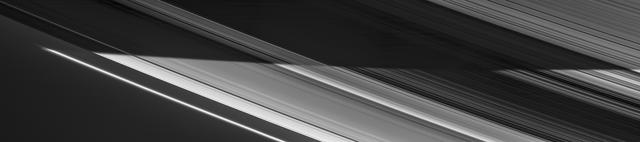
Saturn photographed by NASA Cassini — September 2026 is the best month to observe Saturn before its October 4 opposition

Night Sky Guide · September 2026

Night Sky in September 2026: Saturn's Best Month and Andromeda Season

September 2026 is defined by Saturn. The ringed planet rises at sunset and is visible all night at magnitude 0.3 — brighter than any star in the autumn sky — as it approaches its October 4 opposition. Meanwhile, the Andromeda Galaxy is at its highest for the year, and autumn constellations bring new deep-sky targets to explore.

Planet highlightSaturn — brightest of 2026
Ring tilt7.5° — clearly separated
Galaxy seasonAndromeda at peak height
Opposition countdownOctober 4 — just 1 month away
By Telescope Advisor Editorial Team Published: Updated: Editorial Standards

September 2026 at a Glance

September is the calm month before October's Saturn opposition — but it is anything but quiet astronomically. Saturn now rises at or before sunset and shines at magnitude 0.3, making it the brightest object in the southern sky after the Moon. Every night in September is an opportunity to watch Saturn at near-opposition quality, and the improving ring tilt (back to 7.5° after two years near edge-on) makes the planet visually stunning through even a modest telescope.

Event Date Details
Saturn rises at sunsetAll monthSaturn is an all-night object through September; rings visible in any telescope
New MoonSeptember 8Darkest skies of September; prime window for galaxies, nebulae, and star clusters
Full Moon (Harvest Moon)September 22The famous Harvest Moon rises near sunset several nights in a row; washes out deep sky
Autumnal EquinoxSeptember 22Equal day and night; marks the start of astronomical autumn in the Northern Hemisphere
Saturn Opposition countdownOctober 4Saturn at closest, largest, and brightest for 2026 — just 5 days after September ends
Andromeda Galaxy highestLate SeptemberM31 reaches its highest altitude of the year in late September — best viewing window


🔭

Not sure which telescope actually fits your goals?

Answer 5 quick questions about your budget, observing targets, and experience level — our Telescope Finder Tool recommends a specific model in under 2 minutes.

Find My Telescope →

Saturn in September 2026: Better Than Opposition for Many Observers

Saturn's October 4 opposition is technically the "best" night of the year — closest approach, largest apparent size, highest brightness — but the difference between opposition and the two weeks surrounding it is minimal and often imperceptible. September's Saturn is extraordinary by any measure:

Magnitude0.3 — brighter than any autumn star
Rise time (mid-September)~6:30 PM local time
Highest pointAround midnight local time
Ring tilt7.5° — rings clearly separated from disk
Apparent size19.2 arcseconds (disk)
ConstellationAquarius
Best viewing window11 PM – 2 AM local time
Min. telescope60mm shows rings clearly at 50×

One practical advantage September has over October: longer astronomical nights. By September, darkness falls earlier than in August, and the planet is well above the horizon well before midnight — making school-night observing easier for families and shorter sessions viable before bedtime.

Saturn photographed by NASA Cassini — the ringed planet is the star of September 2026

Saturn's ring system

In September 2026, Saturn's rings tilt at 7.5° — a dramatic improvement from 2025's near-edge-on position. Credit: NASA/JPL/Space Science Institute.

How to See Saturn's Best Features in September

Saturn rewards different apertures with different levels of detail. Here is exactly what you can expect at each aperture class in September 2026:

Telescope Aperture Best Magnification What You'll See
60–70mm refractor 50–75× Rings clearly separated from disk; Titan visible; ring tilt visible as oval shape
80–102mm refractor 80–120× Ring structure visible; Cassini Division hinted; 1–2 cloud bands; Titan + Rhea
130–150mm (5–6 inch) 120–180× Cassini Division split cleanly; 2+ cloud belts; 4–5 moons (Titan, Rhea, Dione, Tethys)
200–250mm (8–10 inch) 150–250× Encke Gap (inner ring gap) visible under best seeing; polar hexagon hint; 5–7 moons; cloud color variations
Binoculars (10×50) 10× Rings give planet a clearly non-circular, "oval" appearance; Titan just visible at the limit in 15×70 binoculars

Practical viewing tips for Saturn in September:

  • Wait for Saturn to clear the horizon haze: Saturn is in Aquarius (low in the south for mid-latitude observers). Wait until it is at least 25–30° above the horizon — typically after 9 PM local time in mid-September — before observing at high magnification. Atmospheric turbulence near the horizon blurs planetary detail significantly.
  • Let your telescope cool down: A telescope taken from indoors to outdoors needs 20–45 minutes to equilibrate with outside air temperature. Cool-down time is shorter for refractors and longer for large Newtonians. An uncooled mirror produces "thermal currents" that blur the view.
  • Use a yellow or light blue filter: A #8 light yellow filter increases cloud belt contrast on Saturn. A #82A light blue filter subtly enhances the blue color difference between polar and equatorial regions. Neither is essential but both help experienced observers squeeze more detail out of steady seeing conditions.
  • The best Saturn viewing window is 10 PM – 1 AM: Saturn transits (reaches its highest point due south) around midnight in mid-September. Observing within ±2 hours of transit, when Saturn is highest, gives the best image quality.

Andromeda Galaxy: At Its Highest for the Year

The Andromeda Galaxy (M31) — the closest large spiral galaxy to the Milky Way at ~2.5 million light-years — reaches its highest point in the sky during late September and October. In mid-northern latitudes, M31 climbs to 60–70° altitude in late September, well above the horizon haze that limits its visibility in other months. This is the best time of year to observe it.

Naked-eye visibility: M31 is one of the most distant objects visible to the naked eye. From suburban skies, it appears as a faint elongated smudge — not the classic spiral arm structure seen in photographs, but definitively not a star. Under dark rural skies (Bortle 4 or better), M31 extends across a larger area than the full Moon.

With binoculars (10×50 or 15×70): The bright nucleus and extended halo are clearly visible. The two companion dwarf galaxies — M32 (small, round, bright) and M110 (large, faint, elongated) — are also visible in the same field with 15×70 binoculars under dark skies.

Through a telescope: A 70–130mm telescope at low power (15–30×) shows the nucleus and the inner disk. Larger apertures (200mm+) reveal dust lane hints and the outer spiral arm faintly. No backyard telescope in full shows M31's spiral structure as in Hubble images — the galaxy is simply too large and too diffuse for high-magnification views.

Andromeda Galaxy M31 — September is the best month to observe it from northern latitudes

Andromeda Galaxy M31 — September target

M31 reaches its highest altitude in late September and October. Under dark skies, it spans more sky than the full Moon. Credit: NASA.

For a complete guide to finding and observing M31, see How to Find the Andromeda Galaxy with a Telescope. For the full autumn galaxy season context, see our best galaxies for light-polluted skies guide.

Other Planets Visible in September 2026

Venus

Evening

Venus — Brilliant Evening Star Returns

Venus returns to the western evening sky in September 2026 after passing inferior conjunction earlier in the year. By mid-September, it is clearly visible low in the west after sunset, shining at magnitude −3.9 to −4.0. Through a small telescope, Venus shows a crescent phase (roughly 30–40% illuminated) that becomes thinner but larger as the planet swings toward maximum elongation. The crescent phase is easily visible at 30× or higher.

Mars

Morning

Mars — Fading Morning Planet

Mars is now past its 2026 opposition and receding from Earth. In September it is visible in the pre-dawn eastern sky as a moderately bright orange point (magnitude ~0.8–1.0). Through a telescope at 100× or more, Mars still shows a disk (~9 arcseconds) but significantly smaller than opposition views. This is still worth visiting through a 4-inch or larger telescope; the polar ice cap and basic disk are visible in steady seeing.

Jupiter

Pre-dawn

Jupiter — Pre-Dawn Returns

Jupiter is in the morning sky in September, rising a couple of hours before the Sun and shining brilliantly at magnitude −2.1. While it is not yet an all-night object, the pre-dawn window from 4–6 AM offers excellent seeing conditions (turbulence often settles before dawn). Jupiter shows all four Galilean moons and at least two equatorial belts in any telescope at 40× or more. Jupiter reaches opposition in January 2027, so September observations preview what is coming.

Neptune

All night

Neptune — At or Near Opposition

Neptune reaches opposition in September 2026 (exact date around September 22), making this its best viewing month of the year. At magnitude 7.8, Neptune is invisible to the naked eye but easily found in binoculars with a finder chart. Through a 150mm+ telescope at 150× or more, Neptune's disk (2.4 arcseconds) is barely resolvable as a blue-grey disk rather than a point. Its largest moon Triton (magnitude 13.5) requires an 8-inch or larger telescope. Our Neptune Opposition September 2026 guide has finder charts and exact times.

September Constellations

September marks the transition from summer to autumn constellations. The Summer Triangle (Vega, Deneb, Altair) still dominates the overhead sky at nightfall, but by midnight the Great Square of Pegasus rises prominently in the east — signaling the autumn constellations are taking over.

Prominent in September evenings:

  • Cygnus (The Swan): Deneb blazing overhead; the Milky Way runs through it. Rich in star clusters, nebulae (North America Nebula, Veil Nebula), and the double star Albireo.
  • Lyra (The Lyre): Vega — the second-brightest star in the northern sky — near the zenith. Contains the Ring Nebula (M57), visible in any telescope.
  • Aquila (The Eagle): Altair, the third corner of the Summer Triangle. Eagle Star Altair completes the Summer Triangle.
  • Pegasus: Rising in the east by 9 PM, the Great Square of Pegasus marks the approach of autumn. The Andromeda Galaxy lies just north of the Great Square.
  • Andromeda: The galaxy after which it is named sits in the northeast, climbing to maximum altitude in late September.

Low on the southern horizon:

  • Aquarius: Saturn's home constellation in 2026. The water-carrier is a large but faint constellation — no bright stars, but Saturn dominates it brilliantly.
  • Capricornus: A faint constellation west of Aquarius, with no star brighter than magnitude 3. Binoculars reveal the fine double star Alpha Capricorni (optically unrelated but visually close).
  • Sagittarius: Now sinking toward the southwest horizon — the last window to catch the Teapot asterism before it sets for the year. The globular clusters M22 and M28 are still worth a visit.
  • Perseus: Rising in the northeast after midnight — next month it will carry the peak of the Perseid shower's parent comet trail. The famous Double Cluster (NGC 884 and 869) is spectacular in binoculars.

Top 10 Deep-Sky Targets for September 2026

Best observed in the New Moon window around September 8. Bortle 5 or better skies recommended for faint targets.

Object Type Magnitude Minimum Scope What to Look For
M31 Andromeda GalaxyGalaxy3.4Naked eyeBright nucleus, extended halo; M32 and M110 companions in binoculars
M57 Ring NebulaPlanetary nebula8.860mmTiny perfect smoke ring in Lyra; center star needs 200mm+
M13 Hercules GlobularGlobular cluster5.8BinocularsFinest globular in northern sky; individual stars resolve in 100mm+
NGC 884/869 Double ClusterOpen clusters4.3Naked eye, binoculars bestTwo rich star clusters side by side in Perseus; breathtaking in binoculars
M15 Globular ClusterGlobular cluster6.260mmOne of the most densely packed globulars; compact core visible in any scope
NGC 7000 North America NebulaEmission nebula4.0Binoculars (dark sky essential)Huge nebula in Cygnus shaped like North America; best with narrowband filter
M2 Globular ClusterGlobular cluster6.560mmProminent globular in Aquarius (same constellation as Saturn); 130mm+ resolves outer stars
Veil Nebula (NGC 6992)Supernova remnant7.0100mm (dark sky + filter)Ghostly filaments from an ancient supernova; UHC or OIII filter essential
M27 Dumbbell NebulaPlanetary nebula7.460mmLargest planetary nebula in Vulpecula; hourglass or dumbbell shape visible in 80mm+
Albireo (Beta Cygni)Double star3.160mmThe jewel double star — one gold, one blue. Beautiful colour contrast in any telescope at 40×

Harvest Moon: September 22, 2026

The Harvest Moon is the full Moon closest to the autumnal equinox. In 2026, the autumnal equinox falls on September 22 — and so does the full Moon, making this a genuine equinox Harvest Moon. The Harvest Moon rises within minutes of sunset for several nights in a row, illuminating the evening sky with an orange-gold disk low on the eastern horizon.

What makes the Harvest Moon special

Near the autumnal equinox, the ecliptic (the Moon's path) makes a shallow angle with the horizon. This means the Moon rises only 20–30 minutes later each evening rather than the usual 50–80 minutes. For 3–4 nights around September 22, you have a bright full or nearly-full Moon rising just after sunset — the "extra" twilight light that traditionally allowed farmers to work after dark.

Telescope viewing of the Harvest Moon

Full Moons are spectacular through any telescope when they first rise — the orange tint comes from atmospheric filtering when the Moon is low. As it rises, crater detail emerges, especially along the terminator (not present at full Moon but visible near the limb). The Tycho crater ray system is most prominent at full Moon. Warning: the full Moon is very bright — a Moon filter significantly improves visual comfort during full Moon observation.

The full Moon on September 22 will significantly compromise deep-sky observing for the week surrounding it. Plan your dark-sky sessions for September 1–14 (waning to new Moon) or September 27 onwards (thin waxing crescent). See our lunar observing guide for a complete guide to Moon watching at all phases.


Best Gear for September 2026

September's primary attraction is Saturn — and the best gift you can give yourself for Saturn viewing is a telescope with at least 100mm aperture. Here are our picks for September 2026.

Editor's Pick — Best Saturn Telescope This September
Celestron NexStar 6SE — the ideal Saturn telescope for September and October 2026

Celestron NexStar 6SE

150mm (6") SCT GoTo computerized 40,000-object database

September's Saturn viewing peaks with the NexStar 6SE. At 150mm and 1500mm focal length, this scope delivers precisely the magnification and contrast needed: at 150×, the Cassini Division splits cleanly, the ring tilt at 7.5° is visually dramatic, and Titan appears as a warm orange speck 4–5 ring diameters from the planet. The GoTo computerized mount finds Saturn in seconds, tracks it automatically, and also locates M57, M13, the Double Cluster, and every other September target without manual star-hopping. For someone buying their first "serious" telescope ahead of the October 4 opposition, nothing at this price tier delivers a better Saturn experience. Full review: Celestron NexStar 6SE review.

Sky-Watcher Heritage 130P tabletop Dobsonian — budget Saturn and deep-sky telescope

Sky-Watcher Heritage 130P — Budget beginner pick

For anyone starting out who wants good Saturn views this September without spending significantly, the Heritage 130P delivers 130mm of aperture on a compact tabletop Dobsonian that stores in a bookcase and deploys in under 2 minutes. At 65–100× (a 25mm or 13mm eyepiece), it shows Saturn's rings clearly separated, the Cassini Division hinted at, and Titan. It also performs well on the Andromeda Galaxy, Double Cluster, M13, M57, and every other September target. Manual operation — no computer — but a rewarding learning experience. Full review: Heritage 130P review.

Celestron SkyMaster 15x70 binoculars — excellent for Saturn's moons and Andromeda Galaxy

Celestron SkyMaster 15×70 Binoculars — Andromeda + Saturn's oval shape

Not everyone needs a telescope for September observing. The 15×70 shows Saturn's disk clearly non-circular (the rings giving it an oval appearance), Titan as a faint speck at the limit, and Andromeda Galaxy (M31) in magnificent detail with both companion galaxies visible. The Double Cluster in Perseus is stunning at 15×. These binoculars are also the best tool for deep-sky object discovery before committing time on a telescope eyepiece. See our binoculars guide for the full comparison.

Affiliate links — we may earn a commission at no extra cost. See our editorial standards.

September 2026 Night Sky — FAQ

When is the best time to see Saturn in September 2026?

Saturn is excellent all month. It rises around or before sunset and is up all night. The best viewing window is when Saturn is highest in the south — around 11 PM – 1 AM local time in mid-September. Wait until Saturn is at least 25–30° above the horizon before using high magnification, as atmospheric turbulence near the horizon blurs planetary detail. The New Moon window around September 8 offers the darkest skies for both Saturn and deep-sky observing.

Can I see Saturn's rings in September 2026?

Yes — clearly, in any telescope at 40× or higher. The rings tilt at 7.5° relative to our line of sight in September 2026, which means they are clearly separated from the planet's disk and visibly angled. This is a dramatic improvement over 2025 when the rings were nearly edge-on. Even a 60mm refractor at 50× shows the rings as a distinct oval band around the planet. An 80mm+ telescope at 80–100× reveals the Cassini Division (the gap between the A and B rings) as a dark line within the ring system.

Can I see the Andromeda Galaxy in September 2026?

Yes — September is one of the best months for Andromeda. M31 reaches its highest altitude of the year in late September, well above the horizon haze that limits its visibility in summer months. From dark skies (Bortle 4 or better), it is visible to the naked eye as a faint elongated smudge. Through 10×50 or 15×70 binoculars, the bright nucleus and extended halo are clearly visible, and the companion galaxies M32 and M110 appear as faint spots nearby. The New Moon on September 8 creates a week of ideal dark-sky conditions for Andromeda viewing.

Is September 2026 a good time to buy a telescope?

Yes — September is one of the best months to buy a telescope, specifically because Saturn's October 4 opposition gives you an immediate, spectacular target. A new telescope bought in September will be ready for the October opposition peak. September also has long enough nights for all-evening observing sessions, and the combination of Saturn, Andromeda, and autumn deep-sky targets provides variety from night one. The next "best" telescope purchase window after September is December/Christmas, so September avoids the seasonal rush. See our best time to buy a telescope guide for sale cycle analysis.

What is the Harvest Moon and when is it in 2026?

The Harvest Moon is the full Moon closest to the autumnal equinox. In 2026, both fall on September 22 — a coincidence that makes it a true equinox Harvest Moon. The Harvest Moon rises around sunset and remains bright all night for 3–4 consecutive evenings due to the shallow ecliptic angle near the equinox. While beautiful to observe and photograph, the full Moon drastically reduces deep-sky observing capability — the sky glow from the full Moon wipes out faint nebulae and galaxies. Plan deep-sky sessions for September 1–14 or after September 27 to avoid the full Moon period.

What deep-sky objects should I prioritize in September?

With the New Moon window around September 8, prioritize: (1) Andromeda Galaxy M31 with companions M32 and M110 — highest of the year and showing maximum detail; (2) Double Cluster in Perseus (NGC 884/869) — two rich star clusters side by side, stunning in binoculars; (3) M15 globular cluster in Pegasus — one of the most densely packed globulars visible from Earth; (4) M57 Ring Nebula in Lyra — the classic smoke-ring planetary nebula; (5) Veil Nebula in Cygnus — ghostly supernova remnant filaments best seen with a UHC or OIII filter. These targets are all well-placed in the September evening sky and range from naked-eye to 100mm telescope challenge.

Is September better for Saturn viewing than October?

The difference is minimal — essentially undetectable to most observers. October 4 is technically Saturn's opposition (closest, brightest, largest apparent size), but the change between September 15 and October 4 is about 2% in apparent size and a tenth of a magnitude in brightness. What matters far more is seeing conditions on any given night. A transparent, steady September night will always show better Saturn detail than a turbulent October night. The practical advice: observe Saturn every clear night in September and October — you cannot tell from eyepiece impressions alone which night is closer to opposition.

Are there any meteor showers in September 2026?

September has several minor showers but no major events. The Epsilon Perseids peak around September 9 (rate: ~5–10 per hour, not spectacular but worth checking during the dark New Moon window). The Draconids peak October 8 — just after September ends — but occasional Draconids can be seen in late September from the northwest sky. For meteor shower fans, the next major event after the August Perseids is the Geminids in December. Check our 2026 astronomy events calendar for the full meteor shower schedule.


Related Guides