
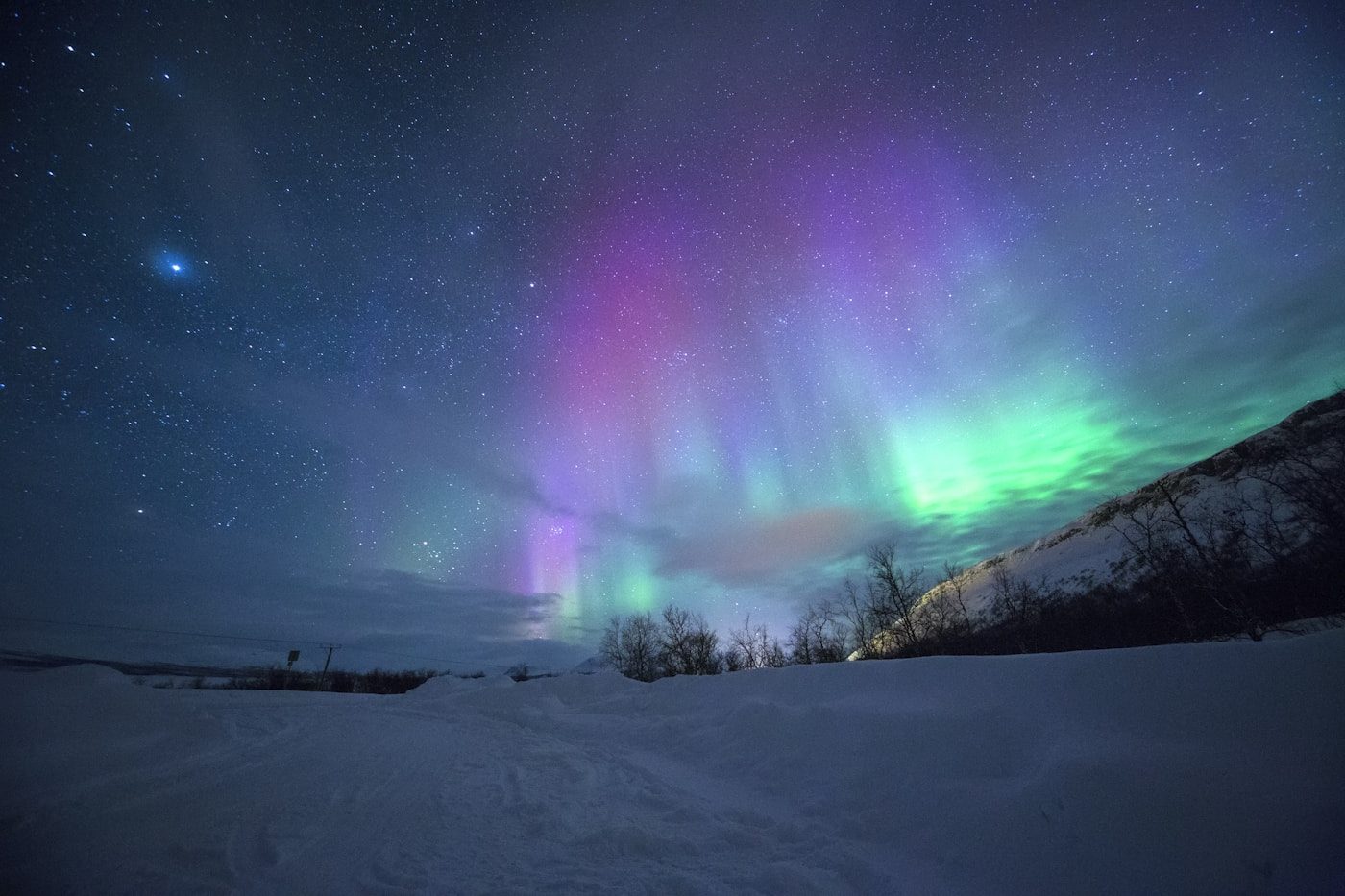

Can You Really See the Northern Lights in Colorado?
Yes — but not as frequently or as dramatically as in Alaska, Canada, or Scandinavia. Colorado sits between 37°N and 41°N latitude, which places it in the mid-latitude aurora zone. During minor geomagnetic storms (G1–G2, Kp 5–6), the aurora is typically visible only from the northernmost parts of the state under dark skies. During moderate to strong storms (G3+, Kp 7–9), the aurora can be seen across the entire state, including Denver's northern suburbs when conditions are optimal.
What makes Colorado special is its elevation. The aurora is a high-altitude phenomenon (typically 100–500 km above Earth's surface), and Colorado's average elevation of 6,800 feet puts observers significantly closer to the action. The thin, dry air at high altitude also means less atmospheric scattering and clearer views. During the May 2024 G5 geomagnetic storm — the strongest in over 20 years — aurora was visible across all of Colorado, with reports from as far south as Durango and Alamosa.
With Solar Cycle 25 currently at its peak, geomagnetic storm frequency is at its highest since 2014. This means Colorado will likely see 2–5 strong aurora events per year through 2027, making this an exceptional time to plan aurora-viewing trips to the state.