
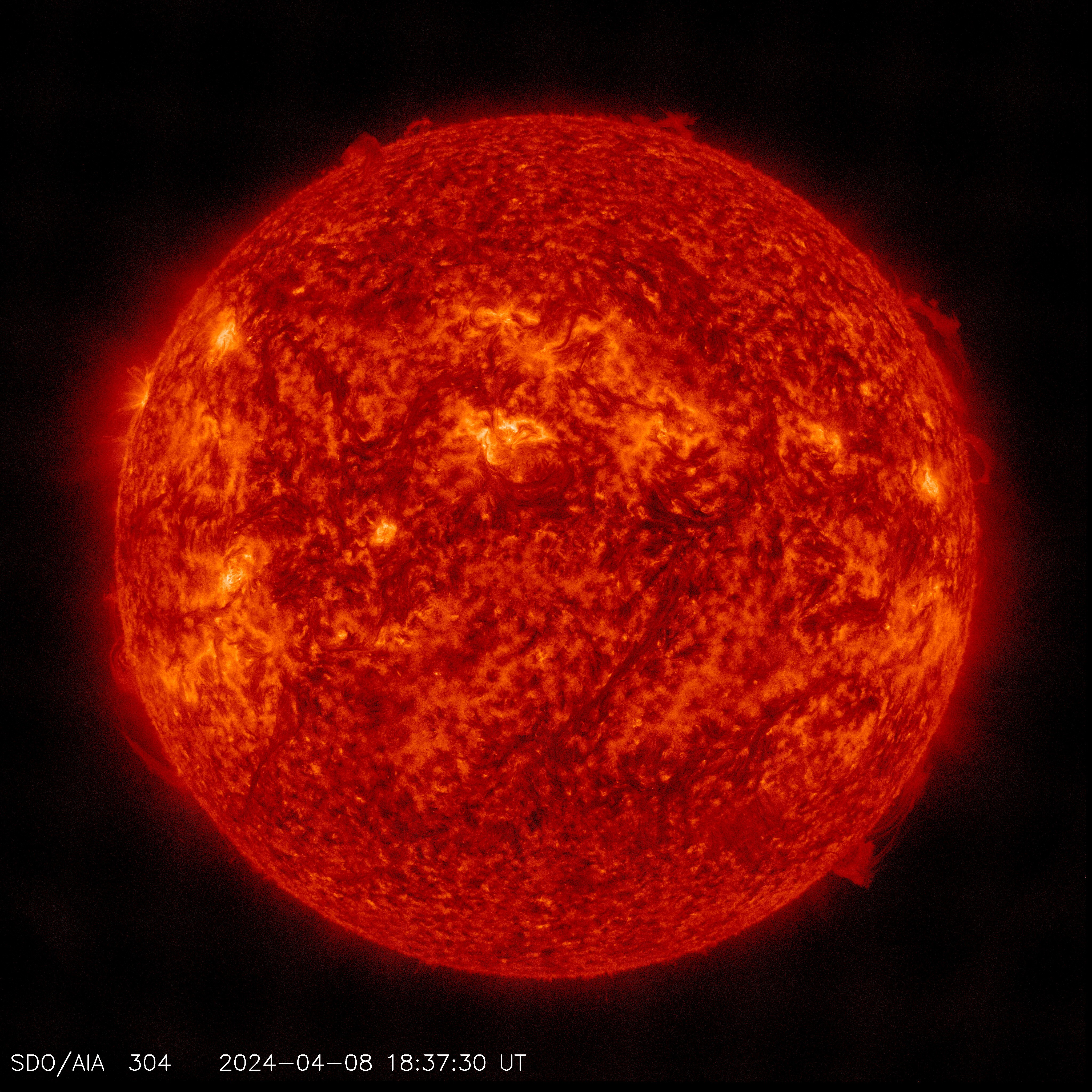

What Is a Solar Flare?
A solar flare is a sudden, intense burst of radiation originating from the release of magnetic energy stored in the Sun's atmosphere. These explosions occur near sunspots — regions of intense magnetic activity on the Sun's visible surface — where twisted magnetic field lines become destabilised and reconnect, accelerating charged particles to near-light speed. The resulting flare releases energy across the entire electromagnetic spectrum, from radio waves to gamma rays.
The total energy released by a large solar flare is equivalent to millions of 100-megaton hydrogen bombs exploding simultaneously. An X-class flare — the most powerful category — can release as much energy as one billion megatons of TNT. Despite these staggering numbers, Earth's atmosphere protects us from the direct harmful effects of flare radiation, though the upper atmosphere can be significantly disturbed.
Solar flares are closely related to but distinct from coronal mass ejections (CMEs). A flare is a burst of electromagnetic radiation reaching Earth in 8 minutes; a CME is a cloud of magnetised plasma ejected from the Sun that takes 1–4 days to travel to Earth. Large flares are often accompanied by CMEs, and it is the CME that triggers the most dramatic space weather effects, including brilliant aurora displays at lower latitudes than usual.