
Telescope Advisor Logo Telescope Advisor
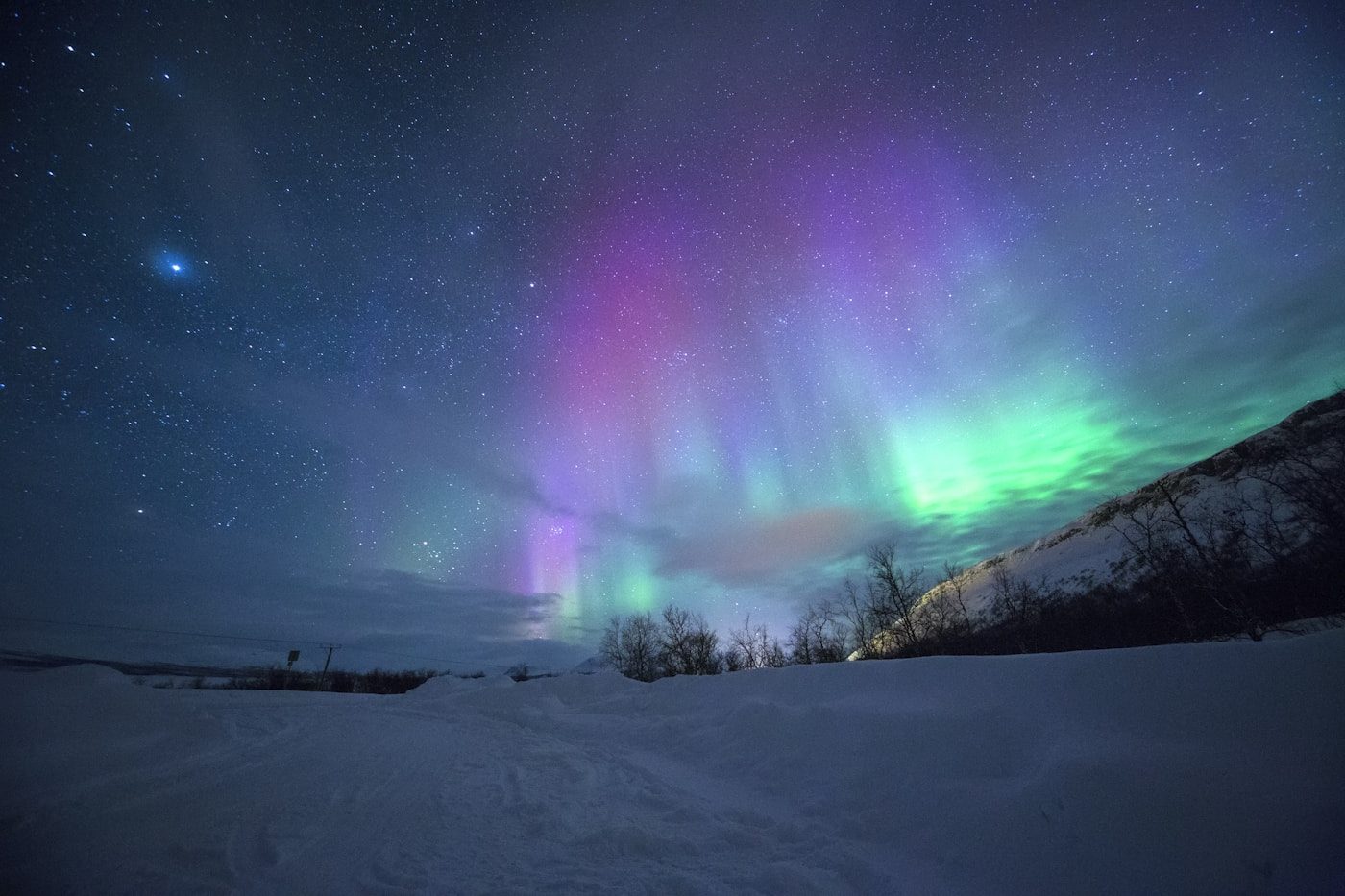
The aurora borealis — vibrant green ribbons of light dancing across a star-filled night sky, as seen from high-latitude locations during strong geomagnetic storms

Aurora Guide · Ohio · Northern Lights

Northern Lights in Ohio: Where and When to See the Aurora Borealis

Ohio sits at roughly 39–41°N latitude, placing it at the southern edge of the mid-latitude aurora zone. While the Buckeye State does not see the northern lights as frequently as Canada or Alaska, it is absolutely possible to witness the aurora borealis from Ohio during strong geomagnetic storms — especially during Solar Cycle 25's current peak. With clear skies, a dark location, and a little patience, an Ohio aurora sighting is a realistic and unforgettable goal.

Kp neededKp 7+ for visible aurora
Best monthsMarch–April & September–October
Top locationLake Erie shoreline (north-facing)
Solar cycleCycle 25 peak — best since 2014
By Elena Reyes Published: Updated: Reviewed & approved by Juhi Sahni, Senior Editor Editorial Standards
Elena Reyes — Senior Science Editor

Elena Reyes

Senior Science Editor

Covers NASA missions, space science discoveries, and astronomical events for Telescope Advisor. Translates complex astrophysical research into practical insights for backyard observers. Based in the San Francisco Bay Area.

Can You Really See the Northern Lights in Ohio?

Yes — but it requires strong geomagnetic activity. Ohio lies between 39°N (Cincinnati) and 42°N (Toledo), which places it in the mid-latitude aurora zone. During minor geomagnetic storms (G1–G2, Kp 5–6), the aurora is typically visible only from the northernmost parts of the state under very dark skies — places along the Lake Erie shoreline like the Lake Erie Islands or the Lake Erie Bluffs. During moderate to strong storms (G3+, Kp 7–9), the aurora can spread across the entire state, including the suburbs of Cleveland, Columbus, and even Cincinnati under the right conditions.

The best recent display was during the May 2024 G5 geomagnetic storm — the strongest in over 20 years — when aurora was reported across all of Ohio. Residents in Cleveland, Columbus, Dayton, and even as far south as Cincinnati caught vivid green and purple aurora with the naked eye. With Solar Cycle 25 at its peak, Ohio has a realistic chance of seeing aurora 1–3 times per year through 2027.
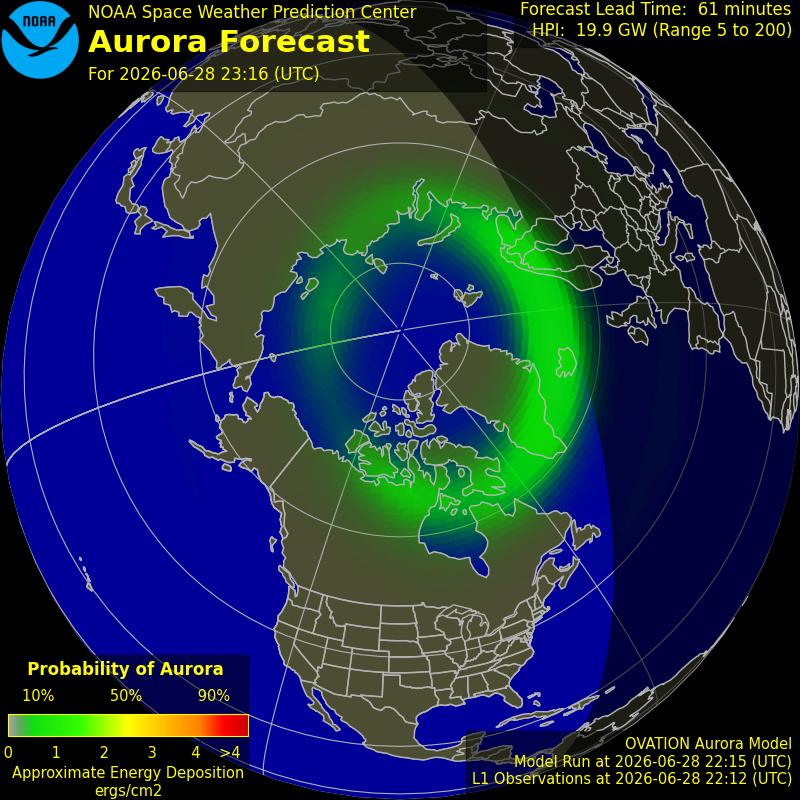
NOAA aurora forecast map showing the aurora oval and probability of visibility — essential for planning aurora viewing from Ohio
NOAA Aurora Forecast Map — The OVATION model shows the current aurora oval and its probability of visibility. When the oval dips below the Canadian border into the Great Lakes region, Ohio has a chance of seeing the northern lights. Credit: NOAA SWPC.

Best Locations in Ohio for Aurora Viewing

Lake Erie Shoreline (Bortle 3–4)

The northern shore of Ohio offers the best combination of dark skies and an unobstructed northern horizon over Lake Erie. Head to Headlands Beach State Park near Mentor, Maumee Bay State Park near Toledo, or the Lake Erie Bluffs in Perry. The lake provides a flat, dark horizon that is ideal for spotting low-altitude aurora.

Hocking Hills State Park (Bortle 3)

Southeastern Ohio's Hocking Hills region offers some of the darkest skies in the state. While the tree cover limits northern horizon views, the open fields around the park's perimeter provide good aurora spotting opportunities during strong storms.

Geauga Observatory Park (Bortle 3)

Ohio's first Dark Sky Park, located in Montville Township. This dedicated astronomy park features an observatory, dark-sky-friendly lighting, and an open field with a reasonable northern horizon. It is open to the public and regularly hosts astronomy events.

John Bryan State Park (Bortle 3–4)

Near Yellow Springs, this park offers darker skies than most of western Ohio. The open meadow areas provide adequate northern horizon views when the aurora is active.

When to See the Aurora in Ohio

Spring and fall equinox months (March–April and September–October) statistically produce the most geomagnetic activity. For Ohio, the best viewing window is 10 PM to 2 AM local time. Avoid nights with a bright moon — check the moon phase calendar before heading out. The Solar Flares Guide covers the forecast tools you need.

A successful aurora hunt in Ohio requires preparation. Here is a step-by-step checklist: (1) Monitor the NOAA SWPC 3-day forecast and the OVATION aurora model. When Kp 6+ is forecast, start planning. (2) Check local weather — clear skies are essential. Lake-effect clouds can obscure the northern horizon even when the rest of the state is clear. (3) Choose your location — ideally a dark site with an unobstructed northern horizon. (4) Arrive at least 30 minutes before peak viewing time to let your eyes adapt to the dark. (5) Look north. The aurora often appears as a faint green glow on the northern horizon before intensifying into visible rays and curtains. Patience is key — auroral displays come in waves that can last from minutes to hours.

Photographing the Aurora in Ohio

Capturing the aurora from Ohio requires the same techniques used at higher latitudes, but with the added challenge that displays are typically fainter and closer to the horizon. A DSLR or mirrorless camera with a wide-angle lens (14–24mm) and a sturdy tripod is essential. Use these settings as a starting point: manual focus set to infinity, aperture wide open (f/1.8 to f/2.8), ISO 3200–6400, and shutter speed 5–15 seconds depending on aurora brightness. The aurora from Ohio is often visibly green to the eye but may appear as a faint grey-white glow to the naked eye during weaker storms — the camera will pick up the colour that your eyes might miss.

For composition, include a foreground element — Lake Erie shoreline, a lighthouse, or silhouette of trees — to give the aurora a sense of place. Use a remote shutter release or your camera's built-in intervalometer for long exposures. If you are using a smartphone, use a tripod mount and the phone's Pro or Night Mode with a 5–10 second exposure. Apps like Slow Shutter Cam (iOS) or Camera Pro (Android) provide manual control. Remember to turn off auto-white balance and set it to daylight or tungsten to preserve the aurora's natural colours.

Beyond capturing the aurora itself, consider photographing the surrounding environment. The dark skies of Ohio's Lake Erie shoreline or Geauga Observatory Park provide excellent conditions for combining aurora photography with wide-field astrophotography. A single wide-angle shot can capture the aurora dancing above the lake, with the Milky Way arching overhead and possibly even a few Perseid or Geminid meteors streaking through the frame. These layered compositions — combining aurora, starscape, and landscape — are among the most rewarding images an astrophotographer can create, and Ohio's mid-latitude aurora provides a unique opportunity to capture them that does not require traveling to Alaska or Iceland.

Frequently Asked Questions

Can you see the northern lights in Ohio?

Yes, during strong geomagnetic storms (Kp 7+). Ohio sees aurora 1–3 times per year during Solar Cycle 25 peak, with the best views from Lake Erie shoreline locations.

What Kp index is needed for aurora in Ohio?

Kp 7 is typically needed for visible aurora from northern Ohio. Kp 8–9 can make the aurora visible across the entire state, including Cincinnati and Columbus.

Where is the best place to see the northern lights in Ohio?

The Lake Erie shoreline (Headlands Beach, Maumee Bay, Lake Erie Bluffs) offers the best dark skies and unobstructed northern horizon. Geauga Observatory Park is Ohio's first Dark Sky Park.

How often does Ohio get the northern lights?

During Solar Cycle 25 peak (2025–2026), Ohio experiences visible aurora 1–3 times per year. During solar minimum, it may go several years without a visible event.

What time of night is best for aurora viewing in Ohio?

The best viewing window is 10 PM to 2 AM local time, when geomagnetic activity is typically strongest. Arrive early to let your eyes adapt to the dark.

Does light pollution affect aurora viewing in Ohio?

Yes. Ohio's major cities produce significant light pollution. You need to drive at least 30–60 minutes from city centers to reach dark enough skies for reliable aurora viewing.