

Telescope Advisor Logo Telescope Advisor
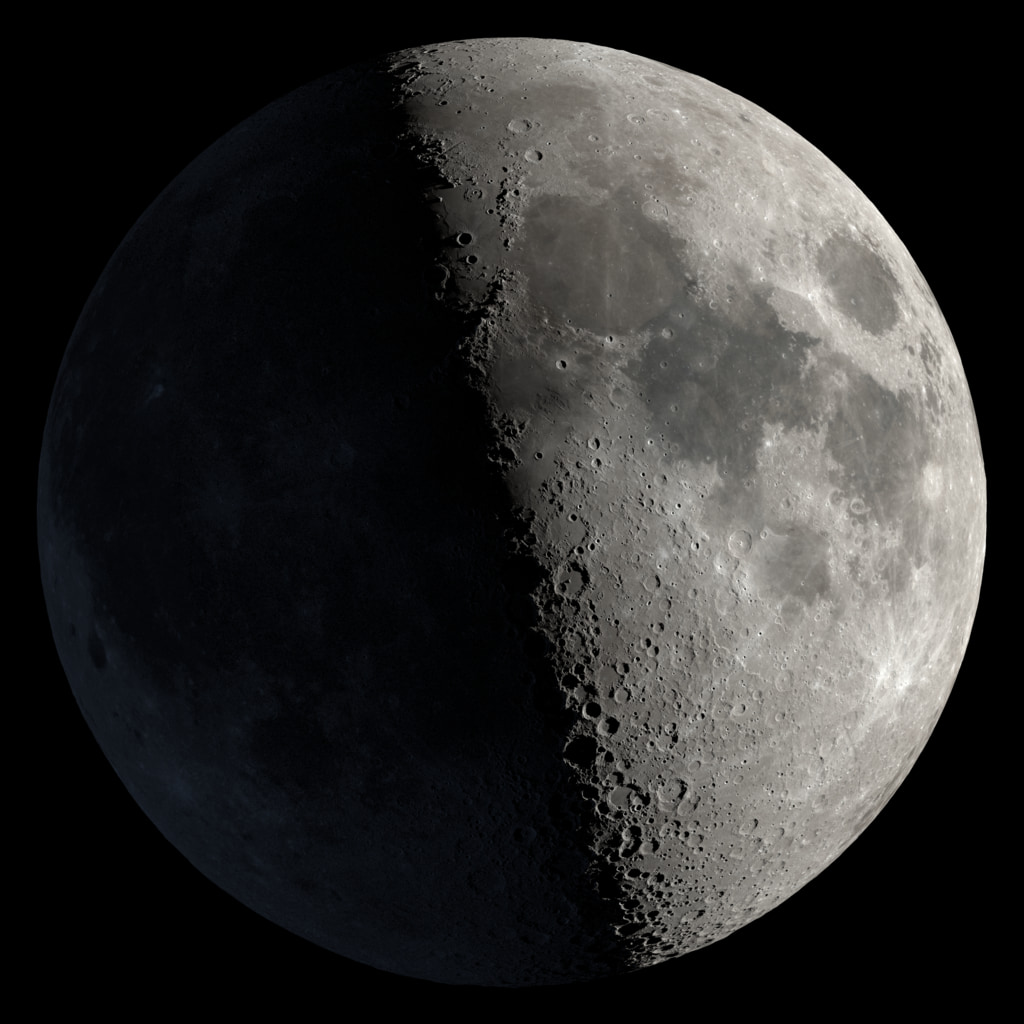
The Moon in exquisite detail captured by NASA's Lunar Reconnaissance Orbiter — showing the cratered surface that changes appearance through each phase of the lunar cycle

Lunar Guide · Moon Phases · Observing

Moon Phases Explained: Waxing, Waning, Crescent, Gibbous — Complete Guide to the Lunar Cycle

The Moon's phases are the most familiar yet most misunderstood cycle in the night sky. Every 29.5 days, the Moon completes a full cycle from new to full and back again, changing its appearance as its position relative to Earth and the Sun shifts. This guide explains all eight phases, why they occur, and what makes each one worth observing through a telescope or binoculars.

Cycle length29.5 days
Phases8 distinct stages
Best observingFirst & Last Quarter
Illumination0% (new) to 100% (full)
By Elena Reyes Published: Updated: Reviewed & approved by Juhi Sahni, Senior Editor Editorial Standards
Elena Reyes — Senior Science Editor

Elena Reyes

Senior Science Editor

Covers NASA missions, space science discoveries, and astronomical events for Telescope Advisor. Translates complex astrophysical research into practical insights for backyard observers. Based in the San Francisco Bay Area.

What Causes the Moon Phases?

The Moon's phases are caused by the changing angle of sunlight hitting the Moon as it orbits Earth. The Moon does not produce its own light — it reflects sunlight. As the Moon travels around Earth once every 27.3 days (the sidereal month), the angle between the Sun, Earth, and Moon changes, causing different portions of the lunar surface to be illuminated from our perspective.

It takes the Moon slightly longer — 29.5 days — to complete a full cycle of phases (the synodic month) because Earth is also moving around the Sun. By the time the Moon returns to the same position relative to the stars, Earth has moved about 27 degrees along its orbit, so the Moon needs an extra two days to catch up to the same Sun-Earth-Moon alignment.

A common misconception is that the Moon's phases are caused by Earth's shadow falling on the Moon. This is incorrect. Earth's shadow only falls on the Moon during a lunar eclipse, which happens only when the Sun, Earth, and Moon are perfectly aligned — about twice per year, not every month. The phases are purely a function of the Moon's orbit changing how much of its sunlit side faces Earth.

The Eight Moon Phases in Detail

The lunar cycle progresses through eight distinct phases, each offering a unique appearance and different opportunities for observation. Understanding them transforms your ability to plan observing sessions and interpret the night sky.

Phase Illumination When Visible Best For Observing
New Moon 0% Daytime (invisible) Darkest skies for deep-sky observing
Waxing Crescent 1–49% Early evening, western sky Earthshine viewing; subtle terminator details
First Quarter 50% Afternoon to midnight Best terminator contrast for crater viewing
Waxing Gibbous 51–99% Late afternoon to predawn Detailed surface features near terminator
Full Moon 100% Sunset to sunrise (all night) Brightest; minimal shadow detail; best for naked-eye enjoyment
Waning Gibbous 99–51% Late evening to morning Eastern terminator reveals features opposite First Quarter
Last Quarter 50% Late night to morning Terminator contrast on eastern side of Moon
Waning Crescent 49–1% Predawn, eastern sky Subtle earthshine; pre-dawn deep-sky opportunity

The two most important terms to understand are waxing and waning. Waxing means the illuminated portion is increasing — from new moon toward full moon. Waning means the illuminated portion is decreasing — from full moon back toward new moon. The terms crescent (less than half illuminated) and gibbous (more than half illuminated) describe the shape of the illuminated portion.

When Is the Best Time to Observe Each Phase?

Each phase offers a different observing experience. The key to lunar observing is the terminator — the line between light and dark on the Moon. This is where shadows are longest and crater walls, mountain peaks, and ridge lines stand out in sharpest relief.

First Quarter and Last Quarter — The Best Lunar Observing

These phases offer the best views through a telescope because the terminator runs straight down the middle of the Moon, creating dramatic shadows across craters and mountains. Every small bump and depression on the lunar surface becomes visible. A 4-inch telescope at 100× reveals dozens of named craters, while an 8-inch scope at 200× shows intricate detail in the lunar highlands. No lunar feature is better illuminated than during these phases.

Waxing Crescent and Waning Crescent — Earthshine Season

A few days before and after the new moon, the thin crescent Moon displays a phenomenon called earthshine — sunlight reflected off Earth that faintly illuminates the dark portion of the Moon. Through binoculars, the full disc of the Moon is visible: the bright crescent lit directly by the Sun, and the rest of the disc glowing softly in earthshine. This is one of the most beautiful sights in the sky and an excellent opportunity for wide-field astrophotography.

Full Moon — Spectacular but Flat

The full Moon is the brightest object in the night sky after the Sun, but it is actually the worst time for telescopic detail. With the Sun directly behind Earth, shadows on the Moon disappear, making craters and mountains look flat and washed out. However, the full Moon is spectacular for naked-eye observation and is the best time to observe ray systems — bright streaks of ejecta radiating from craters like Tycho and Copernicus that are invisible during other phases.

Moon Phases and Tides

The Moon's phases are directly linked to ocean tides on Earth. During new moon and full moon, the Sun and Moon are aligned (combined gravitational pull), producing spring tides — higher high tides and lower low tides. During first quarter and last quarter, the Sun and Moon pull at right angles to each other, producing neap tides — minimal tidal variation.

The most extreme tides occur during a full moon or new moon that coincides with the Moon's closest approach to Earth (perigee) — often called a supermoon. Supermoons appear about 14% larger and 30% brighter than a full moon at apogee (the farthest point), and they produce spring tides that can be 15–20% higher than average.

How to Observe the Moon Through a Telescope by Phase

Because the Moon is so bright, it is one of the few astronomical objects that actually benefits from less aperture. A 60mm refractor at 75× can show more detail on the Moon than a 10-inch Dobsonian on the full Moon, because the smaller scope produces less glare. Use a neutral-density or polarising filter for comfortable viewing during bright phases.

The best strategy for lunar observing is to follow the terminator. Regardless of the phase (except full moon), the terminator reveals the most dramatic topography. Start observing at the terminator and work your way toward the illuminated side. Over a series of nights, you can watch the terminator march across the Moon's surface, revealing different features each night — a complete lunar observing programme that takes an entire month to finish.

Special Moon Names by Season

Many cultures have assigned names to the full moons of each month, based on seasonal events. The most widely known are the Harvest Moon (the full moon closest to the autumnal equinox) and the Hunter's Moon (the following full moon). The Pink Moon (April) is named for wild ground phlox blooming in spring, not for its colour. The Strawberry Moon (June) marks strawberry harvesting season. The Blue Moon is the second full moon in a calendar month, occurring roughly once every 2.5 years.

Frequently Asked Questions

What does waxing moon mean?

Waxing means the illuminated portion of the Moon is increasing from new moon toward full moon. A waxing crescent grows larger each night; a waxing gibbous continues growing until full.

What is the difference between waxing and waning?

Waxing means increasing illumination (new → full). Waning means decreasing illumination (full → new). If the right side of the Moon is illuminated (northern hemisphere), it is waxing. If the left side is illuminated, it is waning.

How long does each moon phase last?

Each phase lasts approximately 3.7 days. The full lunar cycle from new moon to new moon takes 29.5 days. The Moon moves about 13 degrees per day along its orbit.

What is a waxing gibbous moon?

A waxing gibbous moon is between first quarter and full moon, when more than half but not all of the Moon is illuminated. It appears in the afternoon-to-predawn sky and offers excellent terminator contrast.

What is the best moon phase for telescope viewing?

First quarter and last quarter offer the best telescopic views because the terminator creates long shadows that reveal crater walls, mountain peaks, and ridge lines in maximum detail.

What causes a supermoon?

A supermoon occurs when a full moon coincides with the Moon's closest approach to Earth (perigee). It appears about 14% larger and 30% brighter than a full moon at apogee (the farthest point in the Moon's orbit).