Also popular on Telescope Advisor
City Eclipse Guide · Seattle · August 12, 2026
Seattle Eclipse 2026: Partial Solar Eclipse Times & Viewing Guide
Seattle will see one of the deepest partial solar eclipses of any major US city on August 12, 2026. Approximately 40–45% of the Sun's diameter will be covered at peak — more than double what East Coast cities see. The eclipse runs from roughly 9:22 AM to 12:30 PM PDT, a convenient morning window. And August is Seattle's driest, clearest month, giving the Pacific Northwest some of the best eclipse weather prospects of any US city.
Seattle Eye Safety Warning — Eclipse Glasses Required
Never look directly at the partially eclipsed Sun without ISO 12312-2 certified eclipse glasses. At 40–45% coverage, more than half the Sun is still fully exposed and extremely dangerous. Eye safety rules are identical for 5% or 90% coverage: glasses on at all times. Only during the 100% totality phase — which Seattle will NOT experience — is naked-eye viewing ever safe. See our eclipse glasses guide for certified products.
Quick Answer: Seattle's Eclipse Coverage and What to Expect
Seattle will see a 40–45% partial solar eclipse on August 12, 2026, from approximately 9:22 AM to 12:30 PM PDT. Maximum coverage of 40–45% occurs around 10:52 AM PDT. This is by far the deepest partial eclipse of any major US West Coast city — more than double the coverage of New York City (~20%), Boston (~21%), or Los Angeles (~15%).
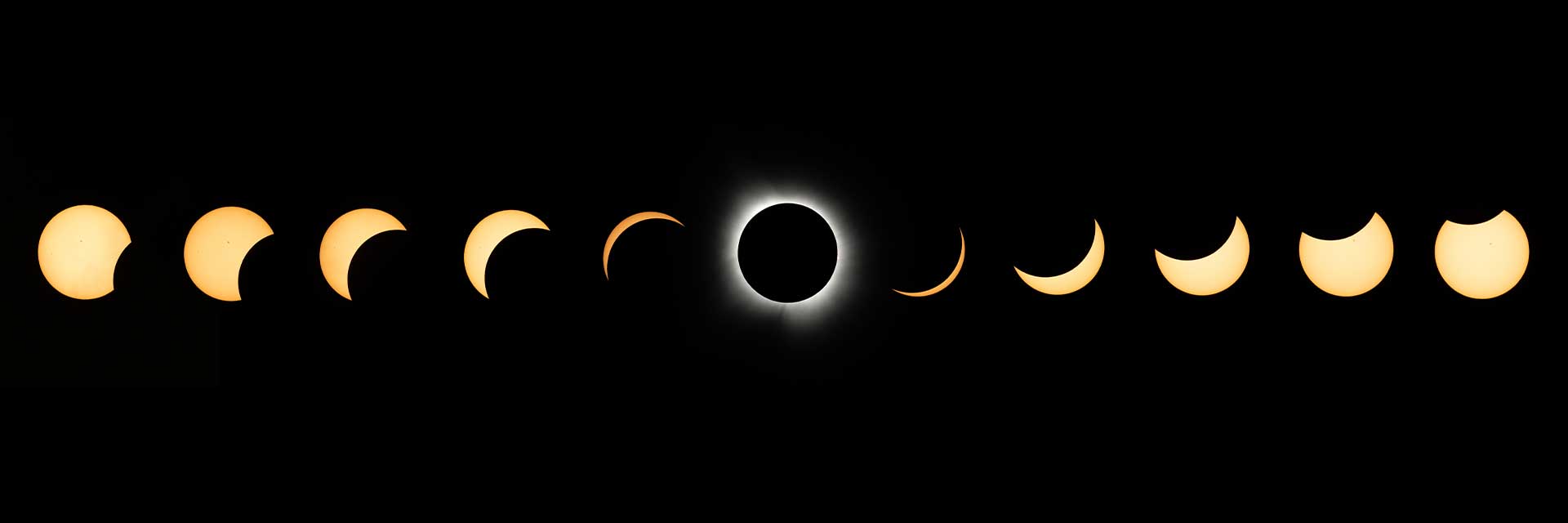
At 40–45% coverage, roughly 40% of the Sun's total light is blocked. Observers using eclipse glasses will see a dramatically crescent-shaped Sun — not the subtle "bite" visible from the East Coast. While there will be no dramatic sky darkening (that requires 90%+), the event is visually significant and a genuine mid-morning spectacle. Coupled with Seattle's remarkable August weather, this is one of the best eclipse-viewing situations of any major American city on August 12.
Through eclipse glasses
A strongly crescent-shaped Sun — roughly 40% of the disk covered, with a dramatic concave shape created by the Moon's limb. Noticeably more impressive than East Coast partial views.
Through solar binoculars
The Moon's crisp geometric edge clearly visible crossing the solar disk. Any sunspot groups present will be visible. The morning timing means the Sun is in the southeast — easy to frame against Puget Sound or the Olympics.
Light change
A subtle change in the quality of morning light is possible at 40%+ coverage — photographers and sensitive observers may notice the sunlight feels slightly "softer." Not dramatic, but more perceptible than East Coast coverage levels.
Seattle Eclipse Times — August 12, 2026 (PDT)
All times are in Pacific Daylight Time (PDT = UTC−7). The eclipse begins as a mid-morning event — ideal timing for Seattle's notoriously cloudy-morning-but-clear-afternoon pattern that defines summer. August, however, reverses this: mornings in August are often clear and calm before any afternoon heat builds.
| Event | Time (PDT) | Sun Altitude | Coverage | Notes |
|---|---|---|---|---|
| First contact (C1) | ~9:22 AM PDT | ~35° | 0% — Moon begins crossing solar disk | Sun in SE sky; put eclipse glasses on now |
| Maximum eclipse | ~10:52 AM PDT | ~47° | ~40–45% — deepest coverage | Crescent Sun clearly visible; best solar binocular moment |
| Last contact (C4) | ~12:30 PM PDT | ~56° | 0% — Moon fully exits solar disk | Eclipse complete; safe to remove glasses |
Times are approximate for central Seattle. Verify exact times for your precise location via NASA's eclipse explorer or TimeandDate.com. Surrounding suburbs vary by less than 2 minutes.
Why Seattle Sees More Than East Coast Cities
The depth of partial eclipse coverage you see from any location depends on your geometric relationship to the path of totality. The August 12, 2026 totality path runs through Iceland, Greenland, and then northern Spain. Seattle's position in the northwest US places it relatively closer to the southern extension of the Moon's penumbral shadow than cities like New York or Boston, which are on the opposite side of North America.
| US City | Coverage at Max | Local Time of Max | Context |
|---|---|---|---|
| Seattle, WA | ~40–45% | ~10:52 AM PDT | Best US West Coast city for this eclipse |
| Anchorage, AK | ~28% | ~8:40 AM AKDT | Higher latitude reduces coverage vs Seattle |
| Portland, OR | ~38% | ~10:50 AM PDT | Very similar to Seattle, slightly less |
| San Francisco, CA | ~25% | ~10:40 AM PDT | Lower coverage as path diverges south |
| Los Angeles, CA | ~15% | ~10:35 AM PDT | Modest partial, further from path |
| New York City, NY | ~20% | ~2:02 PM EDT | East Coast sees less than half of Seattle's coverage |
Coverage values are approximate. Exact percentages vary by source and precise geographic coordinates. Source: NASA eclipse geometry and comparable eclipse calculations.
The bottom line for Seattle
Seattle's 40–45% is the deepest partial of any major US city — more than double the East Coast's coverage — and it arrives on August 12, Seattle's statistically clearest month. This is a combination of geometry and climate that gives Seattle a uniquely good eclipse-viewing opportunity compared to anywhere else in the contiguous United States.
Best Seattle Viewing Locations — August 12, 2026
At eclipse maximum (~10:52 AM PDT), the Sun is in the southeast sky at about 47° altitude. You need a clear view to the southeast — not necessarily a waterfront. Seattle's parks, viewpoints, and elevated neighborhoods all offer this.
Kerry Park (Queen Anne Hill)
Seattle's most iconic viewpoint. The panoramic view of the Space Needle, downtown skyline, and Mount Rainier creates exceptional eclipse photography context. The southeast-facing orientation is ideal for the eclipse direction. Arrive early — this spot fills quickly on clear August mornings.
Best for: photography, panoramic views, urban skyline compositions
Golden Gardens Park (Ballard)
Puget Sound beach access with clear sky views in multiple directions. The Sound provides a wide open southeastern sky without urban obstruction. A natural setting contrasting with the urban Kerry Park experience. Good for families with children who want to spread out.
Best for: families, open sky access, natural beach setting
Gas Works Park (Lake Union)
The hill at Gas Works Park offers a 360° view of Seattle's skyline and Lake Union. The southeast exposure is unobstructed, and the industrial park structure creates dramatic photographic possibilities. Free parking early in the morning.
Best for: skyline context, 360° views, photography
Mount Rainier National Park (Paradise or Sunrise)
For a truly extraordinary eclipse experience, drive 90 minutes south. At Paradise (5,400 ft) or Sunrise (6,400 ft), you may be above the marine layer cloud base if any develops. The eclipsed crescent Sun above a glaciated stratovolcano is an experience unavailable anywhere else in the world on this date.
Best for: alpine experience, high elevation (above potential clouds), extraordinary photography
Discovery Park
Seattle's largest city park, with bluff views over Puget Sound. The lighthouse meadow area provides an open sky with water views to the west and a clear southeast sky for the eclipse direction. Less crowded than Kerry Park.
Best for: spacious viewing with Puget Sound backdrop
Columbia Center Sky View Observatory (downtown)
The highest publicly accessible viewpoint in Seattle, at 73 floors. Completely above street-level obstruction with 360° views. Check opening times — the observatory typically opens at 10 AM, which is just after eclipse first contact. Book tickets in advance if attending.
Best for: sky access above buildings, 360° panorama, premium experience
August Weather in Seattle — The City's Secret Advantage
Seattle is famous for rain — but that reputation applies almost entirely to October through May. August is Seattle's driest, sunniest month. The Puget Sound region benefits from a Pacific high-pressure system that suppresses maritime clouds throughout July and August, creating conditions that regularly rival Southern California.
August cloud cover
Historical NWS data for Seattle in August shows average cloud cover of only 30–35% — dramatically lower than the 65–75% typical from October through April. August mornings are particularly clear.
Rain probability
August is Seattle's statistically driest month, averaging just 0.6 inches of rain for the entire month. The chance of rain on any given August day is roughly 10–15%, far lower than the 40–60% common in autumn and spring.
Eclipse probability
Estimated 70–75% probability of clear or mostly clear skies during the 9:22 AM–12:30 PM PDT eclipse window. Morning hours in August tend to be clearest before any afternoon sea-breeze-driven clouds develop.
| US Eclipse City | Aug. Clear-Sky Probability | Notes |
|---|---|---|
| Seattle, WA | ~70–75% | August is Seattle's driest month — a complete reversal of its rainy reputation |
| Boston, MA | ~55–60% | Humid coastal climate; afternoon thunderstorm risk |
| New York City, NY | ~50–55% | Heat-driven afternoon convection; highest storm risk |
| Toronto, ON | ~55% | Great Lakes humidity affects cloud development |
Eclipse Photography: Seattle Skyline & Mount Rainier
Seattle offers photographic eclipse opportunities unavailable elsewhere in the US on August 12. Two iconic compositions are possible that no other major American city can replicate:
Crescent Sun + Space Needle (Kerry Park)
From Kerry Park at roughly 10:52 AM, the partially eclipsed Sun (in the southeast) and the Space Needle (to the east/southeast) can be framed in a wide-angle composition. Use a 24–35mm lens, solar filter over the front element, and include both the crescent Sun and the landmark below it. A deeply crescent solar disk at 40–45% coverage creates a far more visually striking image than the subtle "bite" seen from East Coast cities.
Crescent Sun + Mount Rainier (from Sunrise, NPS)
The Sunrise visitor area in Mount Rainier National Park at 6,400 feet elevation places you above potential marine layer while keeping Mount Rainier in frame. A 70–200mm telephoto can frame the crescent Sun above Rainier's summit. This is one of the rarest eclipse photography compositions available from the contiguous US on August 12, 2026.
Solar Viewing Gear for the Seattle Eclipse
Celestron EclipSmart 12×50 Solar Binoculars
At 40–45% coverage, Seattle observers will see a properly crescent-shaped Sun — and solar binoculars reveal the lunar limb in crisp detail as it crosses the solar disk. The built-in ISO-certified solar filters mean you simply pick them up and look — no separate glasses required. The 12× magnification and 50mm aperture deliver a bright, detailed view ideal for Seattle's deeper coverage. Sunspot groups visible across the solar surface add significant interest.
Helioclipse Eclipse Glasses — 12 Pack — Essential minimum
ISO 12312-2 certified black polymer filter glasses — the essential minimum for safe viewing. At 12 pairs per pack, ideal for a family, friend group, or workplace eclipse event. The 12-pack ensures enough glasses for everyone without each person needing their own pair.
Celestron EclipSmart Universal Solar Filter — For telescope owners
Fits most refractors and reflectors up to 150mm aperture. The Baader AstroSolar film inside meets ISO 12312-2 specifications. At 40% coverage, the Moon's crisp limb crossing any visible sunspot groups is a stunning solar telescope view. The adjustable fit works with most telescope tube ends without adhesive.
Seattle Eclipse 2026 — FAQ
What time is the solar eclipse in Seattle on August 12, 2026?
The partial solar eclipse begins in Seattle at approximately 9:22 AM PDT and ends around 12:30 PM PDT. Maximum coverage of approximately 40–45% occurs around 10:52 AM PDT, with the Sun in the southeast sky at roughly 47° altitude. All times are Pacific Daylight Time (UTC−7).
Why does Seattle see more of the eclipse than New York City?
Seattle's 40–45% coverage versus NYC's ~20% comes down to geometry. The path of totality for the August 12 eclipse runs from Iceland/Greenland through northern Spain — Seattle's position in the northwestern US places it closer to the edge of the Moon's penumbral shadow than East Coast cities. The deeper you are into the penumbral shadow, the higher the coverage percentage.
Is August a good month for eclipse weather in Seattle?
Yes — August is Seattle's best month for clear skies. Seattle's rainy reputation applies to October through April. August brings the Pacific High pressure system, suppressing maritime clouds and producing sun-drenched, warm days. Historical NWS data shows only 0.6 inches of rain for the entire month of August. The eclipse probability from Seattle is approximately 70–75% — significantly better than East Coast cities.
Can I see totality from Washington State?
No. The path of totality for the August 12, 2026 eclipse passes through Iceland, Greenland, and northern Spain. No part of Washington State or the continental US is in the totality path. Seattle's 40–45% partial is the deepest partial of any US West Coast city, but there will be no moment of darkness, no totality, and no safe naked-eye viewing without eclipse glasses.
Should I drive to Mount Rainier to see the eclipse?
If you want an exceptional photographic experience and don't mind the 90-minute drive each way, yes — the Sunrise area at 6,400 feet offers a spectacular alpine eclipse backdrop with Mount Rainier in frame. From a pure coverage standpoint, Mount Rainier doesn't offer meaningfully more coverage than Seattle. But the elevation above potential marine layer, the alpine scenery, and the photographic composition opportunities are unique. Sunrise typically opens for the season by early August — check NPS.gov for 2026 opening dates.
What direction should I look in Seattle during the eclipse?
At eclipse first contact (~9:22 AM PDT), the Sun is in the southeast sky at about 35° altitude. At maximum (~10:52 AM PDT), it has risen to about 47° in the south-southeast. By last contact (~12:30 PM PDT), the Sun is approaching the south at about 56°. You need a clear view of the southeast-to-south sky from your viewing location — most Seattle parks and viewpoints provide this.
Are there eclipse events organized in Seattle?
The Pacific Science Center and the University of Washington Astronomy Department frequently organize public eclipse viewing events. The Seattle Astronomical Society (member of the Astronomy League) also hosts public observing events. Check their websites in July 2026 for August 12 programming. Many Seattle-area libraries also provide free eclipse glasses — worth checking your branch's calendar.
Will animals in Seattle behave differently during the eclipse?
Probably not noticeably. Documented animal behavioral changes during solar eclipses typically require 90%+ coverage — the animals respond to the rapid light dimming and temperature drop that only occurs near totality. At 40–45% coverage, the light change is subtle enough that most birds, dogs, and other animals are unlikely to show eclipse-related behavior. Animals at Seattle's Woodland Park Zoo sometimes show mild behavioral changes at higher coverage — worth asking the zoo if they plan any eclipse observations.
Continue Exploring
Keep the session going with the next useful answer
Choose the next page based on whether you need a recommendation, a comparison, or a practical observing plan.
Related Guides
Total Solar Eclipse 2026 — Full Guide
The complete eclipse guide covering the totality path through Spain, all European city timings, and gear recommendations.
USA Partial Eclipse — State by State
Coverage percentages for every US state on August 12, 2026. Alaska at 28%, New York at 20%, Seattle at 40–45%.
Best Eclipse Glasses 2026
ISO 12312-2 certified options available in the US, including how to spot counterfeits and how to inspect your glasses before use.
Perseid Meteor Shower 2026
The Perseids peak Aug 11–13 — same nights as the eclipse — under near-perfect dark skies. Seattle's open August nights are ideal.
What to See With a Telescope in August 2026
August 2026's full sky calendar: eclipse, Perseids, Saturn rising, and the best deep-sky targets for every telescope size.
Watch the Eclipse Without Glasses — Pinhole Methods
Project the Sun safely using a pinhole card, colander, or tree shadows. Great backup if glasses aren't available in time.
Astronomy Events Calendar 2026
Every major sky event of 2026 with dates, times, and observing tips — from conjunctions to meteor showers to the eclipse.
When Is the Next Solar Eclipse Visible from the USA?
After 2024's totality, the next US total solar eclipse isn't until 2044. Here's what to watch in between.
Best Solar Binoculars 2026
Solar-safe binoculars for eclipse viewing — ideal for Seattle's deeper 40% coverage where the crescent Sun becomes strikingly visible.