Best H-Alpha Solar Telescope 2026 — View Prominences & Chromosphere
Telescope Advisor Logo Telescope Advisor
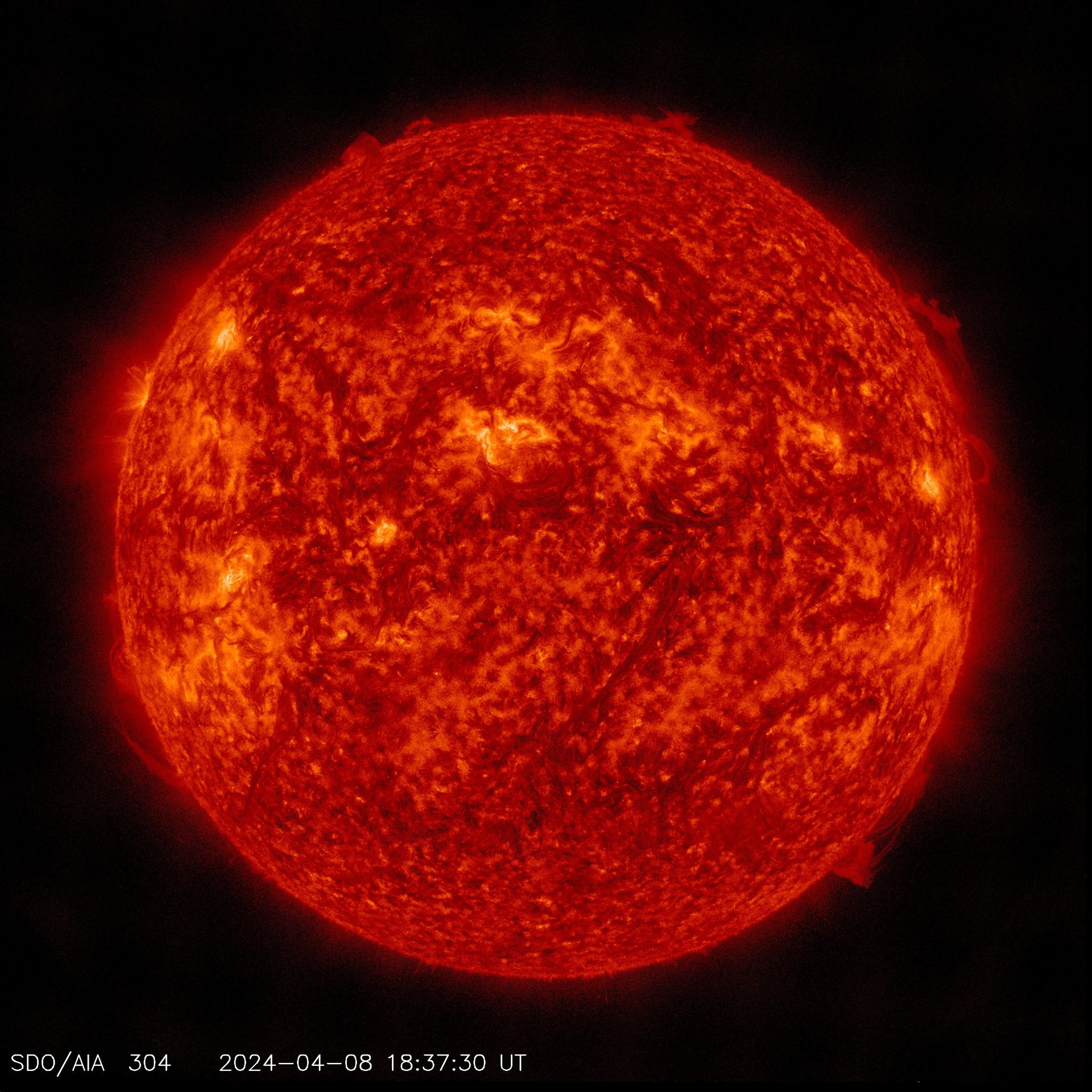
The Sun in extreme ultraviolet captured by NASA's Solar Dynamics Observatory — showing intense solar activity during Solar Cycle 25 maximum

Solar Telescope Guide · Solar Maximum 2026

Best H-Alpha Solar Telescope 2026 — See Solar Prominences and the Chromosphere

White-light solar filters show you sunspots — dark regions of intense magnetic activity on the Sun's visible surface. But there is an entirely different world hidden just above the photosphere: the chromosphere, a thin layer of the solar atmosphere where prominences arc higher than Earth, filaments stretch across hundreds of thousands of kilometres, and the subtle granulation of the solar surface gives way to a dynamic, ever-changing landscape of magnetic fields. To see this world, you need an H-alpha (hydrogen-alpha) telescope — a dedicated instrument that isolates a specific wavelength of light emitted by excited hydrogen atoms at 656.28 nanometres. This guide covers everything you need to choose the right H-alpha scope for Solar Cycle 25's peak.

H-alpha

656.28 nm wavelength

Solar Max

Peak activity 2026

Prominences

Visible in H-alpha only

Aug 12

Total solar eclipse

By Telescope Advisor Editorial TeamPublished: Updated: Reviewed & approved by Juhi Sahni, Senior Editor Editorial Standards

What Is H-Alpha and Why Does It Matter?

Hydrogen-alpha (H-alpha) is a specific deep-red spectral line produced when an electron in a hydrogen atom drops from its third to second energy level, emitting a photon at 656.28 nanometres. In the context of solar observing, H-alpha filters isolate this wavelength to reveal the Sun's chromosphere — the thin layer of the solar atmosphere sandwiched between the visible surface (photosphere) and the outer corona. Because the chromosphere is where the Sun's magnetic field becomes visible through glowing hydrogen gas, H-alpha observations reveal solar features that are completely invisible in white light.

The most spectacular H-alpha features are solar prominences — enormous loops of plasma that follow magnetic field lines, often extending tens of thousands of kilometres above the solar limb. During Solar Cycle 25's peak in 2026, prominences are a near-daily occurrence, with the largest eruptions spanning distances greater than Earth's diameter. Filaments are prominences seen against the solar disk — dark, snaking lines where cooler gas is suspended above the brighter chromosphere. Active regions appear as bright patches around sunspot groups, marking areas of intense magnetic activity. Plage (from the French word for "beach") are bright regions of enhanced chromospheric emission that trace magnetic field concentrations before sunspots form.

For amateur astronomers, the transition from white-light to H-alpha observing is transformative. Where white-light shows you the Sun's "surface" — sunspots, faculae, and granulation — H-alpha reveals the Sun's dynamic atmosphere, changing visibly on timescales of minutes to hours. A prominence that looks small at the start of an observing session can erupt into a massive coronal mass ejection by the end. This real-time display of solar activity makes H-alpha observing one of the most engaging forms of daytime astronomy — and with Solar Cycle 25 at its peak, there has never been a better time to invest in an H-alpha setup.

H-Alpha vs White-Light: What Each Reveals

FeatureWhite-LightH-Alpha
Sunspots (umbra/penumbra)ClearVisible but different contrast
Solar prominencesInvisibleSpectacular — the main attraction
Filaments on diskInvisibleDark snaking features
Plage (bright regions)InvisibleBright patches near active regions
Solar flaresRarely visibleBright flashes in active regions
Surface granulationVisible at 100x+Different texture — spicules visible
Equipment cost$40–$150 (filter only)$500–$6,000+ (dedicated scope)

Types of H-Alpha Solar Telescopes

H-alpha solar telescopes fall into three main categories, each with different price points, capabilities, and target audiences. Understanding the differences is essential before making a purchase.

1

Dedicated H-Alpha Telescopes (Entry-Level: $500–$1,000)

These are complete ready-to-use telescopes with a built-in H-alpha etalon filter. The most popular entry-level options include the Coronado Personal Solar Telescope (PST) and the Lunt Solar Systems LS50THa. Both come with a dedicated H-alpha filter, a blocking filter, and a small refractor optical tube. The PST uses a 40mm aperture and shows prominences and surface detail at 40×. The LS50THa offers a 50mm aperture with a larger 5mm blocking filter for brighter views. Neither requires any additional equipment beyond a sturdy tripod — just unpack, set up in seconds, and start observing the chromosphere.

2

Intermediate H-Alpha Systems ($1,000–$3,000)

The next step up includes scopes like the Coronado SolarMax II 60mm and the Lunt LS60THa. These offer larger apertures (60mm), double-stack options for narrower bandwidth (which reveals finer detail), and better blocking filters. The 60mm aperture gathers significantly more light than entry-level models, allowing higher magnification (up to 100× on steady days) and revealing finer chromospheric detail. Double-stack configurations use two etalons to narrow the passband from 0.7Å to 0.5Å or less, dramatically increasing surface contrast at the cost of some overall brightness.

3

Add-On H-Alpha Filters (for Existing Telescopes: $1,000–$2,500)

If you already own a telescope, an add-on H-alpha filter system like the DayStar Quark can convert it for H-alpha solar observing. The Quark inserts into your telescope's focuser like an eyepiece and contains a temperature-controlled etalon that isolates the H-alpha line. It requires a telescope with a focal ratio of f/10 or slower — or an aperture stop to slow down faster scopes. The advantage: you use your existing optics. The trade-off: setup is more involved, and the view quality depends heavily on your telescope's optical quality.

What to Look for in an H-Alpha Telescope

When comparing H-alpha solar telescopes, three specifications determine what you will see. Bandwidth (measured in Ångströms, typically 0.5–1.0Å) controls how narrow the wavelength passband is — narrower bandwidth reveals finer chromospheric detail but produces a dimmer image. A bandwidth of 0.7Å or less is excellent; 1.0Å is acceptable for entry-level. Aperture determines resolution and maximum useful magnification: 40–50mm shows prominences and basic surface detail, while 60mm+ reveals fine filament structure and plage. Blocking filter size (typically 5–10mm) affects the size of the usable field of view — larger blocking filters are essential for photography but less critical for visual observing. The best H-alpha telescope for most beginners is a dedicated 50mm model with a bandwidth of 0.7Å or narrower — it eliminates the complexity of add-on filter systems and provides immediate, satisfying views of prominences and surface detail.

Getting Started with Solar White-Light Observing

If a dedicated H-alpha telescope exceeds your budget, the most affordable way to start solar observing is with a white-light solar filter on your existing telescope. A quality front-mounted filter like the Celestron EclipSmart Universal Solar Filter or the dedicated 70mm filter for refractors reveals sunspots in crisp detail and costs a fraction of an H-alpha scope. For a complete step-by-step guide to safe white-light sunspot observation, see our dedicated how-to guide. And for eclipse viewing, ISO-certified solar binoculars offer a portable, filter-built-in solution.

Editor's Pick — Best Entry-Level Solar Setup
Celestron AstroMaster 70AZ

Celestron AstroMaster 70AZ + EclipSmart Solar Filter

The most affordable way to start solar observing. The 70mm refractor paired with the Celestron EclipSmart 70mm front-mounted solar filter reveals sunspot detail at 50×. While this white-light setup cannot show prominences (that requires H-alpha), it is the ideal first step into solar observing and costs a fraction of a dedicated H-alpha scope. The same telescope serves as an excellent night-time instrument for lunar, planetary, and bright deep-sky observing.

Solar Cycle 25 — Why Now Is the Time to Invest

Solar Cycle 25 has exceeded all initial predictions. The original NOAA forecast called for a peak sunspot number of approximately 115, but actual activity has regularly exceeded 150 — producing the strongest geomagnetic storm since 2003 (the May 2024 G5 event) and continuing elevated activity through 2025–2026. For H-alpha observers, this means the Sun's chromosphere is alive with activity: large prominences are visible almost daily, complex filament systems stretch across the solar disk, and active regions produce flares that cause sudden brightenings in H-alpha light. The August 12, 2026 total solar eclipse offers a unique opportunity: during totality, the naked-eye corona becomes visible while H-alpha filters reveal prominences erupting from the solar limb in real time. For photographers, the eclipse provides a rare chance to capture both the white-light corona and H-alpha prominences in a single sequence, creating composite images that show the full extent of the Sun's outer atmosphere from the chromosphere to the extended corona.

For those considering an H-alpha telescope purchase, the solar maximum timing presents a unique value proposition. The Sun's peak activity means you will see more prominences, more filaments, and more surface detail in your first observing session than someone buying the same scope during a solar minimum would see in a year. Prominences that arc 50,000 kilometres above the solar limb are routine during solar maximum but rare during minimum. Active regions that spawn complex filament systems appear every few days during peak activity but may be absent for weeks at a time during quiet periods. The current solar cycle is expected to remain elevated through at least 2027, meaning an H-alpha telescope purchased now will deliver several years of spectacular views before activity subsides.


Frequently Asked Questions

What is an H-alpha solar telescope?

An H-alpha solar telescope is a dedicated instrument that isolates the 656.28 nm hydrogen-alpha spectral line, revealing the Sun's chromosphere — including prominences, filaments, plage, and surface detail invisible in white light.

Can I use a regular telescope for H-alpha solar viewing?

Yes, with a DayStar Quark or similar H-alpha filter system that inserts into the focuser. Your telescope needs sufficient focal ratio (f/10 or slower) for best results. Dedicated H-alpha scopes are simpler and more reliable.

What is the difference between H-alpha and white-light solar observing?

White-light reveals the photosphere — sunspots, granulation, and faculae. H-alpha reveals the chromosphere — prominences, filaments, plage, and flare activity. H-alpha shows features invisible in white light but costs significantly more.

What is the best H-alpha telescope for beginners?

The Coronado PST (40mm) or Lunt LS50THa (50mm) are the standard entry points. Both are complete ready-to-use systems. For a lower-cost start, pair a white-light filter with an existing telescope and upgrade to H-alpha later.

How much does an H-alpha solar telescope cost?

Entry-level dedicated H-alpha scopes start around $500–$750. Intermediate models (60mm, double-stack) range from $1,500–$3,000. Add-on filter systems like the DayStar Quark cost $1,000–$2,500.

Is H-alpha solar observing safe?

Yes — H-alpha telescopes have built-in safety filters that block harmful radiation. Never use an H-alpha filter alone without the required blocking filter. Dedicated H-alpha telescopes from reputable manufacturers are fully safe when used as intended.