Telescope Advisor Logo Telescope Advisor
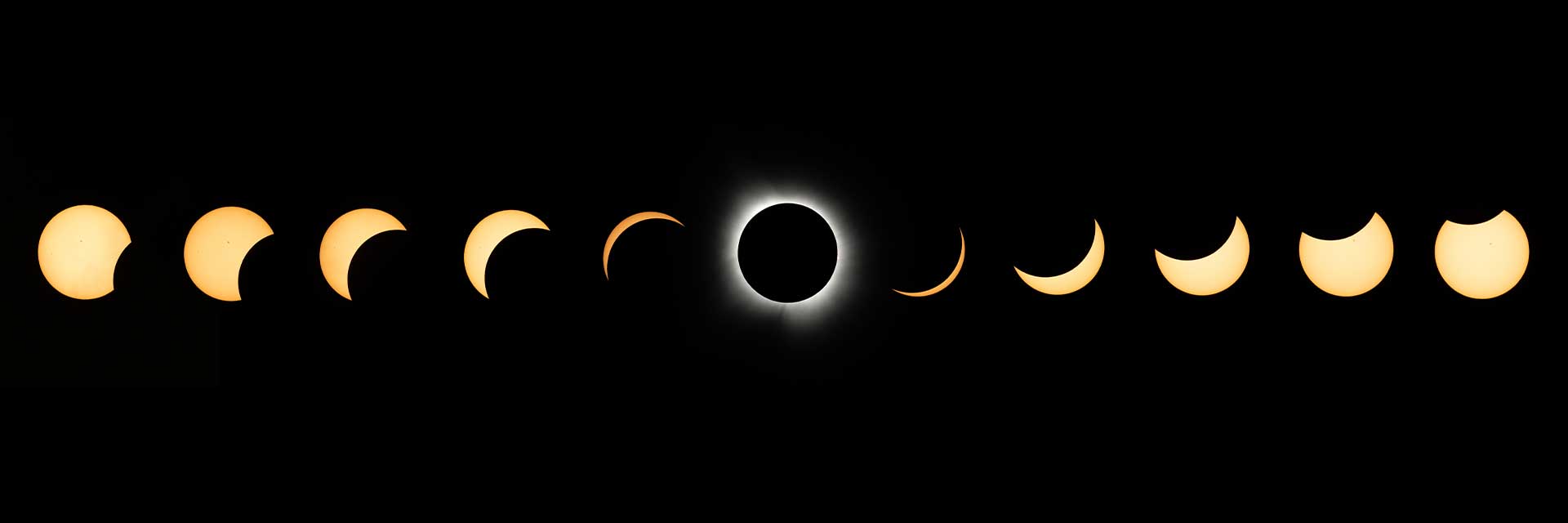
Partial solar eclipse progression composite — Toronto will see a 23-25% partial eclipse at midday on August 12, 2026

City Eclipse Guide · Toronto · August 12, 2026

Toronto Eclipse 2026: Partial Solar Eclipse Times & Viewing Guide

Toronto will see approximately 23–25% of the Sun covered by the Moon during the August 12, 2026 partial solar eclipse. The event peaks in the early afternoon with the Sun high in the sky at 57° altitude — ideal midday viewing conditions with no horizon-blocking challenges. Canada’s largest city is perfectly positioned along Lake Ontario’s waterfront for clear southern-sky views, and the eclipse is the most significant solar event visible from Toronto since the near-total April 8, 2024 eclipse.

Maximum coverage~23–25%
Maximum time (EDT)~1:58 PM EDT
Duration~3 hours 5 minutes
Sun altitude~57° (high & easy to view)
By Telescope Advisor Editorial Team Published: Updated: Editorial Standards

Toronto Eye Safety Warning

Never look directly at the Sun without ISO 12312-2 certified eclipse glasses. This applies throughout the entire eclipse — even at 25% coverage, 75% of the Sun’s surface remains exposed and can cause permanent retinal damage in under a second. Because the Sun is high in the sky at 57° altitude at maximum, there is no atmospheric dimming to reduce the danger. See our best eclipse glasses guide for ISO-certified options available on Amazon Canada.


Quick Answer: Will the Eclipse Be Visible From Toronto?

Yes, Toronto will see a 23–25% partial solar eclipse on the afternoon of August 12, 2026. The Moon will begin crossing the Sun at approximately 12:24 PM EDT, reaching maximum coverage of roughly 23–25% at 1:58 PM EDT before the eclipse ends at approximately 3:29 PM EDT. At maximum, the Sun will be 57 degrees above the southern horizon — nearly overhead, making this one of the easiest North American eclipses to watch from any open outdoor location. Toronto is not in the path of totality, which crosses Spain and Iceland. To experience totality, you would need to travel to Europe. This page covers exactly what Torontonians can expect, where to watch, and how to stay safe.

Why This Eclipse Matters for Toronto

Toronto saw approximately 98% partial coverage during the April 8, 2024 total solar eclipse — so dramatic that temperatures dropped noticeably and streetlights flickered in some neighbourhoods. The August 2026 event at 23–25% is far more modest, but it is the most significant solar eclipse visible from Toronto between 2024 and 2030. The midday timing, high Sun altitude, and accessible waterfront locations make this a rewarding event for families, students, and curious observers who want to experience a solar eclipse without travelling overseas. At 23–25% coverage, a distinct “bite” will be visible on the upper edge of the Sun through properly filtered eclipse glasses — clearly recognizable but subtle compared to 2024.

Toronto Eclipse Times (EDT) — August 12, 2026

All times are in Eastern Daylight Time (EDT = UTC−4), which is the local time in Toronto during August. The eclipse runs entirely during business hours — a lunchtime or early afternoon outing is all that is needed.

Event Time (EDT) Sun Altitude What to Expect
First contact (partial begins)~12:24 PM EDT~52°Put on ISO-certified eclipse glasses. First notch appears on the upper edge of the Sun.
15% coverage~1:15 PM EDT~57°A definite chunk of the Sun is missing. The crescent shape begins to become evident through eclipse glasses.
Maximum eclipse (~24%)~1:58 PM EDT~57°Peak coverage. The Sun appears as a large disk with a clear “bite” taken from its upper-right edge.
Coverage declining~2:45 PM EDT~52°The Moon is retreating. The notch on the Sun is visibly smaller than at maximum.
Fourth contact (eclipse ends)~3:29 PM EDT~45°The Moon fully clears the Sun’s disk. The eclipse is over — the Sun returns to its normal appearance.

The Midday Advantage

Unlike the London eclipse, which occurs at sunset at just 2° altitude, Toronto’s eclipse happens with the Sun at 57° — nearly overhead. This means virtually any outdoor location in Toronto will work: no need to hunt for an unobstructed western horizon. Simply step outside, put on your eclipse glasses, and look roughly southward. A park bench, a school playground, a rooftop patio, or a waterfront deck all provide equally good viewing. The high Sun altitude also means the eclipse is fully visible to observers across all of southern Ontario.

Eclipse Times in Other Ontario Cities

Ottawa will see similar coverage (~24%) at nearly identical times. Hamilton (west of Toronto) will see ~23% coverage. Kingston will see ~25% coverage. All of southern Ontario experiences the eclipse at EDT times within a few minutes of Toronto’s values. Northern Ontario cities such as Sudbury will see slightly less coverage (~18%) as they are farther from the eclipse path geometry.

Best Toronto Viewing Locations

Because the Sun is high in the sky during this eclipse, virtually any open outdoor space in Toronto will work. The following locations are ideal for their open sky, atmosphere, and likelihood of organized community events:

1. Toronto Islands (Centre Island)

The Toronto Islands offer the single best eclipse-viewing experience in the city: open sky in every direction, views of the Lake Ontario horizon, and no urban building canyon effects. Centre Island is a short ferry ride from Jack Layton Ferry Terminal at the foot of Bay Street (ferry runs every 30 minutes in summer). Arrive by noon to secure a good position on the open meadows. The island provides a natural park setting away from the city’s heat island effect, and the southern aspect across the lake provides clean views. Centre Island has been used for public astronomy events in the past and may host an organized eclipse watch in 2026 — check the Toronto Island Ferry schedule and arrive early, as ferries fill up on busy summer days. Ward’s Island and Hanlan’s Point (the western tip) are less crowded alternatives on the island chain.

2. HTO Park West / Harbourfront Centre

HTO Park West, at the foot of Spadina Avenue, is one of Toronto’s premier waterfront spaces and an outstanding eclipse-viewing location. The park features wide open lawn areas directly on the lake shore with an unobstructed southern horizon over Lake Ontario. The adjacent Harbourfront Centre often hosts free outdoor community events and may organize a public eclipse watch. Toronto’s waterfront from HTO Park east to Queens Quay Terminal provides kilometre after kilometre of open lakefront public space — easily accessible by streetcar (510 Spadina, 509 Harbourfront). No ferry required: walk or cycle from downtown.

3. Scarborough Bluffs

The Scarborough Bluffs on Toronto’s eastern lakeshore offer elevated views from up to 90 metres above Lake Ontario. Bluffer’s Park at the base of the bluffs provides direct lakefront access with open southern sky. The elevated bluffs themselves (accessible via Scarborough Bluffs Park) give a wide panoramic view, making this an excellent photography location with the dramatic bluff landform as a foreground element. The Bluffs are accessible by TTC bus (12 Kingston Road) and are less crowded than the downtown waterfront. Arrive by noon to find a spot on the beach or the elevated viewing areas.

4. High Park

High Park in Toronto’s west end is one of the city’s largest green spaces and offers excellent open sky from the central areas of the park. The hilltop near the Colborne Lodge has good southern sky views, and the open fields near the dog off-leash area in the north section provide wide views in multiple directions. High Park is easily accessible by the 506 streetcar (High Park loop) or Bloor-Danforth subway (High Park station). The park’s extensive tree cover means some areas will have obstructed views — head for the open areas on the central ridge or the sports fields in the eastern section. High Park is popular for family outings and is an ideal setting for sharing the eclipse with children.

5. Nathan Phillips Square

For those remaining downtown, Nathan Phillips Square in front of Toronto City Hall provides a large open plaza space with an unobstructed sky overhead. The square is surrounded by buildings but the central area looks straight up at the high midday Sun with minimal obstruction. Queen’s Park and Trinity Bellwoods Park are other central Toronto alternatives with open sky. These locations are ideal for residents who cannot leave the downtown core but want to step outside during a lunch break to observe the eclipse safely.

6. Ontario Science Centre (Don Mills)

The Ontario Science Centre has a history of hosting public astronomy events and is likely to organize a formal eclipse watch in 2026. The centre’s outdoor terrace and surrounding grounds provide open sky, and the Science Centre can supply additional eclipse glasses and information for visitors. Check the Ontario Science Centre website closer to August 12 for event announcements. Similarly, the Royal Ontario Museum (ROM) on Bloor Street West sometimes hosts science communication events around major astronomical events. The University of Toronto’s Department of Astronomy may also organize a public viewing session on campus.

Toronto Weather in August & Eclipse Cloud Cover Odds

Toronto has a humid continental climate. August is a warm, humid month with afternoon thunderstorms more common in July than August. The eclipse falls on August 12 and runs from noon to 3:30 PM EDT — squarely in the peak heat of the day. Historical Environment and Climate Change Canada data for Toronto in mid-August shows approximately 40–45% probability of afternoon cloud cover, with 20–25% probability of thunderstorms.

The good news: the eclipse lasts over three hours. Even if clouds cover the sky for an hour around maximum, there is a significant probability of at least one clear window during the event. Toronto’s proximity to Lake Ontario can create local weather variability — the lake moderates temperature and can sometimes suppress afternoon convective storms that form over the warmer inland areas. The lakefront locations listed above (Toronto Islands, Harbourfront, Scarborough Bluffs) often have slightly better cloud conditions than inland areas on hot summer afternoons.

Use the Environment Canada weather forecast and satellite imagery from weather.gc.ca in the 48 hours before the eclipse to plan your location. If Toronto looks overcast, driving north to the Barrie or Midland area or east to Oshawa/Kingston often provides different cloud conditions. The eclipse will be visible from anywhere within a 200 km radius of Toronto, so flexibility in location dramatically improves your chances of seeing at least some of the event.

Eclipse Weather Strategy for Toronto

Check the Environment Canada forecast from August 10 onward. If the forecast shows morning cloud clearing to afternoon sun, you are in excellent shape. If convective thunderstorm risk is high by afternoon, consider heading to a waterfront location (islands or Harbourfront) where lake breezes often delay storm development until late afternoon. With a three-hour eclipse window starting at 12:24 PM EDT, even a partially cloudy day will likely provide some viewing opportunities.

Toronto Eclipse Context: 2024, 2026 & Beyond

Toronto was uniquely situated during the April 8, 2024 total solar eclipse. The path of totality passed just south of Toronto, clipping northern Lake Ontario. Toronto itself experienced approximately 98% partial coverage — one of the deepest partial eclipses the city has ever seen. The sky dimmed noticeably, temperatures dropped several degrees, and birds fell silent across the city. For many Torontonians, the 2024 eclipse was a transformative experience that sparked lasting interest in astronomy.

The August 12, 2026 eclipse at 23–25% coverage is a more modest event — but it still provides a clear, tangible demonstration of solar eclipse mechanics. At 24% coverage, a distinct crescent shape is visible on the Sun through eclipse glasses. Children who experienced the wonder of the 2024 eclipse will recognize the same geometry playing out at smaller scale. For those who missed 2024, the 2026 eclipse is an excellent introduction to eclipse observation with lower stakes and simpler logistics.

Looking ahead: Toronto will not see another eclipse comparable to 2024 for many decades. The next notable partial eclipse visible from Toronto will be in the early 2030s at modest coverage percentages. The total solar eclipses crossing North America in 2033 and 2044 do not pass through southern Ontario. For Torontonians who want to experience totality, the August 12, 2026 total eclipse in Spain and Iceland is accessible by transatlantic flight — the path of totality crosses coastal Spain, the Balearic Islands, and Reykjavik, Iceland. Many Toronto astronomy enthusiasts are booking eclipse travel specifically to Spain for this event.

For those staying in Toronto, the 2026 eclipse is a community astronomy moment. The Royal Astronomical Society of Canada (RASC) Toronto Centre is Canada’s most active urban astronomy club and is almost certainly planning public eclipse-watching events. Their members operate public telescopes with solar filters at High Park and other Toronto locations. Following RASC Toronto Centre on social media from June 2026 onward will provide event details, safe viewing tips from experienced amateurs, and access to solar telescopes at organized viewing gatherings.

Photographing the Eclipse from Toronto

At 23–25% coverage, the eclipsed Sun will appear as a full disk with a clear bite taken out of the upper-right edge — a crescentic notch rather than a thin crescent. This is photographically distinctive: the Sun is bright and high in the sky, making exposure challenging but the partial phase clearly visible. The following tips apply for Toronto photography conditions on August 12:

Smartphone with eclipse glasses filter: The simplest and most accessible approach. Hold your ISO-certified eclipse glasses in front of your phone’s camera lens and photograph through the filter. The Sun will appear as a bright partial disk. Keep the phone steady — use the volume button for the shutter to avoid camera shake, or use a 2-second delay timer. Shoot in manual or “pro” mode if available, with ISO 100 and fast shutter speed (1/1000–1/2000). Zoom to maximum digital zoom to fill the frame.

DSLR or mirrorless camera: Use a full-aperture solar filter (Baader Astrosolar film or a commercially made solar filter) sized to your lens diameter. For the Toronto Islands background, a 200mm or 300mm telephoto will capture the Sun at a reasonable size with the CN Tower or downtown skyline as a tiny silhouette on the horizon. A tripod is essential for any telephoto work. Shoot at ISO 100, f/8, 1/1000 second as a starting exposure through a solar filter and bracket.

Solar binoculars for observation: If you own solar binoculars with built-in front filters, the 57° Sun altitude at maximum is comfortable for extended viewing — no craning or awkward low-angle viewing required. Simply hold the binoculars as you would for any sky observation. The Celestron EclipSmart solar binoculars are purpose-designed for exactly this type of safe solar viewing.

Eclipse Glasses & Safety Gear for Toronto

ISO 12312-2 certified eclipse glasses are absolutely required throughout the entire Toronto eclipse. Never look at the partial eclipse without certified glasses — even at 25% coverage, 75% of the Sun is fully exposed. Here are the best options available on Amazon:

Best Eclipse Glasses for Toronto Families
Helioclipse ISO 12312-2 eclipse glasses 12-pack

Helioclipse Solar Eclipse Glasses (12-Pack)

ISO 12312-2 & CE certified 12 pairs per pack Phone filter included

The Helioclipse 12-pack is perfect for Toronto families heading to the islands or Harbourfront. Each pair meets ISO 12312-2 and CE certification standards. The included phone filter lets you safely photograph the partially eclipsed Sun through your smartphone camera without damaging the sensor or your eyes. Order well in advance — eclipse glasses tend to sell out in the weeks before major eclipse events.

Check Price on Amazon

Affiliate link.

Lunt Solar Systems eclipse glasses 5-pack

Lunt Solar Eclipse Glasses (5-Pack)

Lunt Solar Systems is a specialist solar optics brand. Their 5-pack eclipse glasses are ISO 12312-2 and CE certified, with a wide frame that fits comfortably over prescription eyewear — a practical consideration for the many observers who need glasses. Ideal for small groups heading to Harbourfront or High Park together.

Check Price on Amazon

Affiliate link.

Celestron EclipSmart 10x25 solar binoculars

Celestron EclipSmart 10×25 Solar Binoculars

Built-in front solar filters make these binoculars ready to use right out of the box for safe solar viewing. At 10× magnification, the partially eclipsed Sun fills the eyepiece with a clear and detailed view of the crescent phase. The compact 25mm aperture keeps weight and price low. No need for separate eclipse glasses when using these. Excellent for the Toronto Islands trip where packing light is a priority.

Check Price on Amazon

Affiliate link.

Celestron EclipSmart 12x50 solar binoculars

Celestron EclipSmart 12×50 Solar Binoculars

The larger 50mm aperture of these EclipSmart binoculars gathers significantly more light than the 25mm model, delivering a brighter, more detailed view of the solar disk. At 12× magnification with built-in solar filters, the crescent notch at maximum eclipse will be unmistakably clear. Recommended for observers who want the best visual experience of the eclipse without a telescope. A tripod adapter is a worthwhile addition for steadier high-magnification views.

Check Price on Amazon

Affiliate link.

Celestron EclipSmart Universal Solar Filter

If you own a telescope and want to observe the partial eclipse through it, the Celestron EclipSmart Universal Solar Filter fits a range of telescope apertures. The filter mounts over the front of the telescope tube to block 99.999% of sunlight before it enters the optics — the only safe way to observe the Sun through a telescope. Through a filtered telescope at 50× or higher, the crescent Sun is a stunning sight, with sunspot detail visible on the exposed solar disk.

Check Price on Amazon

Affiliate link.


🔭

Not sure which telescope actually fits your goals?

Answer 5 quick questions about your budget, observing targets, and experience level — our Telescope Finder Tool recommends a specific model in under 2 minutes.

Find My Telescope →

FAQ — Toronto Eclipse 2026

What percentage of the Sun will be covered during the Toronto eclipse on August 12, 2026?

Toronto will see approximately 23–25% of the Sun covered at maximum eclipse. This means roughly three-quarters of the Sun remains fully exposed. A distinct notch or “bite” will be visible on the Sun’s upper-right edge through certified eclipse glasses. This is significantly less dramatic than the April 8, 2024 eclipse (98% coverage), but still clearly visible with the naked eye through ISO-certified eclipse glasses.

What time does the eclipse start and end in Toronto on August 12, 2026?

The eclipse begins (first contact) at approximately 12:24 PM EDT, reaches maximum coverage (~24%) at approximately 1:58 PM EDT, and ends (fourth contact) at approximately 3:29 PM EDT. Total duration is about 3 hours 5 minutes. All times are Eastern Daylight Time (EDT = UTC−4), which is Toronto’s local time in August.

Is Toronto in the path of totality for the August 2026 eclipse?

No. The path of totality for the August 12, 2026 eclipse crosses Spain, the Balearic Islands, Sardinia, and Iceland. Toronto is thousands of kilometres away from the totality zone and will only experience a partial solar eclipse at 23–25% coverage. To experience totality, Toronto-area residents would need to travel to Europe — particularly coastal Spain or Reykjavik, Iceland.

Can I watch the Toronto eclipse from the Toronto Islands?

Yes — the Toronto Islands are one of the best eclipse-viewing locations in the city. Centre Island, Ward’s Island, and Hanlan’s Point all offer open sky with views of the lake and the Toronto skyline as a backdrop. Take the ferry from Jack Layton Ferry Terminal at the foot of Bay Street. Arrive well before noon to secure a good spot and to allow for ferry wait times, which can be long on busy summer days.

Do I need eclipse glasses to watch the Toronto partial eclipse?

Yes, absolutely. ISO 12312-2 certified eclipse glasses are required throughout the entire event from first contact to fourth contact. The Sun is never fully blocked during a partial eclipse — at 24% coverage, 76% of the solar surface is still exposed and emitting full-intensity ultraviolet and infrared radiation. Looking at the Sun without certified protection for even a second can cause permanent retinal damage. Regular sunglasses, tinted windows, CDs, and unfiltered binoculars are not safe substitutes.

How does the August 2026 Toronto eclipse compare to the April 2024 eclipse?

The April 8, 2024 eclipse was far more dramatic for Toronto: approximately 98% of the Sun was covered, the sky dimmed noticeably, temperatures dropped, and birds fell silent. It was the deepest partial eclipse visible from Toronto in decades. The August 2026 eclipse at 23–25% is considerably more modest — the sky will not darken appreciably, and the effect on wildlife will be minimal. However, the crescent notch is clearly visible through eclipse glasses, making it a genuinely interesting observation for those who want to see and understand eclipse mechanics at smaller scale.

Will the Royal Astronomical Society of Canada host eclipse events in Toronto?

The RASC Toronto Centre is Canada’s largest and most active urban astronomy club and has organized public solar observing events in the past. It is very likely they will host an organized eclipse watch at High Park or another central Toronto location on August 12, 2026. Check the RASC Toronto Centre website (toronto.rasc.ca) from June 2026 onward for event details. RASC events typically feature solar-filtered telescopes operated by experienced amateurs, which provide a much better view than eclipse glasses alone.

What is the weather typically like in Toronto during mid-August?

Mid-August in Toronto is warm and humid, with average daytime highs of 27–30°C. Afternoon thunderstorms are possible but less frequent than in July. Cloud cover probability during afternoon hours is approximately 40–45%. The eclipse lasts over three hours, giving multiple windows for viewing even on a partially cloudy day. The lakefront locations often have better afternoon sky conditions than inland areas due to lake breeze effects.

Can I see the eclipse from Hamilton, Mississauga, or Oakville?

Yes. The partial eclipse is visible from anywhere in southern Ontario. Hamilton, Mississauga, Oakville, Burlington, Brampton, Markham, and all Greater Toronto Area communities will see essentially the same eclipse as Toronto: approximately 22–25% coverage at nearly identical times. The coverage increases very slightly as you move slightly north or east toward Kingston, though the difference is less than 2 percentage points across the GTA. All of southern Ontario requires ISO-certified eclipse glasses for safe viewing.

Can children watch the Toronto eclipse safely?

Yes, with proper supervision and certified eclipse glasses. Children must wear ISO 12312-2 certified eclipse glasses whenever looking at the partially eclipsed Sun. Adult supervision is essential to ensure glasses remain on at all times during viewing. Eclipse glasses should fit securely over a child’s face; if adult glasses are too large, use a glasses-within-glasses approach (child holds the eclipse glasses against their regular glasses). School groups and families attending organized RASC or Ontario Science Centre events will receive guided instruction on safe viewing practices.