What Can You See With a $200 Telescope? Real Views by Target (2026 Guide)
Telescope Advisor Logo Telescope Advisor
Planets as seen through a telescope — what you can expect with a $200 budget

Learning Center · Expectation Guide 2026

What Can You See With a $200 Telescope?

The $200 price range is the most common entry point for new telescope buyers — and for good reason. At this budget, you get a genuine astronomical instrument that shows real detail on the Moon, planets, and brightest deep-sky objects. This guide covers exactly what each target looks like through a typical $200 telescope, so you know what to expect on your first night out.

Moon

Spectacular Detail

Saturn

Rings Visible

Jupiter

Bands + Moons

Nebulae

Brightest Only

By Telescope Advisor Editorial Team Published: Updated: Editorial Standards

Quick Answer: What Does a $200 Telescope Show?

A $200 telescope shows the Moon in spectacular detail — craters, mountains, and the terminator in sharp focus. Saturn's rings are clearly visible as a separate structure from the planet. Jupiter shows its two main equatorial cloud bands and four Galilean moons. The Orion Nebula appears as a bright fuzzy patch below the Belt. What you will not see at this price: spiral arms in galaxies, color in nebulae, or fine planetary detail like Saturn's Cassini Division. The typical $200 telescope uses a 70mm to 80mm aperture, which is ideal for lunar and planetary observing but reaches its limit on faint deep-sky objects.


🔭

Not sure which telescope actually fits your goals?

Answer 5 quick questions about your budget, observing targets, and experience level — our Telescope Finder Tool recommends a specific model in under 2 minutes.

Find My Telescope →

The Moon — Your Best First Target

The Moon is the single best target for any telescope at any price — and a $200 telescope shows it brilliantly. Through a 70mm refractor at 70×, the Moon fills the eyepiece with sharp, high-contrast detail. The terminator (the line between day and night) is where the action is: craters cast long shadows that reveal their depth, mountain ranges catch the early sunlight, and the smooth maria contrast with the rugged highlands.

What you will see: Hundreds of named craters — Tycho, Copernicus, Kepler, Plato — each with distinct features. The Apennine mountain range. The straight Wall (Rupes Recta). The three large craters Ptolemaeus, Alphonsus, and Arzachel in a row. At 100×, smaller craters down to 5–10 km become visible. The Moon at first quarter is particularly rewarding because the terminator shows maximum shadow detail.

Best eyepiece: Use the 10mm eyepiece that comes with most $200 telescopes (or buy a 9mm or 6mm for higher power). A neutral density Moon filter reduces glare during the full Moon and reveals more subtle contrast features.

Saturn — The Ringed Planet

Saturn through a $200 telescope is a genuine "wow" moment for any first-time observer. Even at 70×, the rings are clearly separated from the planet — a tiny but unmistakable shape that photographs cannot prepare you for. At 100×, the rings become more defined, and Titan (Saturn's largest moon) is visible as a bright dot near the planet.

What you will see: Saturn appears as a small cream-colored disk about 15–20 arcseconds across — about the size of a peppercorn at arm's length. The rings extend about 40 arcseconds from end to end. You will not see the Cassini Division (the gap between the A and B rings) with a typical $200 telescope; that requires larger aperture and steadier skies.

Best time to observe: Saturn is best when at opposition (closest to Earth), which in 2026 occurs in October. During opposition, Saturn appears brightest and largest, and it is visible all night. For help finding Saturn, see our Saturn observing guide.

Jupiter — King of the Planets

Jupiter is the most dynamic target through a $200 telescope. At 70×, you see the planet as a small but distinct disk with two darker equatorial bands straddling the equator. The four Galilean moons — Io, Europa, Ganymede, and Callisto — are visible as a changing line of bright dots that shift position from night to night, providing endless interest.

What you will see: The two main equatorial belts (north and south equatorial belts) are the most prominent features. On good nights with steady atmosphere, you may glimpse a third band (the north temperate belt). The Great Red Spot is sometimes visible as a pale oval in the south equatorial belt when it faces Earth. The moons appear as distinct star-like points — you can watch them change positions over a few hours.

Magnification tip: Use the eyepiece that gives 100–120× on Jupiter. A 2× Barlow lens with your 10mm eyepiece is ideal. Jupiter rotates in about 10 hours, so features move noticeably across the disk within a 30-minute observing session. Our Jupiter observing guide has detailed tips.

Orion Nebula (M42) — The Bright Nebula

The Orion Nebula is the brightest deep-sky object and the one non-planetary target that genuinely impresses through a $200 telescope. Under dark skies (Bortle 5 or better), M42 appears as a distinct glowing patch below the three stars of Orion's Belt. Through a 70mm telescope at 40×, it shows a brighter central region (the core) surrounded by a fainter, irregular halo.

What you will see: The nebula looks like a gray-white glow — do not expect color at this aperture. The shape is irregular, like a butterfly or a bird in flight. The core is noticeably brighter than the edges. With careful observation, you may glimpse one or two of the Trapezium stars (the young stars illuminating the nebula) as tiny pinpricks of light embedded in the glow.

What you will NOT see: The wings of the nebula, the Fish Mouth dark lane, or more than 1–2 Trapezium stars. These require 130mm+ aperture. But the fact that you can see a stellar nursery 1,344 light-years away with a $200 telescope is genuinely remarkable. For a full guide, see our Orion constellation guide.

Other Targets Worth Trying With a $200 Telescope

Target What You'll See Best Season
Pleiades (M45)Bright blue cluster of 20+ stars in a compact group. Spectacular in binoculars or low-power eyepiece.Oct–Mar
Andromeda Galaxy (M31)Faint elongated patch. Brighter core visible. No detail. Best under dark skies.Aug–Nov
Hercules Cluster (M13)Faint fuzzy ball. No star resolution. Looks like a circular glow at 70×.Apr–Aug
Double Cluster (NGC 869/884)Two side-by-side star clusters. Beautiful in low power. Dozens of stars visible.Oct–Feb
Albireo (Beta Cygni)Stunning gold-and-blue double star. One of the most beautiful sights in any telescope.Jun–Oct
Venus (crescent phase)Crescent shape clearly visible at 70×. The phase changes noticeably week to week.Evening/morning sky
Mars (opposition)Small orange disk. Polar cap glimpsed on good nights. Surface detail requires larger aperture.Every 26 months

For a complete list of accessible targets, see our easy telescope targets guide.

What You Won't See — And Why That's OK

Honest expectations prevent disappointment. Here is what a $200 telescope cannot do, and why that does not diminish the experience:

  • No spiral arms in galaxies. The Andromeda Galaxy looks like a faint oval glow, not the detailed spiral shown in photos. This requires 8-inch+ aperture under dark skies.
  • No color in nebulae. The Orion Nebula appears gray-white, not pink and purple. Color requires large aperture and long-exposure photography.
  • No Cassini Division in Saturn's rings. The rings appear solid. The gap between them needs 6-inch+ aperture and stable air.
  • No surface detail on Mars. Mars appears as a small orange disk. Canals and polar detail are beyond 70mm aperture.
  • No resolution of globular clusters. M13 looks like a fuzzy ball, not a resolved sphere of thousands of stars.
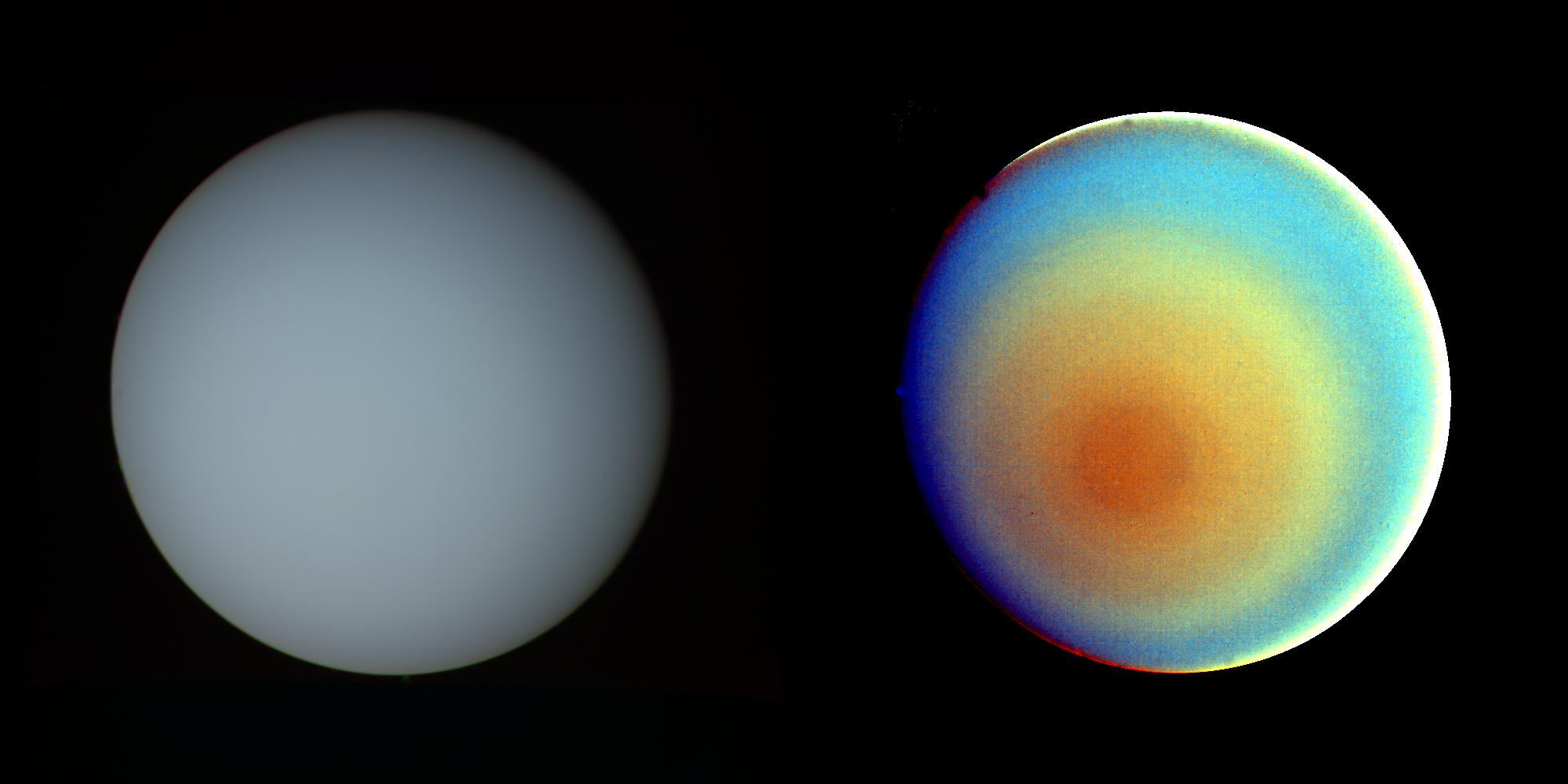
  • No Uranus or Neptune detail. Uranus is a tiny blue-green dot; Neptune is an even tinier blue dot. Their moons are invisible.

Here is what you WILL see: Saturn's rings — a sight that has converted countless people into lifelong astronomers. Jupiter's four moons changing positions night after night. The Moon in such detail that you can spend a lifetime studying it. The Orion Nebula — the most photographed deep-sky object in the sky. Double stars in stunning colors. The Pleiades, the Beehive Cluster, and dozens of other open clusters. That is a rich, rewarding journey — and it all starts with a $200 telescope.

FAQ: $200 Telescope Views

Will I see Saturn's rings with a $200 telescope?

Yes — Saturn's rings are clearly visible with any $200 telescope. At 70×, the rings appear as a distinct structure on either side of the planet, unmistakably different from a round star. You will not see the Cassini Division, but the rings themselves are one of the most exciting first-time sights in astronomy.

Can I see the Andromeda Galaxy with a $200 telescope?

Yes, but it will not look like the photos. The Andromeda Galaxy appears as a faint, elongated oval glow — brighter in the center and fading toward the edges. You need dark skies (Bortle 4 or better) and a low-power eyepiece. It is satisfying as a detection but shows no spiral structure or dust lanes.

Can I see color in the Orion Nebula?

No — through a $200 telescope, the Orion Nebula appears gray-white. The pink and purple colors seen in photographs require long-exposure imaging or very large aperture. The visual reward of M42 at this aperture is its shape and brightness, not its color.

What is the best first target for a $200 telescope?

The Moon. It is bright, easy to find, and reveals spectacular detail. Point your telescope at the terminator (the line between light and dark) at any magnification, and you will see craters, mountains, and valleys in sharp relief. The Moon never disappoints.

Can I take photos with a $200 telescope?

Yes — the Moon and bright planets are excellent targets for smartphone photography using a smartphone adapter (see our smartphone adapter guide). The Moon is bright enough that any phone camera can capture recognizable images through a 70mm telescope. Deep-sky photography is not practical at this price point.


Related Guides