
Best Stargazing Laser Pointers 2026: Green, Red & Astronomy Lasers
Telescope Advisor Logo Telescope Advisor
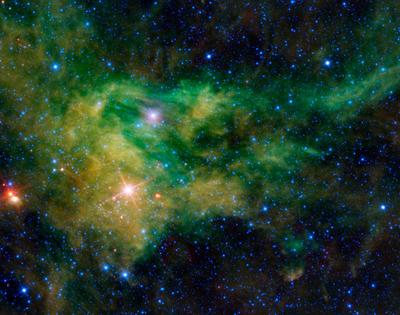
A green laser beam pointing into a star-filled night sky

Buying Guide · Laser Pointers 2026

Best Stargazing Laser Pointers 2026: Point at the Stars

A green laser pointer is the fastest way to show someone exactly where a star or constellation is. One sweep of the beam across the sky and the pattern clicks into place. Here is how to choose the right astronomy laser — power, colour, safety, and our top picks.

Best Colour

Green

Most visible to eye

Power Range

5mW-200mW

Legal varies by country

Beam Distance

Up to 10,000ft

Visible beam at night

Price Range

$15-$80

Good quality

By Elena Reyes Published: Updated: Editorial Standards
Elena Reyes — Senior Science Editor

Elena Reyes

Senior Science Editor

Covers NASA missions, space science discoveries, and astronomical events for Telescope Advisor. Translates complex astrophysical research into practical insights for backyard observers. Based in the San Francisco Bay Area.

Content reviewed by our editorial team. Research and drafting assisted by AI to ensure unbiased, data-driven analysis. Learn more about our editorial process.


🔭

Not sure which telescope actually fits your goals?

Answer 5 quick questions about your budget, observing targets, and experience level — our Telescope Finder Tool recommends a specific model in under 2 minutes.

Find My Telescope →

Quick Answer

The JANHER green laser pointer is the best overall choice for stargazing — bright 532nm green beam, visible for miles on clear nights, and affordable. For outreach and group star-hopping, a 50-100mW green laser provides the brightest visible beam. For casual use, a standard 5mW green laser (legal in most countries) is sufficient for pointing out constellations and bright stars. Red lasers are less visible but safer around airports and aircraft.

Green vs Red Lasers for Astronomy

Green lasers (532nm wavelength) are the standard for astronomy. The human eye is roughly 4x more sensitive to green light than red, so a green laser appears significantly brighter than a red laser of the same power. Under dark skies, a 5mW green laser produces a visible beam that appears to extend into space — you can literally point at stars and trace constellations.

Red lasers (650nm) are less visible to the eye but have one major advantage: they are less likely to be mistaken for aircraft lighting and are legal in more jurisdictions. Red lasers are also cheaper and more efficient. However, for stargazing purposes, the beam is barely visible at night — you see the dot on surfaces but not the beam in the sky. This makes red lasers less useful for pointing at stars in group settings.

FactorGreen (532nm)Red (650nm)
Beam VisibilityExcellent — visible beam in skyPoor — only dot visible
Eye SensitivityHigh (683 lm/W)Low (150 lm/W)
Typical Power5-100mW5-200mW
Battery LifeShorter (frequency-doubled)Longer (direct diode)
Best ForStar-hopping, outreach, groupsPointer use, sensitive areas


Editor's Pick: Best Laser Pointer for Stargazing

Best Overall Astronomy Laser Pointer
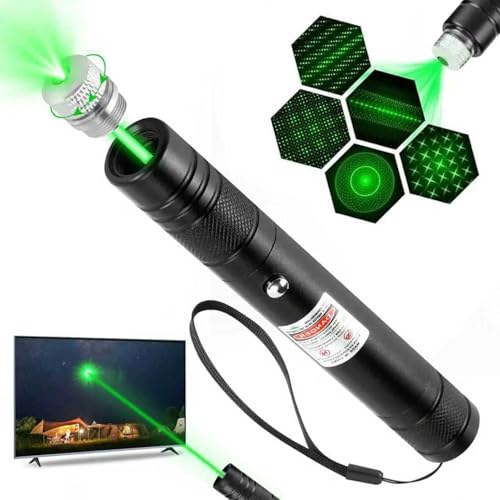
JANHER green laser pointer for astronomy

JANHER Green Laser Pointer

532nm GreenRechargeableClass 3

The JANHER green laser pointer delivers a bright, steady 532nm green beam that is clearly visible under dark skies. The beam traces constellations perfectly for group star-hopping sessions. The rechargeable battery lasts through multiple observing sessions on a single charge. The build is solid aluminium with a textured grip. It includes a safety cap and wrist strap.

For astronomy outreach and personal star-hopping, this laser provides the ideal combination of brightness, build quality, and affordability. The beam is visible for pointing out stars and constellations to groups of up to 20 people. Just remember to use it responsibly — check for aircraft before powering on.


How to Use a Laser for Star-Hopping

Using a green laser for star-hopping is simple: sweep the beam across the sky to trace constellation patterns, point at specific stars, and guide others to faint objects. Here are the best techniques.

Tracing Constellations

Instead of saying "look two fist-widths left of that bright star," you simply point the laser at the star and trace the constellation shape. The beam appears to extend into space, visibly connecting the stars. This is especially effective for showing beginners how to identify constellations — they see the pattern traced in real time.

Pointing at Faint Objects

For deep-sky objects like the Andromeda Galaxy or Orion Nebula, use the laser to trace a path from a bright star. For example: "Start at the belt of Orion, then follow the line of stars down and left to the Orion Nebula" — tracing each step with the laser beam. This technique works well for groups at star parties and outreach events.

Conserving Battery

Lasers draw significant power. A 50mW green laser running continuously will drain its battery in 2-3 hours. Use brief, targeted sweeps instead of leaving the beam on. For long observing sessions, carry a spare battery or power bank with a USB rechargeable laser. Switch off between pointing sessions.


Laser Safety Rules

Never aim at aircraft

Aiming a laser at an aircraft is dangerous and illegal. Pilots can be temporarily blinded. Penalties include fines up to $250,000 and prison time in the US and similar penalties worldwide.

Never point at people or animals

Even low-power lasers can cause temporary or permanent eye damage if aimed directly at eyes. Treat any laser as a potential eye hazard.

Keep below 45 degrees near airports

In areas with air traffic, keep the laser beam below 45 degrees elevation. Check for aircraft before each use. Most astronomy laser incidents happen when users forget to scan the sky first.

Store safely

Remove batteries when not in use. Store in a locked case away from children. A laser left on in a bag can drain its battery or accidentally activate and cause damage.


Frequently Asked Questions

What colour laser is best for astronomy?

Green (532nm) is best. The human eye is most sensitive to green light, so a green laser appears 4x brighter than a red laser of the same power. Green lasers produce a visible beam in the sky; red lasers only show a dot on surfaces.

Are green laser pointers safe for stargazing?

Yes, when used responsibly. Keep the beam away from aircraft, people, and animals. A 5mW green laser is considered safe for general use. Higher-power lasers require more caution and may be restricted in some jurisdictions.

What mW laser do I need for astronomy?

5-50mW is the ideal range for astronomy. A 5mW green laser is visible as a beam under dark skies. A 50mW laser produces a dramatically brighter beam. Above 50mW, the brightness increase is marginal but legal restrictions increase significantly.