
Roman Space Telescope Launch Day: How to Watch Live (Aug. 30, 2026)
Telescope Advisor Logo Telescope Advisor
NASA Nancy Grace Roman Space Telescope mission artwork — cleared to launch Aug. 30, 2026 on a SpaceX Falcon Heavy from Pad 39A

Space Mission Live Guide · Aug. 30, 2026

Roman Space Telescope Launch Day: How to Watch Live

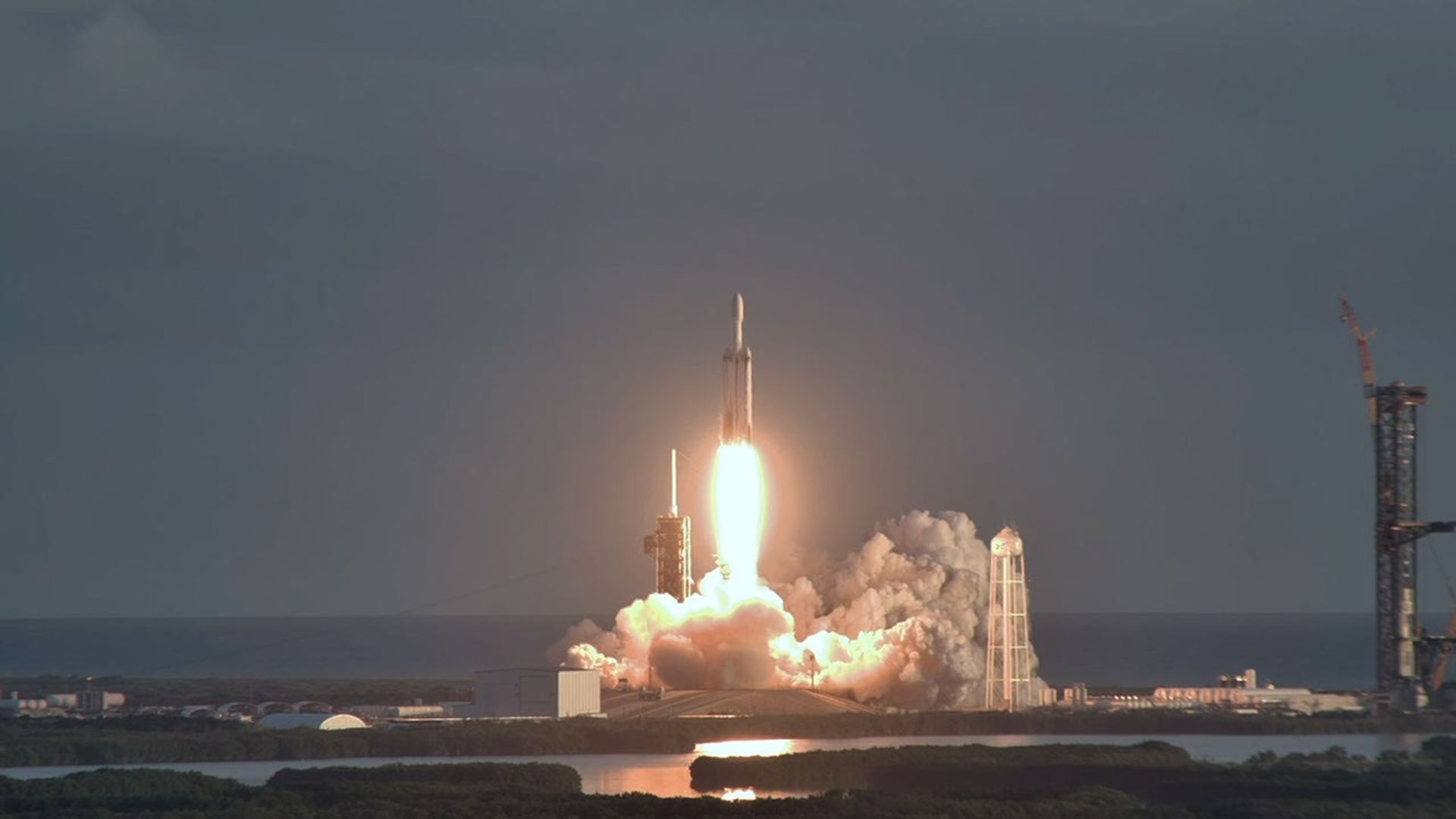
NASA's Nancy Grace Roman Space Telescope is "go" for launch on Aug. 30, 2026. The Falcon Heavy rolled out to Pad 39A on Aug. 29, and mission briefings are set. Here is exactly how to watch the liftoff live and what to follow next.

Launch dateAug. 30, 2026
VehicleSpaceX Falcon Heavy
Launch sitePad 39A, Kennedy Space Center
Status"Go" for launch
By Telescope Advisor Editorial Team Published: Updated: Reviewed & approved by Juhi Sahni, Senior Editor Editorial Standards
Elena Reyes — Senior Science Editor

Elena Reyes

Senior Science Editor

Covers NASA missions, space science discoveries, and astronomical events for Telescope Advisor. Translates complex astrophysical research into practical insights for backyard observers. Based in the San Francisco Bay Area.

Content reviewed by our editorial team. Research and drafting assisted by AI to ensure unbiased, data-driven analysis. Learn more about our editorial process.

Quick Answer: Roman Launches Tomorrow

The Nancy Grace Roman Space Telescope is scheduled to launch on Aug. 30, 2026 aboard a SpaceX Falcon Heavy from Launch Complex 39A at Kennedy Space Center, Florida. NASA cleared the mission after the Launch Readiness Review on Aug. 28, and the rocket rolled out to the pad on Aug. 29.

You can watch the entire event free on NASA TV, NASA+, the NASA app, or NASA's YouTube channel. Coverage typically begins a couple of hours before the launch window opens. If the window slips for weather or technical reasons, NASA and SpaceX will target the next available opportunity — so keep an eye on the official channels close to launch time.

Why it matters: Roman is NASA's next flagship observatory — a 2.4-metre mirror with a field of view 100 times wider than Hubble's. It will spend at least five years at the Sun-Earth L2 point mapping dark energy, counting exoplanets, and surveying the infrared sky. This launch is the single biggest astronomy event of the year for casual stargazers and serious observers alike.

Launch Status: NASA Says "Go"

Here is where the mission stood as of Aug. 29, 2026, based on NASA's official Roman blog:

  • Aug. 29 — The Falcon Heavy carrying Roman rolled out from the hangar to Pad 39A. NASA scheduled pre-launch and post-launch mission briefings.
  • Aug. 28 — NASA and SpaceX completed the Launch Readiness Review at Kennedy Space Center, giving the mission a "go" for launch.
  • Aug. 25 — Roman arrived at the SpaceX hangar at Launch Complex 39A, days before launch.
  • Aug. 21 — Flight Readiness Review completed; the observatory was enclosed inside the Falcon Heavy's payload fairing.
  • Aug. 20 — The launch team completed a full dress rehearsal of the countdown.
  • July 25 — Technicians finished loading 290 gallons of hydrazine fuel into the observatory.

Every major pre-launch gate has now been cleared. The final variable on launch day is the weather and technical state of the vehicle at the top of the window — the same risk profile as any Falcon Heavy mission.

How to Watch the Launch Live (Free)

NASA provides launch coverage on several free platforms. Bookmark the one you prefer before the window opens:

Official NASA streams

  • NASA TVnasa.gov/nasatv (free, no login)
  • NASA+plus.nasa.gov (free streaming service)
  • NASA app — iOS and Android; streams coverage and sends launch notifications
  • NASA YouTube — search "NASA" and subscribe to catch the live stream in your feed

SpaceX stream + tips

  • SpaceX YouTube — its own broadcast, often with different camera angles and booster-landing views.
  • ● Coverage typically begins about 2 hours before the window opens.
  • ● Watch for the Falcon Heavy's two side boosters returning and landing together — one of the most spectacular sights in modern rocketry.
  • ● Follow NASA's Roman blog for the exact window and any hold/recycle updates.

Mission Briefings & Countdown

NASA announced on Aug. 29 that pre-launch and post-launch mission briefings are scheduled. These are the best sources for the exact liftoff time once it's announced and for a first read on mission status after separation.

  • Pre-launch briefing — typically the day of or day before launch; confirms the target window and weather outlook.
  • Launch broadcast — begins ~2 hours before the window; includes commentary from NASA and SpaceX.
  • Post-launch briefing — after spacecraft separation; covers orbit status and next steps.
  • Rollout note: the Falcon Heavy and its payload completed the rollout to Pad 39A on Aug. 29, the standard final step before a Falcon-family countdown.

NASA posts the exact T-0 window on its launch schedule and the mission blog. Because launch windows can shift on short notice, check the official channels in the final hours rather than relying on third-party summaries.

What Happens After Liftoff

Roman's flight profile differs from most NASA science missions because Falcon Heavy can send it on a direct path toward its destination. Here is the sequence observers should follow in the days and weeks after launch:

  1. Booster separation and landing: minutes after liftoff, the Falcon Heavy's side boosters separate and return for landing. The center core continues the ascent.
  2. Spacecraft separation: Roman separates from the upper stage once it's on a trajectory toward the Sun-Earth L2 point, about 1.5 million km from Earth.
  3. Solar array deployment: within hours, Roman's two solar arrays unfold to begin generating power for the spacecraft.
  4. Antenna deployment and checkout: the high-gain antenna deploys so the mission can communicate through NASA's Deep Space Network.
  5. Coast to L2: the trip takes roughly 30 days, during which teams run instrument checkouts.
  6. Commissioning: after arrival, the Wide Field Instrument and Coronagraph are calibrated over weeks to months.
  7. First light and science: the first calibration images and early survey fields are expected in the following weeks, with the core surveys ramping up through late 2026 into 2027.

The most useful way to track this is NASA's official Roman blog, which posts each milestone as it happens. After the launch-day spike in interest, the mission shifts into a longer news cycle driven by commissioning updates and early science.

What It Means for Backyard Astronomers

A common question on launch day is whether you'll be able to "see" Roman through a telescope. Once deployed at L2, Roman is far too faint and distant for practical backyard viewing — it is not like the ISS or Hubble in low Earth orbit.

What the launch does change is the sky's context. Roman will survey billions of galaxies, thousands of star clusters, and hundreds of nebulae — the same classes of targets any amateur can reach. When you point an 8-inch scope at the Andromeda Galaxy or a globular cluster, you're looking at the objects Roman will catalogue on a cosmic scale.

The honest takeaway: watch the launch live for the spectacle, then use the mission's science themes as motivation for your own observing. Galaxies, star clusters, and wide-field Milky Way sessions are the closest "Roman experience" a backyard observer can have.

Frequently Asked Questions

When is the Roman Space Telescope launching?

The Nancy Grace Roman Space Telescope is cleared to launch on Aug. 30, 2026. NASA and SpaceX completed the Launch Readiness Review on Aug. 28, and the Falcon Heavy rolled out to Pad 39A at Kennedy Space Center on Aug. 29.

How can I watch the Roman Space Telescope launch live?

Watch free on NASA TV (nasa.gov/nasatv), NASA+ (plus.nasa.gov), the NASA app, or NASA's YouTube channel. SpaceX also streams its own coverage. Coverage typically begins about 2 hours before the launch window opens.

What time does the Roman launch happen on Aug. 30?

The exact T-0 window is announced by NASA in the mission briefing close to launch. Bookmark NASA's Roman blog and launch schedule for the precise time, and check again in the final hours since windows can shift for weather or technical reasons.

Where is the Roman Space Telescope launching from?

Roman launches from Launch Complex 39A at NASA's Kennedy Space Center in Florida, aboard a SpaceX Falcon Heavy rocket. It's the same pad used for Apollo 11 and many SpaceX missions.

Can I see the Roman Space Telescope with a backyard telescope?

Not practically. Once deployed at the Sun-Earth L2 point, about 1.5 million km away, Roman is far too faint for typical amateur equipment. The practical value is watching the launch live and then observing the same classes of deep-sky targets Roman will survey.

What happens after the Roman launch?

After separation, Roman deploys its solar arrays and antenna, then coasts about 30 days to the Sun-Earth L2 point. Teams then run instrument commissioning and calibration over weeks to months before first light and the start of its core surveys.