50+ Best Astronomy & Space Gifts 2026, Ranked by Price Tier
Telescope Advisor Logo Telescope Advisor
Starry night sky over a telescope — 50+ best astronomy and space gifts 2026

Astronomy & Space Gift Guide · 2026

50+ Best Astronomy & Space Gifts 2026

The gifts we'd actually give a stargazer — and the "junk scopes" we'd never let you buy. Every pick is ranked by price tier and recipient, so you can hand the right thing to a space lover, a curious kid, or a seasoned observer without second-guessing.

Gift Ideas50+ picks, all vetted
Price TiersUnder $25 to Premium
Best Stocking StufferRed-Light Flashlight
Best Smart GiftZWO Seestar S30 Pro
By Telescope Advisor Editorial Team Published: Updated: Reviewed & approved by Juhi Sahni Editorial Standards

How We Pick Astronomy Gifts

A good astronomy gift does one of two things: it makes the sky easier to see (aperture, binoculars, filters, charts), or it makes it easier to share (smart telescopes, phone adapters, eclipse glasses, laser pointers). We reviewed and ranked 50+ items against three rules: real optical or utility value at the price, no "spec-sheet" hype, and something the recipient will actually use more than once.

Rule 1: Aperture beats magnification

Ignore the "675×!" claims on toy-scope boxes. For telescopes and binoculars, bigger aperture (lens/mirror in millimetres) means more light and better views. Magnification is meaningless on a wobbly mount.

Rule 2: Match the gift to the recipient

A 7-year-old, a curious partner, and a serious observer want completely different things. We organize every tier by who it suits — and by what they already own.

Rule 3: Accessories upgrade real telescopes

For someone who already owns a scope, the best gift is often an upgrade — a Barlow, a moon filter, a smartphone adapter — not a second telescope. Half this list is built for exactly that.


🔭

Not sure which telescope actually fits your goals?

Answer 5 quick questions about your budget, observing targets, and experience level — our Telescope Finder Tool recommends a specific model in under 2 minutes.

Find My Telescope →

Tier 1

Stocking Stuffers — Astronomy Gifts Under $25

Small, genuinely useful, and easy to wrap. These are the cart-fillers that every stargazer ends up needing.

DARKBEAM Red Light Astronomy Flashlight

DARKBEAM Red Light Astronomy Flashlight

A dimmable red-light flashlight that preserves night vision — the most-used gadget in an astronomer's bag.

MIPREZT Rechargeable Green Laser Pointer

MIPREZT Rechargeable Green Laser Pointer

A rechargeable green beam that points out stars and constellations for the whole group.

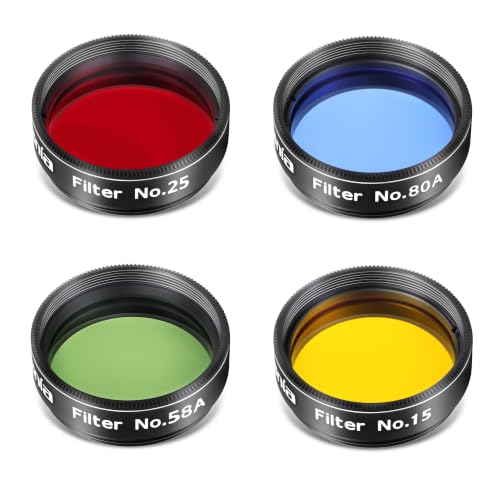
Astromania 4-Piece Color Filter Set

Astromania 4-Piece Color Filter Set

Planetary color filters that pull subtle detail out of Jupiter and Mars.

Celestron StarPointer Red Dot Finder

Celestron StarPointer Red Dot Finder

The easiest aiming upgrade — a red-dot finder that makes finding targets painless.

Celestron Collimation Eyepiece

Celestron Collimation Eyepiece

Keeps a Dobsonian's mirror aligned — a thoughtful add-on for any reflector owner.

Lunt Solar Eclipse Glasses (5-Pack)

Lunt Solar Eclipse Glasses (5-Pack)

ISO-certified solar viewers that make the next eclipse a safe group event.

Helioclipse Eclipse Glasses (12-Pack)

Helioclipse Eclipse Glasses (12-Pack)

A 12-pack of certified solar viewers — enough for the whole classroom or family.

Tier 2

Astronomy Gifts Under $50

The upgrades that transform a telescope owner's experience — moon filters, Barlows, and phone adapters that make the hobby dramatically better.

Celestron Variable Polarizing Moon Filter

Celestron Variable Polarizing Moon Filter

Dials down the Moon's glare to reveal crater detail — one of the best cheap upgrades.

SVBONY Variable Polarizing Filter

SVBONY Variable Polarizing Filter

A budget-friendly variable moon filter that keeps bright lunar views comfortable.

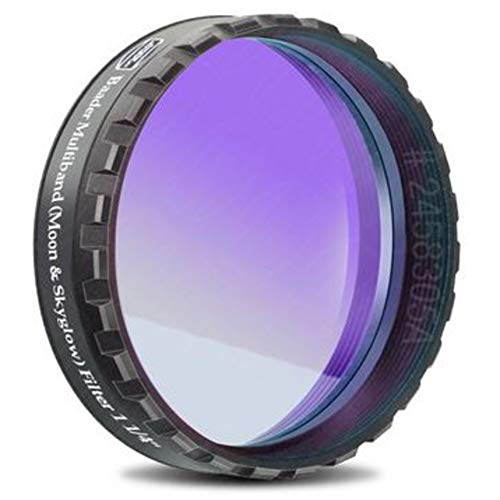
Baader Moon & Skyglow Filter

Baader Moon & Skyglow Filter

Boosts planetary and lunar contrast while cutting skyglow — a favorite of experienced observers.

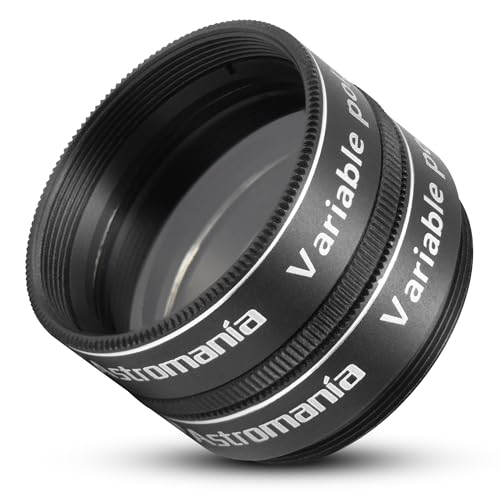
Astromania Variable Polarizing Filter (1.25")

Astromania Variable Polarizing Filter (1.25")

A smooth-turn variable moon filter for 1.25-inch eyepieces.

Celestron Omni 2x Barlow Lens

Celestron Omni 2x Barlow Lens

Doubles any eyepiece's magnification — instantly expands a beginner's eyepiece collection.

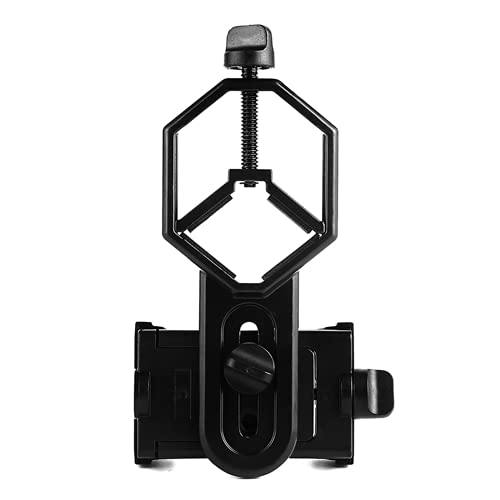
SVBONY Universal Phone Adapter

SVBONY Universal Phone Adapter

Clips any phone to an eyepiece for easy Moon and planet photos.

Gosky Universal Phone Adapter

Gosky Universal Phone Adapter

A sturdy phone-to-eyepiece mount that works with spotting scopes and binoculars too.

Celestron NexYZ Smartphone Adapter

Celestron NexYZ Smartphone Adapter

Celestron's premium phone adapter with three-axis adjustment for rock-steady shots.

Tier 3

Astronomy Gifts Under $100

Eyepiece sets, solar binoculars, telescope bags — the gifts that make existing gear more capable and easier to take to dark skies.

SVBONY SV131 Eyepiece Set

SVBONY SV131 Eyepiece Set

A five-piece eyepiece kit that gives any telescope a full range of magnifications.

Amazon Basics 60-Inch Tripod

Amazon Basics 60-Inch Tripod

A light, cheap tripod that turns binoculars into a rock-steady observing rig.

Celestron EclipSmart 10x25 Solar Binoculars

Celestron EclipSmart 10x25 Solar Binoculars

Certified solar binoculars for watching sunspots and eclipses safely with both eyes.

Celestron 40" Full Kit Telescope Bag

Celestron 40" Full Kit Telescope Bag

A padded full-kit bag that protects a scope on the way to dark skies.

HODRANT 40" Telescope Case

HODRANT 40" Telescope Case

A hard carrying case for larger scopes — travel insurance for precious optics.

samdew 40" Universal Travel Bag

samdew 40" Universal Travel Bag

A universal padded travel bag that fits most 4–5 inch telescopes.

TORIBIO 35" Padded Telescope Bag

TORIBIO 35" Padded Telescope Bag

A compact padded bag built for tabletop Dobsonians and small refractors.

USA Gear Expandable Refractor Case

USA Gear Expandable Refractor Case

An expandable padded case that swallows a complete refractor kit.

Dwarf Mini Hard Case

Dwarf Mini Hard Case

A custom hard case that makes a smart telescope safe to pack anywhere.

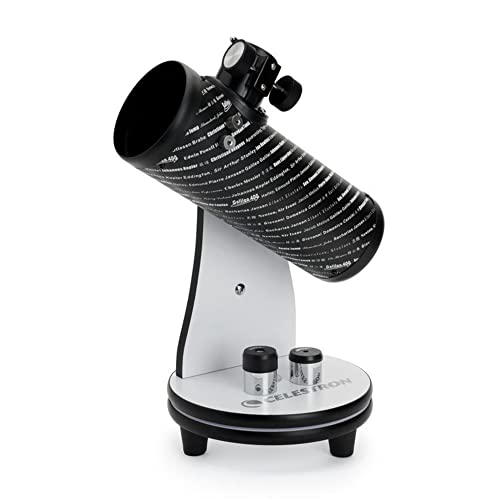
Celestron FirstScope 76mm

Celestron FirstScope 76mm

The classic first telescope for kids — a durable tabletop Dobsonian that shows the Moon and Saturn's rings.

Tier 4

Astronomy Gifts Under $200

The real-telescope zone. These are genuine instruments — not toys — plus the solar filters that turn any telescope into a daytime observatory.

Celestron EclipSmart 12x50 Solar Binoculars

Celestron EclipSmart 12x50 Solar Binoculars

Higher-magnification certified solar binoculars for detailed sunspot views.

Celestron EclipSmart Universal Solar Filter

Celestron EclipSmart Universal Solar Filter

A safe solar filter that fits most telescopes — the gateway to daytime astronomy.

Celestron EclipSmart 70mm Solar Filter

Celestron EclipSmart 70mm Solar Filter

Drop-in solar filter for 70mm refractors — sunspots and transits, safely.

Sky-Watcher Heritage 130P

Sky-Watcher Heritage 130P

The best-value first real telescope: 130mm of aperture that packs down to backpack size.

Celestron AstroMaster 70AZ

Celestron AstroMaster 70AZ

A zero-maintenance refractor that sets up in minutes — ideal for a first-time owner.

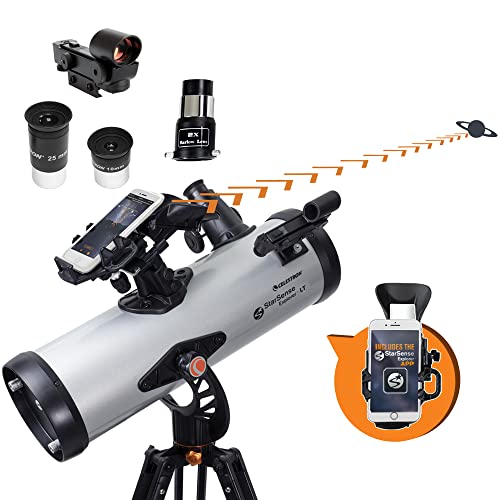
Celestron StarSense Explorer LT 114AZ

Celestron StarSense Explorer LT 114AZ

Smartphone-guided 114mm telescope — the easiest way for a beginner to find anything.

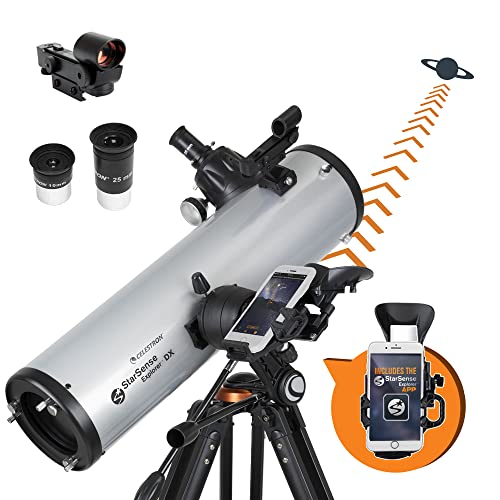
Celestron StarSense Explorer DX 130AZ

Celestron StarSense Explorer DX 130AZ

More aperture, still phone-guided — the best step-up beginner telescope gift.

Sky-Watcher Heritage 150P

Sky-Watcher Heritage 150P

Six inches of aperture in a collapsible tabletop tube — deep-sky views on a budget.

Dwarf Mini Smart Telescope

Dwarf Mini Smart Telescope

A pocket smart telescope that photographs deep-sky objects from a phone.

Dwarf Mini Tripod

Dwarf Mini Tripod

The matching mini tripod that turns a Dwarf Mini into a ready-to-go kit.

Tier 5

Premium & Smart Telescope Gifts

The "wow" gifts. Smart telescopes photograph nebulae and galaxies automatically from a phone — perfect for non-astronomers who deserve something spectacular.

ZWO Seestar S30

ZWO Seestar S30

ZWO's entry smart telescope — automated astrophotography that fits in a backpack.

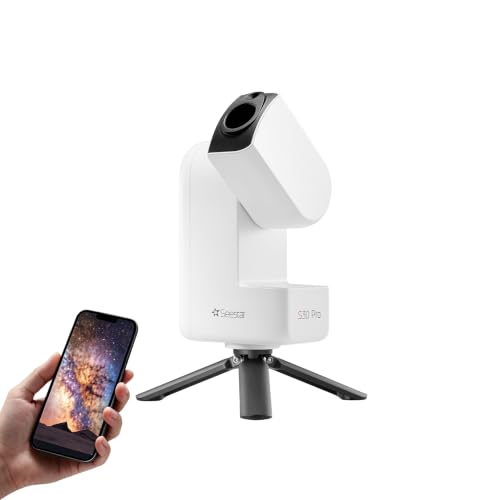
ZWO Seestar S30 Pro

ZWO Seestar S30 Pro

The upgraded Seestar with more aperture and built-in light-pollution filtering.

Dwarf 3 Smart Telescope

Dwarf 3 Smart Telescope

The dual-camera smart telescope that shoots wide Milky Way and deep-sky targets.

Unistellar eQuinox 2

Unistellar eQuinox 2

A fully autonomous smart telescope that reveals nebula colors even from the city.

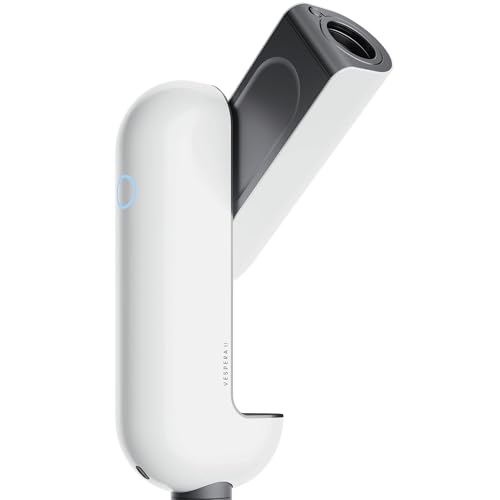
Vaonis Vespera II

Vaonis Vespera II

The elegant all-in-one smart scope with live deep-sky views on your phone.

Gifts by Recipient

Not sure who you're buying for? Here's the shortcut by recipient type — with the deeper guides we already have on the site.

How to Choose an Astronomy Gift by Recipient

The single most common gifting mistake we see is buying for the hobby instead of the person. Astronomy spans a huge range of ages, attention spans, and ambitions, and the perfect gift for one stargazer is a dud for another. Before you pick a tier above, spend two minutes matching the gift to the human who will unwrap it. Here is how we would shop for the five recipients we get asked about most.

The curious kid (ages 5–12)

Durability and instant results matter more than optical performance. A child's attention arrives in bursts, so the gift needs to deliver something visible within the first five minutes outside. The Celestron FirstScope 76mm is the classic answer because it sits on a table, survives being knocked over, and shows the Moon's craters on night one. Pair it with a red-light flashlight and a pack of eclipse glasses and you have a complete starter kit for well under 150 dollars. Skip anything with a flimsy tripod — wobble is the number-one reason kids abandon telescopes. Our telescopes for kids guide breaks this down age by age.

The teen who lives on a screen

Teens respond to technology, sharing, and results they can post. A smartphone-guided telescope like the StarSense Explorer series turns their phone into a sky guide, while a smart telescope such as the Dwarf Mini or Seestar S30 produces actual photographs of nebulae they can share the same night. If the budget is smaller, a phone-to-eyepiece adapter for an existing family telescope scratches the same itch for under 30 dollars. The worst teen gift is a purely manual scope with a steep learning curve — it competes with everything else on their phone and usually loses.

The partner who is new to the hobby

Buy for shared evenings, not for specs. A pair of stargazing binoculars plus a planisphere makes stargazing something you do together this weekend, with zero setup and zero learning curve. If you want a bigger gesture, a smart telescope is the rare "wow" gift that works for someone with no astronomy background at all — it finds everything itself and puts galaxies on a phone screen while you both watch. Add a thermos and a red light and you have gifted an experience, not just an object.

The seasoned observer

Never buy an experienced astronomer a telescope — they have opinions you cannot predict, and probably a wishlist you have not seen. What they always need is consumable and upgrade gear: a premium moon filter, a quality Barlow, a collimation eyepiece, a padded case for the scope they already treasure, or certified solar gear for the next eclipse. These gifts say "I understand your hobby" without gambling hundreds of dollars on the wrong instrument. When in doubt, ask what is on their bench list; every observer has one.

The armchair astronomer

Some space lovers never want to stand in a cold backyard, and that is fine. For the person who devours documentaries and space news, look at the non-optical end of this list: a heat-changing solar system mug, a nebula projector for the bedroom, a beautiful book like Turn Left at Orion or NightWatch, or a premium stargazing app subscription from our stargazing apps guide. A LEGO Hubble Space Telescope set — see our full LEGO Hubble review — is the sleeper hit here: hours of building, then a permanent display piece.

Gifts by Interest: Visual, Astrophotography, or Space Science

Beyond age and experience, astronomy splits into three broad camps, and each camp treasures different gear. Figure out which one your recipient belongs to and half the shopping decision is already made.

The visual observer

This is the classic eyepiece-first stargazer who wants photons hitting their own retina. They value aperture, eyepieces, and comfort. Great gifts: an eyepiece set, a variable moon filter, a 2x Barlow, an observing chair-height tripod for binoculars, and dark-sky travel gear like padded telescope bags. The Celestron SkyMaster 15x70 binoculars — reviewed in full in our SkyMaster 15x70 review — are the definitive "more sky for the money" visual gift.

The astrophotography fan

They want images: the Moon on a phone, the Orion Nebula in color, a Milky Way panorama. Entry gifts are smartphone adapters (SVBONY, Gosky, or the premium Celestron NexYZ), which turn any telescope into a camera rig. The serious version of this gift is a smart telescope — the Seestar S30 Pro, Dwarf 3, or Vespera II photograph deep-sky objects automatically. If they already shoot, accessories like a sturdy case or a mini tripod for their smart scope are safe, appreciated picks.

The space-science fan

They follow launches, missions, and discoveries more than they observe. Gift the culture of space rather than optics: books, a solar system mug, a nebula light, eclipse glasses for the next big event, solar binoculars for watching sunspots, or a green laser for narrated backyard sky tours. For daytime wildlife-and-sky crossover fans, the Celestron Nature DX ED binoculars — see our Nature DX ED review — pull double duty for birding and casual stargazing.

One deliberate note about telescopes themselves: this hub keeps telescope picks brief on purpose. Choosing a first telescope deserves its own decision process — mount type, aperture, storage space, and the recipient's patience all matter — so if a full-size telescope is the plan, go straight to our Telescope Christmas Gift Guide 2026, which walks every budget from under 100 dollars to premium GoTo instruments, and read How to Buy a Telescope as a Gift before you spend anything.

The Junk to Avoid

Half of being a good astronomy-gift giver is knowing what not to buy. The astronomy aisle attracts more gift-shaped junk than almost any other hobby, because the products are judged in the store and fail in the backyard. Here are the traps we see every holiday season.

1. "675× magnification!" toy scopes

Department-store scopes that scream magnification on the box are almost always unstable, low-quality instruments that frustrate a new owner and end up in a closet. We explain the magnification myth in detail in our magnification guide.

2. Unbranded Amazon listings at toy prices

If the brand isn't one of the established names (Celestron, Sky-Watcher, Explore Scientific, or the smart-scope brands), treat it as a gamble. See our telescopes to avoid list for the specific offenders.

3. Discontinued or superseded models

A few once-great models have been discontinued (like the ZWO Seestar S50). Buying an outdated scope "because it's cheap" can mean missing current features. Our smart-scope pages flag what's still worth buying.

The toy-scope trap, explained. Every December, department stores and marketplace sellers fill shelves with 50-to-80-dollar telescopes in glossy boxes covered in Hubble photographs. Inside is a narrow plastic tube on a tripod that shakes for several seconds every time it is touched, with eyepieces so poor that the Moon looks like a gray smear. The recipient concludes that telescopes are disappointing — and that astronomy is not for them. That is the real cost of a junk scope: it does not just waste money, it kills a budding interest. If the budget cannot reach a real instrument, gift an accessory, binoculars, or a book instead; all three deliver genuine value at toy-scope prices. Our Telescopes to Avoid 2026 page names the specific models and listing patterns to walk past.

The magnification lie. Any box that leads with a giant magnification number — "525x!", "675x!" — is advertising the one spec that is essentially free to inflate and useless in practice. Useful magnification is limited by aperture: roughly 50x per inch of aperture under perfect skies, and far less on an average night. A 60mm toy scope claiming 675x is physically incapable of delivering a usable image at even a fifth of that number. Real manufacturers advertise aperture; junk manufacturers advertise magnification. The full physics, with worked examples, is in our magnification lie explainer — five minutes of reading that immunizes you against the whole category.

Name-a-star certificates. These kits sell the feeling of naming a star after someone, but no scientific body recognizes the names — only the International Astronomical Union assigns official designations, and it does not sell them. The certificate is a novelty printout with no standing anywhere, and most recipients figure that out with one web search. If you want a sentimental astronomy gift, a framed star chart of a meaningful date, a good book with a handwritten inscription, or an evening under dark skies with borrowed binoculars all carry more genuine meaning for less money.


When to Buy: Timing Your Astronomy Gift Purchase

Astronomy gear follows a predictable annual price rhythm, and a little timing knowledge can save real money — or save the gift itself from arriving late.

Black Friday (November 27, 2026) is the deep-discount window. Telescopes and smart telescopes see their best prices of the year in the stretch from late November through Cyber Monday. Celestron beginner scopes, Sky-Watcher Dobsonians, and smart telescopes from ZWO and DwarfLab have all seen meaningful cuts in past years. If your gift is in the over-150-dollar tiers on this page, it is usually worth waiting for that window. We track patterns, realistic price targets, and live deals on our Telescope Black Friday Deals 2026 page, with a separate Smart Telescope Black Friday deal watch for the Seestar, Dwarf, Vespera, and Unistellar lines.

Order by roughly December 18 for Christmas delivery. Popular telescope models sell out every December — the StarSense Explorer line and the Heritage tabletop Dobsonians are repeat offenders — and carrier delays pile up in the final week. Ordering by the third week of December gives you a buffer for both stock and shipping. Small accessories are more forgiving, but even stocking stuffers get risky after December 20.

Off-season buying has its own logic. If you are reading this in spring or summer, do not assume you must wait for November. New models typically launch in late summer and autumn, which pushes down prices on the outgoing generation; eclipse gear spikes in price right before a major eclipse and is cheap the rest of the year; and used-market bargains appear in January when abandoned Christmas scopes get resold. Our best time to buy a telescope guide maps the whole calendar month by month, so you can decide whether to buy now or wait.

Astronomy Gift Guide — FAQ

Is a telescope a good gift?

Yes — for the right recipient. A telescope is a genuinely life-changing gift for a curious beginner, a kid who loves space, or a family that wants to observe together. The catch: you must match it to the person. A 7-year-old needs a durable tabletop scope; an adult who wants "wow" photos needs a smart telescope; a total beginner needs something easy to set up. Buy by aperture and brand, never by the magnification number on the box. If the recipient is only mildly interested, binoculars or a pair of eclipse glasses often make a better first gift.

How much should I spend on an astronomy gift?

Keep it under 25 dollars for stocking-stuffer territory — flashlights, filters, eclipse glasses. From 50 to 100 dollars you can gift excellent upgrades (eyepiece sets, phone adapters, solar binoculars) or the Celestron FirstScope. Real telescopes start around 150 to 200 dollars (the Sky-Watcher Heritage 130P and StarSense Explorer LT 114AZ are the sweet spots). Smart telescopes that photograph the sky start around 400 dollars and go up from there. If you're not sure, 50 to 100 dollars of quality accessories is a safe, genuinely appreciated tier.

What's the best astronomy gift under 50 dollars?

For value and delight, the Celestron variable polarizing moon filter and the Celestron Omni 2x Barlow transform a telescope owner's experience for very little money. A smartphone adapter is the gift that turns any telescope into a camera. For a non-owner, a pack of ISO-certified eclipse glasses is a timely, safe, and thoughtful pick.
Are smart telescopes worth the price as gifts?

For a non-astronomer who wants instant "wow," a smart telescope is often the best gift on the market — far better than a cheap traditional scope. Devices like the ZWO Seestar S30 Pro or Dwarf 3 find, track, and photograph deep-sky objects automatically, showing nebula colors you can't see through a traditional eyepiece. The trade-offs: they're screen-based (no eyepiece) and cost more. For someone who wants a hands-on, eyepiece experience, a traditional telescope is still the right call.

What should I buy for someone who already owns a telescope?

Don't buy a second telescope — buy an upgrade. The best "next step" gifts are: a quality eyepiece set (SVBONY SV131), a 2x Barlow, a variable moon filter, a smartphone adapter for astrophotography, or a proper padded carry bag/case. All of these make the gear they already own dramatically more capable, and they fit in almost any budget tier on this page.

What are good space gifts for people who don't want a telescope?

Plenty: ISO-certified eclipse glasses, a green laser pointer for constellation tours, solar binoculars for daytime sunspot viewing, astronomy binoculars for stargazing, or a red-light flashlight for night hikes. These capture the "space" feeling without the telescope learning curve — and they make great family or group gifts.

When is the best time to buy astronomy gifts?

Black Friday — November 27 in 2026 — through Cyber Monday is the deepest discount window of the year for telescopes and smart telescopes, and the best single answer if your budget is over 150 dollars. For Christmas delivery, order by roughly December 18, because popular beginner models sell out and shipping slows in the final week. Accessories and stocking stuffers are discounted less dramatically, so those can be bought whenever convenient. Our best-time-to-buy guide covers the full annual price calendar.

Are name-a-star certificates a good astronomy gift?

No. No scientific organization recognizes purchased star names — only the International Astronomical Union assigns official designations, and it does not sell them. The certificate has no standing anywhere, and most recipients discover that quickly. For a sentimental gift with the same feeling, choose a framed star chart of a meaningful date, an inscribed astronomy book, or a pair of binoculars and a promised night under dark skies.
Should I buy a telescope or binoculars as a first astronomy gift?

If you are unsure how deep the recipient's interest runs, binoculars are the safer first gift. A quality pair like the Celestron SkyMaster 15x70 shows Jupiter's moons, star clusters, and the Milky Way with zero setup, works for daytime use too, and never ends up abandoned the way a fiddly telescope can. If the recipient has asked for a telescope specifically, buy one — but choose by aperture and mount quality using our telescope gift guides, not by box art.

What astronomy gifts work for someone in a light-polluted city?

City skies favor three categories: the Moon and planets, which shine through any light pollution and reward moon filters, Barlows, and planetary eyepieces; solar observing, where certified solar binoculars and filters turn the daytime Sun into a target; and smart telescopes, whose stacking and built-in filtering pull nebulae and galaxies out of bright suburban skies surprisingly well. A balcony astronomer with a Seestar or Dwarf can photograph deep-sky objects that would be invisible through an eyepiece downtown.


Continue Exploring

Keep the session going with the next useful answer

Choose the next page based on whether you need a recommendation, a comparison, or a practical observing plan.

Use Finder Tool →

⚡ On sale now: Prime Big Deal Days telescope deals · or wait for Black Friday?

🎄 Holiday season: Telescope Christmas Gift Guide 2026 · Black Friday deal tracking

Related Guides