
How to See Bode's Galaxy (M81) and the Cigar Galaxy (M82) Through a Telescope
Telescope Advisor Logo Telescope Advisor
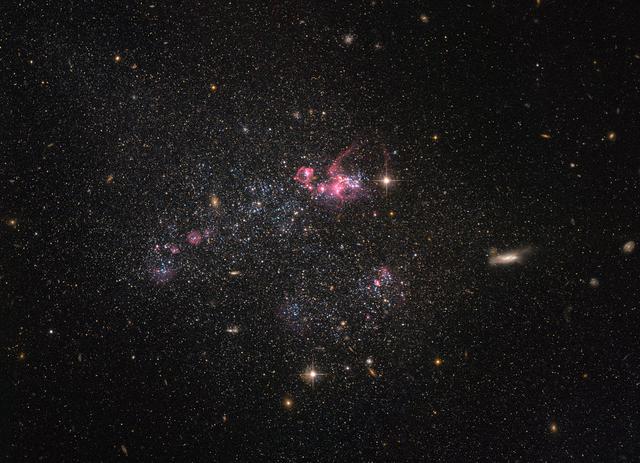
Bode's Galaxy M81 and the Cigar Galaxy M82 as captured by the Hubble Space Telescope — a stunning pair of interacting galaxies

Observing Guide · Galaxy Pair

How to See Bode's Galaxy (M81) and the Cigar Galaxy (M82) Through a Telescope

M81 and M82 form one of the finest galaxy pairs in the northern sky — two very different galaxies separated by just 0.5 degrees, fitting comfortably in the same low-power eyepiece field. M81 is a magnificent face-on spiral with tightly wound arms, while M82 is a chaotic starburst galaxy seen edge-on, distorted by a recent close encounter with its larger neighbour. This guide covers everything you need to observe both galaxies.

Object typeGalaxy pair (M81+M82)
Apparent magnitude6.9 / 8.4
Best seasonJanuary – August
Min. aperture80mm sees both
By Elena ReyesPublished: Updated: Reviewed & approved by Juhi Sahni, Senior Editor Editorial Standards

Quick Answer: What Telescope Do I Need for M81 and M82?

Both galaxies are visible in any telescope with at least 80mm (3-inch) aperture under dark skies. M81 is the brighter of the pair at magnitude 6.9, while M82 shines at magnitude 8.4. Through a 100mm refractor at 40–50×, M81 appears as a round diffuse glow with a bright core, and M82 is visible as a smaller, elongated patch nearby. A 150mm (6-inch) scope at 60–80× reveals M81's bright oval disc and M82's distinctive cigar shape with a mottled, uneven surface. An 8-inch (200mm) Dobsonian at 100–120× shows M81's spiral arms as subtle brightness variations around the core, while M82 reveals its chaotic, patchy structure with dark lanes cutting across its bright centre. Both galaxies are visible in 15×70 binoculars under dark skies as two distinct fuzzy patches.


🔭

Not sure which telescope actually fits your goals?

Answer 5 quick questions about your budget, observing targets, and experience level — our Telescope Finder Tool recommends a specific model in under 2 minutes.

Find My Telescope →

How to Find M81 and M82 in Ursa Major

M81 and M82 lie in the constellation Ursa Major, about 10 degrees northwest of the Big Dipper's bowl stars Phecda and Dubhe. The easiest way to find them: start at Phecda (Gamma Ursae Majoris), the bottom-left star of the Big Dipper's bowl. Sweep about 10 degrees northwest (toward the Little Dipper) and you will encounter the pair. In a finder scope, both galaxies appear as two small fuzzy patches close together — M81 rounder and brighter, M82 narrower and fainter.

M81 and M82 are best observed from January through August, when Ursa Major is high in the sky for northern hemisphere observers. The constellation culminates around midnight in April and is visible all year from mid-northern latitudes. Both galaxies are well placed in the evening sky from spring through mid-summer. Because Ursa Major is nearly overhead for many northern observers, these galaxies benefit from minimal atmospheric extinction and are well situated for a wide-field eyepiece comparison.

What M81 and M82 Look Like Through Different Apertures

InstrumentBest MagnificationM81 (Bode's Galaxy)M82 (Cigar Galaxy)
15×70 binoculars15×Round glow, bright core. Distinctly non-stellar. Companion M82 nearby.Small, faint elongated patch. Slightly fainter than M81.
100mm (4") refractor40–50×Bright oval disc with intense core. Fits with M82 in a wide-field view.Elongated cigar shape. Slight brightness variation along its length.
150mm (6") reflector60–80×Large bright oval. Core sharply defined. Spiral arms hinted as halo.Distinct mottled surface. Dark lane visible on one side. Uneven brightness.
200mm (8") Dobsonian100–120×Bright core with spiral arm structure visible as arcs around nucleus.Chaotic patchy surface with clear dark lanes. Starburst regions visible as bright knots.
300mm (12")+150–250×Spiral arms well-defined. Dust lanes visible in inner disc.Intricate network of dark lanes and bright patches across the galaxy's face.

The Science Behind the Pair

M81 and M82 are not just a visual pairing — they are physically interacting galaxies. About 200 million years ago, M82 passed close to its larger companion M81, triggering a burst of star formation that continues today. This is why M82 is known as a "starburst galaxy" — it is forming stars at a rate about 10 times higher than normal galaxies. The gravitational interaction also stripped gas from M82 and created a stream of hydrogen gas connecting the two galaxies, detectable only in radio wavelengths.

M81 itself, at 12 million light-years away, is one of the brightest galaxies in the northern sky and a member of the M81 Group — one of the nearest galaxy groups to our Local Group. It is a grand-design spiral galaxy, meaning its spiral arms are well-defined and symmetrical, unlike the patchy, fragmented arms of many other spirals. The galaxy's bright nucleus (magnitude 14.5) hosts a supermassive black hole about 70 million times the mass of our Sun. In 1993, a type II supernova (SN 1993J) erupted in M81, briefly reaching magnitude 10.8 and becoming one of the most observed supernovae of the decade.

Best Telescopes for M81 and M82

Because both galaxies fit in the same low-power field, a telescope with a wide true field of view is ideal. A 6-inch or 8-inch Dobsonian at 40–50× provides the perfect framing, with both galaxies centred in a 1-degree field. For telescope recommendations, see our best Dobsonian telescopes guide. For those who prefer the convenience of tracking, see our best computerized telescopes guide.


Frequently Asked Questions

What telescope do I need for M81 and M82?

Both galaxies are visible in 80mm+ telescopes. A 6-inch scope at 60× shows both clearly, with M81 as a bright oval and M82 as an elongated cigar shape. Binoculars show them as two fuzzy patches.

How do I find M81 and M82?

Start from the Big Dipper's bowl (Phecda and Dubhe) and sweep about 10 degrees northwest. Both galaxies fit in the same finder or low-power eyepiece field.

Can I see M81 and M82 in binoculars?

Yes — 10×50 binoculars under dark skies show both as faint fuzzy patches. 15×70 binoculars show M81's core distinctly brighter and M82's elongation clearly.

What is the difference between M81 and M82?

M81 is a face-on grand-design spiral galaxy (mag 6.9) with tightly wound arms. M82 is an edge-on starburst galaxy (mag 8.4) distorted by its interaction with M81, showing chaotic structure and dark lanes.

When is the best time to observe M81 and M82?

From January through August, with best evening viewing in spring (March–May). Ursa Major is circumpolar from mid-northern latitudes, so they are visible all year.

How far apart are M81 and M82 in the sky?

Only 0.5 degrees — less than the diameter of the full Moon. They fit comfortably in the same low-power eyepiece field, making them one of the best galaxy pairs for amateur telescopes.