
Night Sky in November 2026: Leonids, Jupiter, and Winter Deep-Sky
Telescope Advisor Logo Telescope Advisor
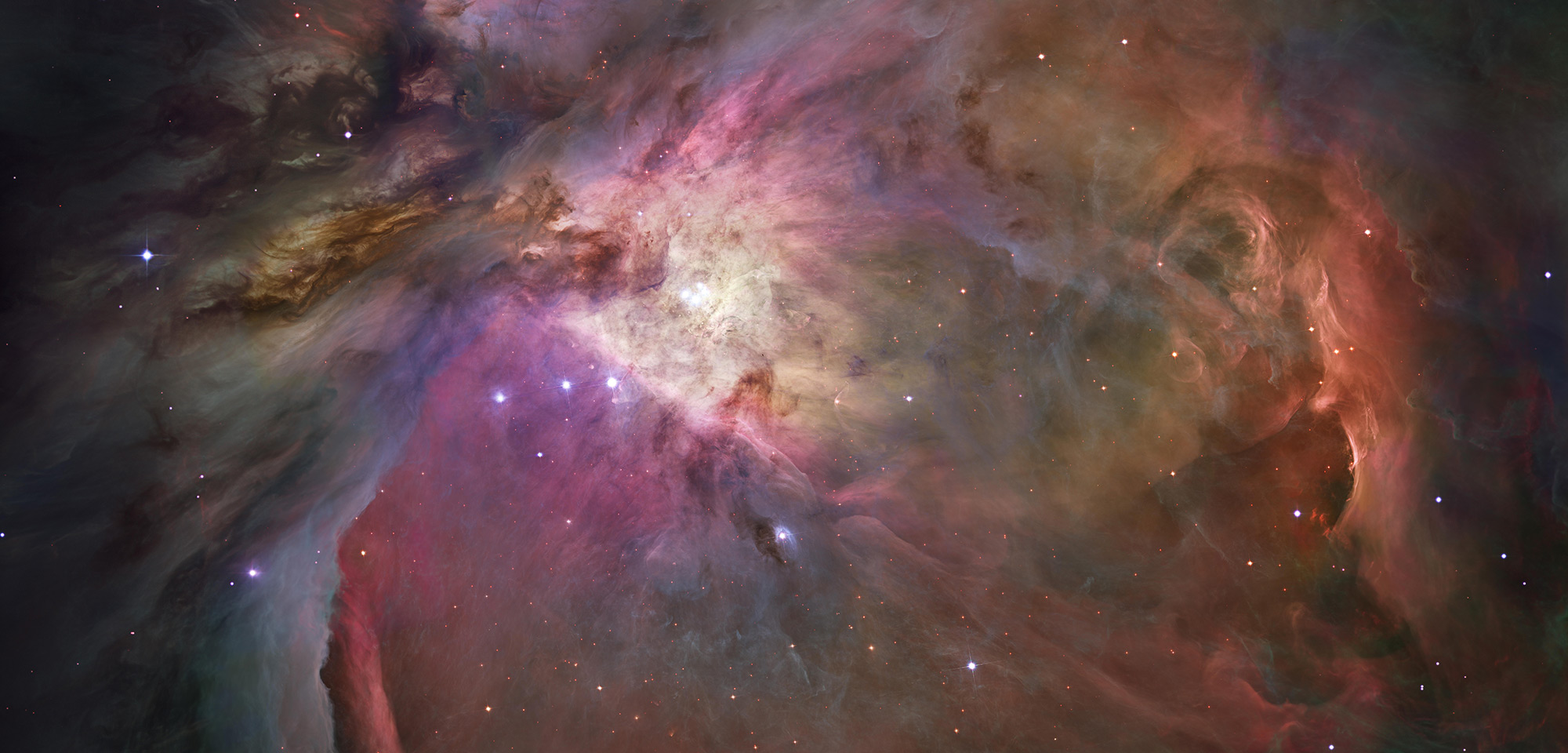
Orion constellation rising over a dark landscape — November marks the return of Orion to the evening sky, signalling the start of winter's deep-sky season

Night Sky Guide · November 2026

Night Sky in November 2026: Leonids, Jupiter, and Winter Deep-Sky Opens

November 2026 brings the Leonid meteor shower on the 17th–18th, Jupiter riding high in Gemini throughout the month, and the return of winter's legendary constellation landscape. Orion rises in the east by 9 PM, Andromeda is near-zenith early in the evening, and the Perseus Double Cluster is overhead. With long nights and stable autumn air, November is one of the best observing months of the year.

Nov 10New Moon — prime deep-sky window
Nov 17–18Leonid meteor shower peak
Nov 25Full Moon (Beaver Moon)
All monthJupiter excellent, Orion rising
By Telescope Advisor Editorial Team Published: Updated: Editorial Standards

November 2026 at a Glance

November is the month when winter's premier deep-sky landscape reasserts itself. Orion climbs higher each evening — by month-end it is well placed by 9 PM and dominating the southeast by midnight. Saturn is still observable in the southwest but declining. Jupiter is excellent and building toward its January 2027 opposition. The Andromeda Galaxy and Perseus Double Cluster are near-zenith in the early evening — their best accessible position of the year.

Date Event Notes
Nov 1–9Dark sky window building to New MoonExcellent deep-sky observing: M31, Double Cluster, Saturn still up
Nov 10New Moon — darkest skies of NovemberBest night of the month for faint objects
Nov 17–18Leonid meteor shower peakZHR ~15/hr; Moon ~30% illuminated, sets ~9 PM
Nov 25Full Moon — Beaver MoonAvoid deep-sky this week; Moon observing and Jupiter
All monthJupiter in Gemini all night, building to Jan 2027 oppositionMagnitude −2.6, rising mid-afternoon by month-end
All monthOrion rising — winter deep-sky season opensM42 excellent by 10 PM by mid-month


🔭

Not sure which telescope actually fits your goals?

Answer 5 quick questions about your budget, observing targets, and experience level — our Telescope Finder Tool recommends a specific model in under 2 minutes.

Find My Telescope →

Leonid Meteor Shower 2026: November 17–18 Peak Guide

The Leonid meteor shower peaks on the night of November 17–18, 2026. The Leonids are famous in meteor astronomy history for producing some of the most spectacular meteor storms ever recorded — but in non-storm years like 2026, they deliver a modest but reliable 10–20 meteors per hour under dark skies. The shower is characterised by unusually fast meteors (71 km/s — the fastest of any major annual shower), which often produce brief but intensely bright streaks and persistent trains.

2026 Leonid Data

  • Peak: Night of November 17–18
  • Best viewing: After midnight local time (radiant highest)
  • ZHR (dark sky): 10–20 per hour
  • Moon phase at peak: Waxing crescent (~30% illuminated), sets ~9–10 PM — leaving midnight window moonlight-free
  • Radiant: Leo, near the star Algieba (Gamma Leonis)
  • Active period: November 6–30
  • Parent comet: 55P/Tempel-Tuttle
  • Speed: 71 km/s — fastest major shower
  • Outburst years: Not predicted for 2026

How to watch the Leonids

  1. No telescope or binoculars needed — naked eye only
  2. Find a dark location away from street lights. The Leonids are a modest shower — every bit of sky darkness helps
  3. Wait until after midnight local time when Leo has risen and the radiant is highest in the eastern sky
  4. Allow 20 minutes for dark adaptation before counting meteors
  5. Face southeast, recline comfortably so you're looking at a large area of sky. Meteors radiate FROM Leo but appear across the whole sky
  6. Dress for cold November temperatures — a sleeping bag or insulated blanket is essential for extended sessions

Leonid Timing by US City

CityMoon sets (Nov 17)Best windowRadiant altitude at 1 AM
New York~9:30 PM ESTMidnight – 4 AM EST~35°
Chicago~9:25 PM CSTMidnight – 4 AM CST~33°
Denver~9:20 PM MSTMidnight – 4 AM MST~30°
Los Angeles~9:35 PM PSTMidnight – 4 AM PST~28°

How the Leonids compare to other 2026 showers

The Leonids are a modest shower in non-storm years — significantly less productive than the Perseids (August) or Geminids (December). Their main appeal is their exceptional speed: at 71 km/s, Leonid meteors are the fastest of any major shower, producing brief but intensely bright streaks that are visually distinctive from the slower Geminids. Think quality over quantity. If you missed the Orionids (October) or want a preview before the Geminids (December), the Leonids provide a worthwhile November viewing night.

Leonid Storm History: When the Sky Rained Fire

In most years the Leonids produce a modest 10–20 meteors per hour. But every 33 years — when Earth passes through a dense filament of debris deposited by comet 55P/Tempel-Tuttle during a recent perihelion passage — the Leonids can produce a meteor storm: rates exceeding 1,000 meteors per hour, sometimes far more. These are among the most spectacular events in all of astronomy.

The Great Leonid Storm of 1833

On the night of November 12–13, 1833, observers across North America witnessed one of the greatest meteor displays in recorded history — estimated at 100,000 to 200,000 meteors per hour at peak. Eyewitness accounts describe the sky "raining fire" for hours. This event is credited with founding modern meteor astronomy as a scientific discipline: astronomer Denison Olmsted determined that the meteors originated from a fixed radiant point in Leo, proving for the first time that meteor showers are a predictable astronomical phenomenon associated with specific celestial coordinates.

The 1966 Leonid Storm

The most recent major Leonid storm occurred on November 17, 1966, when observers in western North America reported rates estimated at 40,000–150,000 meteors per hour during a roughly 40-minute peak. Astronomer after astronomer described meteors falling so densely that they appeared to stream from Leo like water from a hose. The 1966 storm coincided with Earth's passage through a dense filament of debris from Tempel-Tuttle's 1965 perihelion passage.

What to expect in 2026

Tempel-Tuttle's next perihelion is 2031 — not particularly close in 2026. No outburst or storm is predicted for the 2026 Leonids. Rates will be in the normal non-storm range of 10–20 per hour. The value of watching in 2026 is the shower's exceptional speed and the opportunity to observe before the more productive Geminids in December. The next potential Leonid storm opportunity is around 2032–2034 following Tempel-Tuttle's 2031 perihelion.

Planets in November 2026

Jupiter (Gemini) — Dominant all-night planet

Jupiter is the showpiece planet of November 2026, building toward its January 2027 opposition. By mid-November it rises before sunset and is well-placed in the south by 10 PM. At magnitude −2.5 to −2.7 and with a disk exceeding 45 arcseconds, Jupiter is near its annual maximum — the four Galilean moons create beautiful patterns each night visible in any binoculars. Through a 130mm+ telescope, the equatorial belts, the Great Red Spot (when transiting), and shadow transits by the moons are all accessible. Jupiter sits in Gemini — convenient for the Leonid nights, since Leo (the Leonid radiant) and Gemini are in the same general part of the sky. Full guide: how to see Jupiter through a telescope.

Saturn (Aquarius) — Declining in the southwest

Saturn passed opposition on October 4 and is now setting progressively earlier — around 9 PM local time by late November. Still worth observing early in the evening: the rings remain beautifully tilted at 8° and the Cassini Division is accessible in any 80mm+ telescope. By November's end, Saturn is low in the southwest at dusk and the season is drawing to a close. December will be the last month for comfortable Saturn observing before its 2027 apparition. See our Saturn ring eyepiece guide.

Mars (Leo/Virgo) — Pre-dawn, approaching opposition

Mars is rising earlier each night in November — by month-end it rises around 1 AM local time. At magnitude 0.2–0.4, it's bright and distinctly orange. The disk is 13–15 arcseconds — the largest it has been in years as it approaches its January 2027 opposition. A 150mm+ telescope on steady autumn nights begins to show the polar cap and major albedo features. November is an excellent month to start serious Mars observing.

Uranus (Taurus) — All night, near opposition

Uranus reached opposition in late October and remains excellent through November — visible all night in Taurus, appearing as a steady blue-green "star" in binoculars. A telescope at 150×+ shows its disk (3.7") with the characteristic blue-green methane colour. Guide: how to see Uranus with a telescope.

November Deep-Sky: The Best Window Opens

The New Moon on November 10 creates a dark-sky window that extends from roughly November 5–17 — the best sustained deep-sky observing stretch of the autumn. With the autumn galaxy season still accessible and the winter objects rising in the east, November offers the widest variety of deep-sky targets of any month.

Andromeda Galaxy M31 — in early November it is near its highest point, visible without equipment and dramatic through any telescope

Andromeda Galaxy (M31) — near-zenith in early November

M31 reaches near-overhead position in early November evenings — its highest and cleanest annual viewing position. The companion galaxies M32 and M110 are visible in any 60mm+ telescope. Credit: NASA.

Object Type Mag Why November Equipment
Andromeda Galaxy (M31)Galaxy3.4Near-zenith at 7–8 PM — highest of the yearNaked eye / binoculars
Perseus Double Cluster (NGC 884/869)Open clusters4.3Overhead — stunning in binocularsBinoculars / any scope
Pleiades (M45)Open cluster1.6High overhead — best seasonNaked eye / binoculars
M15 Globular (Pegasus)Globular6.2High in Pegasus — last month before setting60mm+ telescope
Orion Nebula (M42)Emission nebula4.0Rising in east by 9 PM — winter season beginsBinoculars / any scope
Hyades cluster (Taurus)Open cluster0.5V-shaped naked-eye cluster in TaurusNaked eye
M33 Triangulum GalaxyGalaxy5.7Near Andromeda, near-zenith — needs dark skyBinoculars in dark sky
M74 (Pisces)Face-on galaxy9.4High in Pisces — challenging but rewarding in dark sky100mm+ in dark sky

The Andromeda Galaxy in November — Prime Position

The Andromeda Galaxy (M31) — our nearest large galactic neighbour at 2.5 million light-years — reaches its highest point in the sky on November evenings, transiting near-overhead (75–85° altitude from mid-latitudes) around 7–8 PM local time. This is the cleanest, least atmospherically disturbed view of M31 possible from Northern Hemisphere locations. Through 15×70 binoculars, M31 appears as a large oval glow extending several degrees — the companion galaxies M32 and M110 flank it as smaller oval smudges. In a 130mm+ telescope at 40–60×, dust lanes begin to appear in the inner disc under good transparency. Guide: how to find the Andromeda Galaxy with a telescope.

November Constellations

High in the south (8–11 PM)

  • Pegasus (The Winged Horse): The Great Square of Pegasus dominates the southern sky. M15 globular cluster sits just 4° northwest of Epsilon Pegasi. The Great Square makes an excellent reference frame for navigating to M31 Andromeda.
  • Andromeda: Extending northeast from the Great Square, hosting M31 and the fainter M33 galaxy in Triangulum nearby. Highest early in November evenings.
  • Perseus: Contains the famous Double Cluster (NGC 869/884) — one of the finest binocular objects in the sky. Also the radiant of the Perseid meteor shower (August) and the variable star Algol (beta Persei).
  • Pisces: Faint but contains the face-on spiral M74 — one of the most challenging Messier objects but rewarding in large apertures under dark skies.

Rising in the east (after 8 PM)

  • Taurus (The Bull): The Pleiades and Hyades clusters fully risen by 8–9 PM. The Crab Nebula (M1) near Zeta Tauri begins its winter accessibility. Uranus is nearby.
  • Orion (The Hunter): Rises in the east around 7–8 PM by late November. By midnight it dominates the south — the signature of winter observing beginning. The Orion Nebula (M42) is visible to the naked eye below the three belt stars.
  • Gemini: Jupiter rides high in Gemini — its bright presence makes navigating the constellation easy. M35 open cluster sits at Gemini's northern foot.
  • Auriga: Bright Capella (the sixth-brightest star in the sky) marks Auriga near the overhead point. Contains M36, M37, M38 open clusters sweepable in one binocular field.

Looking Ahead: December's Geminids Are the Year's Best

If the Leonids leave you wanting more — or if November weather doesn't cooperate — December offers a significantly better meteor opportunity. The Geminid meteor shower peaks December 13–14, 2026 with up to 120 meteors per hour, making it the most productive annual shower. In 2026, the Geminids benefit from excellent Moon-free conditions at peak — the Moon is a waxing crescent that sets around 9 PM, leaving the critical midnight–2 AM window completely dark. December also brings Jupiter near its January opposition, Orion at its prime position, and the Orion Nebula at its highest and most detailed.


Best Gear for November 2026

November rewards both naked-eye observers (Leonids, Andromeda, Pleiades) and telescope users (Jupiter, Saturn, the Orion Nebula opening up). Here are the recommended instruments:

Editor's Pick — Jupiter, Andromeda, and Saturn in One Telescope
Sky-Watcher Heritage 130P tabletop Dobsonian

Sky-Watcher Heritage 130P

For November's combination of Jupiter, Saturn's declining but still spectacular rings, the opening Orion Nebula, and the Andromeda Galaxy at its prime, the Heritage 130P is the ideal instrument. At 130mm it handles all of these targets well — Jupiter shows 4+ cloud belts and Galilean moon interactions at 65–130×; M31 is a glowing oval with visible structure; M42 is breathtaking. The tabletop Dobsonian design is especially good for cold autumn nights — no tripod assembly in cold temperatures. Full review: Heritage 130P review.

Celestron SkyMaster 15x70 binoculars

Celestron SkyMaster 15×70 — Perfect for November's wide targets

For the Andromeda Galaxy, Double Cluster in Perseus, and Pleiades — all at prime November position — the SkyMaster 15×70 is the instrument of choice. 70mm aperture gathers enough light for M31's outer halo and the M32/M110 companions. The Double Cluster in Perseus is genuinely breathtaking in 15× binoculars — two rich open clusters side by side. Also perfect for post-Leonid sweeping of the winter Milky Way region. Guide: best astronomy binoculars.

Affiliate links. Editorial standards.

November 2026 Night Sky FAQ

When is the Leonid meteor shower peak in 2026?

The Leonids peak on the night of November 17–18, 2026. Best viewing is after midnight local time when the radiant (in Leo near Algieba) has risen to a useful altitude in the east-southeast. The Moon is a waxing crescent (~30% illuminated) that sets around 9–10 PM local time, leaving the midnight hours moonlight-free. Expect 10–20 meteors per hour from a dark site. No telescope needed — naked eyes only.

Has the Leonid shower ever produced a storm?

Yes — the Leonids are historically famous for producing the most spectacular meteor storms ever recorded. The 1833 storm produced an estimated 100,000–200,000 meteors per hour and is credited with founding modern meteor astronomy. The 1966 storm peaked at approximately 40,000–150,000 per hour over a 40-minute period and was witnessed by professional astronomers across North America. Storms occur roughly every 33 years when Earth passes through dense filaments of debris from comet 55P/Tempel-Tuttle following a recent perihelion. No outburst is predicted for 2026; the next storm opportunity is around 2032–2034 following Tempel-Tuttle's 2031 perihelion.

What telescope is best for November stargazing?

The Sky-Watcher Heritage 130P covers everything November offers: Jupiter's cloud belts and Galilean moons, Saturn's rings, the Andromeda Galaxy at its prime, the Orion Nebula rising in the east, and the Perseus Double Cluster. Its tabletop Dobsonian design is particularly practical for cold autumn nights. See our complete guide: best telescopes for beginners.

Is the Andromeda Galaxy visible in November without a telescope?

Yes — the Andromeda Galaxy (M31) is the most distant object visible to the naked eye, at magnitude 3.4. From a dark rural site (Bortle 4 or better), it appears as an unmistakable elongated grey smudge in Andromeda constellation, roughly 3° long. From suburban Bortle 6 skies, it requires averted vision and dark-adapted eyes but is detectable. In November, M31 transits near the overhead point at 7–8 PM — its cleanest, highest position of the year. Through 10×50 or larger binoculars, the galaxy's extent expands dramatically and the companion galaxies M32 and M110 become visible. Guide: how to find the Andromeda Galaxy.

Is November a good month to buy a telescope as a Christmas gift?

November is actually one of the best months to buy — for two reasons: (1) Black Friday (late November) consistently delivers 15–30% discounts on major Celestron, Sky-Watcher, and Orion models — the best annual deals for telescope buyers. (2) Buying in November gives the recipient time to observe November and December targets before the Christmas delivery season depletes stock. Black Friday telescope deals guide: telescope Black Friday deals 2026. Best time to buy: best time to buy a telescope.


Related Guides