
Palma de Mallorca Eclipse 2026: Total Solar Eclipse Guide — Times and Beachside Viewing
Telescope Advisor Logo Telescope Advisor
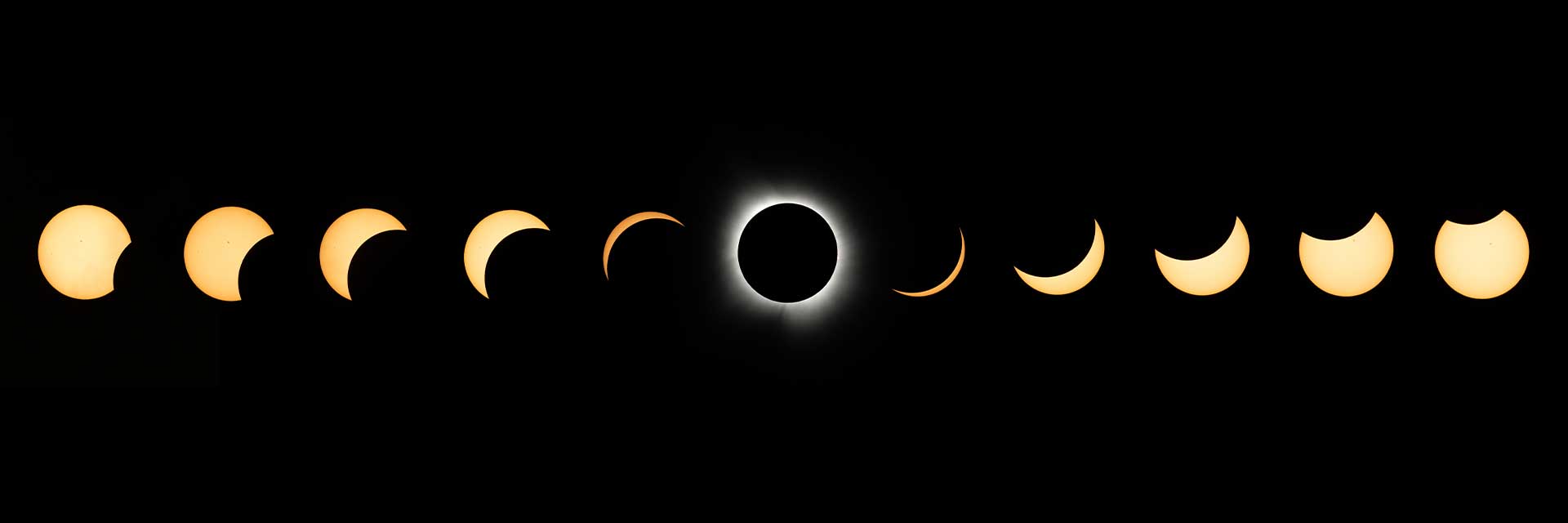
Solar eclipse progression panel showing the partial phases leading to totality — similar to what Palma de Mallorca will experience on August 12, 2026

Total Solar Eclipse · August 12, 2026

Palma de Mallorca Eclipse 2026: Total Solar Eclipse Guide — Times and Beachside Viewing

Mallorca sits on the southern edge of the path of totality, offering a brief but unforgettable total eclipse experience from the Mediterranean's most beautiful island setting. Here is your complete guide to seeing totality from Palma and beyond.

DateAugust 12, 2026
Totality duration~30–60 seconds
Sun altitude~12–15°
Best toolSolar binoculars + glasses
By Telescope Advisor Editorial Team Published: Updated: Editorial Standards

Quick Answer: Can I See Totality From Palma de Mallorca?

Yes — but just barely. Palma de Mallorca sits very close to the southern limit of the path of totality. The northern parts of the island (around Alcúdia, Pollença, and the Serra de Tramuntana) will experience a longer totality, while Palma itself may see as little as 30–60 seconds of total eclipse depending on your exact location. Even 30 seconds of totality, however, is enough to see the solar corona, the diamond ring effect, and the 360° sunset — and the experience of watching from a Mediterranean beach is something no other location can offer.

If your goal is maximum totality duration, you are better off in northern Spain (Bilbao, Burgos) or Iceland (Reykjavik). But if you want to combine the eclipse with a Mediterranean island holiday, Mallorca is an outstanding choice — provided you understand and accept the edge-of-totality constraints.

Palma (city centre)

~30–45 seconds totality — very close to the southern limit

Northern Mallorca (Alcúdia)

~1 min 10 sec totality — significantly longer, recommended

Mediterranean weather

Excellent — August is the driest month, ~80% chance of clear skies

🔭

Not sure which telescope actually fits your goals?

Answer 5 quick questions about your budget, observing targets, and experience level — our Telescope Finder Tool recommends a specific model in under 2 minutes.

Find My Telescope →

The Edge of Totality: What Makes Palma's Eclipse Unique

Palma's position near the southern limit of the path of totality creates an observing experience unlike anywhere else along the centreline. The most dramatic difference is the flattened corona — because the Moon's shadow is grazing the southern limit, the geometry of the eclipse means the Sun's corona appears asymmetrical, with streamers extending primarily in one direction. This is a genuinely unique visual that totality veterans often travel to the edge of the path specifically to witness.

Here is what to expect during the ~30–60 seconds of totality from Palma:

  • The diamond ring will be elongated. Near the edge of totality, the final bead of sunlight before totality — and the first after — lasts longer than on the centreline. This means the diamond ring effect may persist for 5–10 seconds, creating an extraordinary photographic opportunity.
  • Baily's beads are more prominent. With the Moon's limb grazing the Sun's edge, multiple beads of sunlight (Baily's beads) may remain visible around the lunar limb for several seconds before and after totality.
  • The corona appears flattened. Instead of the symmetric corona seen from the centreline, the corona will be visibly stretched along the ecliptic plane, with shorter streamers on the side nearest the path edge.
  • The sky will not go fully dark. At ~12–15° altitude and with such a short totality, the sky will darken to a deep twilight but will not reach the near-black levels seen further north. This is not a disadvantage — it means Venus, Jupiter, and perhaps Mercury will be visible against a rich blue-dark sky.

Why eclipse chasers go to the edge on purpose

Many experienced eclipse chasers deliberately choose locations near the path edge for their second or third totality. The elongated diamond ring, the extended Baily's beads, and the asymmetric corona are visual phenomena that centreline observers do not see. If you have already experienced a centreline totality, Palma's edge-of-totality eclipse offers something genuinely different.

Exact Eclipse Times for Palma de Mallorca — August 12, 2026

All times below are in Central European Summer Time (CEST), which Mallorca uses in August (UTC+2). The Sun will be low in the west-southwest, so an unobstructed horizon is critical.

Event Time (CEST) Sun Altitude Notes
Partial eclipse begins ~7:32 PM CEST ~18° First contact — the Moon begins to cover the Sun. Eclipse glasses required.
Totality begins (Palma) ~8:48 PM CEST ~12° Totality begins. Duration depends on exact location — 30–60 seconds for Palma city centre.
Maximum eclipse (Palma) ~8:49 PM CEST ~12° Midpoint of totality. Corona visible, diamond ring approaching.
Totality ends (Palma) ~8:50 PM CEST ~11° Diamond ring. Replace solar filters immediately.
Partial eclipse ends ~9:58 PM CEST ~3° The Sun will be very low; horizon obstructions may cut off the final moments.

Times are approximate for Palma city centre (39.57°N, 2.65°E). For longer totality, drive north toward Alcúdia or Pollença — adding just 15–20 km north can increase duration significantly. Use an eclipse timing app (Eclipse2026.org or similar) for your exact GPS coordinates.

The horizon challenge

With the Sun at only 12° altitude during totality, you need a completely unobstructed western horizon. The west-facing beaches of Mallorca's Palma Bay (Platja de Palma, Cala Major) are ideal because they offer a sea horizon. Avoid locations with buildings, hills, or trees to the west. If you are in Palma's old town or port area, walk to the seafront promenade at least 30 minutes before totality begins.

Best Beachside Viewing Spots in Mallorca for the 2026 Eclipse

Mallorca's coastline offers what is arguably the most beautiful eclipse viewing environment on the entire path of totality. Watching the diamond ring over the Mediterranean is a memory that will last a lifetime. Here are the top locations:

1. Platja de Palma (Palma Beach)

The long sandy beach stretching southeast from Palma's harbour offers a clear southwestern view over the Mediterranean. The beach runs for nearly 5 km, providing ample space to spread out. Advantage: easy access from Palma city centre, sea-level horizon, sunset-facing orientation. Disadvantage: popular with tourists; arrive early to claim a spot.

2. Cap de Formentor Lighthouse (northern tip)

For longer totality, drive north to the Formentor peninsula. The lighthouse at Cap de Formentor offers dramatic cliff-top views with a clear horizon in nearly every direction. Advantage: significantly longer totality (~1 min+); spectacular setting; fewer crowds than Palma. Disadvantage: 1.5-hour drive from Palma; winding mountain roads.

3. Port d'Alcúdia

The port town of Alcúdia is one of the best locations on the island for eclipse viewing. Its long beach (Platja d'Alcúdia) faces east-northeast, but the port area and the headland at Cap de Pinar offer excellent western views. Advantage: ~1 min 10 sec totality; excellent beach infrastructure; less tourist congestion than Palma Bay. Disadvantage: requires travel from Palma (~45 minutes drive).

4. Cala Deià (west coast)

A small pebble cove nestled beneath the Serra de Tramuntana mountains. The west-facing orientation is ideal for the eclipse. Advantage: stunning scenic setting with mountain backdrop; clear western horizon over the sea. Disadvantage: small beach that fills quickly; parking is very limited; narrow approach roads.

5. Sa Dragonera Natural Park (boat access)

The uninhabited island of Sa Dragonera, west of Mallorca, is a nature reserve with zero light pollution and unobstructed horizons. Accessible by boat from Sant Elm and Port d'Andratx. Advantage: the most pristine dark-sky location on the island; guaranteed unobstructed horizon. Disadvantage: boat access only; limited capacity; no facilities.

The mobility strategy

Mallorca is only 100 km across — you can drive from Palma to Alcúdia in 45 minutes and from Alcúdia to Formentor in another 30 minutes. If the weather forecast shows clouds in one area on August 12, you have excellent options to relocate. Rent a car and keep your plans flexible. Monitor satellite imagery starting August 10 and make your final location call on the morning of the 12th.

Weather Odds: Mallorca's Mediterranean Advantage

Mallorca has the best weather odds of any location in the entire 2026 eclipse path. August is the driest month on the Balearic Islands, with long, hot, stable days dominated by the Mediterranean high-pressure system.

Historical weather data for Palma in mid-August shows:

  • Clear sky probability: ~75–80% in the late afternoon and early evening
  • Average cloud cover: Only 20–30% — mostly thin, high cirrus that does not significantly affect viewing
  • Average temperature: 28–32°C (82–90°F) during the day, dropping to ~22°C (72°F) by eclipse time
  • Rain probability: Less than 10% in mid-August
  • Humidity: Moderate, but the sea breeze keeps conditions comfortable

Compare this to northern Spain, where August cloud cover averages 40–50%, or Iceland, where it reaches 65–75%. Mallorca is statistically the clearest location on the path of totality. This is a genuine advantage — what good is a 2-minute totality if clouds block your view? Mallorca's ~80% clear-sky probability means you have an excellent chance of seeing the entire event.

The sea breeze factor

The afternoon sea breeze (embat) in Mallorca typically picks up around midday and peaks in the early afternoon, then subsides toward evening. By the time the eclipse starts at 7:32 PM CEST, the breeze will be light or calm — excellent for telescope stability. If you are using a telescope at high magnification, the calm evening air will deliver steady, sharp views.

Palma vs Mainland Spain: Where Should You Watch?

If you are planning a trip to Spain for the eclipse, comparing Mallorca to mainland locations along the path of totality will help you decide where to base yourself.

Factor Palma (Mallorca) Bilbao (mainland) Burgos (mainland)
Totality duration ~30–60 sec (Palma) / ~1 min 10 sec (Alcúdia) ~1 min 30 sec ~1 min 40 sec
Sun altitude ~12–15° ~14° ~15°
Clear sky probability ~75–80% (excellent) ~50–60% (moderate) ~55–65% (moderate)
Edge-of-totality phenomena Yes — elongated diamond ring, asymmetric corona Standard centreline Standard centreline
Tourism / crowds High (August peak season) Moderate to high Low to moderate
General holiday appeal Excellent — beaches, food, culture Good — Pintxos, Guggenheim Good — historic city, cathedral

The bottom line: Mallorca offers the best holiday + eclipse combination, with the best weather odds in the path and a stunning Mediterranean setting. The trade-off is a shorter totality. If you are an experienced eclipse chaser who has already seen a centreline totality, the edge-of-totality phenomena make Mallorca a uniquely appealing choice. If you are a first-time totality seeker wanting maximum duration, northern mainland Spain or Iceland may be better options.

Eclipse Glasses and Solar Filters for Palma

Regardless of where you watch from on Mallorca, safe solar viewing equipment is non-negotiable. The partial phases before and after totality last over an hour each, and you will want to watch the Moon slowly cover the Sun without damaging your eyes.

Editor's Pick — Best Eclipse Glasses for Palma
Lunt Solar Eclipse Glasses 5-Pack — premium ISO-certified solar eclipse glasses

Lunt Solar Eclipse Glasses (5-Pack)

ISO 12312-2 certified Premium optical film Fits over eyeglasses 5-pack for family

Lunt Solar is one of the most trusted names in solar observing equipment. Their eclipse glasses use the same high-density optical film used in professional solar telescopes. The 5-pack is perfect for a family trip to Mallorca. Comfortable cardboard frame design fits over regular prescription glasses.

Why these are ideal for Palma: With the Sun at ~12° altitude, you will be standing or sitting comfortably to view the partial phases — no awkward neck craning. The premium optical film delivers a crisp, natural-colour view of the Sun that makes sunspots and the Moon's limb easy to distinguish.

View on Amazon →

Affiliate link — we may earn a small commission at no extra cost to you.

Celestron EclipSmart 12x50 Solar Binoculars — high-power solar binoculars for eclipse viewing

Celestron EclipSmart 12×50 Solar Binoculars — Best for detail

With 12× magnification and 50mm objectives, these dedicated solar binoculars deliver the best balance of image brightness and detail for eclipse viewing. The built-in ISO-certified solar filters are permanently mounted and cannot be removed — a key safety feature. Use them to watch the partial phases and spot sunspots, then set them aside during totality to view the corona with your naked eyes.

View on Amazon →

Affiliate link.

Celestron EclipSmart 70mm Solar Filter — solar filter for small telescopes

Celestron EclipSmart 70mm Solar Filter — For small telescopes

If you plan to bring a small telescope to Mallorca, this 70mm solar filter is the ideal solution. It fits Celestron 70mm refractors and many other 70mm aperture scopes. During the partial phases, it reveals sunspots and the Moon's slow crawl across the Sun in crisp white light. Remove it during totality to see the corona, then replace it immediately when the diamond ring appears.

View on Amazon →

Affiliate link.

⚠️ CRITICAL SAFETY — Low Sun Does Not Mean Safe Sun

Even at 12° altitude, the Sun is intense enough to cause permanent eye damage in under a second. The fact that the Sun is low and may appear dimmer through haze does not make it safe to view without proper filtration. Use ISO 12312-2 certified eclipse glasses or solar filters for ALL partial phases. Only remove filters during the brief window of totality when the Moon completely covers the Sun's disk.

Photographing the Eclipse From Mallorca

Mallorca offers what is arguably the most photogenic eclipse setting in the entire path of totality. The combination of the Mediterranean Sea, palm trees, mountain backdrops, and historic architecture — with the eclipsed Sun low in the west — creates compositional opportunities you will not find anywhere else.

Wide-angle landscape

  • ✓ Include the beach, coastline, or a silhouetted palm tree in the foreground
  • ✓ 24–35mm lens, ISO 200, f/8, 1/60s to 1/250s for partial phases
  • ✓ During totality, try a 2–10 second exposure to capture corona and twilight colours
  • ✓ The low Sun angle means you can include interesting foreground elements without them being lost in shadow

Telephoto / telescope

  • ✓ 200–400mm lens or telescope with solar filter for partial phases
  • ✓ At 12° altitude, the Sun will appear yellowish-orange near the horizon — beautiful natural colour
  • ✓ Use a solar filter for all partial phase shots
  • ✓ Remove filter for totality — bracket exposures around 1/125s to 2s
  • ✓ The elongated diamond ring (edge-of-totality effect) is a must-capture moment
Composition tip for Mallorca: The silhouette of a Mediterranean pine tree, a sailboat in the bay at sunset, or the Serra de Tramuntana mountains in the background with the eclipsed Sun above the sea — these are images that will stand out from every other eclipse photo taken on August 12, 2026. Scout your location on August 11 at the same time of day to plan your composition.

Palma de Mallorca Eclipse 2026 — FAQ

Will I see a total solar eclipse from Palma de Mallorca on August 12, 2026?

Yes — Palma is within the path of totality, but only just. The duration of totality in Palma city centre is approximately 30–60 seconds. For a longer totality, drive north toward Alcúdia or Pollença. The northern coast of Mallorca will experience up to 1 minute 10 seconds of totality.

What time is the eclipse in Palma de Mallorca?

Partial eclipse begins at approximately 7:32 PM CEST. Totality begins at approximately 8:48 PM CEST and ends around 8:50 PM CEST (30–60 seconds). Partial eclipse ends at approximately 9:58 PM CEST, though the Sun will be very low by then.

Where is the best place in Mallorca to see the eclipse?

For the longest totality, go to the northern coast — Alcúdia, Port de Pollença, or Cap de Formentor. For a unique edge-of-totality experience with the elongated diamond ring and asymmetric corona, any west-facing beach along Palma Bay will work. For the most dramatic setting, consider Cala Deià on the west coast or Sa Dragonera island.

What is the weather like in Mallorca in August?

Mallorca has the best weather odds of any location in the eclipse path. August is the driest month with approximately 75–80% clear sky probability. Average temperatures are 28–32°C (82–90°F), cooling to approximately 22°C (72°F) by the evening eclipse window. Rain is extremely unlikely.

Do I need eclipse glasses for the Palma eclipse?

Absolutely. Even at 12° altitude, the Sun is bright enough to cause permanent eye damage in under a second. You need ISO 12312-2 certified eclipse glasses for all partial phases. Only remove them during the brief window of totality when the Moon fully covers the Sun.

Is it worth travelling to Mallorca for just 30 seconds of totality?

Many eclipse chasers would say yes — and here is why: edge-of-totality eclipses are rare and produce unique visual phenomena (elongated diamond ring, asymmetric corona, extended Baily's beads) that centreline observers never see. Combined with Mallorca's outstanding weather odds, beautiful setting, and excellent holiday infrastructure, even a short totality can be an unforgettable experience. If you want maximum duration, choose northern Spain or Iceland instead.

Related Guides