Madrid Eclipse 2026: Partial Solar Eclipse Guide — Times and Visibility
Telescope Advisor Logo Telescope Advisor
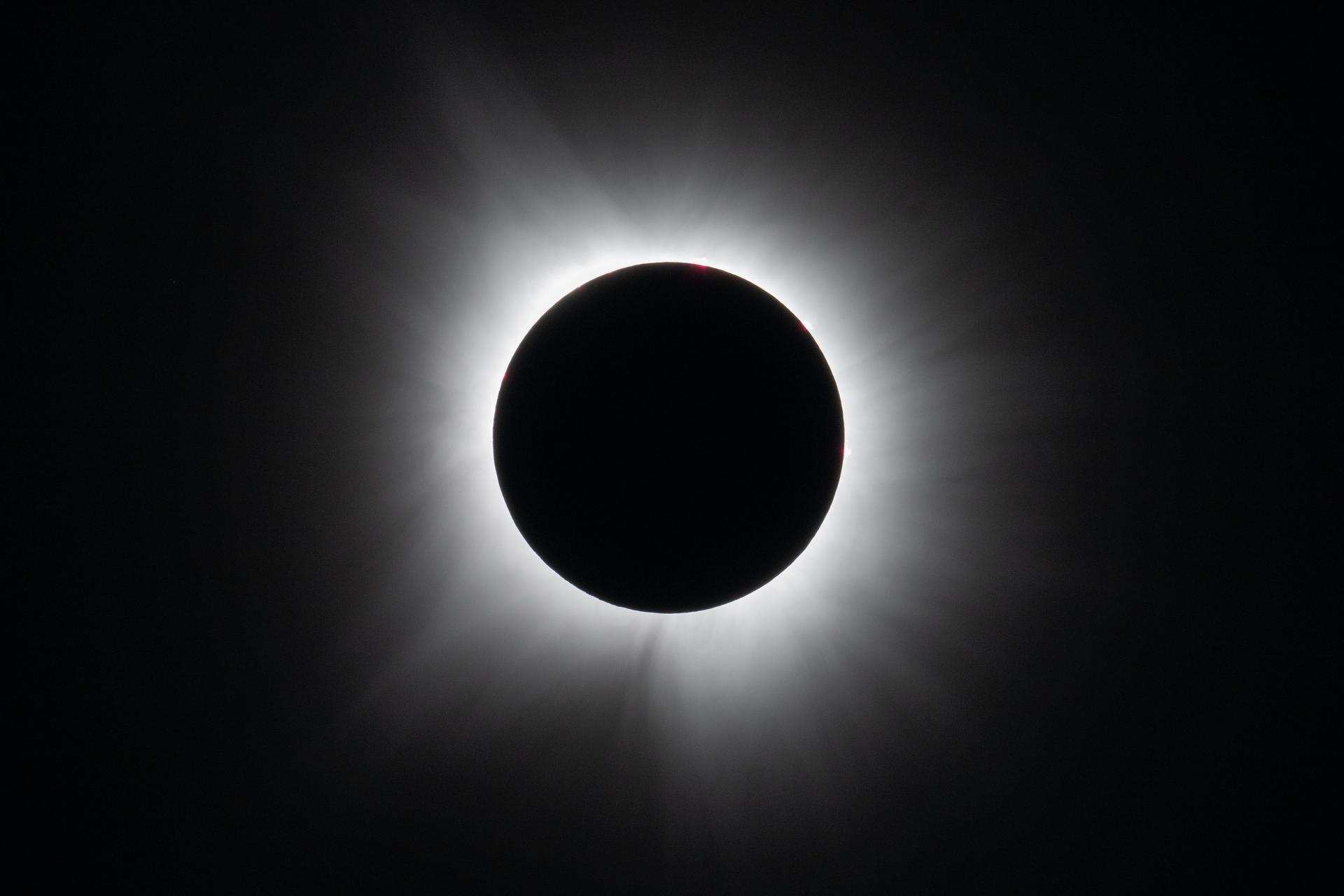
Total solar eclipse corona — reference for what a 100% total eclipse looks like, versus Madrid's ~90% partial eclipse experience

Partial Solar Eclipse · August 12, 2026

Madrid Eclipse 2026: Partial Solar Eclipse Guide — Times and Visibility

Madrid sits just outside the path of totality, but a ~90% partial eclipse is still a dramatic sky event. Here is exactly what to expect, when to watch, and how to stay safe while observing from Spain's capital.

DateAugust 12, 2026
Maximum coverage~90% (partial)
Sun altitude~15° at max eclipse
SafetyEclipse glasses essential
By Telescope Advisor Editorial Team Published: Updated: Editorial Standards

Quick Answer: What Will Madrid See During the August 12 Eclipse?

Madrid will experience a deep partial solar eclipse of approximately 90% coverage. The Moon will appear to cover about nine-tenths of the Sun's disk, creating a dramatic crescent Sun in the late afternoon sky. The sky will dim noticeably — but it will not go dark, and the solar corona will not be visible. Madrid is located just outside the path of totality, missing the total phase by approximately 50–70 kilometres northward.

A 90% partial eclipse is still a spectacular and memorable event. The sunlight will take on a peculiar, eerie quality — shadows will sharpen, the colours of the landscape will shift, and the temperature may drop slightly. Birds may behave as if dusk is approaching. But you must understand that 90% is not 100%: the difference between a 90% partial and a total eclipse is the difference between almost dark and completely dark, between a thin crescent Sun and a black disk surrounded by the corona.

Maximum coverage

~90% — the Sun becomes a thin crescent

Peak time

~8:49 PM CEST (Sun at ~15° altitude)

Corona visible?

No — totality only reveals the corona. You need to travel ~70 km north for totality.

🔭

Not sure which telescope actually fits your goals?

Answer 5 quick questions about your budget, observing targets, and experience level — our Telescope Finder Tool recommends a specific model in under 2 minutes.

Find My Telescope →

90% vs 100%: What You Will and Will Not See From Madrid

This is the most important section in this guide. Many people assume that 90% coverage is "almost as good" as a total eclipse. It is not. The difference between 90% and 100% is not 10% — it is the difference between day and night, between a crescent and a corona.

Observation Madrid (~90% partial) Totality zone (100%)
Solar corona Not visible Visible — the main event
Sky darkness Dim twilight — not fully dark Near-darkness — stars and planets visible
Diamond ring effect Not visible Visible — iconic moment
Baily's beads Not visible Visible — beads of sunlight
360° sunset Not visible Visible — twilight ring around horizon
Crescent Sun projection Visible — through pinhole, tree leaves, colander Visible — including during partial phases
Temperature drop Subtle — 2–4°C drop possible Noticeable — 5–8°C drop typical
Animal behaviour change Mild — birds may quieten Dramatic — birds roost, crickets chirp, confusion

The honest advice: If you are in Madrid on August 12, 2026, and you cannot travel north to the path of totality, you will still see an impressive and memorable partial eclipse. But if you have the means to drive 70–100 km north (to the area around Segovia, Valladolid, or Burgos), you can experience totality — and totality is a genuinely life-changing event. We discuss this further in the travel section below.

The 90% experience: what Madrid observers say

"I saw the 1999 partial eclipse from London — 97% coverage — and thought it was amazing," many eclipse chasers recall. "Then I saw a 100% total eclipse in 2017 and realized I had never actually seen an eclipse before." The corona, the diamond ring, the 360° sunset, the sudden darkness in the middle of the day — these are things you cannot experience from outside the path of totality. A 90% partial eclipse is a beautiful curiosity. A total eclipse is a transformative experience.

Exact Eclipse Times for Madrid — August 12, 2026

All times below are in Central European Summer Time (CEST), which Madrid uses in August (UTC+2).

Event Time (CEST) Sun Altitude Coverage
Partial eclipse begins ~7:32 PM CEST ~22° 0% → growing
Maximum eclipse ~8:49 PM CEST ~15° ~90%
Partial eclipse ends ~9:58 PM CEST ~6° diminishing → 0%

Times calculated for Madrid city centre (40.42°N, 3.70°W). The Sun sets at approximately 9:15 PM CEST on August 12 in Madrid, so the final partial phase of the eclipse will be occurring very close to the horizon — the last 30–40 minutes may be partially obstructed by buildings or terrain to the west.

Why the timing matters

The eclipse occurs in the late afternoon and early evening, which is ideal for comfortable viewing — the Sun is not too high, the temperatures are cooling from Madrid's August highs (typically 34–37°C / 93–99°F), and the western sky orientation means you can watch from many locations with natural shade. However, the decreasing Sun altitude means you need a clear western horizon for the full duration.

Best Viewing Spots in Madrid for the Partial Eclipse

Because the eclipse occurs in the late afternoon and early evening, the Sun will be in the western sky. You need a location with a clear view to the west-southwest. Here are the best spots in Madrid:

1. Parque del Retiro

Madrid's most famous park offers wide-open spaces with good western sightlines, particularly from the area around the Estanque Grande (the large pond) looking toward the Puerta de Alcalá and the western sky. Advantage: central location, easy metro access, cafés and facilities, pleasant shaded areas while waiting. Disadvantage: trees may partially obstruct the low western horizon; position yourself near the western edge of the park.

2. Templo de Debod

The ancient Egyptian temple in Parque del Oeste offers one of the best sunset views in Madrid, with an elevated position facing directly west over the Casa de Campo parkland. Advantage: famous sunset viewpoint for a reason — the elevated position offers an unobstructed western horizon; iconic foreground for eclipse photos. Disadvantage: can be very crowded for sunset; arrive at least 1–2 hours early.

3. Casa de Campo

Madrid's largest public park (1,700+ hectares) on the western side of the city offers numerous open areas with unobstructed western views. The area around the Teleférico (cable car) station and the lake are excellent. Advantage: vast space — no crowding concerns; clear western horizon; parking available. Disadvantage: less central; requires metro or car to reach.

4. Cerro del Tío Pío (Park of the Seven Hills)

This park in the Vallecas district features seven artificial hills that provide elevated panoramic views. The western-facing slopes offer excellent sightlines over the city. Advantage: elevated position, excellent western view, less crowded than central spots. Disadvantage: located in eastern Madrid — farther from the city centre; limited shade.

5. Madrid Río park (western bank)

The park along the Manzanares River, particularly the western bank near the Puente del Rey bridge, offers open views to the west. Advantage: linear park — plenty of space to find your perfect spot; modern infrastructure; easy walking distance from the city centre. Disadvantage: bridges and buildings may create some obstruction; scout your exact position beforehand.

Pro tip: arrive early and bring a chair

The eclipse begins at 7:32 PM CEST and maximum coverage is not until 8:49 PM — over 75 minutes of gradual darkening. Bring a comfortable folding chair, water, sunscreen (the Sun will still be intense during the early partial phases), and your eclipse glasses. Settle in, watch the crescent slowly deepen, and enjoy the gradual transformation of the light.

Madrid Weather on August 12: What to Expect

Madrid's continental Mediterranean climate means August is hot, dry, and predominantly clear. This is excellent news for eclipse viewing.

  • Clear sky probability: ~75–85% — Madrid is one of the sunniest major cities in Europe in August
  • Average cloud cover: Only 15–25% in the late afternoon and evening hours
  • Average temperature at eclipse time (7:30–10 PM): 28–34°C (82–93°F), cooling toward the lower end by the end of the eclipse
  • Rain probability: Less than 5% in mid-August
  • Typical afternoon weather: Hot, sunny, with occasional thin high cirrus — usually not thick enough to significantly affect viewing

Madrid's weather odds are among the best in Europe for the 2026 eclipse. The main concern is not clouds but heat — August temperatures in Madrid regularly exceed 35°C (95°F). Stay hydrated, wear a hat, and use sun protection. The eclipse itself will be safest to view in the early evening when the Sun is lower and less intense (though still requiring eclipse glasses at all times).

Madrid vs Other European Cities: Eclipse Coverage Comparison

Madrid is not the only European capital experiencing a partial eclipse on August 12. Here is how Madrid compares to other major cities:

City Eclipse Type Max Coverage Sun Altitude at Max Notes
Madrid Partial ~90% ~15° Deep partial — dramatic crescent Sun
Barcelona Partial ~70% ~10° Lower coverage, lower Sun — horizon critical
London Partial ~30% ~5° Modest partial — best with projection methods
Paris Partial ~35% ~6° Modest partial — similar to London
Lisbon Partial ~85% ~18° Deep partial — good altitude, lower than Madrid
Bilbao (totality zone) Total 100% ~14° ~5-hour drive north — totality guaranteed

Madrid's ~90% coverage makes it one of the best major cities for the partial phase in Europe. Only Lisbon (85%) and Porto approach similar depths. Barcelona, at ~70%, will have a less dramatic view. London and Paris see only modest partials of 30–35% — significantly less impressive.

The Madrid advantage

Madrid's combination of ~90% coverage, excellent weather odds, and comfortable viewing conditions (late afternoon, reasonable Sun altitude) makes it arguably the best European capital for the partial eclipse. While Bilbao and Burgos offer totality, Madrid's deep partial is still a spectacular sky event — and you do not need to travel anywhere.

Safety: Eclipse Glasses Are Non-Negotiable — Even at 90%

This cannot be overstated: you must use ISO 12312-2 certified eclipse glasses for every moment of the partial eclipse. The fact that 90% of the Sun is covered by the Moon does not make it safe to look at the remaining 10% with unprotected eyes. That sliver of uncovered Sun is still intensely bright and can cause permanent retinal damage in under a second.

Here is what you need for safe viewing in Madrid:

  • ISO 12312-2 certified eclipse glasses — essential for all direct viewing. They block 99.999% of the Sun's intensity.
  • Solar binoculars — binoculars with built-in solar filters (like Celestron EclipSmart) allow magnified viewing of the partial phases.
  • Solar filter for telescopes — if using a telescope, a full-aperture solar filter covering the front of the scope is mandatory.
  • Pinhole projector or colander — safe indirect methods that require no eye protection (crescent Sun images projected onto a surface).
Editor's Pick — Best Eclipse Glasses for Groups
Helioclipse Eclipse Glasses 12-Pack — ISO 12312-2 certified solar eclipse glasses for the Madrid eclipse

Helioclipse Eclipse Glasses (12-Pack)

ISO 12312-2 certified 12 pairs Fits over glasses Ideal for families

The 12-pack is ideal for Madrid's family-friendly eclipse viewing — hand out a pair to everyone in your group and watch the crescent Sun safely together. Certified to ISO 12312-2, these glasses block 99.999% of the Sun's intensity. The cardboard frame is comfortable and fits over regular prescription glasses.

Why a 12-pack makes sense in Madrid: With Madrid's excellent weather odds and the eclipse occurring in the early evening, this is a perfect opportunity for a family outing or a group picnic in the park. Having enough glasses for everyone eliminates the "share and miss the moment" problem.

View on Amazon →

Affiliate link — we may earn a small commission at no extra cost to you.

Celestron EclipSmart 10x25 Solar Binoculars — safe solar binoculars for Madrid partial eclipse

Celestron EclipSmart 10×25 Solar Binoculars — Enhanced view

For a magnified view of the crescent Sun, solar binoculars are the best tool. The built-in ISO-certified solar filters make them safe for direct Sun viewing — no separate filter to attach or worry about. 10× magnification reveals the texture of the Moon's limb against the Sun's surface and may show sunspots. Compact enough to carry anywhere in Madrid.

View on Amazon →

Affiliate link.

Celestron EclipSmart Universal Solar Filter — for telescope viewing of the Madrid partial eclipse

Celestron EclipSmart Universal Solar Filter — For telescopes

If you plan to use a telescope from Madrid, this universal solar filter is essential. It fits telescopes up to 8 inches in aperture and provides safe, high-contrast views of the partial eclipse. Watch the Moon's limb slowly traverse the Sun's disk, revealing sunspots and surface granulation in crisp white light.

View on Amazon →

Affiliate link.

⚠️ NEVER look at the Sun through a telescope, binoculars, or camera without a certified solar filter — even during a 90% partial eclipse. Instant and irreversible eye damage will result.

Photographing the Partial Eclipse From Madrid

A deep partial eclipse with the Sun low in the western sky is an excellent photographic subject. Madrid's iconic landmarks provide foregrounds that will make your eclipse photos instantly recognizable.

Iconic foreground compositions

  • ✓ The crescent Sun setting behind the Templo de Debod
  • ✓ The Royal Palace silhouetted against the eclipsed Sun
  • ✓ The Almudena Cathedral with the crescent Sun beside it
  • ✓ The western skyline from Cerro del Tío Pío
  • ✓ The crescent Sun over the Casa de Campo lake

Camera settings for partial eclipse

  • ✓ 200–400mm lens for tight shots of the crescent Sun
  • ✓ Solar filter on the lens for ALL partial phases (mandatory)
  • ✓ ISO 100–200, f/8–f/11, shutter 1/500s to 1/1000s
  • ✓ 24–70mm lens for wide-angle landscape shots (filter still needed for Sun)
  • ✓ Bracket exposures to capture the changing light levels
  • ✓ Remove filter ONLY if the Sun becomes totally eclipsed (it will not from Madrid)
Important: From Madrid, the Sun will never be fully covered. You must keep a solar filter on your camera lens or telescope for the entire eclipse. There is no safe moment to remove it. Pointing an unfiltered telephoto lens at the Sun, even at 90% coverage, can damage your camera sensor and your eyes.

Should You Travel North for Totality?

If you are in Madrid on August 12 and have access to a car, you have the option to drive north and experience totality. The northern edge of the path of totality is approximately 70–100 km north of Madrid. Here is what you need to know:

Destination Drive from Madrid Totality Duration Sun Altitude
Segovia ~1 hour (95 km) ~30–60 seconds (near edge) ~14°
Valladolid ~1.5 hours (150 km) ~1 min 30 sec ~14°
Burgos ~2.5 hours (250 km) ~1 min 40 sec ~15°

If you have never seen a total solar eclipse, the drive north is strongly recommended. A total eclipse is a profoundly different experience from even a 99% partial. The corona, the diamond ring, the 360° sunset, the sudden darkness in the middle of the day — these are things that cannot be described, only experienced. If you can spare an afternoon for the drive, you will never regret it.

The honest bottom line

If you stay in Madrid, you will see a very impressive 90% partial eclipse — a thin crescent Sun, noticeably dimmer light, and a memorable late afternoon in the park. If you drive to Burgos, you will see the solar corona with your naked eyes, feel the temperature drop, watch the stars come out in daytime, and likely experience an emotional reaction that stays with you for life. The choice is yours, but now you know the difference.

Madrid Eclipse 2026 — FAQ

Will Madrid experience a total or partial solar eclipse?

Madrid will see a partial solar eclipse of approximately 90%. The path of totality passes just north of Madrid. For totality, you need to travel approximately 70–100 km north to cities like Segovia, Valladolid, or Burgos.

What time is the solar eclipse in Madrid on August 12, 2026?

The partial eclipse begins at approximately 7:32 PM CEST. Maximum eclipse (the deepest coverage, ~90%) occurs at approximately 8:49 PM CEST. The partial eclipse ends at approximately 9:58 PM CEST, though the Sun will be very low near sunset by then.

Will the sky get dark during Madrid's partial eclipse?

The sky will dim noticeably — similar to twilight — but it will not go fully dark. The solar corona will not be visible. This is the key difference between a ~90% partial eclipse and a total eclipse. The dimming will be most noticeable in the 10–15 minutes around the maximum at 8:49 PM CEST.

Is it safe to look at the partial eclipse in Madrid?

Only with proper eye protection. ISO 12312-2 certified eclipse glasses are essential for direct viewing. Even at 90% coverage, the remaining sliver of the Sun is bright enough to cause instant and permanent eye damage. Never look at the Sun through a telescope, binoculars, or camera without a certified solar filter.

Where is the best place in Madrid to watch the eclipse?

Templo de Debod offers the best combination of elevated western view and iconic foreground. Parque del Retiro (western end) and Casa de Campo also offer excellent viewing. For the least crowded experience, try Cerro del Tío Pío or the Madrid Río park. All locations need a clear view to the west-southwest.

How does Madrid compare to Barcelona for the 2026 eclipse?

Madrid (~90% coverage) will see a significantly deeper partial eclipse than Barcelona (~70% coverage). The Sun will also be at a more favourable altitude in Madrid (15° vs 10° in Barcelona at maximum). Madrid is clearly the better Spanish capital for viewing the partial phase.

Related Guides