Telescope Advisor Logo Telescope Advisor
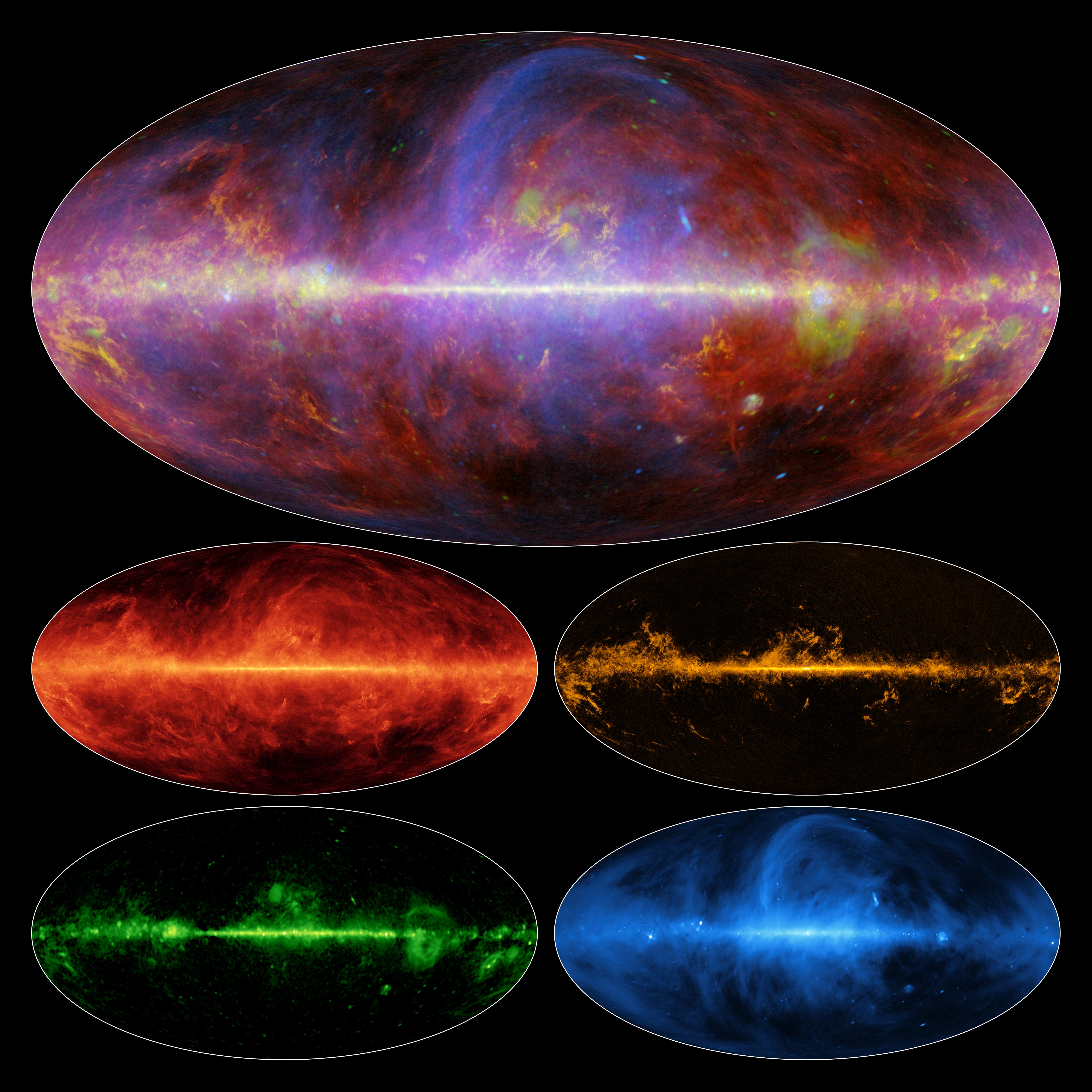
The Milky Way stretching across a dark night sky — the kind of target both the Seestar S30 Pro and DWARFLAB Dwarf 3 are designed to capture

Smart Telescope Comparison · 2026

Seestar S30 Pro vs DWARFLAB Dwarf 3: Which Should You Buy?

You’ve already decided you want a smart telescope under $500. The Seestar S50 isn’t in the picture. Now it’s just the S30 Pro and the Dwarf 3 — and they’re more different than the spec sheets suggest. This is the direct two-way comparison, built around the questions that actually drive the right choice for your use case.

S30 Pro aperture30mm quadruplet APO
Dwarf 3 aperture24mm telephoto lens
S30 Pro field of view4.6° — widest budget smart scope
Solar modeS30 Pro: built-in · Dwarf 3: filter required
By Telescope Advisor Editorial Team Published: Updated: Editorial Standards

Quick Answer: S30 Pro or Dwarf 3?

Buy the Seestar S30 Pro if: You want the widest field of view in this price category (4.6° — fits the entire Andromeda Galaxy), you plan to image the Sun during the August 2026 eclipse (built-in solar filter), or you prefer a simpler app experience optimized for beginners. The S30 Pro's quadruplet APO optics also deliver better edge-of-field star quality than the Dwarf 3's telephoto lens.

Buy the DWARFLAB Dwarf 3 if: You want a higher-resolution imaging experience, more powerful processing software (Stellar Studio is genuinely capable), or you value the Dwarf 3's lighter, more pocketable form factor. The Dwarf 3's software ecosystem is better for users who want to push beyond basic automatic stacking into more advanced image processing.

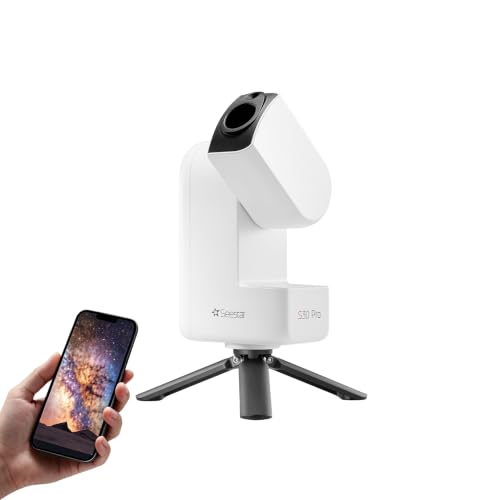
ZWO Seestar S30 Pro
ZWO Seestar S30 Pro smart telescope — 30mm quadruplet APO with 4.6 degree field of view
  • ✓ 30mm quadruplet APO — superior optics
  • ✓ 4.6° FOV — widest in category
  • ✓ Built-in solar filter
  • ✓ 8.3MP Sony IMX585 sensor
  • ✓ 6-hour battery
  • ✓ ZWO Seestar App — polished & beginner-friendly
  • ✗ Narrower deep-sky magnification vs Dwarf 3 at equivalent settings
DWARFLAB Dwarf 3
DWARFLAB Dwarf 3 smart telescope — ultraportable with Sony sensor and Stellar Studio software
  • ✓ 24mm — lighter and more pocketable
  • ✓ Sony sensor — excellent low-noise performance
  • ✓ Stellar Studio — advanced image processing
  • ✓ Superior mosaic mode for large-target imaging
  • ✓ Competitive 4–5 hour battery
  • ✗ No built-in solar filter — add-on required
  • ✗ Narrower FOV than S30 Pro


Full Spec Comparison: S30 Pro vs Dwarf 3

Specification ZWO Seestar S30 Pro DWARFLAB Dwarf 3 Edge
Aperture 30mm f/5.3 24mm f/~4 S30 Pro
Optical design Quadruplet APO refractor Telephoto lens S30 Pro (better star edge quality)
Field of view ~4.6° × 3.4° (tele camera) ~2.2° × 1.7° (tele camera) S30 Pro (2× wider)
Imaging sensor Sony IMX585 (8.3MP, colour) Sony IMX415 (8.3MP, colour) Tie (similar sensors)
Dual cameras Yes (wide + tele) Yes (wide + tele) Tie
Built-in solar filter Yes — app-activated No — third-party required S30 Pro
Battery life ~6 hours (rated); 5–6h real ~4–5 hours real-world S30 Pro
App ecosystem ZWO Seestar App (simple, polished) DWARFLAB App + Stellar Studio Dwarf 3 (for advanced users)
Mosaic imaging Basic mosaic mode Superior mosaic — better stitching Dwarf 3
Weight / portability ~420g ~400g (14 oz) — slightly lighter Tie (both ultraportable)
Works offline Yes — creates own Wi-Fi Yes — creates own Wi-Fi Tie
Price tier Mid-range (slightly higher) Budget-to-mid (slightly lower) Dwarf 3 (value)

Specs sourced from manufacturer documentation and our hands-on reviews. Check our full Seestar S30 Pro review and Dwarf 3 review for complete tested performance data.

The Core Difference: Field of View vs Software Power

Most smart telescope comparisons get distracted by aperture and sensor specs. For these two telescopes, the real fork in the road is simpler: the S30 Pro's 4.6° field of view versus the Dwarf 3's deeper but narrower 2.2°, combined with the S30 Pro's solar capability and the Dwarf 3's more powerful software.

The S30 Pro's 4.6° × 3.4° field is genuinely distinctive in the sub-$600 smart telescope market — it is the widest imaging field of any smart telescope at this price point. The entire Andromeda Galaxy fits in a single frame. The full extent of the Orion Nebula complex, the Pleiades, the complete Virgo Cluster — all captured without mosaic work. If you want to photograph large, extended objects in one shot, nothing else at this price can match it.

The Dwarf 3's 2.2° field is narrower but represents a deliberate design trade-off: a longer telephoto path at the same aperture produces more magnification per pixel, which can improve resolution on smaller targets like planetary nebulae, compact galaxies, and globular clusters. Combined with Stellar Studio's image processing tools, the Dwarf 3 is the better choice for observers who want to post-process their images and push for maximum detail.

S30 Pro: best for large, extended objects

  • Andromeda Galaxy (M31) — full galaxy + companions in one frame
  • Orion Nebula complex — full extent including running man nebula
  • Pleiades star cluster — full halo of nebulosity in frame
  • Large emission nebulae (Rosette, North America)
  • Milky Way panoramas with the wide-angle camera
  • Solar disk — full-disk solar imaging with built-in filter

Dwarf 3: best for compact, detail-rich targets

  • Globular clusters (M13, M22) — better resolution in center
  • Compact planetary nebulae (Ring Nebula M57, Blinking Planetary)
  • Smaller galaxies (M81/M82 pair fills frame well)
  • Users who want to post-process via Stellar Studio
  • Advanced mosaic work — superior stitching algorithm
  • Observers comfortable with a more complex but more capable app

Optics: Quadruplet APO vs Telephoto Lens

This is the head-to-head where the S30 Pro wins clearly on paper — and in tested edge-of-field performance. The S30 Pro uses a quadruplet apochromatic refractor design — four lens elements optimized to eliminate chromatic aberration and maintain pinpoint star shapes across the entire 4.6° field. Stars at the corner of the frame are nearly as round and sharp as stars in the center.

The Dwarf 3 uses a telephoto lens design. Telephoto lenses are not inherently inferior — camera telephoto lenses achieve excellent results — but at f/4 or wider with a relatively wide field, some field curvature and vignetting is more common. In real-world imaging, the difference is most visible in wide-field shots with many stars: the S30 Pro maintains clean star shapes to the edges; the Dwarf 3 may show slight elongation in the corners at its widest field.

For typical users looking at nebulae centered in the frame, this distinction matters less. For astrophotographers who crop and inspect corners, the S30 Pro's optical design is a genuine advantage. For the average beginner, both produce genuinely impressive results on bright targets like M42, M31, and M45.

Sensor comparison note: Both telescopes use Sony 8.3MP imaging sensors — the S30 Pro uses Sony IMX585, the Dwarf 3 uses Sony IMX415. Both are backside-illuminated (BSI) sensors with good low-light performance and low read noise. In real-world imaging, the sensor difference between these two is minimal — camera sensitivity is not the deciding factor here. Optical design and field of view dominate the quality difference.

App Comparison: ZWO Seestar App vs Stellar Studio

The app experience is where the Dwarf 3 earns its reputation among intermediate and advanced users — and where the S30 Pro wins for absolute beginners. This is not a minor difference; it is one of the primary reasons to choose one telescope over the other.

ZWO Seestar App (S30 Pro)

  • Streamlined interface — designed for first-night success. Select a target, tap Start, watch the image build.
  • Fast plate-solving — typically locks on within 30–60 seconds
  • Automatic stretching — the app applies histogram stretching to reveal nebula detail without user input
  • Solar mode — one-tap activation deploys the built-in solar filter and switches to solar imaging parameters
  • Limit: Less control over individual parameters (gain, exposure, stretch curve) compared to Stellar Studio. Advanced users may find it constraining.

DWARFLAB App + Stellar Studio (Dwarf 3)

  • More powerful imaging controls — gain, exposure, and stacking parameters are adjustable
  • Stellar Studio — a dedicated post-processing tool that goes beyond the in-app preview, enabling proper calibration frame application, background subtraction, and colour calibration
  • Superior mosaic mode — the stitching algorithm produces cleaner panorama joins than the S30 Pro's basic mosaic
  • Limit: Steeper learning curve. The DWARFLAB app UI can feel crowded on smaller screens. First-night users occasionally struggle more than on the S30 Pro.
  • Active firmware/app updates — DWARFLAB has been releasing regular improvements

The verdict on apps

If this is your first smart telescope and you want to be imaging M42 beautifully on night one with minimal fuss, the ZWO Seestar App wins. If you already understand astrophotography concepts (calibration frames, histogram stretching, noise reduction) or you're willing to learn Stellar Studio, the Dwarf 3's software gives you tools the S30 Pro simply cannot match. Neither is universally "better" — it depends on your experience level and how deep you want to go.

Solar Imaging for the August 2026 Eclipse

If the August 12, 2026 total solar eclipse is a significant factor in your purchase decision, the answer is clear: get the Seestar S30 Pro.

S30 Pro solar mode — complete out of the box

The S30 Pro has a built-in motorized solar filter that deploys automatically when solar mode is activated in the Seestar app. There is nothing else to buy. Point at the Sun, tap Solar Mode, and it plates-solves to center the Sun's disk and begins imaging sunspots immediately. The 4.6° field captures the full solar disk with comfortable margins — ideal for filming the partial phases of the eclipse as the Moon's limb crosses the solar surface. For documenting the 2026 eclipse photographically, this is the smart telescope choice.

Dwarf 3 solar imaging — requires additional purchase

The Dwarf 3 does not include a solar filter. You need to purchase and attach a third-party solar filter that fits the Dwarf 3's lens hood diameter. DWARFLAB sells an accessory solar filter; Baader film cut to size is also usable. Once attached, the Dwarf 3 images the Sun competently — but the setup friction is greater, and the filter must be manually removed for nighttime use. If solar imaging is important to you, factor in the additional purchase and setup complexity.

Eclipse photography note

Both smart telescopes produce exceptional solar eclipse documentation during partial phases. Neither is designed for totality photography (which requires fast exposure adjustment during the brief totality window). But for imaging the partial phases — including any partial eclipse visible from North America or the UK — either telescope with a proper solar filter will produce compelling stacked images showing the Moon's crisp limb progressing across sunspot groups. The S30 Pro gets there with zero extra equipment; the Dwarf 3 needs one add-on. For the full eclipse photography guide, see our 2026 eclipse telescope guide.

Portability and Build Quality

Both the S30 Pro and Dwarf 3 are genuinely ultraportable smart telescopes — dramatically smaller and lighter than any traditional telescope capable of comparable astrophotography. Both fit in a daypack. Both weigh under 450g. Both set up in under 3 minutes. The portability difference between them is marginal in day-to-day use.

The Dwarf 3 is slightly lighter at ~400g (14 oz) versus the S30 Pro's ~420g. Both include tabletop tripods. For travel — airport carry-on, hiking to dark-sky sites, fitting inside a backpack — neither creates any practical challenge. The S30 Pro's larger optical tube diameter (owing to the 30mm vs 24mm aperture) makes it very slightly less pocketable in the strictest sense, but for any normal backpack or camera bag both fit without issue.

Build quality: both are well-constructed

The S30 Pro uses a robust plastic and aluminum construction typical of ZWO's product line. The Dwarf 3 uses a similar construction approach. Both charge via USB-C and can be powered from a power bank for extended sessions beyond their battery life — a practical advantage for multi-hour dark-sky nights. Both are rated for typical outdoor use; neither is rated for rain or dust immersion.

Who Should Buy the Seestar S30 Pro

The S30 Pro is the right choice if:

  • The 2026 eclipse matters to you. Built-in solar filter means zero extra equipment. Tap solar mode and you're filming the eclipse.
  • You love large targets. Andromeda, full Orion Nebula complex, large emission nebulae — the 4.6° field captures these in one frame without mosaic work.
  • You're a first-time smart telescope buyer. The ZWO Seestar app is genuinely the most beginner-friendly in the category. First-night success rate is very high.
  • Battery life matters. The 6-hour battery is 1–2 hours more than the Dwarf 3. For long dark-sky sessions, this is meaningful.
  • You want the best optical quality in this category. The quadruplet APO design maintains edge-of-field star quality across the full 4.6° frame — no competitor at this price does this.

S30 Pro ideal target list

  • M31 Andromeda Galaxy (full disc)
  • M42 Orion Nebula (full complex)
  • M45 Pleiades (full nebulosity halo)
  • Rosette Nebula, North America Nebula
  • The Sun — partial eclipse phases
  • Milky Way panoramas (wide-angle mode)

Who Should Buy the DWARFLAB Dwarf 3

The Dwarf 3 is the right choice if:

  • You want to post-process your images. Stellar Studio is a legitimate astrophotography tool, not just a preview app. If you want to calibration-frame, stretch, and noise-reduce properly, the Dwarf 3 ecosystem supports this.
  • You prefer higher magnification on compact targets. The narrower FOV translates to higher effective magnification per pixel on globular clusters, small galaxies, and planetary nebulae.
  • Mosaic imaging interests you. For capturing enormous nebulae in multi-panel mosaics, the Dwarf 3's superior stitching algorithm produces cleaner results.
  • You want better value. The Dwarf 3 is generally priced lower than the S30 Pro, making it the more budget-friendly choice in this head-to-head.
  • Solar imaging isn't a priority. If the eclipse isn't your motivation and you don't plan to image the Sun, the missing built-in filter is a non-issue.

Dwarf 3 ideal target list

  • M13 Hercules Globular Cluster
  • M57 Ring Nebula (NGC 6720)
  • M81/M82 Bode's Galaxy pair
  • Compact galaxy pairs and groups
  • Large mosaic projects (full Milky Way)
  • Night sky time-lapses with wide camera

Also Consider

DWARFLAB Dwarf Mini — if budget is tight

The Dwarf Mini is the entry-level smart telescope at a lower price. Smaller sensor, narrower field, and fewer features than the Dwarf 3 — but an excellent first smart telescope for those who want to try the category at minimum cost. See our Dwarf Mini review.

ZWO Seestar S50 — the original model

The S50 offers 50mm aperture and better light-gathering on faint targets at the cost of a much narrower 1.29° field of view. It has been largely superseded by the S30 Pro for most buyers. See is the S50 still worth buying.

Seestar S30 Pro vs Dwarf 3 — FAQ

What is the biggest advantage of the Seestar S30 Pro over the Dwarf 3?

The S30 Pro's biggest advantage is its 4.6° field of view — more than twice as wide as the Dwarf 3's ~2.2°. This allows the entire Andromeda Galaxy, the full Orion Nebula complex, and large emission nebulae to fit in a single frame without mosaic work. The built-in solar filter is the second significant advantage, making the S30 Pro uniquely suited for the August 2026 eclipse without any additional equipment.

What is the biggest advantage of the Dwarf 3 over the S30 Pro?

The Dwarf 3's biggest advantage is its software ecosystem, particularly Stellar Studio. This gives advanced users access to genuine astrophotography tools: calibration frame processing, background subtraction, and colour calibration go well beyond what the ZWO Seestar app offers. For observers who want to post-process their images and achieve maximum quality from the raw data, the Dwarf 3 with Stellar Studio is the more capable platform. Price is a secondary advantage — the Dwarf 3 is generally the more affordable option.

Can the Dwarf 3 do solar imaging for the 2026 eclipse?

Yes, but it requires an additional solar filter purchase. The Dwarf 3 does not include a built-in solar filter. DWARFLAB sells a dedicated Dwarf 3 solar filter as an accessory, and Baader AstroSolar film cut to size also works. Once a solar filter is attached, the Dwarf 3 images the partial eclipse phases effectively. The extra purchase and setup step is the only disadvantage versus the S30 Pro, which handles solar mode entirely automatically.

Is the S30 Pro or Dwarf 3 better for beginners?

The S30 Pro is better for absolute beginners. The ZWO Seestar app is the most streamlined smart telescope app on the market — select a target, tap Start, and a beautiful stacked image builds on your phone within 5–10 minutes. The Dwarf 3's DWARFLAB app and Stellar Studio are more powerful, but they have a steeper learning curve. First-night success rate is higher with the S30 Pro. If you're comfortable with technology and want more control from the start, the Dwarf 3 is manageable — but the S30 Pro is the easier first smart telescope.

How does this comparison differ from the S30 Pro vs S50 vs Dwarf 3 three-way page?

The three-way comparison covers all three telescopes for buyers who haven't yet decided which category they're in. This page is specifically for buyers who have already ruled out the S50 — either because it's discontinued, outside their budget, or because they prefer the S30 Pro's wider field — and are making the final S30 Pro vs Dwarf 3 decision. The two-way format allows much deeper treatment of the specific trade-offs between these two models.

Which smart telescope is better for deep-sky astrophotography?

It depends on what "better" means to you. For capturing large, extended nebulae in a single frame, the S30 Pro's wider field wins. For squeezing maximum resolution and detail from compact targets, and for post-processing flexibility, the Dwarf 3 with Stellar Studio wins. Both produce genuinely impressive deep-sky images on bright targets like M42, M31, M45, and M13 — the distinction matters most at the margins, not in daily use.

Can I see planets with either telescope?

Poorly, on both. Smart telescopes in this category are optimized for deep-sky astrophotography — their short focal lengths and wide fields produce small planetary images with minimal detail. Neither the S30 Pro nor the Dwarf 3 is a planetary telescope. Both will show Saturn as an oval with visible rings and Jupiter as a small disk, but they cannot compete with a 6" or 8" traditional telescope on planets. If planetary viewing is your priority, consider a Celestron NexStar 6SE or a traditional 8" Dobsonian instead. See our best planetary telescopes guide.

Do either of these smart telescopes require a computer or just a smartphone?

Both require only a smartphone (iOS or Android). The telescope creates its own Wi-Fi hotspot; you connect your phone, open the app, and control everything from there. No laptop, no astronomy computer, no hand controller. Both work fully offline at dark-sky sites — no internet connection required after the initial app installation and catalogue download.

Is the Seestar S30 Pro or Dwarf 3 better for apartments and light-polluted locations?

Both perform remarkably well under light-polluted skies — better than any traditional telescope at this price. The live-stacking approach both use suppresses sky gradient effectively. The S30 Pro's built-in light pollution rejection mode (like Seestar's LP mode) and wider field make it slightly better optimized for urban imaging of extended objects. Both produce impressive results on bright targets like M42 and M31 even from city centres. For a dedicated guide, see our best targets for light-polluted skies.

Which is the final recommendation — S30 Pro or Dwarf 3?

For most buyers, the Seestar S30 Pro is the better all-around choice — the widest field of view in the category, better optics, a longer battery, a simpler app, and a built-in solar filter that makes the August 2026 eclipse immediately accessible. It is the better first smart telescope and the better wide-field tool. The Dwarf 3 wins for buyers who value software depth — advanced image processing, mosaic capability, and lower price. If you know what calibration frames are and you intend to use Stellar Studio, the Dwarf 3 is worth the trade-off. If not, the S30 Pro is the safer recommendation.

Related Smart Telescope Guides