
How to See the Black Eye Galaxy (M64) Through a Telescope — Complete Guide
Telescope Advisor Logo Telescope Advisor
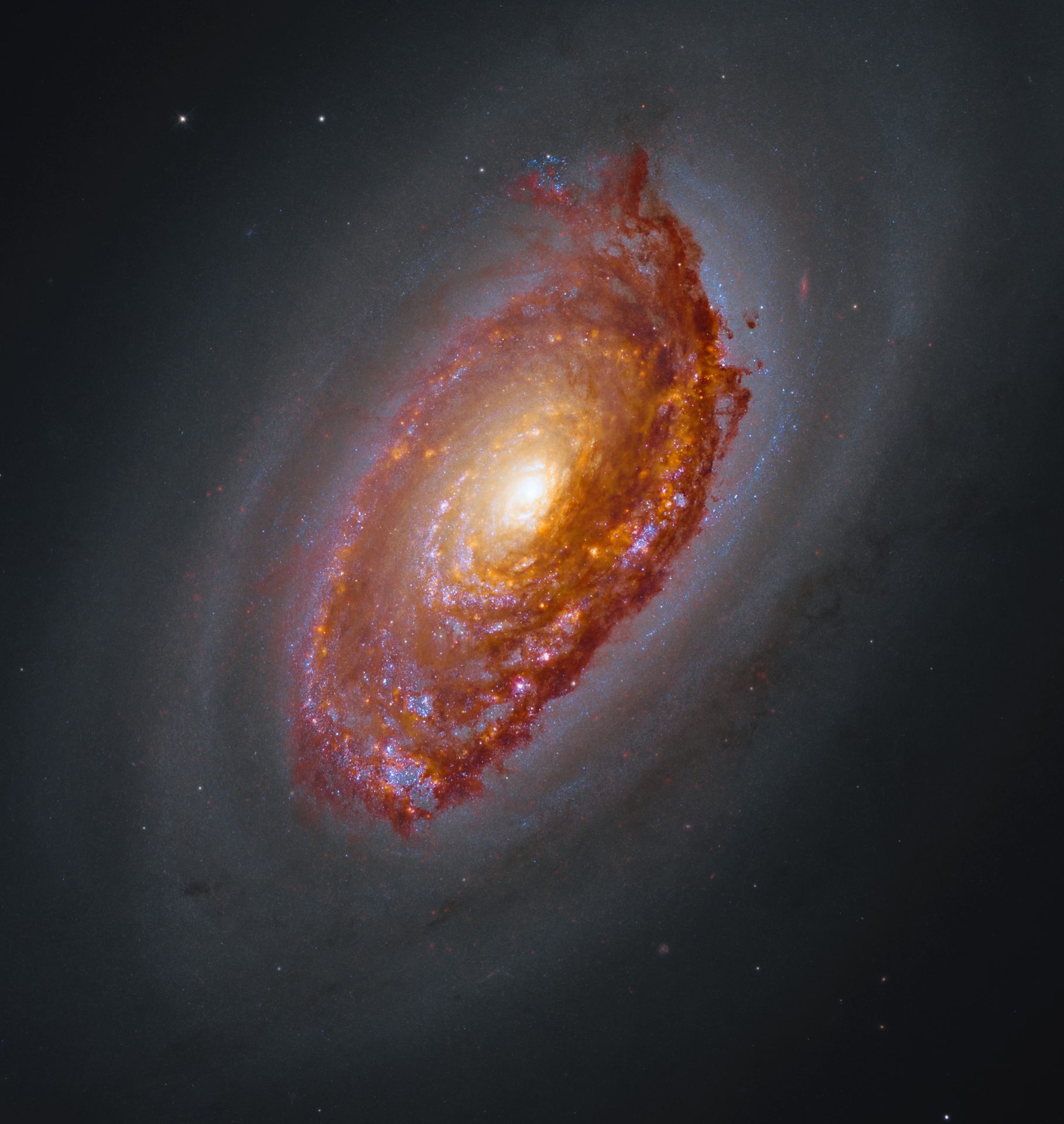
The Black Eye Galaxy M64 captured by Hubble and Webb — a spiral galaxy with a dramatic dark dust lane across its bright core

Observing Guide · Spiral Galaxy

How to See the Black Eye Galaxy (M64) Through a Telescope

The Black Eye Galaxy — also known as the Sleeping Beauty Galaxy — is one of the most distinctive galaxies in the Messier catalogue. Its bright core is dramatically bisected by a dark lane of interstellar dust that gives it the appearance of a black eye. Discovered by Edward Pigott in 1779, M64 is a favourite target for amateur observers because its unique feature is visible in surprisingly modest telescopes. This guide covers everything you need to observe it.

Object typeSpiral galaxy with dark lane
Apparent magnitude8.5
Best seasonMarch – July
Min. aperture100mm sees dark lane
By Elena ReyesPublished: Updated: Reviewed & approved by Juhi Sahni, Senior Editor Editorial Standards

Quick Answer: What Telescope Do I Need for the Black Eye Galaxy?

The Black Eye Galaxy is visible in any telescope with at least 100mm (4-inch) aperture under dark skies. At magnitude 8.5, M64 is moderately bright, and its most distinctive feature — the dark dust lane — can be glimpsed in a 100mm scope under good conditions. Through a 100mm refractor at 60–80×, the galaxy appears as a bright, oval patch with a noticeably off-centre core. A 150mm (6-inch) scope at 80–100× shows the dark lane clearly as a notch or dark indentation on the galaxy's north-eastern edge. An 8-inch (200mm) Dobsonian at 100–150× reveals the iconic black-eye appearance: a bright core with a sharp, dark dust lane cutting across it, surrounded by a faint outer halo of the galaxy's spiral disc.


🔭

Not sure which telescope actually fits your goals?

Answer 5 quick questions about your budget, observing targets, and experience level — our Telescope Finder Tool recommends a specific model in under 2 minutes.

Find My Telescope →

How to Find M64 in Coma Berenices

M64 is located in the small, faint constellation Coma Berenices (Berenice's Hair), about 40 arcminutes north of the star 35 Comae Berenices. The easiest approach: find the bright star Arcturus in Boötes (the spring sky's brightest star), then look about 15 degrees west. Coma Berenices is a faint constellation best recognised by its constellation — a scattering of faint stars that forms a loose cluster. Alternatively, locate the Big Dipper high overhead, trace the handle past Alkaid to the diamond-shaped head of the Hunting Dogs (Cor Caroli), then continue south-southeast to the Coma star cluster.

M64 is best observed from March through July, when Coma Berenices is high in the evening sky. The constellation culminates around midnight in May, placing the galaxy well above the horizon. From spring through mid-summer, the galaxy is well placed for evening observing sessions.

What M64 Looks Like Through Different Apertures

InstrumentBest MagnificationWhat You'll See
100mm (4") refractor60–80×Bright oval patch. Core noticeably off-centre. Dark lane glimpsed as a notch on one side.
150mm (6") reflector80–100×Clear dark dust lane across one side of the core. The "black eye" effect is visible.
200mm (8") Dobsonian100–150×Prominent dark lane cutting across the bright core. Surrounding halo visible. Iconic black-eye appearance.
300mm (12")+150–200×Dark lane detailed and sharp. Hints of spiral arm structure in the outer halo. Star-forming regions visible.

The Science of the Black Eye Galaxy

M64 is famous for its striking appearance, but the science behind it is just as fascinating. The galaxy is thought to have formed from the merger of two galaxies — one large and one smaller — about a billion years ago. The dark dust lane that gives M64 its distinctive appearance is the remnant of the smaller galaxy's gas and dust, which is rotating in the opposite direction to the main galaxy's stars. This counter-rotation creates a region of intense star formation in the interface zone, where gas clouds from the two systems collide and collapse, visible in photographs as bright blue knots along the inner edge of the dust lane.

M64 is approximately 17 million light-years away and spans about 50,000 light-years in diameter — smaller than the Milky Way. The galaxy's unusual appearance and relatively close distance make it a popular target for amateur astrophotographers, who can capture both the bright core and the dark lane with modest equipment. M64's central region is actively forming stars, particularly along the inner edge of the dust lane, where the opposing gas rotations trigger star formation on a dramatic scale.

Best Telescopes for M64

M64 is a moderately bright galaxy that shows its most distinctive feature well in 6-inch and larger telescopes. An 8-inch Dobsonian at 100–150× provides the iconic black-eye view. For telescope recommendations, see our best Dobsonian telescopes guide.


Frequently Asked Questions

What telescope do I need for the Black Eye Galaxy?

A 100mm scope shows the dark lane as a notch. A 6-inch scope reveals it clearly. An 8-inch Dobsonian shows the iconic black-eye appearance at 100–150×.

How do I find M64?

Find Arcturus in Boötes, then look 15° west. M64 is 40 arcminutes north of the star 35 Comae Berenices in the constellation Coma Berenices.

Why is it called the Black Eye Galaxy?

A prominent dark dust lane cuts across the bright core, giving the galaxy the appearance of a black eye. It is also called the Sleeping Beauty Galaxy.

When is M64 best visible?

From March through July, when Coma Berenices is high in the spring/summer evening sky. Best around midnight in May.

What causes the dark lane in M64?

The dark lane is the remnant of a smaller galaxy that merged with M64 about a billion years ago. The gas rotates in the opposite direction to the main galaxy's stars.

Can I photograph the Black Eye Galaxy?

Yes — M64 is a popular astrophotography target. A 6-inch scope with a DSLR can capture both the bright core and the dust lane in 30–60 second exposures.