
How to See Globular Cluster M3 Through a Telescope — Complete Observing Guide
Telescope Advisor Logo Telescope Advisor
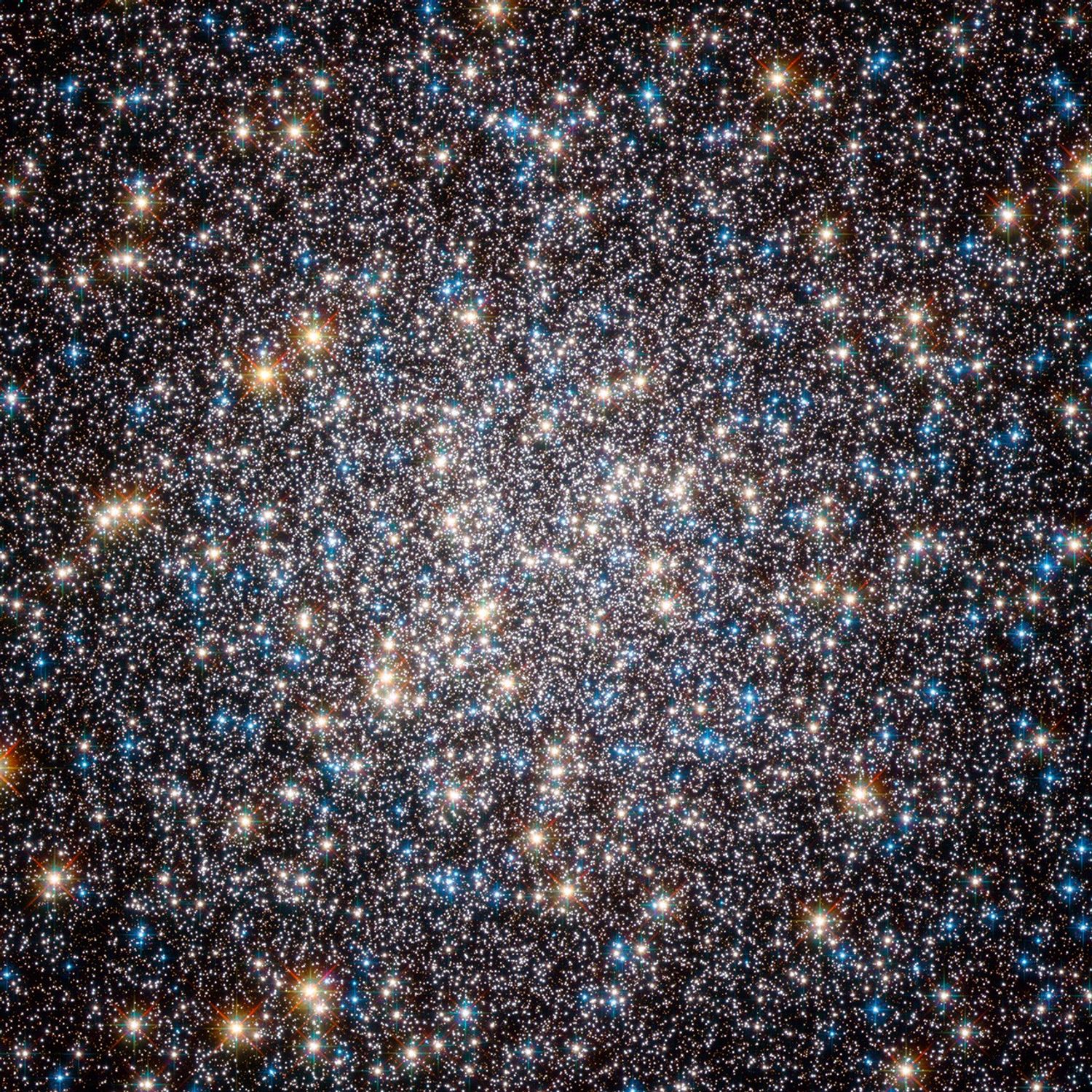
Globular cluster core region captured by the Hubble Space Telescope — M3 is one of the richest and brightest globular clusters in the northern sky

Observing Guide · Globular Cluster

How to See Globular Cluster M3 Through a Telescope

M3 is one of the finest globular clusters in the northern sky — second only to M13 in Hercules and arguably richer in individual stars. It contains an estimated half-million stars packed into a sphere just 180 light-years across, glowing at magnitude 6.2. Discovered by Charles Messier in 1764, M3 is a spectacular sight in any telescope. This guide covers everything you need to observe it.

Object typeGlobular cluster
Apparent magnitude6.2
Best seasonMarch – August
Min. apertureBinoculars resolve it
By Elena ReyesPublished: Updated: Reviewed & approved by Juhi Sahni, Senior Editor Editorial Standards

Quick Answer: What Telescope Do I Need for M3?

M3 is visible as a fuzzy star to the naked eye under dark skies and an easy target in binoculars. Any telescope with at least 80mm aperture begins to resolve individual stars. Through a 100mm refractor at 60–80×, M3 appears as a bright, round glow with a dense core and dozens of resolved stars at the edges. A 150mm (6-inch) scope at 100–150× resolves hundreds of stars across the cluster's 16-arcminute face. An 8-inch (200mm) Dobsonian at 150–200× reveals a spectacular ball of stars with a bright, compressed core and countless individual points stretching to the cluster's edge. M3 is one of the most rewarding globular clusters for medium-aperture telescopes.


🔭

Not sure which telescope actually fits your goals?

Answer 5 quick questions about your budget, observing targets, and experience level — our Telescope Finder Tool recommends a specific model in under 2 minutes.

Find My Telescope →

How to Find M3 in Canes Venatici

M3 is located in the small constellation Canes Venatici (the Hunting Dogs), about 10 degrees southeast of Cor Caroli (Alpha Canum Venaticorum) and midway between the bright stars Arcturus in Boötes and Cor Caroli. The easiest finder approach: locate Arcturus (the brightest star in the spring sky), then look about 15 degrees northwest. In a finder scope at low power, M3 appears as a bright, round, fuzzy patch — noticeably brighter than the surrounding field stars and distinctly non-stellar.

M3 is best observed from March through August, when Canes Venatici is high in the evening sky. The constellation culminates around midnight in May. Because M3 is a high-surface-brightness object (unlike many galaxies), it holds up well under moderately light-polluted skies — it will look good even from suburban skies in a 6-inch scope.

What M3 Looks Like Through Different Apertures

InstrumentBest MagnificationWhat You'll See
10×50 binoculars10×Bright, round, fuzzy patch. Resolved into a grainy texture. Core noticeably brighter than edges.
100mm (4") refractor60–80×Bright resolved core. Dozens of individual stars at the edges. Increasing density toward centre.
150mm (6") reflector100–150×Hundreds of stars across the cluster face. Bright, compressed core. Stars resolved almost to the centre.
200mm (8") Dobsonian150–200×Spectacular. Thousands of stars visible. Core a bright, unresolved ball with resolved stars surrounding it.
300mm (12")+200–300×Individual stars resolved in the core on steady nights. Star chains and dark lanes visible through the cluster.

The Science of M3

M3 is one of the oldest and most massive globular clusters in the Milky Way's halo. It is approximately 33,900 light-years away and contains an estimated 500,000 stars packed into a sphere 180 light-years across. The cluster orbits the Milky Way's centre in a highly elliptical orbit, taking about 300 million years to complete one revolution. At an estimated age of 11.4 billion years, M3's stars are among the oldest in the galaxy — the cluster formed when the universe was only about 2.5 billion years old.

M3 holds a special place in astronomical history: it contains 274 known variable stars — more than any other globular cluster in the sky. Most of these are RR Lyrae variables, which pulse with periods of less than a day and are used as standard candles for measuring cosmic distances. The first variable star in M3 was discovered in 1889, and the cluster has been a favourite target for variable star observers ever since. For observers with larger telescopes, tracking the brightness of some of the brighter RR Lyrae stars in M3 over the course of an evening is a rewarding project that connects modern amateur astronomy to a century and a half of scientific tradition.

Best Telescopes for M3

M3 is a magnificent target in almost any telescope. A 6-inch Dobsonian at 100× provides a stunning resolved view. An 8-inch scope adds significantly more stars and shows the core's compressed structure. For telescope recommendations, see our best Dobsonian telescopes guide.


Frequently Asked Questions

What telescope do I need for M3?

M3 is visible in binoculars and resolves beautifully in any 80mm+ telescope. A 6-inch scope at 100× reveals hundreds of stars. An 8-inch shows thousands.

How do I find M3?

M3 lies in Canes Venatici, about 10° southeast of Cor Caroli and midway between Arcturus and Cor Caroli. Bright, round fuzzy patch in a finder scope.

How does M3 compare to M13 (Hercules Cluster)?

M3 is slightly fainter than M13 (mag 6.2 vs 5.8) and smaller, but many observers find M3 richer in individual resolved stars. Both are spectacular in medium apertures.

When is M3 best visible?

From March through August, when Canes Venatici is high in the evening sky. Best around midnight in May. Visible all year from mid-northern latitudes.

Can I see M3 from the city?

Yes — M3 has high surface brightness and holds up well in suburban skies. A 6-inch scope from Bortle 6 skies still shows dozens of resolved stars.

Why is M3 important to astronomy?

M3 contains 274 known variable stars — more than any other globular cluster. It is a key target for studying RR Lyrae variable stars used as standard candles.