
Telescope Advisor Logo Telescope Advisor
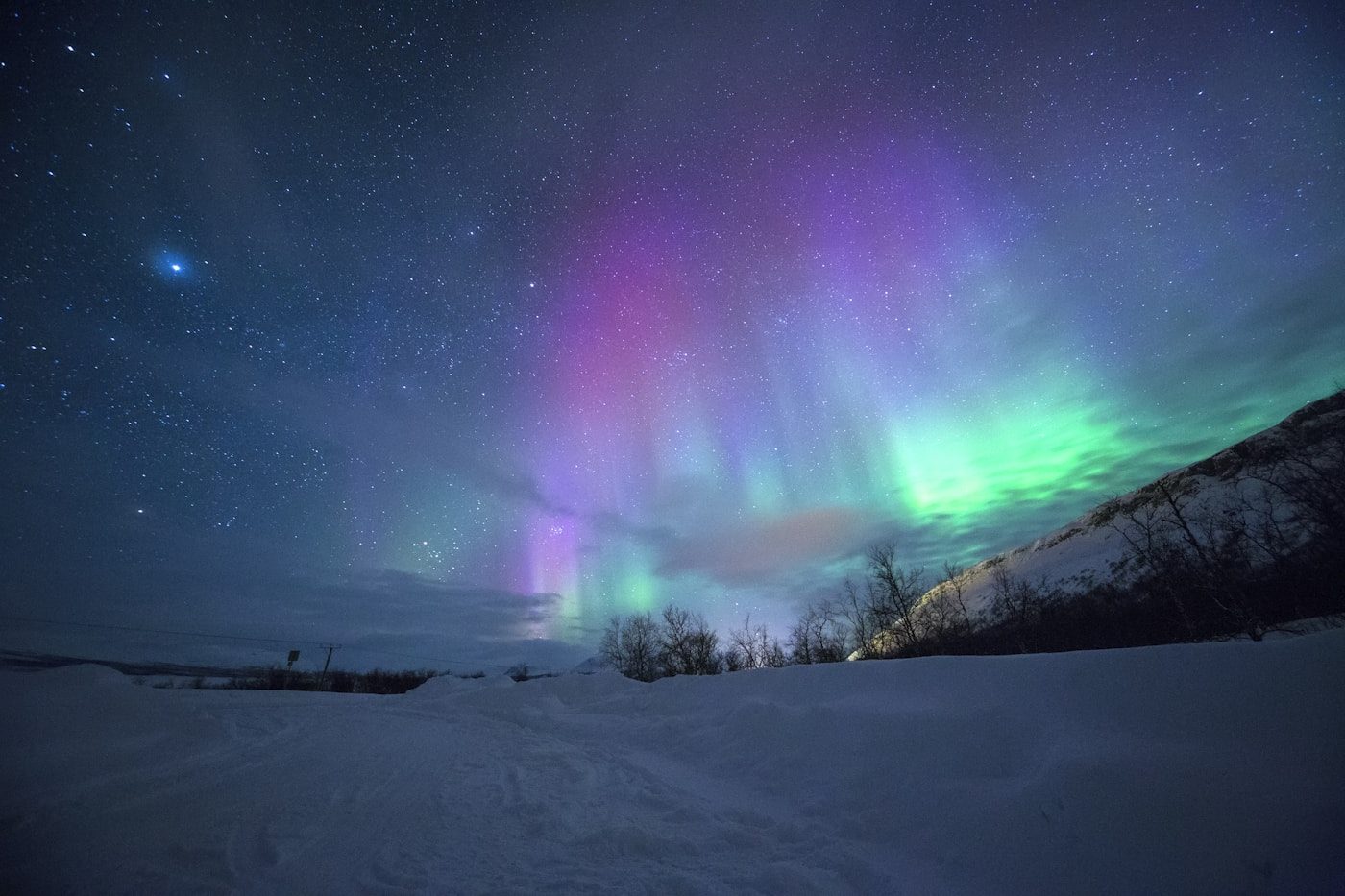
Vivid green aurora borealis — the northern lights as photographed by NASA against a star-filled night sky

Aurora Viewing Guide · Alaska

Northern Lights Alaska: Best Viewing Spots, Season & Complete Aurora Guide

Alaska is the best place in the United States to see the northern lights — and Fairbanks is the global capital of aurora tourism. Under the "Aurora Oval," Fairbanks sees more than 200 aurora displays per year. This guide covers exactly when to go, where to stay, and how to maximize your chances of seeing the aurora in Alaska.

Best monthsAugust 21 – April 21
Kp neededKp 2–3 (local)
Peak time10 PM – 2 AM (local)
Aurora frequency200+ nights/year
By Elena Reyes Published: Updated: Reviewed & approved by Juhi Sahni, Senior Editor Editorial Standards

Quick Answer: When and Where to See the Northern Lights in Alaska

Fairbanks is the #1 aurora destination in the United States. Located directly under the Aurora Oval at 64.8°N latitude, Fairbanks experiences more than 200 aurora displays per year between August 21 and April 21. You need only Kp 2–3 for visible aurora overhead — compare this to Kp 6–7 needed for Colorado or Ohio. A 3-night stay in Fairbanks during the aurora season gives you a 90%+ chance of seeing the northern lights.

The best time to visit is March–April (warmer temperatures, good road conditions, and the equinox effect increases geomagnetic activity) or August–September (milder weather, fall colors, and the aurora returns after the midnight sun ends). Avoid December–January unless you're prepared for extreme cold (−20°F to −40°F) and very short daylight (3–4 hours).


Why Alaska Is the Best US Destination for Aurora Viewing

Alaska's aurora advantage comes down to geography. The Aurora Oval — the ring-shaped zone of maximum aurora activity around Earth's magnetic north pole — passes directly over central Alaska. Fairbanks, at 64.8°N, sits squarely under the oval. This means aurora displays occur at much lower Kp thresholds than anywhere in the lower 48 states.

Low Kp requirement

Kp 2–3 produces visible aurora overhead in Fairbanks. The same display would require Kp 6–7 to be visible from Denver or Chicago. This means almost any moderate solar activity translates to a visible show.

200+ nights per year

Fairbanks sees aurora on roughly 80% of clear nights during the August–April season. A 3-night stay has a 90%+ success rate. No other US location comes close to this reliability.

Infrastructure built for aurora

Fairbanks has aurora-specific lodges with aurora wake-up calls, heated viewing domes, and photography tours. The airport is served by multiple airlines. Rental cars, hotels, and restaurants cater to aurora tourists.

For comparison, the best aurora locations in the lower 48 (Minnesota's Boundary Waters, Michigan's Keweenaw Peninsula, Maine's Aroostook County) require Kp 5+ for a decent show and have far fewer clear nights. Alaska is not just better — it's in a different league entirely.

Vivid green aurora borealis over a snowy Alaska landscape — Fairbanks offers 200+ aurora displays per year

Northern Lights Over Alaska

Alaska sits directly under the Aurora Oval, making it the best place in the United States to see the northern lights. Fairbanks alone experiences more than 200 aurora displays per year between August and April. Credit: NASA.


Best Time to Visit Alaska for the Northern Lights

Season Aurora Activity Temperature Daylight Pros Cons
Aug 21 – Sep 30 High (equinox) 30–55°F 12–16 hrs Mild temps, fall colors, aurora returns after summer Late sunsets (10 PM+), shorter dark window
October High 10–30°F 10–14 hrs Good aurora, reasonable temps, fewer tourists Possible snow, variable roads
Nov–Jan Moderate −20 to 0°F 3–6 hrs Longest dark hours, deep winter scenery Extreme cold, road hazards, short days
Feb–Mar Very high (equinox) −10 to 15°F 8–12 hrs Best balance: good temps, long nights, peak aurora Still cold, need warm gear
April High 10–35°F 13–16 hrs Most comfortable temps, spring scenery Shorter dark window, late sunsets

My recommendation: March or September

Both months offer the equinox boost in geomagnetic activity (aurora is statistically 2× more likely at equinox). March has better road conditions; September has milder temperatures. Either way, book a minimum 3-night stay and check the Kp index forecast before you go.

Fairbanks Aurora Viewing — The Complete Guide

Fairbanks is the aurora capital of North America, and for good reason. It sits under the Aurora Oval at 64.8°N, has a 200+ night aurora season, and offers a range of accommodations from budget hostels to luxury aurora lodges with private viewing domes.

Best Fairbanks Aurora Viewing Locations

🏔️

Murphy Dome (elevation 2,930 ft)

The most popular aurora viewing site near Fairbanks. A 45-minute drive from downtown, the dome offers 360° views and an old Air Force radar station parking lot that serves as a perfect viewing platform. The elevation puts you above the valley fog that often obscures lower sites. Popular — expect other aurora chasers.

🌲

Cleary Summit (elevation 2,200 ft)

A slightly closer option (30 minutes from Fairbanks) with developed aurora-viewing infrastructure. The Mount Aurora Lodge and Borealis Basecamp operate here with heated viewing cabins, photography decks, and aurora wake-up calls. Well-lit parking and maintained roads in winter.

🏕️

Chena Hot Springs Resort (60 miles northeast)

The ultimate aurora experience: soak in natural hot springs while watching the northern lights overhead. The resort offers dedicated aurora viewing with an aurora alarm system that alerts guests when activity begins. Also has an ice museum year-round. The 60-mile drive from Fairbanks is on a maintained highway.

Fairbanks aurora pro tip

Don't stay in downtown Fairbanks — light pollution reduces the show. Stay at an aurora lodge outside the city (Murphy Dome area, Chena Hot Springs Road, or Cleary Summit area) where you can walk outside your cabin and see the full sky. Most lodges offer wake-up calls when aurora activity begins.

Other Alaska Aurora Viewing Locations

🏙️

Anchorage

Alaska's largest city at 61.2°N. Aurora is visible from Anchorage on strong nights (Kp 4+), but light pollution is significant. Drive 30 minutes north to Eagle River or 1 hour to Girdwood for darker skies. Anchorage is better as a base for day trips than for dedicated aurora viewing.

🚂

Denali National Park

Aurora framed by North America's tallest peak. The park is 2 hours south of Fairbanks and offers exceptional dark skies (Bortle 1–2). Winter access is limited — the park road is closed at mile 30, but the entrance area and nearby lodging offer excellent viewing. Best combined with a Fairbanks trip.

🏞️

Coldfoot / Arctic Circle

For the ultimate aurora adventure, visit Coldfoot (pop. ~10) — 60 miles north of the Arctic Circle on the Dalton Highway. Aurora is visible nearly every clear night from August through April. The Coldfoot Camp offers basic accommodations. Fly in from Fairbanks or brave the 8-hour drive on the infamous Dalton Highway.

Alaska Aurora Locations — Comparison Table

Location Latitude Kp Needed Accessibility Light Pollution Best For
Fairbanks (Murphy Dome)64.9°NKp 245 min driveLowBest overall — reliable, accessible
Chena Hot Springs65.0°NKp 21 hr driveVery lowUnique hot springs + aurora combo
Cleary Summit65.1°NKp 230 min driveLowLodges with aurora wake-up calls
Denali NP area63.7°NKp 32 hrs from FairbanksVery lowAurora + mountain scenery
Anchorage area61.2°NKp 4City + 30 min driveModerateConvenient but less reliable
Coldfoot / Arctic Circle67.3°NKp 1–28 hrs from Fairbanks (drive)ZeroAdventure — extreme but unforgettable

Aurora Photography in Alaska — What You Need to Know

Alaska's aurora season coincides with very cold temperatures, which create specific challenges for photographers. Here's what works.

Camera equipment

  • DSLR or mirrorless with manual mode
  • Wide-angle lens (14–24mm) at f/2.8 or faster
  • Sturdy tripod (carbon fiber recommended — less cold transfer)
  • Extra batteries (cold drains them fast — keep spares warm)
  • Remote shutter release (prevents camera shake)

Camera settings

  • ISO 1600–3200 (start at 1600, adjust up if aurora is faint)
  • Aperture: widest (f/1.8, f/2.0, or f/2.8)
  • Shutter: 5–15 seconds (faster for dancing aurora)
  • Focus: Manual, set to infinity (use live view on a bright star)
  • White balance: 3500–4000K (or shoot RAW and adjust later)

For a complete guide, see How to Photograph the Northern Lights and Best Camera Settings for Aurora.

What to Pack for an Alaska Aurora Trip

Clothing (essential)

  • Thermal base layers (merino wool)
  • Insulated mid-layer (fleece or down)
  • Windproof outer shell
  • Insulated snow pants
  • Winter boots rated to −30°F
  • Balaclava + wool hat + neck gaiter
  • Heated hand warmers (chemical or rechargeable)

Gear

  • Headlamp with red light mode
  • Camera + tripod (see photography section)
  • Binoculars (7×50 or 10×50 for wider aurora views)
  • Thermos with hot drink
  • Folding chair or sit pad
  • Portable phone charger (cold drains batteries)

Travel planning

  • Book min 3 nights (5+ recommended)
  • Rent a 4WD vehicle (studded tires optional)
  • Download offline maps (cell coverage is spotty)
  • Check the Kp forecast daily
  • Check cloud cover forecasts (Clear Outside app)
  • Book aurora lodge with wake-up service

Frequently Asked Questions About Alaska's Northern Lights

Can you see the northern lights in Anchorage?

Yes, but less frequently than Fairbanks. Anchorage at 61.2°N requires Kp 4+ for overhead aurora. Drive 30 minutes north to Eagle River or 1 hour to Girdwood for darker skies and better odds. Fairbanks is significantly more reliable.

What is the best month to see the northern lights in Alaska?

March is statistically the best month — the spring equinox increases geomagnetic activity, temperatures are manageable (10–20°F), and road conditions are best. September is second-best with milder weather but shorter dark windows.

How much does an Alaska aurora trip cost?

A 5-night DIY trip to Fairbanks costs roughly $1,500–$2,500 per person including flights, rental car, lodging, and food. Guided aurora tours add $100–$200 per night. Luxury aurora lodges with all-inclusive packages range from $3,000–$6,000 for 5 nights.

Do I need a tour guide to see the aurora in Alaska?

No — if you have a car and can drive 30–45 minutes outside Fairbanks to Murphy Dome or Cleary Summit, you can see the aurora independently. Tours are valuable for photographers (they know the best foreground compositions) and for visitors who don't want to drive in winter conditions.

Can you see the northern lights in Alaska in summer?

No — from mid-April to mid-August, Alaska experiences the "midnight sun" where the sky never gets dark enough for aurora viewing. The aurora is technically still active, but it's invisible against the bright summer sky. The aurora viewing season runs from August 21 to April 21.