Summer Stargazing Guide 2026: Night Sky Highlights June–September
Telescope Advisor Logo Telescope Advisor
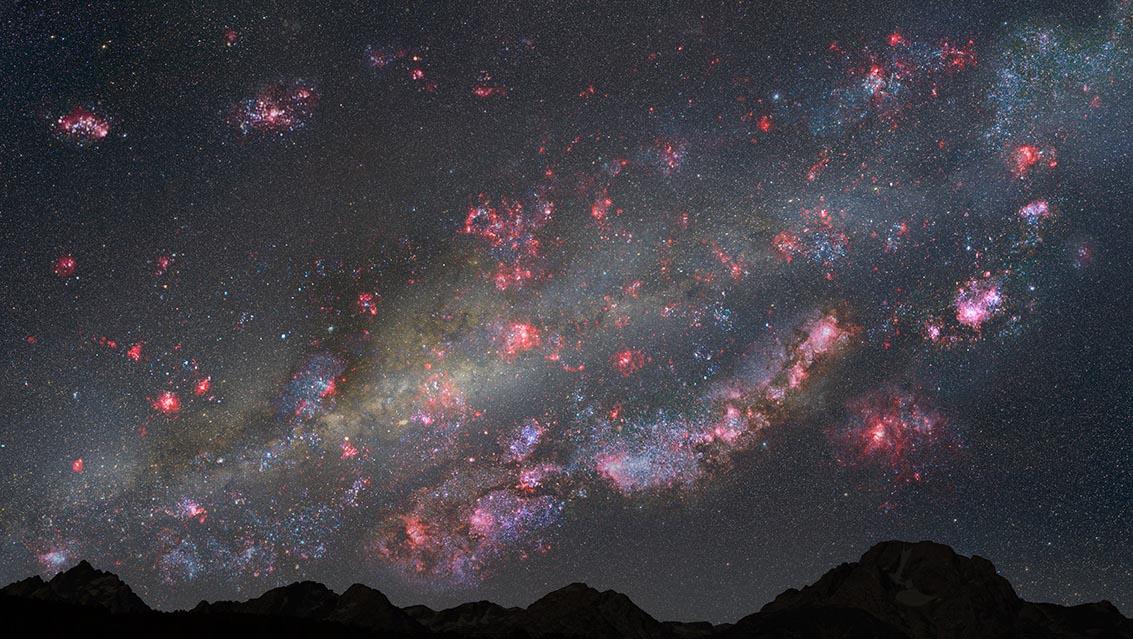
Summer Milky Way arching across the night sky

Stargazing Guide · Summer 2026

Summer Stargazing Guide 2026: Night Sky Highlights June–September

Summer is the richest season for stargazing in the Northern Hemisphere. The Milky Way arcs overhead, the Perseid meteor shower peaks, Saturn reaches opposition, and the Summer Triangle dominates the sky. Here's your complete guide.

Top eventPerseid meteor shower Aug 11–12
Planet highlightSaturn all night
ConstellationsCygnus, Lyra, Aquila, Scorpius
Milky WayVisible from dark sites
By Telescope Advisor Editorial Team Published: Updated: Reviewed & approved by Juhi Sahni, Senior Editor Editorial Standards

Summer in the Northern Hemisphere is the most generous season for stargazers. The nights are warm, the Milky Way is at its magnificent best, and the sky offers a constant parade of bright planets, rich star clusters, and the year's best meteor shower. Whether you are observing from a dark-sky site or your suburban backyard, summer delivers more visible targets per hour than any other season.

This guide covers the key events and targets from June through September 2026, with recommended equipment for each. Unlike our monthly night sky guides, this is a season-long overview to help you plan your summer observing.

Top 5 Summer Sky Events

  1. Perseid Meteor Shower — August 11–12. The most popular meteor shower of the year peaks under near-ideal conditions. With a waning crescent Moon rising after midnight, dark-sky rates could reach 60–80 meteors per hour. The radiant is in Perseus, rising in the north-east after midnight. Best viewed from a dark site with a reclining chair and wide-field binoculars. See our Perseid guide for full details.
  2. Summer Milky Way — June through August. The galactic centre in Sagittarius is visible from dark sites, with the Milky Way band arching from the south-west to the north-east. Through binoculars, the Milky Way resolves into countless stars, dark nebulae, and star clouds. Through a telescope, the region around the Teapot asterism is packed with Messier objects.
  3. Saturn at Opposition — August 2026. Saturn rises at sunset and is visible all night, reaching its highest point around midnight. The rings are tilted at approximately 10°, providing an increasingly open view. A 4-inch telescope at 120× shows the Cassini Division and several moons.
  4. Summer Triangle overhead. The three bright stars Vega (Lyra), Deneb (Cygnus), and Altair (Aquila) form the Summer Triangle, prominent overhead from June through September. Within the Triangle lie some of the finest deep-sky objects: the Ring Nebula (M57), the Dumbbell Nebula (M27), and the Double-Double star Epsilon Lyrae.
  5. Partial Solar Eclipse — August 12. The most significant sky event of 2026 falls right in the middle of summer. While most of North America sees only a partial eclipse, Europe and especially Spain experience a deep partial or total eclipse. See our eclipse guide for your local times.

The Summer Milky Way — Your Best Deep-Sky Season

For observers in the Northern Hemisphere, the summer Milky Way is the richest deep-sky hunting ground of the year. The galactic centre in Sagittarius is packed with star clouds, open clusters, globular clusters, and emission nebulae — all within reach of modest equipment. From a Bortle 3–4 dark site, the Milky Way is bright enough to cast a shadow on moonless nights.

Binocular highlights (10×50 or 15×70): Sweep the Sagittarius star clouds, the Lagoon Nebula (M8) visible as a bright patch, the Trifid Nebula (M20) as a smaller companion, and the open cluster M7 (Ptolemy's Cluster). The Scutum Star Cloud (toward Aquila) is one of the richest Milky Way fields.

Telescope highlights (6-inch+): The Lagoon Nebula shows structure and the Hourglass region. The Trifid Nebula reveals its three-lobed dust lanes. The Swan Nebula (M17) is a bright H-II region. Globular clusters M22, M28, and M54 in Sagittarius resolve into dozens of stars. The Eagle Nebula (M16) shows the famous Pillars of Creation region in dark skies.

Recommended Equipment for Summer Stargazing

Sky-Watcher Heritage 130P tabletop Dobsonian — ideal summer stargazing telescope
BEST SUMMER SCOPE

Sky-Watcher Heritage 130P (5-inch Dobsonian)

The Heritage 130P is the ideal summer telescope. Its compact tabletop design is easy to take to dark sites, the 130mm aperture reveals dozens of summer Milky Way objects, and the collapsible tube packs small for transport. At 40× with a 15mm eyepiece, the Lagoon Nebula and Sagittarius star clouds are spectacular. It is also light enough to carry on short hikes to observing spots.

Celestron SkyMaster 15x70 binoculars — sweep the summer Milky Way
BEST MILKY WAY BINOCULARS

Celestron SkyMaster 15×70 Binoculars

A quality pair of 15×70 binoculars is the best tool for exploring the summer Milky Way. The wide 4.4° field frames the entire Sagittarius star cloud, resolves dozens of stars in the Lagoon Nebula region, and reveals the dark lanes of the Great Rift. Mounted on a tripod, they provide hours of comfortable sweeping. No other piece of equipment shows more of the summer sky at once.

Planet Viewing in Summer 2026

Saturn reaches opposition in August, rising at sunset and remaining visible all night. At magnitude 1.0 and 18 arcseconds across, it is unmistakable with its ring system. An 8-inch telescope reveals the Cassini Division, subtle banding on the planet's disk, and the moons Titan, Rhea, and Dione. Saturn is the highlight of summer evenings.

Jupiter returns to the morning sky in late summer, rising around 2–3 AM by August. At magnitude -2.1, it is brilliant in the pre-dawn sky. A 6-inch telescope shows the equatorial belts and Great Red Spot. Jupiter improves through autumn toward its December opposition.

Mars is lost in solar conjunction through most of summer, returning to the morning sky in late September.

Venus transitions from the evening to the morning sky in summer, visible as a brilliant morning star at magnitude -4.3 in August and September.

Summer Stargazing Tips

  • Start late. Astronomical twilight doesn't end until 10–11 PM in mid-summer at mid-northern latitudes. The darkest hours are between midnight and 3 AM.
  • Bring insect repellent. Mosquitoes are the bane of summer observing. A repellent without DEET (picaridin-based) is optics-safe.
  • Let your telescope cool. Summer temperature drops of 10–15°C after sunset cause thermal currents in the tube that blur images. Allow 30–45 minutes for the optics to stabilise.
  • Use a red flashlight. Preserves night vision while you set up and read charts. A dimmable red LED is essential for any observing session.
  • Dew is still a problem. Despite warm temperatures, summer humidity can dew over optics within an hour, especially near lakes or coasts. A dew shield is recommended.
  • Bring a reclining chair. Zenith viewing with a Dobsonian requires a chair. Summer observing sessions can last 3–4 hours — comfort matters.

Frequently Asked Questions

What is the best time for summer stargazing?

Midnight to 3 AM is the darkest period in summer, when the Milky Way is highest. However, the Perseid meteor shower is best viewed after moonset, typically 2–4 AM. Planetary viewing is best when objects cross the meridian, which varies by target.

Can I see the Milky Way without a telescope?

Yes — the summer Milky Way is visible to the naked eye from any reasonably dark site (Bortle 4 or darker). From a Bortle 3 site, the Milky Way is bright enough to see structure and dark lanes. From the city, the Milky Way is invisible due to light pollution.

What are the best constellations in the summer sky?

Cygnus, Lyra, Aquila (the Summer Triangle stars), Scorpius, Sagittarius, and Ophiuchus are the highlight constellations. Cygnus lies along the Milky Way and is packed with deep-sky objects. Scorpius and Sagittarius contain the richest Milky Way fields.

What equipment do I need for the Perseid meteor shower?

No telescope is needed — meteors are best viewed with the naked eye. A reclining chair, warm blanket, and a wide-field pair of binoculars for the occasional fireball train are all you need. Drive to a dark site for the best rates.

Is August a good month for stargazing?

August is arguably the best month of the year. The Milky Way is at its peak, the Perseid meteor shower provides a natural spectacle, Saturn is visible all night, and the August 12 solar eclipse adds a rare bonus event. Warm nights make extended sessions comfortable.

Essential Gear for Summer Observing

The right gear makes the difference between a frustrating summer session and a memorable one. A reclining observing chair is the most important comfort item — looking at zenith through a Dobsonian while standing is exhausting. The Celestron adjustable observing chair lets you sit comfortably at any eyepiece height. A red flashlight with adjustable brightness preserves night vision and lets you read star charts without ruining your dark adaptation.

A planisphere or star atlas is essential for navigating the summer sky. The Pocket Sky Atlas is the standard printed reference, showing stars to magnitude 7.6 and hundreds of deep-sky objects. For digital users, SkySafari 7 Pro provides a comprehensive planetarium with real-time tracking, object descriptions, and observing lists tailored to your equipment.

A dew shield is necessary even in summer — humid nights can dew over optics within an hour, especially on SCTs and refractors. A simple foam shield or a heated dew strap prevents this. An O-III or UHC nebula filter enhances contrast on summer emission nebulae like the Veil, Lagoon, and Swan nebulae, making them visible even from suburban skies where they would otherwise be washed out by light pollution.

For astrophotographers, summer is the season for wide-field Milky Way imaging. A star tracker like the Sky-Watcher Star Adventurer 2i lets you take tracked 2–3 minute exposures with a DSLR and wide-angle lens, capturing the Milky Way's dust lanes and star clouds in stunning detail. A fast wide-angle lens (14–24mm f/2.8 or faster) is the ideal companion for summer Milky Way photography.

Summer Constellations Deep Dive

Cygnus (the Swan) — the most prominent summer constellation, lying directly along the Milky Way. Its brightest star, Deneb, marks the Swan's tail and forms the north-eastern corner of the Summer Triangle. Cygnus is packed with deep-sky targets: the North America Nebula (NGC 7000), the Pelican Nebula (IC 5070), the Veil Nebula (NGC 6960/6992), and the open cluster M39. A wide-field eyepiece at 30×–50× reveals a stunning Milky Way field rich in star clouds and dark nebulae.

Lyra (the Lyre) — dominated by Vega, the brightest star in the summer sky. Lyra contains the Ring Nebula (M57), one of the most famous planetary nebulae. In an 8-inch telescope at 150×, the Ring appears as a smoke-coloured donut of expanding gas. The Double-Double (Epsilon Lyrae) is a multiple star system that splits into four components at 200× — a test of telescope optics and sky conditions.

Aquila (the Eagle) — Altair marks the Eagle's head, the southernmost corner of the Summer Triangle. Aquila lies along the Milky Way and contains the Wild Duck Cluster (M11), a rich open cluster that resolves into hundreds of stars in a 6-inch telescope. The Scutum Star Cloud, just south of Aquila, is one of the richest Milky Way fields in the entire sky — visible as a bright patch to the naked eye from dark sites.

Scorpius and Sagittarius — these southern summer constellations contain the richest Milky Way fields. Scorpius features the bright red supergiant Antares and the open clusters M6 and M7. Sagittarius is the heart of the Milky Way, packed with Messier objects including the Lagoon Nebula (M8), Trifid Nebula (M20), Omega Nebula (M17), and the globular clusters M22 and M28. A 6-inch telescope from a dark site reveals dozens of objects in a single evening sweep.

Best Summer Deep-Sky Objects by Telescope Size

Binoculars (10×50 or 15×70): The Milky Way star clouds in Sagittarius and Scutum, the Lagoon Nebula as a bright patch, M7 (Ptolemy's Cluster), the Double Cluster in Perseus (rising late), the Coathanger asterism (Brocchi's Cluster) in Vulpecula, and the International Space Station (visible as a bright moving star during summer passes).

4-inch to 6-inch telescope: The Ring Nebula (M57) as a grey smoke ring, the Dumbbell Nebula (M27) as a distinct hourglass shape, the Wild Duck Cluster (M11) resolving into dozens of stars, the globular clusters M13 (Hercules) and M22 (Sagittarius), and the Swan Nebula (M17) showing its characteristic check-mark shape.

8-inch and larger: The Veil Nebula as delicate filaments with an O-III filter, the Trifid Nebula's three dust lanes, the Eagle Nebula's Pillars of Creation region, the Helix Nebula (NGC 7293) in Aquarius (late summer), and hundreds of faint NGC galaxies in the summer Milky Way fields.

Finding Dark Skies in Summer

Summer is the best season for visiting a dark-sky site because the weather is warm and the roads to remote locations are clear of snow. A Bortle 3 or darker sky transforms the summer Milky Way from a faint wash of light to a brilliant river of stars with visible dark lanes, structure, and colour. The galactic centre in Sagittarius appears as a bright, textured region that is genuinely stunning through binoculars.

To find a dark site near you, use a light pollution map (such as lightpollutionmap.info). Look for dark zones within a 1–2 hour drive of your location. State parks, national forests, and Bureau of Land Management areas are typically open at night. Many astronomy clubs have observing sites at dark locations — joining a club gives you access to secured dark-sky sites with amenities like concrete pads and power hookups.

For the August 12 eclipse, the best dark-sky locations in Spain (Bilbao, Zaragoza, Valencia) also offer the bonus of totality. Even outside the path of totality, the partial eclipse combined with a summer dark-sky session — Perseids, Milky Way, Saturn — makes for an unforgettable night.

Related Guides

Elena Reyes — Senior Science Editor

Elena Reyes

Senior Science Editor

Covers NASA missions, space science discoveries, and astronomical events for Telescope Advisor. Translates complex astrophysical research into practical insights for backyard observers. Based in the San Francisco Bay Area.

Content reviewed by our editorial team. Research and drafting assisted by AI to ensure unbiased, data-driven analysis. Learn more about our editorial process.