Also popular on Telescope Advisor
City Eclipse Guide · Valencia · August 12, 2026
Valencia Eclipse 2026: Total Solar Eclipse Times & Viewing Guide
Valencia, Spain's third-largest city, sits close to the path of totality for the August 12, 2026 total solar eclipse. While the city centre lies just south of the path, the northern suburbs and the coastline toward Castellón offer access to the totality zone. This guide covers everything Valencia-based eclipse chasers need: exact timings, the best nearby totality locations, weather prospects, and essential safety gear.
Eye Safety: ISO 12312-2 Glasses Required
ISO-certified eclipse glasses are essential for all partial phases before and after totality. The only safe time to remove them is during totality. See our eclipse glasses guide for recommendations available on Amazon ES.
Quick Answer: Can I See Totality From Valencia?
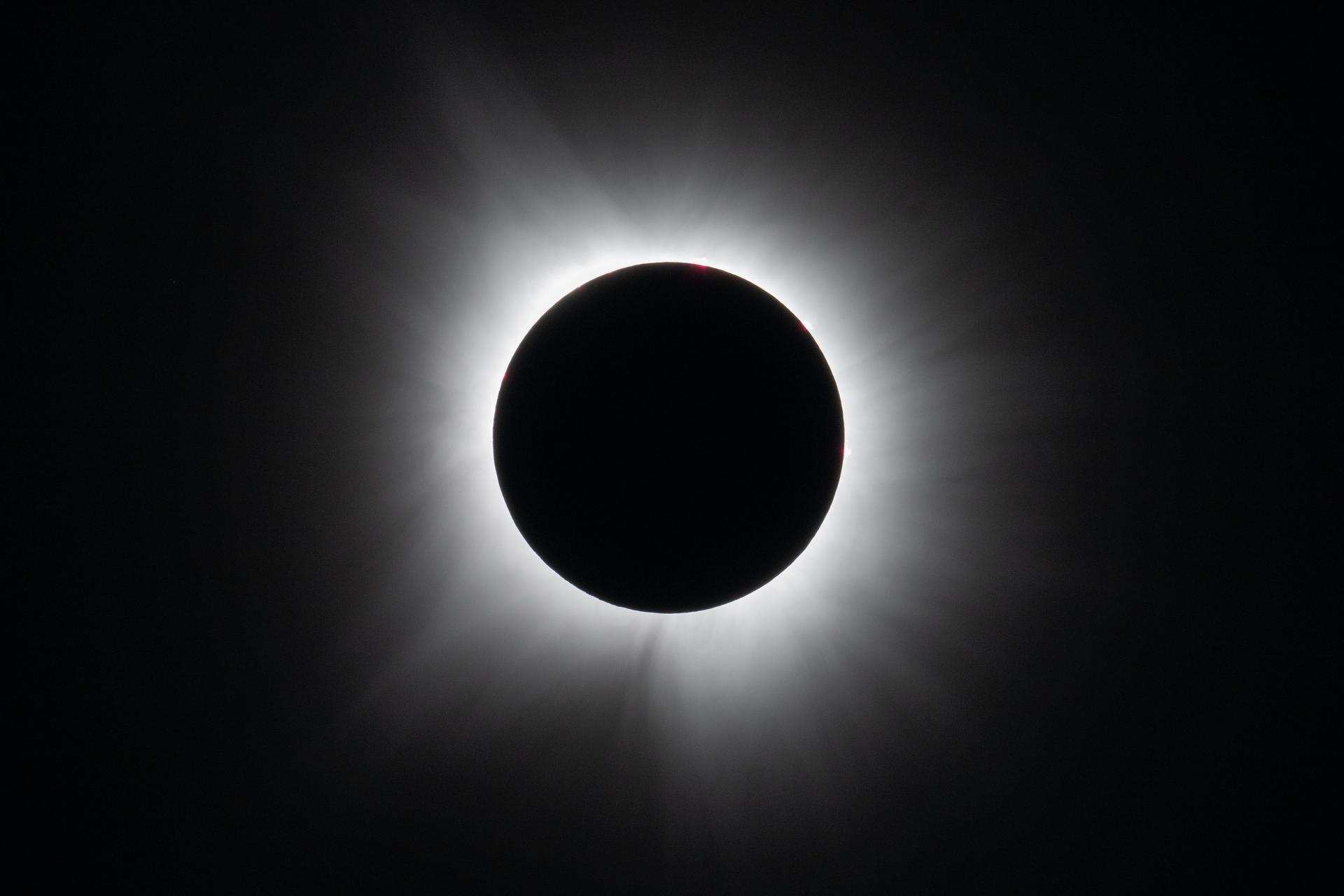
Not directly from Valencia city centre, but totality is a short 20-minute drive north. The path of totality passes just north of Valencia, so the city itself will experience a 99.5% partial eclipse — dramatically deep, but not total. However, by driving 15–25 kilometres north on the V-21 or AP-7 motorway toward Castellón, you can reach the totality zone and experience approximately 50 seconds of total darkness at around 21:43 CEST.
Valencia makes an excellent base because it is a major city with an international airport, high-speed AVE rail connections from Madrid and Barcelona, and a wide range of hotels. You can enjoy Valencia's famous paella and the City of Arts and Sciences during the day, then make a short drive north into the countryside for totality in the evening. The central location within the Valencia region means you can also easily reach other totality-zone cities like Castellón if weather conditions require a longer drive. This guide covers the best totality-zone locations near Valencia and everything you need to plan your eclipse trip.
Valencia Eclipse Times (CEST)
All times are in Central European Summer Time (CEST = UTC+2), the local time in Valencia.
| Event | Valencia City | Totality Zone (20 min N) |
|---|---|---|
| Partial begins | 20:36 CEST | 20:36 CEST |
| Maximum eclipse | 21:43 CEST (99.5%) | 21:43 CEST (100% — totality) |
| Totality duration | None | ~50 seconds |
| Sun altitude | 6° | 6° |
| Sunset | 21:03 CEST | 21:03 CEST |
Don't Settle for 99.5%
Valencia is tantalisingly close to the path of totality. A 20-minute drive north is all it takes to go from a 99.5% partial eclipse to 50 seconds of complete totality with the corona visible and the sky darkening dramatically. Make the drive — you will not regret it, and the memories of totality will last a lifetime.
Best Viewing Locations Near Valencia
1. Puzol / Sagunt (15–20 km N, V-21)
The coastal towns of Puzol and Sagunt lie within the path of totality and are the closest totality-zone locations to Valencia. The area around Sagunt's Roman theatre offers elevated views with a clear north-western horizon over the Mediterranean. Take the V-21 north from Valencia — the journey takes approximately 20 minutes. The beaches north of Sagunt offer flat sea horizons to the north-west, ideal for the low Sun.
2. Almenara & Nules (30–35 km N, AP-7)
Further north on the AP-7 motorway, the towns of Almenara and Nules are well within the path of totality. The surrounding agricultural land offers open, flat horizons with excellent visibility to the north-west. These locations are less crowded than the closer Sagunt area and offer more space to set up equipment. The AP-7 toll road makes this a fast 25-minute drive from Valencia.
3. La Vall d'Uixó (40 km N, inland)
An inland town at approximately 200 metres elevation, offering panoramic views of the Plana Baixa region. The higher elevation provides cleaner air above the coastal haze and a slightly later sunset. Take the CV-10 from Valencia, approximately 35 minutes. This is the best option if you want elevated terrain and are willing to drive a bit further.
4. Valencia City (Parque del Oeste — 99.5% partial)
If you are unable to drive out of the city, the Parque del Oeste on Valencia's western edge offers the best city-based view. The park sits on elevated ground with a reasonable western horizon. You will see a 99.5% partial eclipse — still a spectacular sight with a very thin solar crescent — but not the full totality effect.
Valencia Weather in August
Valencia has a Mediterranean climate with hot, dry summers. August is the warmest month, with average highs of 30°C and sea temperatures around 26°C, making it comfortable for an extended evening outdoors. Historical data from AEMET, the Spanish Meteorological Agency, shows approximately 35% chance of clear skies at sunset on August 12 on the Valencia coast, with 35% partly cloudy and 30% overcast. These odds are slightly better than the Spanish average for eclipse viewing, making Valencia a solid choice for weather reliability.
The main weather risk is afternoon cloud build-up over the interior mountains, which can drift toward the coast in the evening. However, Valencia's coastal position means that sea breezes often clear the sky by late afternoon. The most common August pattern is a hot, sunny morning with some cloud development after 16:00, clearing again by sunset. This clearing pattern works in eclipse viewers' favour. If the coast is overcast, driving inland toward the hills can often find clearer skies, as the cloud tends to break up over the warmer land. The A-7 motorway heading west toward Requena is a good cloud-escape route if the coastal forecast looks marginal.
Getting to Valencia & Where to Stay
Valencia Airport (VLC) receives flights from across Europe, including London, Paris, Amsterdam, Berlin, and several other major cities. The AVE high-speed train connects Valencia to Madrid in 1 hour 40 minutes and to Barcelona in 2 hours 30 minutes. The city centre is compact and walkable, and the metro system is excellent for getting around without a car during your daytime explorations.
Accommodation: Valencia has outstanding hotel options across all budgets. The city centre around Plaza del Ayuntamiento and the Eixample district offers the widest choice. For a memorable experience, stay in the historic El Carmen quarter or near the City of Arts and Sciences. Book immediately — August 12 will be one of the busiest nights of the year for Valencia hotels. A rental car is essential for reaching the totality zone, though the V-21 and AP-7 are well-maintained roads.
Eclipse day strategy: Drive north to your chosen totality-zone location by 18:30 CEST. Set up your viewing position, test your equipment, and confirm your north-western horizon is clear. Partial phases begin at 20:36 CEST, with totality arriving at approximately 21:43 CEST. After totality ends, the Sun will set by 21:03 CEST, so pack a torch for the drive back to Valencia.
Photographing the Eclipse from Valencia
Valencia's coastline and agricultural plains provide excellent foreground elements for eclipse photography. The Sun at only 6 degrees elevation during totality means you can capture the eclipsed Sun low over the Mediterranean or the orange groves of the Plana Baixa region. A telephoto lens of 200mm or longer is recommended for detailed crescent shots during partial phases. During the 50 seconds of totality, switch to a wider lens to capture the 360-degree sunset effect with the coastline in the frame.
For smartphone users, the low Sun makes it possible to capture the eclipse without specialized equipment. Use the phone filter included with the Helioclipse glasses for safe partial-phase photography. For totality, brace your phone against a steady surface and use manual exposure. The Mediterranean coastline provides a stunning natural foreground. A tripod is essential for any camera work during the dim light of totality.
One particularly dramatic composition is from the beaches north of Sagunt, looking along the coastline toward the Columbretes Islands. The low Sun creates a golden path across the Mediterranean, with the Moon's shadow sweeping across from the landward side. For the partial phases, a solar filter over the lens is essential. During the 50-second window of totality, remove the filter and capture the corona hanging just above the sea horizon — an image that combines the drama of totality with the unique Mediterranean setting that only Valencia can offer. For astrophotographers using dedicated cameras, the low altitude also means that atmospheric dispersion will create subtle colour fringing around the Sun's edges. This chromatic separation can be corrected in post-processing using RGB alignment tools available in software like Adobe Camera Raw, DeepSkyStacker, or PixInsight.
Eclipse Glasses & Safety Gear
ISO 12312-2 certified eclipse glasses are essential for the partial phases before and after totality. Available on Amazon ES:
Helioclipse Solar Eclipse Glasses (12-Pack)
The Helioclipse 12-pack is the best value for families and groups. Each pair is independently tested to ISO 12312-2 and CE certified. Includes a bonus phone filter for safe smartphone photography.
Affiliate link.
Lunt Solar Eclipse Glasses (5-Pack)
Lunt Solar Systems is a trusted name in solar optics. Their 5-pack is ideal for couples or small groups. Individually sealed, ISO 12312-2 and CE certified.
Affiliate link.
Valencia's Astronomical Heritage & Eclipse Events
Valencia has a strong astronomical tradition. The Observatorio Astronómico de Valencia (OAUV), part of the University of Valencia, was founded in 1909 and has contributed to research on stellar evolution, galaxy formation, and solar physics. The observatory's historical telescope, a 200mm refractor housed in its original 1909 dome in the Burjassot campus, is still used for public outreach events and is listed as a Cultural Heritage site by the Spanish government. During eclipse week, the OAUV plans to host guided observing sessions with historical instruments.
The Ciudad de las Artes y las Ciencias (City of Arts and Sciences) is Valencia's premier science museum complex, featuring the Hemisfèric planetarium, the Museo de las Ciencias Principe Felipe, and the Oceanogràfic. The Hemisfèric's 900-square-metre IMAX screen will host a special eclipse-themed programme throughout August, including live feeds of totality from Burgos and Valladolid. The museum is also planning a temporary exhibition on solar physics and eclipse history, featuring artefacts from the 1900 Paris eclipse expedition and images from NASA's Solar Dynamics Observatory.
Several local astronomy clubs are organising eclipse expeditions. The Agrupación Astronómica de Valencia (AAV), founded in 1975, is arranging a guided eclipse-viewing trip to Almenara on August 12, with telescopes, solar filters, and expert commentary. They will also host a preparatory workshop on August 8 covering eclipse safety, photography techniques, and local weather analysis. The European Space Astronomy Centre (ESAC) in nearby Villanueva de la Cañada, 30 km west of Valencia, is a major ESA facility that processes data from space telescopes like Gaia and XMM-Newton — a must-visit for astronomy enthusiasts during eclipse week, though advance booking is required for their guided tours. The ESAC visitor centre is open to the public on weekdays and features interactive exhibits about ESA's space science missions, including full-scale models of the Gaia and Herschel spacecraft.

Driving Routes & Transport to the Totality Zone
Getting from Valencia city centre to the totality zone requires a short drive north. Here are the best routes depending on where you want to observe:
Route 1: V-21 to Sagunt (15–20 min)
The fastest and most direct route. Take the V-21 north from Valencia, following signs toward Sagunt/Castellón. The V-21 is a dual carriageway with a speed limit of 100 km/h and no tolls. Exit at Sagunt/Puerto de Sagunt and follow local roads toward the countryside north of the town. The area around the Sagunt Roman theatre offers elevated viewpoints with clear north-western horizons. Leave Valencia by 18:30 CEST at the latest to avoid the eclipse-day traffic.
Route 2: AP-7 Toll Road to Almenara/Nules (25–30 min)
For longer totality duration (closer to the centreline), take the AP-7 toll motorway north. The toll from Valencia to Nules is approximately €7. This route is faster than the V-21 when traffic is heavy, but the toll cost adds up. Exit at Almenara (exit 52) or Nules (exit 50) and follow country roads toward open fields with clear western horizons. The AP-7 is the best option if you want to maximise your totality duration by driving further north toward the centreline.
Route 3: CV-10 Inland to La Vall d'Uixó (35–40 min)
For cloud avoidance, take the CV-10 inland highway toward La Vall d'Uixó. This route climbs to approximately 200 metres elevation, providing cleaner air above the coastal haze and a slightly longer view of the eclipse before the Sun sets. The CV-10 is a high-speed road with no tolls. This is the best option if the coastal forecast looks marginal, as inland areas often have better evening clearing in August.
Public transport warning: The last train from Sagunt back to Valencia departs at approximately 21:15 CEST — before totality. A rental car is essential. Taxis and ride-sharing will be in extremely high demand; pre-book any taxi by early August if you are not renting a car. The AVE high-speed train from Valencia to Madrid and Barcelona is an excellent option for reaching Valencia itself, but you will need local transport for the final leg to the totality zone. Given the 21:43 CEST totality time, you should plan to be at your viewing location by approximately 20:00 CEST at the latest to allow time for setup and to watch the full partial phase develop.
Next Best Step
Need the fastest next step?
Pick the path that matches where you are right now: get a recommendation, compare buyer guides, or narrow by budget.
Not sure which telescope actually fits your goals?
Answer 5 quick questions about your budget, observing targets, and experience level — our Telescope Finder Tool recommends a specific model in under 2 minutes.