Eclipse 2026 Spain Weather: Cloud Forecast & Escape Plan
Telescope Advisor Logo Telescope Advisor

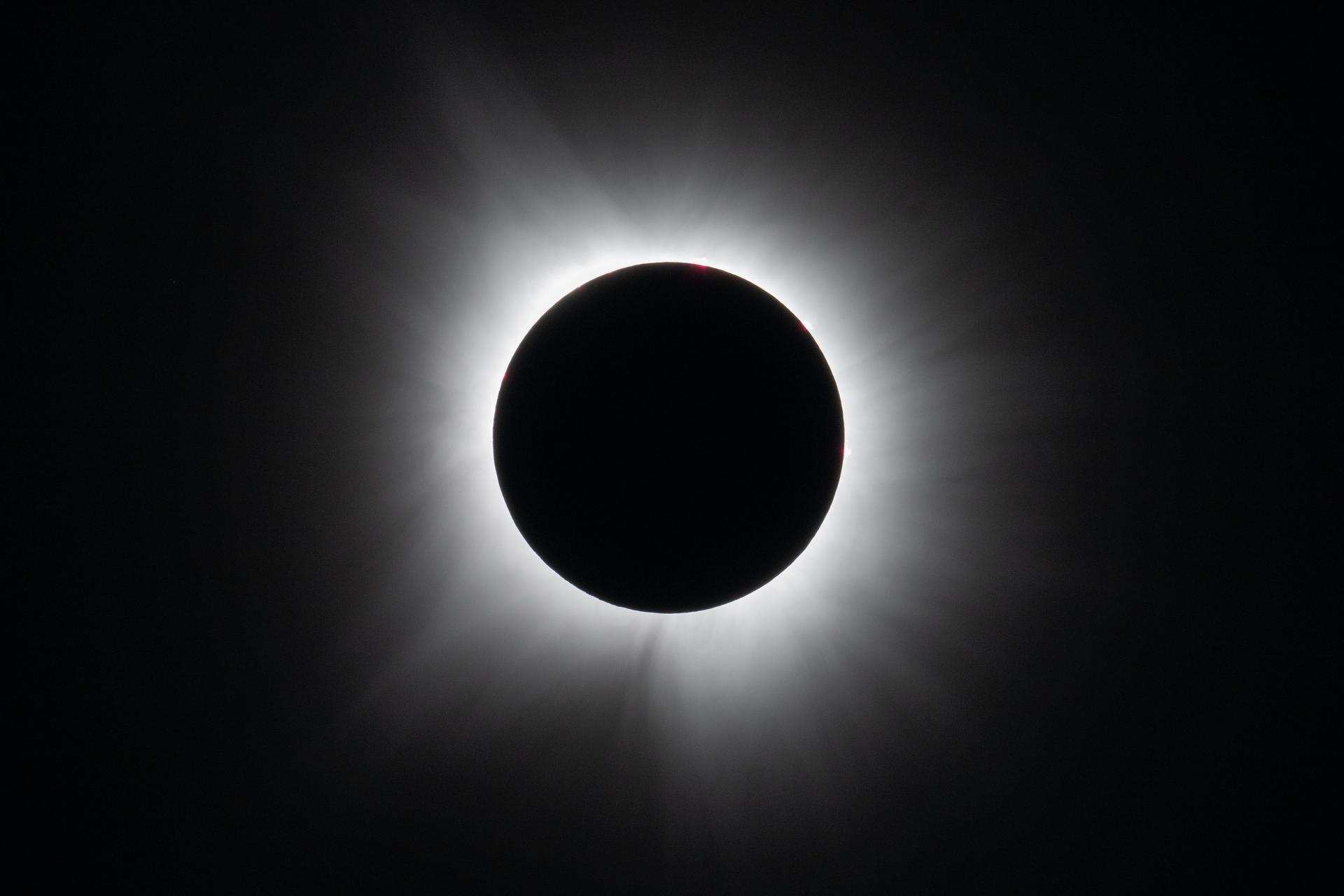
Total solar eclipse corona — the Sun's outer atmosphere visible during totality, as seen from Spain on August 12, 2026

Eclipse Guide · Weather & Cloud Forecast

Eclipse 2026 Spain Weather Forecast: Cloud Cover, Escape Routes & Real-Time Updates

The August 12, 2026 total solar eclipse will cross northern Spain during the final minutes of daylight. Your viewing experience depends entirely on what the clouds do. This page tracks the forecast daily from August 2 and provides a complete cloud escape plan for every Spanish totality city.

Forecast activeAugust 2–12, daily updates
Best oddsMeseta plateau (Burgos, Palencia)
Official sourceAEMET — Spanish Met Office
Sun altitude5–8° — low horizon critical
By Telescope Advisor Editorial Team Published: Updated: Reviewed & approved by Juhi Sahni, Senior Editor Editorial Standards

Quick Answer: Will It Be Cloudy for the Eclipse in Spain?

The short answer: it depends on where you choose to watch. Northern Spain's August weather varies significantly across the path of totality. The meseta plateau cities — Burgos, Palencia, and Valladolid — have the best historical track record for clear August evenings, with approximately 35% chance of entirely clear skies at sunset and another 40% chance of partly cloudy conditions that still allow good viewing. Zaragoza, sitting in the Ebro valley closer to the Pyrenees, has slightly higher cloud cover but also benefits from the Föhn effect that can push clouds away.

The key insight for the 2026 eclipse is that the entire Spanish totality corridor is within a few hours' drive. Unlike the 2024 US eclipse where the path was hundreds of kilometres wide, the Spanish totality zone is compact — you can drive from Zaragoza to Burgos in under 2 hours. This makes cloud-chasing genuinely practical. If the forecast for one city looks poor 48 hours out, you can relocate to another city entirely and still have time to settle in.

This page will be updated daily from August 2, 2026 with actual AEMET forecast data. Bookmark it and check back as the eclipse approaches. The 10-day forecast window opens on August 2, and forecasts become reliably accurate around the 5–7 day mark.


Historical Cloud Cover by Spanish Totality City

The table below shows historical August cloud cover statistics for each major city along or near the path of totality in Spain. These figures are based on 30-year averages from AEMET and represent conditions at approximately 21:00–21:45 CEST — the critical totality window when the Sun sits at 5–8 degrees above the north-western horizon.

City Clear (%) Partly cloudy (%) Overcast (%) Totality Verdict
Burgos35%40%25%1 min 10 secBest odds
Palencia34%41%25%1 min 24 secBest odds
Valladolid33%40%27%1 min 30 secGood
Zaragoza28%38%34%~90 secMixed
Lleida25%35%40%45 secMixed
Bilbao (near path)22%38%40%Drive 20 min SCloudier
Valencia (near path)30%35%35%Drive 20 min NMixed

Source: AEMET 30-year climatological averages (1996–2025). Data represents cloud cover at 21:00 CEST in August. Actual conditions vary year to year. The "partly cloudy" category includes conditions where the Sun is visible through thin cloud or breaks in the cloud cover — often sufficient for totality viewing if the eclipse occurs in a gap.

Understanding the Low Sun Challenge

Every Spanish totality city shares one critical constraint: the Sun sits at only 5–8 degrees above the north-western horizon during totality. This means your viewing location matters as much as the cloud forecast. A city with excellent historical clear-sky statistics is useless if you choose a valley location where the low Sun is blocked by a hill 5 kilometres to the north-west.

When evaluating a viewing site, check three things: the elevation of the terrain to the north-west (use Google Earth or a topographic map), the presence of any ridges or mountain ranges in that direction, and the tree cover along the horizon. A site at 900 metres elevation on open farmland — common around Burgos and Palencia — gives you a far better chance than a valley-bottom location even if the cloud cover is identical.

Live Forecast Updates — Daily From August 2

📅 Forecast not yet available

Reliable 10-day weather forecasts for the August 12 eclipse become available from approximately August 2, 2026. This section will be updated daily from that date with actual AEMET forecast data for each Spanish totality city. Bookmark this page and check back daily from August 2 for the latest outlook.

In the meantime, use the historical data above to choose your primary and backup viewing cities. The cloud escape plan below will help you decide where to go based on the forecast when it becomes available.

How to Check the Forecast Yourself

While this page will carry daily updates, you should also monitor these sources directly, especially in the final 48 hours when local conditions can change hour by hour:

  • AEMET (Agencia Estatal de Meteorología) — Spain's official meteorological agency. The AEMET app and website provide the most accurate local forecasts for Spanish cities. Set your location to Burgos, Palencia, or Zaragoza and check the hourly cloud cover forecast for the evening of August 12.
  • Clear Outside — An astronomy-specific forecasting app that shows cloud cover, transparency, and seeing conditions by the hour. Available for iOS and Android. The "cloud cover" layer is the most useful for eclipse planning.
  • Windy.com — Interactive satellite and forecast visualisation. The ECMWF model layer provides the most accurate medium-range forecast. Toggle the "clouds" overlay to see predicted cloud cover for your chosen location.
  • SpotWx — Designed for mountain weather but excellent for elevated eclipse viewing sites. Provides hour-by-hour cloud cover predictions at specific elevations.

Cloud Escape Plan: Where to Drive If Your City Is Overcast

The Spanish totality corridor is compact and well-connected by motorway. If the forecast shows clouds over your planned viewing city 48–24 hours before the eclipse, you have viable alternatives within a 1–3 hour drive. This section provides a city-by-city escape plan with driving times, alternative locations, and road recommendations.

If You Are Based in Burgos

Burgos has the best historical cloud cover statistics, but no forecast is guaranteed. If clouds threaten Burgos:

  • Drive west toward Palencia (45 min, AP-1 → A-62): Palencia is only 60 km from Burgos on the AP-1 and A-62 motorways. Weather systems on the meseta typically move east to west, so if Burgos is cloudy, Palencia may be clear — or vice versa. Palencia also offers 14 seconds longer totality than Burgos, making it a worthwhile destination in its own right.
  • Drive south toward Valladolid (1 hr 15 min, A-62): Valladolid is 120 km south of Burgos via the A-62. The city offers the longest totality on the meseta at 1 minute 30 seconds. Valladolid's position further south on the plateau means it can catch different weather patterns.
  • Drive east toward Logroño (1 hr 15 min, AP-1): If clouds are streaming in from the Atlantic (the most common pattern), heading east toward Logroño can put you in the rain shadow of the Cantabrian Mountains. Logroño sits in the Ebro valley and often experiences different conditions than the meseta.

If You Are Based in Zaragoza

Zaragoza's position in the Ebro valley creates unique weather patterns. The valley can channel clouds, but the Föhn effect from the Pyrenees can also create clear slots:

  • Drive north-west toward Burgos (1 hr 50 min, A-2 → AP-1): The most reliable escape route. Burgos is only 200 km from Zaragoza on good motorways. If the Ebro valley is overcast, the meseta is often clear. This is your best option if clouds threaten Zaragoza.
  • Drive north toward Huesca (50 min, A-23): Huesca sits at the foot of the Pyrenees and can have完全不同 weather to Zaragoza due to orographic effects. The A-23 is a good road, and the area around Huesca offers open farmland with reasonable north-western horizons.
  • Drive west toward Calatayud (45 min, A-2): A shorter-range option. The area around Calatayud is in the path of totality and sits at a slightly higher elevation than Zaragoza, which can mean less valley fog and low cloud.

If You Are Based in Valencia

Valencia's coastal location means sea breezes and afternoon cloud are the primary concern. The escape route is inland:

  • Drive north toward Castellón (40 min, AP-7): Staying on the coast but moving north can put you in a different weather cell. The coastline north of Valencia often has less afternoon cloud than the city itself.
  • Drive inland toward Teruel (1 hr 30 min, A-23): Teruel sits at 900 metres elevation on the southern meseta and often has completely different weather than the coast. The journey is scenic but the road is winding in sections — allow extra time.
  • Drive north-west toward Zaragoza (2 hr 30 min, A-23): A longer-range option. If both the coast and the inland mountains are cloudy, heading to the Ebro valley at Zaragoza or beyond to the meseta gives you the most options.

If You Are Based in Bilbao

Bilbao is the cloudiest of the major base cities, sitting close to the coast with the Cantabrian Mountains to the south. However, this also means clear skies are often just a short drive away:

  • Drive south toward Burgos (1 hr 30 min, AP-1): This is the most important escape route from Bilbao. The AP-1 motorway climbs from the Bilbao basin through the Cantabrian Mountains to the meseta. Weather changes dramatically on this route — Bilbao can be overcast while Burgos is perfectly clear, just 150 km away.
  • Drive east toward San Sebastián (1 hr, AP-8): The Basque coast east of Bilbao can have local clear patches even when Bilbao is cloudy. San Sebastián is not in the totality path but offers a deep partial eclipse with a spectacular sea horizon.

The Ultimate Escape Route: Meseta Relay

If the entire Spanish totality corridor looks threatened by a large weather system, your best strategy is the meseta relay: base yourself in Burgos or Valladolid and use the A-62 motorway corridor that connects Palencia, Valladolid, and Medina del Campo. This 100 km stretch of the meseta offers the highest density of viable viewing locations in Spain. Because the meseta is a flat, elevated plateau, you can literally drive until you find a gap in the clouds — the kind of flexibility that coastal and valley locations cannot provide.

The meseta also offers the best road infrastructure for last-minute decisions. The A-62 and A-67 are modern dual carriageways with multiple exits. You can check satellite imagery on your phone (using Windy.com or the AEMET app), identify a gap in the clouds on the map, and drive directly to it within 30–60 minutes. This is the closest thing to a guaranteed viewing strategy that any eclipse chaser can have.

Essential Weather Tools & Eclipse Gear for Spain

Having the right tools and equipment makes the difference between a successful eclipse observation and a missed opportunity. Here is what we recommend packing for the Spanish totality corridor.

Apps and Websites

  • AEMET (free, iOS/Android/Web): Official Spanish Meteorological Agency app. Provides the most reliable local forecasts for Spanish locations. Essential for the 5–7 day outlook. The website at aemet.es offers detailed satellite imagery and radar.
  • Windy.com (free, iOS/Android/Web): Interactive weather visualisation with ECMWF and GFS model layers. The cloud cover overlay is the single most useful tool for last-minute eclipse planning. Toggle between models and look for consistency — if both models agree on clear skies, you can be confident.
  • Clear Outside (free, iOS/Android): Astronomy-specific forecasts showing cloud cover, transparency, seeing, and wind by the hour. The cloud cover percentage is colour-coded and easy to interpret at a glance.
  • SpotWx (free, Web): Excellent for elevated viewing sites. Provides hour-by-hour forecasts for specific elevations — useful if you are planning to view from a hilltop or mountain pass.

Essential Gear Checklist

⚹ Solar Viewing

  • ISO 12312-2 eclipse glasses (2+ pairs per person)
  • Telescope solar filter (front-mounted only)
  • Binocular solar filters if using binoculars

🏁 Cloud-Chasing

  • Smartphone with AEMET + Windy apps installed
  • Portable phone charger / power bank
  • Paper road map (as backup if phone signal drops)

🌬 Comfort & Safety

  • Folding chair or blanket (partial phases last 90+ min)
  • Warm jacket (evening temps on the meseta drop to 15°C)
  • Torch/headlamp with red light mode
  • Water and snacks

📷 Photography

  • Camera with telephoto lens (200mm+)
  • Tripod (essential for low-Sun conditions)
  • Solar filter for camera lens
  • Extra memory cards and batteries

👓

Eclipse Glasses — Still Available on Amazon

ISO 12312-2 certified eclipse glasses are mandatory for the partial phases before and after totality. As of late July 2026, certified glasses are still available on Amazon ES and Amazon UK. We recommend buying now — prices typically rise and stock depletes sharply in the final 10 days before an eclipse. See our eclipse glasses guide for recommended models, and if they sell out, our alternatives page covers welding filters, pinhole projectors, and last-resort options.

Reading the Sky: What Different Cloud Types Mean for Eclipse Viewing

Not all clouds are equal when it comes to eclipse viewing. Understanding the difference between a viewing-ruining overcast and a salvageable partly-cloudy situation can save you from unnecessary last-minute driving.

The Good: High Cirrus Clouds

Thin, wispy cirrus clouds at 6,000–12,000 metres altitude are not a problem for eclipse viewing. They reduce contrast slightly but the corona and the diamond ring effect will still be visible through them. Cirrus clouds often precede a warm front by 24–48 hours, so their presence does not necessarily mean the eclipse will be clouded out — the front may arrive after the eclipse has ended.

The Salvageable: Scattered Cumulus

Afternoon cumulus clouds are common on the meseta in August. They typically form around 14:00–16:00 CEST and dissipate toward sunset as the ground cools. Because the Spanish eclipse occurs very close to sunset (totality at 21:41–21:44 CEST), afternoon cumulus often clears just in time. If you see scattered cumulus on the forecast, do not panic — wait until the evening and check again. Many eclipse chasers in Spain will enjoy clearing skies as the Sun approaches the horizon.

The Problematic: Low Stratus and Fog

Low stratus clouds and valley fog are the real threats. These form near the surface (0–500 metres) and can persist for days under a temperature inversion. Valley locations along the Ebro and Duero rivers are most vulnerable. If the forecast shows low stratus or fog for your planned location, your only reliable option is to drive to higher ground. The meseta at 800–900 metres elevation is typically above the inversion layer and can be perfectly clear while the valleys are fogged in.

The Deal-Breaker: Overcast Stratus (TOTAL cloud cover)

If the forecast shows 100% cloud cover at low to mid levels (stratus, stratocumulus, or nimbostratus) over your entire region, you need to move. No amount of elevation change or positioning will help if the sky is uniformly grey. This is when you implement the meseta relay or the long-range escape plan. The good news: total overcast is the least common August condition on the meseta (approximately 25% probability for Burgos, 35% for Zaragoza).

Frequently Asked Questions About Eclipse Weather in Spain

When will we know the actual weather forecast for eclipse day in Spain?

Reliable 10-day forecasts become available around August 2. The forecast becomes reasonably accurate at the 5–7 day mark (August 5–7). Hour-by-hour cloud cover predictions are reliable from about 48 hours before the eclipse (August 10). Bookmark this page for daily updates starting August 2.

Which Spanish city has the best chance of clear skies for the eclipse?

Burgos, Palencia, and Valladolid on the meseta plateau have the best historical track record, with approximately 35% chance of entirely clear skies and 40% chance of partly cloudy conditions at sunset in August. Zaragoza has slightly lower odds at 28% clear.

Should I change my plans if the forecast shows clouds?

Not necessarily — check the cloud type and timing first. Afternoon cumulus often clears toward sunset, which is when the Spanish eclipse occurs. Cirrus clouds reduce contrast but do not block the view entirely. Only low stratus, fog, or total overcast warrant relocating.

How far apart do Spanish totality cities need to be for different weather?

Weather on the meseta can vary significantly over just 30–50 km. Burgos and Palencia are 60 km apart and frequently have different cloud cover. Zaragoza and Burgos are 200 km apart and often have completely different weather due to the Ebro valley versus meseta climate zones.

What is the best app for eclipse weather in Spain?

The AEMET app (official Spanish Met Office) for local forecasts, Windy.com for satellite and cloud visualisation, Clear Outside for astronomy-specific cloud cover, and SpotWx for elevated viewing sites. Use all four and look for consensus.

Is a rental car essential for cloud-chasing in Spain?

Yes. A rental car is the single most important piece of equipment for eclipse viewing in Spain. The totality corridor is compact and the road network is excellent. Without a car, you are committed to one location regardless of the weather. With a car, you can drive to clear skies anywhere from Bilbao to Teruel within 2–3 hours.

What happens if it is cloudy everywhere in Spain on August 12?

This is unlikely but possible. In that scenario, your best option is to watch the partial eclipse from wherever you are — even through thin cloud, the sudden dimming of daylight during the deep partial phase is unmistakable and dramatic. The next total solar eclipse visible from mainland Europe is in 2093, so make the most of whatever conditions you have.