Vaonis Vespera II Review 2026: Best Smart Scope for Nebulae?
Telescope Advisor Logo Telescope Advisor
Orion Nebula M42 — the kind of nebula the Vaonis Vespera II was built to capture in full

Smart Telescope Review · 2026

Vaonis Vespera II Review 2026: The Smart Telescope Built for Nebulae

The Vespera II upgrades its predecessor's 2MP sensor to 8.3MP and widens the field of view to the largest of any portable smart telescope. The result: nebulae that appear in full rather than cropped. We test who this is really for — and who should save their money.

Sensor8.3MP Sony IMX585
Field of View2.5° × 1.4° — widest portable
Focal Ratiof/5 quadruplet APO
Price TierMid-range
By Telescope Advisor Editorial Team Published: Updated: Editorial Standards

Quick Verdict: Vaonis Vespera II

★★★★☆ 4.2 / 5 — Recommended; best nebula images at mid-range price

The Vaonis Vespera II does one thing better than any other portable smart telescope in its price tier: it captures entire nebulae. Its 2.5° × 1.4° field of view — the widest of any portable smart scope — means the full Orion Nebula complex (including M43 and the Running Man Nebula, NGC 1977), the entire Andromeda Galaxy, and the Lagoon Nebula (M8) all fit in a single frame. On the ZWO Seestar S50, these same objects appear cropped — often showing only the central region. This difference is meaningful and immediately visible when you compare results side by side.

The sensor upgrade from the original Vespera is substantial: 8.3MP (3840 × 2160) vs the original's 2MP, representing a 4× increase in pixel count. Combined with a 250mm focal length (up from 200mm), the Vespera II captures both more angular area and more detail within that area. The Singularity app is among the most polished in the smart telescope category — target selection, real-time stacking preview, and image export all work smoothly.

Trade-offs: the 4-hour battery is the shortest in the class (bring a USB-C power bank for all-night sessions). Planets are weak — like all 50mm smart telescopes, the aperture simply is not sufficient for meaningful planetary detail. And while it's portable, at 11 lbs it's not as grab-and-go as a Seestar S50 at 2.2 lbs.

Buy Vespera II if:

  • ✓ Nebulae are your primary target
  • ✓ You want the widest FOV available
  • ✓ Light pollution is a challenge
  • ✓ You value app polish

Skip Vespera II if:

  • ✗ Budget is tight (see Seestar S50)
  • ✗ You need 6+ hour battery
  • ✗ You want ultra-portability
  • ✗ Planets matter to you

Consider instead:

  • → Seestar S50 — entry budget
  • → Unistellar eQuinox 2 — eyepiece + science
  • → Celestron Origin — max depth


🔭

Not sure which telescope actually fits your goals?

Answer 5 quick questions about your budget, observing targets, and experience level — our Telescope Finder Tool recommends a specific model in under 2 minutes.

Find My Telescope →

What Is the Vaonis Vespera II?

Vaonis is a French company (founded in Aix-en-Provence in 2017) that has built its reputation around a specific design philosophy: smart telescopes that fold flat for transport and open in seconds to reveal a precision quadruplet apochromatic refractor. The Vespera II (released January 2024) is their mid-range model — positioned above the original Vespera and below the professional Stellina Plus.

The folded form factor is genuinely different from other smart telescopes. Closed, the Vespera II is 40 × 20 × 9 cm — roughly the size of a thin laptop. Open, it reveals a 50mm quadruplet APO refractor with 250mm focal length pointing straight up. The quadruplet design (four-element apochromatic objective lens) is normally found on premium visual refractors costing considerably more than the Vespera II — it provides excellent correction of chromatic aberration and coma across the wide field.

The Vespera II is entirely controlled through the Singularity app on your smartphone or tablet (iOS and Android). There is no eyepiece. You select targets from the app's sky catalogue, the telescope's built-in motorized alt-az mount slews to the target, and a live stacking preview builds up on your screen as the camera stacks short exposures. Images improve continuously as more frames accumulate — most bright nebulae look satisfying within 3–5 minutes.

Andromeda Galaxy M31 — fits fully in the Vespera II's 2.5° × 1.4° field of view

Andromeda Galaxy (M31) — complete in one Vespera II frame

The Vespera II's 2.5° × 1.4° FOV captures the full extent of M31 including companion galaxies M32 and M110 — something impossible on a Seestar S50's 1.29° × 0.73° frame. Credit: NASA.

Vespera II vs Original Vespera — What Actually Changed

The original Vespera was a compelling product that attracted criticism in one area: its 2MP sensor was undersized for a telescope at its price tier. The Vespera II addresses this directly.

Feature Original Vespera Vespera II Improvement
Sensor2MP Sony IMX4628.3MP Sony IMX5854× more pixels
Focal Length200mm250mm25% longer reach
Field of View1.5° × 1.0°2.5° × 1.4°1.56× wider coverage
Aperture50mm50mmSame
Focal Ratiof/4f/5Slightly slower (sensor larger)
Filter SlotYesYesSame
Battery4 hours4 hoursSame
Weight9 lbs11 lbsSlightly heavier

The original Vespera is discontinued and no longer available new. If you encounter a used original Vespera at a substantial discount, the sensor and FOV differences are real — the Vespera II produces noticeably superior results. At comparable prices, always choose the Vespera II.

Vaonis Vespera II Full Specifications

Specification Value
Optical Design50mm quadruplet APO refractor
Aperture50mm
Focal Length250mm
Focal Ratiof/5
Camera SensorSony IMX585 — 8.3MP (3840 × 2160)
Field of View2.5° × 1.4° (widest portable smart telescope in 2026)
MountMotorized alt-az (built-in, folds with body)
Battery4 hours (built-in, USB-C rechargeable)
StorageSD card slot (card not included)
ConnectivityWiFi hotspot (no internet required)
AppSingularity (iOS / Android)
Image ExportJPEG, FITS (RAW)
Filter SlotYes — built-in 1.25" slot (Solar and Dual Narrowband available separately)
Dimensions (folded)40 × 20 × 9 cm
Weight11 lbs / 5 kg
Physical EyepieceNo — phone screen only

Setup and the Singularity App Experience

Setup is genuinely fast. Unfold the Vespera II, extend its three built-in legs, power on, and open the Singularity app. The alignment routine takes about 90 seconds: the telescope slews to two bright stars automatically, confirms their identity, and is ready to observe. Total setup time from bag to first image is typically under 4 minutes — competitive with any smart telescope on the market.

Singularity App: Strengths

  • ✓ Polished, intuitive target browser with sky map
  • ✓ Real-time stacking preview — you watch the image build
  • ✓ Mosaic mode: stitch multiple frames for very wide targets
  • ✓ Observation history and image export (JPEG and FITS)
  • ✓ Community gallery: browse other observers' Vespera images
  • ✓ Online catalogue updated independently of app version

Singularity App: Limitations

  • ⚠ No offline mode — the catalogue requires internet connection to load initially (though previously loaded objects work offline)
  • ⚠ App updates occasionally introduce instability — check app store reviews before major sessions
  • ⚠ Limited manual control compared to dedicated astronomy software
  • ⚠ No real-time histogram or stretch control during stacking

The Singularity app's Mosaic mode deserves special mention. When pointed at a target wider than the Vespera II's already-wide 2.5° FOV (the North America Nebula, the full Milky Way core, or an entire constellation's deep-sky objects), Mosaic mode autonomously images a grid of adjacent fields and stitches them into a seamless panorama. This makes the Vespera II capable of producing wide-field images that even large traditional telescopes struggle to produce in a single frame.


Image Quality: Nebulae, Galaxies, and Planets

Orion Nebula M42 — the Vespera II's signature target captured in full with surrounding nebulosity

Orion Nebula (M42) — full complex in one Vespera II frame

The Vespera II's 2.5° × 1.4° FOV captures M42, M43, and the surrounding NGC 1977 "Running Man Nebula" in a single frame. The Seestar S50's 1.29° × 0.73° FOV fits only the M42 core. Reference: NASA/Hubble.

Where the Vespera II Excels

Emission nebulae: This is the Vespera II's primary strength. M42 Orion Nebula, M8 Lagoon Nebula, M16 Eagle Nebula, M20 Trifid Nebula, and M17 Omega Nebula all appear in vibrant color with visible structural detail within 5–10 minutes of stacking. The 8.3MP sensor captures fine detail within the nebular filaments — an area where the original Vespera's 2MP was noticeably inferior.

Large galaxies: Andromeda (M31) fits completely in frame — the only portable smart telescope where this is true. M33 Triangulum and M101 Pinwheel also sit comfortably within the FOV. The 50mm aperture limits surface brightness detail on fainter galaxies, but for the Messier catalogue's showpieces, the Vespera II performs well.

Open clusters: The wide field is perfect for open clusters. The Pleiades (M45), Hyades, NGC 884/869 Double Cluster, and Christmas Tree Cluster (NGC 2264) all fit in frame with generous margins.

Where the Vespera II Falls Short

Planets: Identical to all 50mm smart telescopes — planet images are small and lack detail. For planets, see our planet-only telescope guide.

Very faint deep-sky objects: Globular cluster stars don't fully resolve at 50mm. Distant galaxies beyond 12th magnitude are marginal. The Celestron Origin's 154mm aperture reaches substantially fainter objects.

Built-In Filter Support: A Genuine Differentiator

The Vespera II has a built-in 1.25" filter slot — a feature absent from every other portable smart telescope. This has practical consequences for two specific use cases:

Dual Narrowband Filter (Light Pollution)

Vaonis offers an optional Dual Narrowband filter that passes hydrogen-alpha (H-α) and oxygen-III (OIII) emission wavelengths while blocking the broad-spectrum sodium and mercury emission from city lighting. From a Bortle 8 urban sky, this filter dramatically improves nebula contrast — turning a washed-out result into a vivid emission nebula image with clear color differentiation. For city-based nebula imaging, the Vespera II with the dual narrowband filter is the most capable portable smart telescope available.

Solar Filter (Safe Sun Viewing)

Vaonis's optional solar filter converts the Vespera II into a solar imaging telescope. Sunspots, faculae (bright regions around active areas), and limb darkening are all visible through the Singularity app in real time. No other portable smart telescope currently offers native solar observation support through a manufacturer-supplied filter system. For the 2026 solar maximum observing period, this is a compelling bonus capability.

The filter slot accepts standard 1.25" astronomy filters, so third-party options (OIII, H-alpha, luminance, and UHC filters) also work. This gives the Vespera II a degree of customizability that single-purpose smart telescopes lack.

Battery Life: The Honest Assessment

The Vespera II's 4-hour battery life is the most frequently cited criticism in user reviews — and the criticism is fair. Four hours covers a winter evening session in the Northern Hemisphere (astronomical darkness typically runs 5–7 hours in winter) but falls short for summer nights when darkness extends past midnight. In cold weather (below 5°C / 40°F), real-world battery life typically drops to 2.5–3.5 hours.

The USB-C power bank solution

The Vespera II charges via USB-C and can be powered from an external battery bank during operation — meaning you can run indefinitely with a large enough bank. A 20,000–30,000 mAh USB-C power bank (such as the Anker 737 or INIU 25,600mAh) will power the Vespera II through a full summer night without interruption. We strongly recommend purchasing one alongside the Vespera II if you plan all-night sessions. The combined weight is still manageable for transport.

Summer night (short):
4-hour battery may be sufficient — astronomical darkness often ends by 2–3 AM
Winter night (long):
Battery will likely run out — use a USB-C power bank
Cold weather (<5°C):
Expect 2.5–3 hours — always carry a power bank in these conditions

Vaonis Vespera II vs Competition

Feature Vespera II Seestar S50 Unistellar eQuinox 2 Celestron Origin DWARFLAB Dwarf 3
Sensor8.3MP Sony2MP Sony7.7MP SonyCustom2.1MP
Field of View2.5° × 1.4°1.29° × 0.73°0.57° × 0.76°1.7° × 1.7°2.2° × 1.6°
Aperture50mm50mm114mm154mm24mm
Filter SlotYes (1.25")Yes (built-in)NoNoNo
Battery4 hours4.5 hours11 hoursMains only3 hours
Weight11 lbs2.2 lbs11 lbs~15 lbs3.5 lbs
Price TierMid-rangeEntryPremiumPremiumEntry
Nebula Best-in-ClassYes (widest FOV)NoNoNoNo
Solar ObservingYes (with filter)Yes (built-in)NoNoNo

Buy: Vaonis Vespera II and Alternatives

Editor's Pick — Best Nebula Smart Telescope at Mid-Range Price
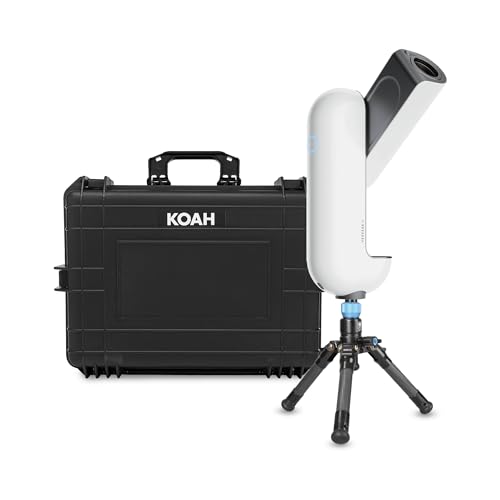
Vaonis Vespera II smart telescope — folded design with 8.3MP sensor and 2.5-degree field of view

Vaonis Vespera II Smart Telescope

8.3MP Sony sensor 2.5° widest FOV Filter slot Foldable design

The Vespera II earns our recommendation for one specific but compelling reason: it captures wider nebulae in finer detail than any other portable smart telescope at its price tier. The 8.3MP sensor, widest-in-class FOV, and integrated filter slot combine to make it the most capable mid-range smart telescope for emission nebula imaging — particularly from light-polluted urban and suburban skies when used with the optional dual narrowband filter. Budget for a USB-C power bank alongside it.

View Vespera II on Amazon →

Affiliate link — we may earn a commission at no extra cost to you.

ZWO Seestar S50 — the best entry-tier alternative to the Vespera II

ZWO Seestar S50 — best entry-tier alternative

If the Vespera II's mid-range price is beyond budget, the Seestar S50 is the entry-tier smart telescope that launched the category. It's dramatically lighter (2.2 lbs vs 11 lbs), has a 4.5-hour battery, and delivers good nebula images for the price. The trade-off vs Vespera II: smaller 1.29° × 0.73° field of view means most large nebulae appear cropped, and the 2MP sensor means less fine detail than the Vespera II's 8.3MP. But for a first smart telescope experience or travel use, the Seestar's portability wins.

DWARFLAB Dwarf 3 smart telescope — best value entry smart telescope alternative

DWARFLAB Dwarf 3 — best value entry alternative

The Dwarf 3 offers a dual-camera system (wide + telephoto) and a surprisingly wide 2.2° × 1.6° telephoto FOV at its entry price point. For casual nebula observers on a tight budget, the Dwarf 3 is a strong alternative to the Seestar and a starting point before upgrading to the Vespera II. See our full Dwarf 3 review.

Affiliate links. See our editorial standards.

Vaonis Vespera II — FAQ

What is the Vaonis Vespera II's key advantage over the Seestar S50?

The primary advantages are the wider field of view (2.5° × 1.4° vs the Seestar's 1.29° × 0.73°), the 8.3MP sensor vs the Seestar's 2MP, and the built-in filter slot. In practice, the wider FOV means the Vespera II captures entire nebulae that appear cropped on the Seestar. Large targets like the full Andromeda Galaxy, the complete Orion Nebula complex, and many emission nebulae fit in a single Vespera II frame but not a single Seestar frame. The trade-off is substantially higher price and much more weight (11 lbs vs 2.2 lbs).

Can the Vaonis Vespera II see planets?

No — not meaningfully. Like all 50mm smart telescopes, the Vespera II's aperture and focal length are insufficient for planetary detail. Jupiter's disk is visible but small and shows no cloud band detail. Saturn's rings are identifiable but not resolved in meaningful detail. For planets, a traditional planetary telescope (Maksutov-Cassegrain, SCT, or high-quality refractor at 80mm+) is required.

How long does the Vaonis Vespera II battery last?

The stated battery life is 4 hours. Real-world is 3.5–4 hours in moderate temperatures (15–20°C). In cold weather (below 5°C / 40°F), expect 2.5–3 hours. The telescope charges via USB-C and can be powered from an external USB-C power bank during operation. A 20,000 mAh power bank will extend any session indefinitely. We strongly recommend purchasing one for all-night summer or winter sessions.

Does the Vaonis Vespera II work from light-polluted skies?

Yes — and it's particularly well-equipped for light pollution thanks to its built-in filter slot. With the optional Vaonis Dual Narrowband filter (sold separately), the Vespera II blocks broadband city lighting and passes only H-alpha and OIII emission wavelengths, dramatically improving emission nebula contrast from Bortle 7–9 skies. Without the filter, it performs similarly to other 50mm smart telescopes on bright targets. See our light pollution telescope guide for full context.

Does the Vaonis Vespera II need internet access to work?

No. The Vespera II creates its own WiFi hotspot — you connect your smartphone directly to the telescope's network. No home router or internet connection is needed. The Singularity app does require internet to download new targets or update the catalogue initially, but previously loaded targets work offline. At a dark-sky site without internet, the telescope operates normally if the catalogue was previously synced.

Can the Vaonis Vespera II observe the Sun?

Yes — with the optional Vaonis solar filter, the Vespera II becomes a solar imaging telescope. Sunspots, faculae, and limb darkening are visible in the Singularity app in real time. Never attempt solar observation without a proper solar filter — unfiltered observation through any telescope will cause permanent eye damage and sensor damage. Use only Vaonis-supplied or ISO 12312-2 certified solar filters.

What is the largest object the Vaonis Vespera II can image in a single frame?

The Vespera II's 2.5° × 1.4° field of view fits the following significant objects in a single frame: the full Andromeda Galaxy (M31) including M32 and M110 companions, the complete Orion Nebula complex including M43 and NGC 1977, the Lagoon Nebula (M8), the Omega Nebula (M17), the Eagle Nebula (M16), and most open clusters. Objects wider than 2.5° (Pleiades full extent, North America Nebula, Full Moon at 0.5°) require Mosaic mode or won't fit in one frame. The Moon itself (0.5° diameter) fits easily — but the Moon is too bright for the Vespera II's sensor without a filter.

Is the Vaonis Vespera II worth the upgrade from a Seestar S50?

If you've used a Seestar S50 and found yourself frustrated by targets that don't fit in the frame, or by wanting more pixel detail in your nebula images, the Vespera II is a meaningful upgrade. The wider FOV and 4× more pixels translate to a genuinely different and better result on most nebula targets. If you're happy with Seestar results and don't specifically need the wider coverage, the upgrade may not justify the price difference. The weight difference (2.2 lbs Seestar vs 11 lbs Vespera II) is also a real practical consideration for travel or balcony use.



Related Guides