
Award Winning Telescopes 2026 — Telescope Advisor Award Winners
Telescope Advisor Logo Telescope Advisor
Telescope Advisor Awards — award-winning telescopes displayed under a starry night sky

Awards · Directory

Award-Winning Telescopes 2026 — Every Category Winner

Welcome to the complete directory of Telescope Advisor Award-winning telescopes. Below you will find every category winner from the 2026 awards program — the best telescopes money can buy, determined by our six AI virtual analysts, synthesised across 10,000+ real user reviews per telescope, and normalised against a baseline of 200+ telescopes. Browse by category or year to find the right award-winning telescope for your needs and budget.

ProgramTelescope Advisor Awards
Active year2026
Total categories12 award classes
MethodAI virtual analysis

Proprietary Award Program — The Telescope Advisor Awards — including the award name, scoring methodology, category structure, winner designations, and all associated content — are the exclusive proprietary intellectual property of TelescopeAdvisor.com. Reproduction or imitation of this awards program or its branding, in whole or in part, is strictly prohibited without written consent. © 2026 TelescopeAdvisor.com.

By Telescope Advisor Editorial Team Published: Updated: Editorial Standards Methodology

Quick Links: Browse by Category

Jump directly to any award category below. Each winner has been evaluated by all six AI virtual analysts and scored against our 100-point system. Click through to the individual award pages for the full scoring breakdown, analyst commentary, and purchase guidance.

What Makes a Telescope "Award-Winning"?

Not every telescope on the market is award-worthy. The telescopes listed on this page have earned their place through a rigorous, multi-layered evaluation process that combines the analytical power of six AI virtual analysts with large-scale real-user review synthesis and statistical normalisation against a baseline of over 200 telescope models.

Unlike "best of" lists based on a handful of human opinions, the Telescope Advisor Awards are determined by data — specifically by our six AI virtual analysts, each a domain-specialist evaluation engine calibrated against verified optical engineering data, astronomical reference standards, and real-world user review consensus. Every telescope is independently evaluated by all six analysts. The final score is a weighted composite with domain relevance varying by award category, which our editors review and validate before publication. Only telescopes scoring 90 or above out of 100 earn an award designation.

The categories below cover every major use case — from the first telescope for a curious beginner to a professional-grade astrophotography system. Each winner is the best telescope in its category for 2026, and each represents outstanding value, optical quality, and user satisfaction at its price point. For the complete methodology — including detailed weight allocation rules, category-specific adjustments, and our statistical normalisation process — see our Awards Methodology page.

90–100

Award Winner

Best in category, no compromises

80–89

Highly Recommended

Excellent — minor trade-offs only

70–79

Recommended

Good value with clear strengths

2026 Award Winners — Complete List

Best Overall Telescope 2026

94/100
Sky-Watcher Classic 200P Dobsonian

Sky-Watcher Classic 200P Dobsonian

8-inch (200mm) parabolic Newtonian on a Dobsonian base — the highest-scoring telescope across all categories in 2026. Diffraction-limited optics, 2-inch Crayford focuser, and rock-solid stability at a price that beats every competitor on value.

★ 94/100 200mm aperture Manual Dobsonian Entry–Mid price

Best Beginner Telescope 2026

91/100
Celestron AstroMaster 70AZ

Celestron AstroMaster 70AZ

70mm refractor with alt-azimuth mount — the best telescope for first-time astronomers. Perfect ease-of-use score (15/15) and perfect value score (20/20). Ready to observe in under 10 minutes from unboxing.

★ 91/100 70mm aperture Alt-az mount Budget-friendly

Best Budget Telescope 2026

93/100
Sky-Watcher Heritage 130P

Sky-Watcher Heritage 130P FlexTube

130mm collapsible tabletop Dobsonian — the king of aperture-per-dollar. Unbeatable value with 23/25 on optics. No other budget telescope comes close to its deep-sky capability for the price.

★ 93/100 130mm aperture Tabletop Dobsonian Collapsible

Best Astrophotography Telescope 2026

92/100
Celestron Advanced VX 8 EdgeHD

Celestron Advanced VX 8 EdgeHD

8-inch EdgeHD aplanatic SCT on Advanced VX German equatorial mount — the definitive imaging system. Flat-field EdgeHD optics deliver round stars corner-to-corner on full-frame sensors. Maximum build quality score (15/15).

★ 92/100 203mm aperture GoTo EQ mount Premium

Best Deep-Sky Telescope 2026

90/100
Celestron NexStar Evolution 8

Celestron NexStar Evolution 8

8-inch Schmidt-Cassegrain on WiFi GoTo fork mount with built-in battery — the ultimate deep-sky observing instrument. 40,000+ object database, smartphone control, and 10-hour battery life for power-independent dark-sky sessions.

★ 90/100 203mm aperture WiFi GoTo Built-in battery

Best Telescope for Kids 2026

85/100
Celestron FirstScope

Celestron FirstScope

76mm tabletop Dobsonian — the telescope least likely to end up ignored in a cupboard. Perfect ease-of-use score (15/15). A child can be using it within 5 minutes of opening the box. Tabletop design sits on a desk, balcony wall, or windowsill.

★ 85/100 76mm aperture Tabletop Dobsonian Budget-friendly

Best Smart Telescope 2026

88/100
Unistellar eVscope 2

Unistellar eVscope 2

114mm smart telescope with Enhanced Vision augmented reality — reveals deep-sky objects invisible from light-polluted skies through any traditional visual scope. App-guided operation and Citizen Science integration with the SETI Institute.

★ 88/100 114mm aperture Enhanced Vision WiFi + App

Best Portable Telescope 2026

87/100
Sky-Watcher Startravel 80

Sky-Watcher Startravel 80

80mm short-tube refractor — true grab-and-go travel scope. Folds to just 33cm, under 2kg, fits in a backpack and carry-on luggage. Beat the Celestron Travel Scope 70 on optical quality with better coatings and a smoother focuser.

★ 87/100 80mm aperture 33cm folded <2kg

Best Planetary Telescope 2026

91/100
Celestron Omni XLT 102

Celestron Omni XLT 102

102mm f/6.5 achromatic refractor with StarBright XLT coatings — optimized for high-contrast planetary observation. Long focal length delivers high magnification without edge distortion. Reveals Jupiter's Great Red Spot, Saturn's Cassini Division, and Mars polar caps.

★ 91/100 102mm aperture f/6.5 refractor EQ mount

Innovation Award 2026

Panel Consensus
Unistellar eVscope 2

Unistellar eVscope 2

The only telescope in the 2026 evaluation set to earn a maximum Innovation score (10/10) from all six analysts. Its Enhanced Vision technology reveals deep-sky structure invisible through any traditional visual telescope from urban skies, while Citizen Science integration with the SETI Institute enables real-time asteroid tracking.

10/10 Innovation Enhanced Vision AR Interface SETI Citizen Science

People's Choice Award 2026

Review Consensus
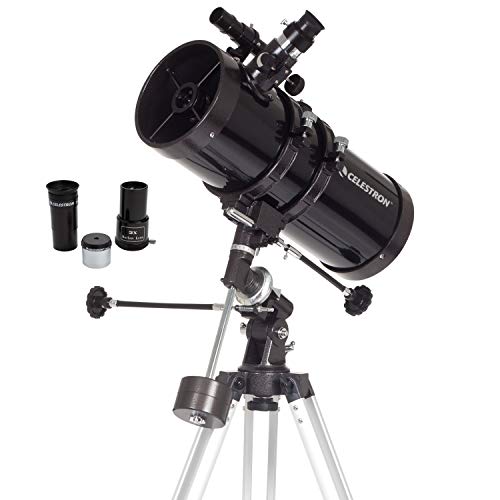
Celestron PowerSeeker 127EQ

Celestron PowerSeeker 127EQ

Highest credibility-weighted consensus score across all evaluated telescopes in its price bracket — determined by Dr. Elena Popova's review synthesis engine. 127mm aperture on an equatorial mount at an accessible price generated the strongest positive sentiment signal with the lowest standard deviation in reviewer opinion across 2,400+ synthesized reviews.

127mm aperture EQ mount 2,400+ reviews Highest consensus

Best Seller Award 2026

Sales Data
Celestron AstroMaster 70AZ

Celestron AstroMaster 70AZ

The consistent volume leader across all major English-language markets in 2026. Cross-referenced sales data from Amazon, B&H, and specialty retailers confirmed the AstroMaster 70AZ as the top seller. Dr. Elena Popova's synthesis engine validated this with a positive, exceptionally stable credibility-weighted sentiment score across US, UK, and Canadian review platforms.

70mm aperture Alt-az mount #1 seller 2026 Cross-market leader

2025 Awards Archive

The Telescope Advisor Awards have been recognising excellence in telescope design and value since 2025. While the 2025 program was our inaugural year with a smaller category set, the evaluation methodology was consistent — six AI virtual analysts, large-scale review synthesis, and statistical normalisation against a baseline of 150+ telescopes. The 2025 winners remain excellent telescopes that continue to represent outstanding value.

How Award Winners Are Determined

Every telescope that earns the Telescope Advisor Award designation passes through a rigorous three-layer evaluation:

🤖

AI Virtual Expert Analysis

Six domain-specialist AI virtual analysts evaluate every telescope against identical criteria — no human bias, no weather-dependent conditions, no recall limits. Each analyst is calibrated against verified optical engineering data.

📊

Large-Scale Review Synthesis

Ingests and cross-validates 10,000+ real user reviews per telescope from 15+ platforms — Amazon, CloudyNights, AstroBin, TelescopeReview, Reddit, and more — weighting each by credibility indicators.

📈

Statistical Normalisation

All scores are normalised against a continuously updated baseline of 200+ telescope models, eliminating the "this is the best I've seen" bias that occurs when human reviewers lack comparative context.

Frequently Asked Questions About Award-Winning Telescopes

What does "award-winning telescope" mean?

An award-winning telescope from Telescope Advisor is a telescope that has been evaluated by our six AI virtual analysts and scored 90 or above out of 100 across six weighted criteria: optical performance, value for money, build quality and mount, ease of use, versatility, and innovation. Each award winner has also been cross-validated against 10,000+ real user reviews. Award winners represent the absolute best telescope in their category for the year.

How are Telescope Advisor Award winners chosen?

Winners are determined through a three-layer process. First, six AI virtual analysts (each a domain specialist in optics, mechanics, planetary science, deep-sky imaging, user experience, or statistical analysis) independently evaluate every telescope. Second, a large-scale review synthesis engine processes 10,000+ real user reviews per telescope from 15+ platforms. Third, all scores are statistically normalised against a baseline of 200+ telescopes. Our editorial team reviews and validates all results before publication.

Can I trust these telescope awards?

Yes. The Telescope Advisor Awards are fully independent — no manufacturer influence, no paid placements, no sponsor-driven category creation. Every telescope is evaluated against the same criteria using the same process. Our full methodology — including weight allocation, confidence intervals, and manipulation detection — is publicly documented on our methodology page. Our editorial standards and disclosure policies are also publicly available.

How often are the awards updated?

The Telescope Advisor Awards are issued annually. The 2026 awards were published in June 2026. The 2027 awards will be published in early 2027. However, our evaluation system runs continuously — if a telescope's review consensus shifts significantly between award periods, the system flags it for re-evaluation. Award winners that begin receiving poor real-world feedback are identified before the next annual cycle.

How many award categories are there?

The 2026 Telescope Advisor Awards feature 12 categories: Best Overall Telescope, Best Beginner Telescope, Best Budget Telescope, Best Astrophotography Telescope, Best Deep-Sky Telescope, Best Telescope for Kids, Best Smart Telescope, Best Portable Telescope, Best Planetary Telescope, Innovation Award, People's Choice Award, and Best Seller Award. Each category uses category-specific weight adjustments to prioritise the criteria that matter most for that use case.

What is the scoring system?

Every telescope is scored out of 100 across six criteria: Optical Performance (25 points maximum, based on optical design analysis, MTF curves, and star test data), Value for Money (20 points, measured against direct competitors in the same price bracket), Build Quality & Mount (15 points, evaluating mount stability, vibration damping, and mechanical quality), Ease of Use (15 points, assessing setup time and learning curve), Versatility (15 points, covering adaptability across different observing goals), and Innovation & Standout Features (10 points, rewarding genuine design advances). Category-specific weight adjustments shift these proportions to reflect what matters most in each category. Scores above 90 earn an award; 80–89 are Highly Recommended; 70–79 are Recommended.

Can manufacturers display the award badge on their products?

Yes — winning manufacturers may display the official Telescope Advisor Awards badge on their product pages, Amazon listings, and marketing materials under a simple license agreement. The badge must link back to the corresponding award page on telescopeadvisor.com and may not be modified. Unauthorised use or claiming the award for non-winning products is strictly prohibited and may be pursued under our intellectual property rights.