Best Eyepieces for Dobsonian Telescopes: Upgrade Guide
Telescope Advisor Logo Telescope Advisor
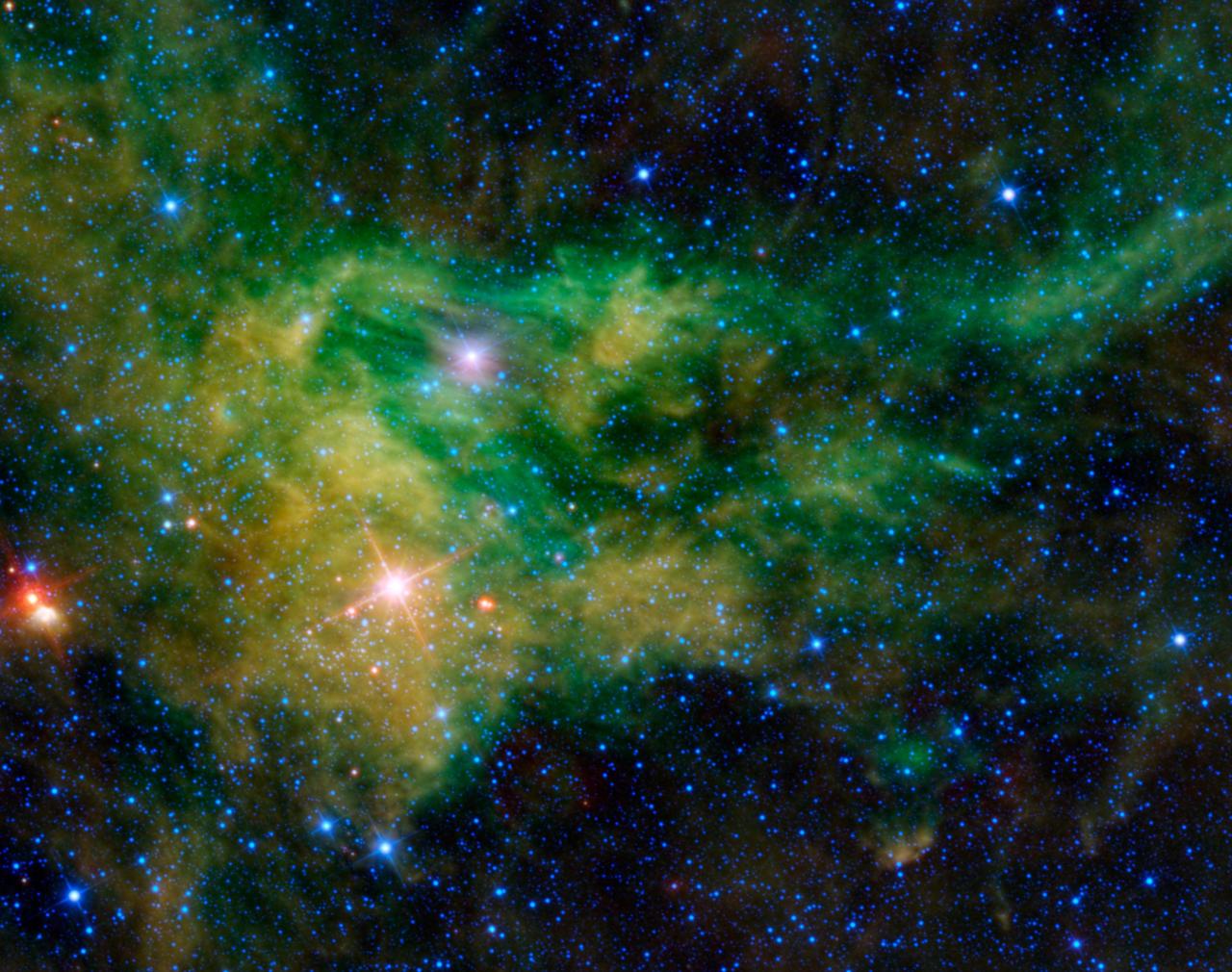
Star-filled night sky

Telescope Accessories · Buying Guide 2026

Best Eyepieces for Dobsonian Telescopes: What You Need for Every F-Ratio

Dobsonian telescopes have different eyepiece needs than refractors or SCTs. Fast focal ratios, large apertures, and a wide field of view create specific requirements. This guide covers which focal lengths, designs, and sizes work best for your Dob.

Best starter setThree-eyepiece kit (low/med/high)
Key specWide AFOV for fast f-ratios
Size2" for low power, 1.25" for high
BudgetEntry kit or premium upgrade
By Elena Reyes Reviewed by Juhi Sahni Updated Editorial Standards

Most Dobsonian telescopes ship with two eyepieces: a low-power 25mm (or 30mm) for finding objects and wide-field sweeping, and a higher-power 9mm or 10mm for closer looks. These bundled eyepieces are functional, but they are almost always the most basic Plossl designs with narrow apparent fields of view and minimal eye relief. The result is a telescope that shows you the universe through a keyhole — sharp, but confined.

Upgrading the eyepieces on a Dobsonian is the single most impactful change you can make to your observing experience. A good eyepiece set transforms a Dob from a "push and peek" instrument into one where you linger on every object, exploring the edges of the field as eagerly as the centre.

This guide is specific to Dobsonians. The fast focal ratios typical of Dobsonians — f/4 to f/6 — place different demands on eyepiece design than the slower f/8 to f/12 focal ratios found in many refractors and SCTs. We cover what makes a good Dob eyepiece, the best focal lengths to build a versatile three-eyepiece kit, and specific model recommendations at several price points.

Why Dobsonians Need Different Eyepieces

A Dobsonian's optical design — fast focal ratio Newtonian reflector on a simple alt-az mount — creates three specific challenges for eyepiece selection.

1. Fast Focal Ratios Expose Eyepiece Aberrations

Most Dobsonians operate at f/4 to f/6. At these fast focal ratios, the light cone coming off the primary mirror hits the eyepiece at a steep angle. Simple eyepiece designs — basic Plossls, Kellners, and Huygenians — cannot correct the resulting aberrations across the entire field. The most noticeable is astigmatism in the outer field: stars near the edge of the view appear as tiny seagull-shaped smears rather than sharp points. Quality multi-element eyepieces with wide-field designs (60° to 100° apparent field of view) use additional lens groups to correct these edge aberrations, maintaining sharp stars across the entire field.

2. Large Aperture Creates Bright, Low-Power Views

A 200mm (8-inch) Dobsonian at f/6 has a focal length of 1200mm. With a 30mm eyepiece, you get 40× magnification and a 4.4mm exit pupil — a bright, wide view ideal for sweeping the Milky Way, framing the Andromeda Galaxy, or taking in the Pleiades. A 2-inch eyepiece with a wide apparent field (68° to 82°) at this power shows nearly 2° of true sky, which is enough to fit the entire Orion Nebula, the Andromeda Galaxy core and its two satellite galaxies, or the full sweep of the Hercules star cluster in one field. The included 1.25-inch eyepieces that ship with most Dobsonians physically limit the maximum true field because a 1.25-inch barrel restricts the field stop diameter to roughly 27mm at most.

3. Eye Relief Matters at High Magnification

High-power planetary observing with a Dobsonian — 200× to 300× — demands eyepieces with comfortable eye relief. A standard Plossl at short focal lengths (6mm to 8mm) has very short eye relief, forcing your eye uncomfortably close to the lens. This is especially problematic for eyeglass wearers. Modern wide-field eyepiece designs at the same focal lengths offer 15mm to 20mm of eye relief, a dramatic improvement in comfort during the sustained high-power sessions that planetary observing requires.

Building a Three-Eyepiece Dobsonian Kit

Three well-chosen eyepieces cover virtually every observing situation with a Dobsonian. The exact focal lengths depend on your telescope's focal length, but the following table provides a useful starting point for 6-inch, 8-inch, and 10-inch Dobsonians at typical f-ratios.

Telescope Low Power Medium Power High Power
6" f/8 (1200mm) 32mm (37×, 2" recommended) 15mm (80×) 6mm (200×)
8" f/6 (1200mm) 30mm (40×, 2" recommended) 12mm (100×) 6mm (200×)
10" f/5 (1200mm) 25mm (48×, 2" recommended) 10mm (120×) 5mm (240×)
12" f/4.9 (1500mm) 30mm (50×, 2" recommended) 12mm (125×) 6mm (250×)

Note that all four common Dobsonian sizes produce roughly similar magnification ranges because focal length stays near 1200mm across apertures. The main difference is exit pupil: larger apertures at the same magnification produce brighter, more immersive views of deep-sky objects.

Best Eyepieces for Dobsonians 2026: Tested Recommendations

The following eyepieces represent the best options at several price tiers, tested specifically on Dobsonian telescopes at f/4 to f/6 for edge sharpness, eye relief, and apparent field quality.

SVBONY SV131 Eyepiece Set 6/10/15/25mm four-piece kit for Dobsonian telescopes
EDITOR'S PICK

SVBONY SV131 Eyepiece Set 6/10/15/25mm

This four-piece set from SVBONY is the most cost-effective way to outfit a Dobsonian with a complete eyepiece kit. The 25mm delivers a comfortable low-power sweeping view at 48× on a typical 1200mm Dobsonian. The 15mm provides a useful mid-power 80× for general deep-sky observing. The 10mm and 6mm cover the high-power range up to 200× for planetary and lunar detail. All four eyepieces have 20mm of eye relief — excellent for eyeglass wearers — and 66° apparent fields that provide a noticeably wider view than the 50° fields of standard Plossls. At f/6, edge sharpness remains good across the field; at f/5 and faster, the outer 15% of the field shows mild astigmatism, though it is less pronounced than similarly priced Plossls. The set includes a padded foam carrying case.

Celestron X-Cel LX 9mm eyepiece for planetary Dobsonian observing
BEST PLANETARY

Celestron X-Cel LX Series (7mm / 9mm / 12mm / 18mm / 25mm)

The Celestron X-Cel LX series is the natural upgrade path for Dobsonian owners who want better edge correction and eye relief than the SVBONY set provides, without jumping to premium pricing. The 9mm is a standout for planetary observing: at 133× on a 1200mm Dob, it delivers sharp, contrasty views of Jupiter's equatorial bands, Saturn's Cassini Division, and the Moon's terminator detail. The 60° apparent field is modest by modern standards, but edge correction is excellent — stars remain sharp to within a few percent of the field edge even at f/5. The 16mm eye relief is comfortable for eyeglass wearers. The twist-up eyeguard locks firmly at multiple heights. Owners of 8-inch and larger Dobsonians at f/6 should consider the 12mm (100×) for general deep-sky and the 7mm (171×) for nights of good seeing on Jupiter and Mars.

Explore Scientific 82 degree 14mm eyepiece for premium Dobsonian viewing
PREMIUM

Explore Scientific 82° Series (14mm)

The Explore Scientific 82° series is for Dobsonian owners who want a spacewalk experience. At 82° apparent field, the 14mm delivers a 1.1° true field at 86× on a 1200mm Dob — a combination that lets you take in the full sweep of the Orion Nebula with the Trapezium at the centre and the running man nebula at the edge, or frame the entire Andromeda Galaxy core and its dust lanes. The 82° field creates the sensation of looking through a spaceship window rather than a telescope eyepiece. Edge correction at f/5 is very good: stars remain sharp across the central 80% of the field, with mild astigmatism in the outer 10% that is barely noticeable during deep-sky observing. The 18mm eye relief is generous, and the eyeguard adjusts smoothly. This eyepiece is also available in 6.7mm, 11mm, 18mm, and 30mm focal lengths for a complete premium set. The 30mm paired with a 2-inch focuser delivers an extraordinary 2° true field at 40×.

Celestron Omni 2x Barlow lens for Dobsonian telescope eyepiece kit
SMART UPGRADE

Celestron Omni 2× Barlow Lens

A 2× Barlow lens effectively doubles your eyepiece collection by doubling the magnification of any eyepiece it is paired with. With a 2× Barlow, your 25mm eyepiece becomes 12.5mm, your 12mm becomes 6mm, and your 6mm becomes 3mm — though 3mm is rarely usable because the exit pupil becomes too small. The Celestron Omni 2× Barlow is a well-crafted, fully multi-coated unit that adds negligible image degradation. It is particularly useful for Dobsonian owners because it provides an instant high-power option without buying a dedicated short-focal-length eyepiece. At f/6, the Barlow works well with all eyepiece types; at f/5 and faster, it performs best with well-corrected eyepieces like the X-Cel LX series.

2-Inch vs 1.25-Inch Eyepieces for Dobsonians

Most Dobsonians come with a 2-inch focuser from the factory. If yours did not, a 2-inch focuser upgrade is one of the best investments you can make because it unlocks the widest true fields of view. A 2-inch eyepiece with a 30mm focal length and 82° apparent field (like the Explore Scientific 30mm 82°) delivers roughly 2° of true sky at 40× on a 1200mm Dob — enough to frame the entire Orion Nebula, the full Andromeda Galaxy core and its satellite galaxies M32 and M110, or the entire Pleiades cluster with room to spare. The same field through a 1.25-inch 32mm Plossl is roughly 1.3° — noticeably more constricted.

For medium and high powers (100× and above), 1.25-inch eyepieces are perfectly adequate. The field stop of a 1.25-inch barrel limits the maximum true field, but at high power the true field is small regardless, so the 1.25-inch format imposes no practical limitation above about 80×.

The practical recommendation: buy one good 2-inch wide-angle eyepiece in the 25mm to 32mm range for low-power sweeping, and build your medium-to-high-power set in 1.25-inch format. This gives you the best of both worlds without duplicating focal lengths.

Eyepiece Buyer's Checklist for Dobsonian Owners

Before purchasing any eyepiece for your Dobsonian, consider these factors:

  • Focal ratio: If your Dob is f/5 or faster, invest in well-corrected multi-element eyepieces. Cheap Plossls at fast f-ratios show distracting edge astigmatism that spoils the immersive experience.
  • Eye relief: For eyepieces below 12mm focal length, check the eye relief specification. Below 10mm of eye relief is uncomfortable for extended observing. Look for 15mm or more, especially if you wear eyeglasses.
  • Apparent field of view: 50° (standard Plossl) is functional but constricting. 60°–68° is comfortable. 82°–100° is immersive and transforms the observing experience, though at significantly higher cost.
  • 2-inch compatibility: Verify that your Dob's focuser accepts 2-inch eyepieces. Most modern Dobsonians do, but some entry-level models have 1.25-inch-only focusers. An adapter ring is a cheap fix if needed.
  • Balance: A heavy 2-inch wide-angle eyepiece can shift the balance point of a Dobsonian, especially on smaller models. Have a small counterweight or magnetic weight system ready if you notice the tube tipping forward when you insert a large eyepiece.

Frequently Asked Questions

What eyepieces come with a Dobsonian telescope?

Most Dobsonians ship with two 1.25-inch Plossl eyepieces, typically 25mm and 9mm or 10mm. These are functional but have narrow 50° fields, short eye relief at the high-power end, and limited edge correction at fast f-ratios. They are designed to meet a price point rather than deliver the best possible view.

How many eyepieces do I need for a Dobsonian?

Three well-chosen eyepieces — low power (25–32mm), medium power (12–15mm), and high power (5–7mm) — cover virtually all observing situations. A 2x Barlow effectively doubles your options without buying additional eyepieces.

What is the best low-power eyepiece for an 8-inch Dobsonian?

A 2-inch 30mm eyepiece with a 68° to 82° apparent field is ideal for an 8-inch f/6 Dobsonian. It delivers roughly 40x magnification with a 1.5° to 2° true field — wide enough to frame large nebulae and open clusters with surrounding star fields.

Are 2-inch eyepieces worth it for a Dobsonian?

Yes, for low-power observing. A 2-inch eyepiece provides a significantly wider true field than any 1.25-inch eyepiece, which is valuable for large deep-sky objects, star field sweeping, and framing open clusters. For medium and high powers, 1.25-inch eyepieces perform identically.

Can I use Plossl eyepieces on a fast Dobsonian?

You can, but the outer field will show astigmatism at f/5 and faster. Plossls are best suited to telescopes with focal ratios of f/8 or slower. For fast Dobsonians, multi-element wide-field designs provide significantly better edge correction.

What magnification is best for planetary observing with a Dobsonian?

The useful magnification range is roughly 150x to 250x, depending on atmospheric conditions. On a 1200mm focal length Dobsonian, this corresponds to eyepieces in the 5mm to 8mm range. On excellent seeing nights, experienced observers occasionally push to 300x (4mm) on 10-inch and larger apertures.

Eyepiece Upgrades: The Highest-ROI Change You Can Make

A good set of eyepieces transforms a Dobsonian from a capable but basic instrument into one that delivers rich, immersive views night after night. The bundled eyepieces that ship with most Dobsonians are gateways — they show you enough to know that the telescope has potential, but they do not show you what the telescope is truly capable of.

The SVBONY SV131 four-piece set is the fastest and most affordable way to experience this transformation. For those who want to push further, the X-Cel LX series delivers excellent edge correction at f/5 and above, and the Explore Scientific 82° series provides the spacewalk experience that makes Dobsonian observing truly memorable.

Start with a low-power 2-inch wide-angle and a good mid-power eyepiece, then build out from there. Your Dobsonian has been waiting for better glass.

Related Guides

Elena Reyes — Senior Science Editor

Elena Reyes

Senior Science Editor

Covers NASA missions, space science discoveries, and astronomical events for Telescope Advisor. Translates complex astrophysical research into practical insights for backyard observers. Based in the San Francisco Bay Area.

Content reviewed by our editorial team. Research and drafting assisted by AI to ensure unbiased, data-driven analysis. Learn more about our editorial process.