Venus Greatest Elongation January 2027: Evening Star at Its
Telescope Advisor Logo Telescope Advisor
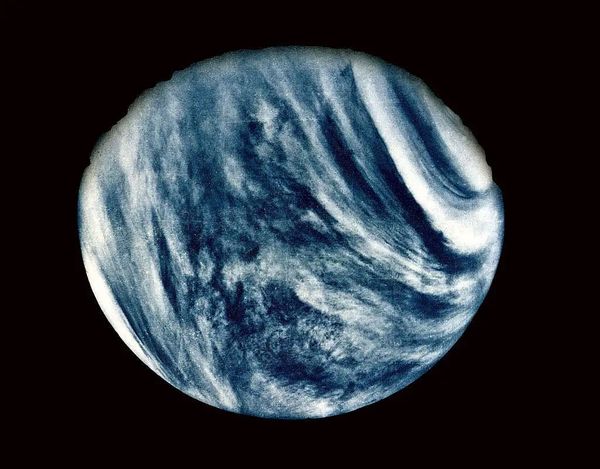
Venus as seen by Mariner 10 — the planet's cloud-tops and atmosphere

Sky Event Guide · January 2027

Venus Greatest Elongation January 2027: See the Evening Star at Its Half-Phase

Venus reaches 47° east of the Sun on January 3, 2027 — its highest evening altitude of the year and the finest opportunity to observe the planet's half-phase through a telescope.

DateJanuary 3, 2027
Elongation47° east of Sun
Magnitude-4.4
Phase50% (dichotomy)
By Telescope Advisor Editorial Team Published: Updated: Reviewed & approved by Juhi Sahni, Senior Editor Editorial Standards

Venus reaches greatest eastern elongation on January 3, 2027, standing 47° away from the Sun and setting nearly four hours after sunset. At magnitude -4.4, it is unmistakable in the western evening sky — the brightest point of light after the Sun and Moon — and a stunning sight through even the smallest telescope.

At greatest elongation, Venus appears exactly half-illuminated — a phenomenon known as dichotomy. Through a telescope at 60× or higher, the planet shows a perfect half-circle, with the terminator (the line between day and night sides) running straight down the middle of the disk. This is the finest evening apparition of Venus in 2027, and the best opportunity to observe its phase and any subtle atmospheric features in the cloud tops.

This guide covers exactly when and where to look for Venus at its January 2027 elongation, what telescope magnification reveals, and how to observe the planet's crescent transformation in the months that follow.

What Is Greatest Elongation?

Greatest elongation occurs when an inferior planet — Venus or Mercury — reaches its maximum angular separation from the Sun as seen from Earth. For Venus, this happens approximately twice per year, alternating between eastern elongation (evening sky) and western elongation (morning sky). At greatest eastern elongation, Venus appears in the western sky after sunset, reaching its highest altitude above the horizon and remaining visible for the longest period after sundown.

The January 3, 2027 elongation is a 47° eastern elongation — close to Venus's maximum possible separation of about 47.8°. This means Venus climbs higher in the evening sky than at any other time in 2027, making it visible from a wider range of latitudes and for longer after sunset. For observers at 40°N latitude, Venus sets approximately 4 hours after the Sun.

What You'll See Through a Telescope

Venus through a telescope is a study in changing phases. Unlike Mars or Jupiter, which show surface features, Venus is permanently shrouded in thick cloud layers that reflect sunlight as a featureless white or slightly yellowish disk. What makes Venus interesting to observe is its phase cycle, which Galileo first documented in 1610 as proof that Venus orbits the Sun, not Earth.

At greatest elongation on January 3, Venus shows a perfect 50% phase — exactly half illuminated, half in shadow. Through a 60mm refractor at 60×, the half-disk is crisp and clear, with the terminator appearing as a straight line down the centre. Through a 4-inch or larger telescope at 120×–150×, the disk is large enough to study the terminator for subtle irregularities caused by Venus's thick atmosphere. Some observers report a faint shading along the terminator known as the Schröter effect — an apparent delay in the exact moment of dichotomy caused by scattering in the Venusian atmosphere.

After greatest elongation, Venus's phase thickens from half to gibbous through January and February, while the planet's apparent diameter shrinks as it moves away from Earth on its orbital path. By mid-January, Venus is 55% illuminated and still brilliant at magnitude -4.3.

Venus Phase Evolution: What to Expect Week by Week

One of the most fascinating aspects of Venus observing is how dramatically the planet changes over just a few weeks. Unlike Mars or Jupiter, which appear essentially the same night after night, Venus cycles through a complete set of phases — from thin crescent to nearly full — over the course of its apparition.

DateElongationPhaseMagnitudeDisk SizeVisibility
Dec 15, 202638° E45%-4.324"Evening, sets ~3 hrs after Sun
Jan 3, 202747° E50% (dichotomy!)-4.423"Evening, sets ~4 hrs after Sun
Jan 15, 202744° E55%-4.321"Evening, sets ~3.5 hrs after Sun
Feb 1, 202738° E64%-4.217"Evening, sets ~3 hrs after Sun
Mar 1, 202725° E78%-4.013"Evening, sets ~2 hrs after Sun

As the table shows, Venus's disk shrinks and its phase fattens after greatest elongation. The planet is racing away from Earth in its orbit, and by March 2027 it will have lost much of its angular size. The best time to observe Venus is the two-week window centred on January 3, when the disk is still large enough to show the half-phase clearly and the elongation keeps it high in a dark sky.

Best Telescope for Venus Viewing

Venus is surprisingly easy to observe. Any telescope with an aperture of 60mm or larger shows the phase clearly at 60× or higher. A 4-inch refractor or 5-inch SCT at 100×–150× provides the best balance of image brightness and detail. A pale blue filter (Wratten 80A or 47) can help reveal subtle cloud markings in the Venusian atmosphere, though they are notoriously difficult to see — Venus's cloud tops are nearly featureless in visible light.

Celestron Travel Scope 70 — portable refractor ideal for Venus observing
BEST PORTABLE

Celestron Travel Scope 70

The Travel Scope 70 is an excellent choice for Venus observing. Its 70mm aperture provides clear, bright views of Venus's half-phase at 60× with the included 20mm eyepiece. The lightweight, portable design makes it easy to set up for quick evening sessions — which is exactly what Venus observing requires, since the planet sets within a few hours of sunset. The 400mm focal length (f/5.7) is on the shorter side, so a 2× Barlow is useful for reaching the 100× magnification that shows the half-disk at a comfortable size. The included backpack and tripod make this a grab-and-go solution for evening Venus sessions.

Sky-Watcher Heritage 130P — larger aperture for detailed Venus views
BEST VALUE APERTURE

Sky-Watcher Heritage 130P (5-inch Dobsonian)

For observers who want more aperture and higher magnification, the Heritage 130P delivers. Its 130mm aperture at 120× shows Venus's half-disk as a crisp, bright 1.5mm image at the eyepiece — large enough to study the terminator for irregularities. The collapsible tube makes it easy to grab for evening sessions, and the tabletop Dobsonian base is stable and quick to set up. At this magnification, the dichotomy is unmistakable, and the pale blue filter can reveal very subtle cloud shading along the terminator. The Heritage 130P is also a superb deep-sky telescope, making it a versatile investment for year-round observing.

Celestron SkyMaster 15x70 binoculars — wide-field Venus viewing
RECOMMENDED

10×50 Binoculars for Wide-Field Venus Viewing

Even without a telescope, Venus at greatest elongation is a spectacular sight in 10×50 binoculars. They show the planet as a brilliant, steady disk — too small to resolve the phase, but the intense brightness of Venus combined with the wide-field context of the surrounding twilight sky is genuinely beautiful. Binoculars also help you find Venus in the bright twilight sky before it becomes visible to the naked eye, and they frame the planet Saturn and the background stars of Aquarius and Pisces in the same field.

Viewing Venus from Different Latitudes

Venus's greatest elongation on January 3, 2027 is visible from both hemispheres, but the viewing geometry differs significantly by latitude.

Northern Hemisphere (40°N — New York, Madrid, Beijing): Venus sets approximately 4 hours after sunset at greatest elongation. The ecliptic (the plane of the solar system) is steep relative to the western horizon in January evenings, so Venus climbs to an altitude of about 35° above the horizon at sunset — a comfortable viewing height. This is the best geometry for Northern Hemisphere observers in years.

Equatorial regions (0–20° latitude): Venus appears nearly overhead at sunset, setting about 3 hours after the Sun. The high altitude minimises atmospheric turbulence, so the view through a telescope at 150× is exceptionally steady. Equatorial observers have the best conditions for studying the terminator and looking for cloud markings.

Southern Hemisphere (35°S — Sydney, Buenos Aires, Cape Town): January is summer in the Southern Hemisphere, and the ecliptic is shallower relative to the western horizon. Venus sets approximately 2–3 hours after sunset and appears lower in the sky. The view is still good, but atmospheric dispersion and turbulence are more significant at lower altitudes. A higher-quality eyepiece or an atmospheric dispersion corrector helps.

Photographing Venus at Greatest Elongation

Venus is one of the easiest planets to photograph through a telescope. Its brightness means exposure times are short and the requirements for tracking accuracy are low. A smartphone held to the eyepiece can produce a recognisable image of the half-phase. For better results, use a planetary camera or DSLR in prime focus mode.

Smartphone photography: Use the night mode or manual exposure mode on your phone. Set ISO to 100–200 to minimise noise — Venus is bright enough that high ISO is not needed. Hold the phone steady against the eyepiece and use the 2-second timer or a Bluetooth remote to avoid shake. Focus carefully on the terminator before taking the shot.

Planetary camera (ZWO ASI or similar): A dedicated planetary camera captures video at 30–60 fps through the telescope. Use a Barlow lens to magnify the small disk to fill more of the sensor frame. Process the video in AutoStakkert or RegiStax to stack the sharpest frames. Venus's phase is so bright that most planets do not need dark or flat calibration frames.

DSLR prime focus: A DSLR attached to the telescope via a T-ring and adapter can capture single-shot images of Venus. Set the camera to ISO 200 and an exposure time of 1/100 to 1/250 second. The disk will be small on the sensor, so a 2× or 3× Barlow is recommended to increase image scale. Focus using live view, zoomed in on the terminator.

Historical Significance of Venus Elongations

Venus elongations hold a special place in the history of astronomy. When Galileo first turned his telescope to Venus in 1610, he observed that the planet showed a full set of phases — from thin crescent to nearly full — just like the Moon. This was revolutionary because Ptolemaic astronomy (the Earth-centred model of the solar system) predicted that Venus should always appear as a thin crescent. Galileo's observation of Venus at dichotomy and beyond was direct evidence that Venus orbits the Sun, not Earth, and helped establish the Copernican model of the solar system.

When you observe Venus at greatest elongation on January 3, 2027, you are repeating one of the most important observations in the history of astronomy. The half-disk you see through the eyepiece is exactly the same sight that Galileo used to change humanity's understanding of the cosmos. It is a humbling reminder that the equipment we take for granted — a 60mm refractor, a basic eyepiece — was once cutting-edge scientific instrumentation.

Observing Tips for Venus Elongation

  • Start early. Venus is visible as soon as the sky begins to darken after sunset. Begin observing 15–20 minutes after sunset when Venus first becomes visible, and continue for the next two hours as the sky darkens further.
  • Use twilight for reference. Venus is so bright that it is visible through a telescope against a bright twilight sky. Use a star chart or planetarium app to confirm its position before full darkness.
  • Focus carefully. Venus is bright enough that atmospheric dispersion (the separation of colours by the atmosphere) can be visible at the edge of the disk. Focus on the terminator itself for the sharpest view of the phase boundary.
  • Try a pale blue filter. A Wratten 80A (pale blue) or 47 (deep blue/violet) filter can enhance contrast in Venus's cloud tops. The effect is subtle — Venus's atmosphere is frustratingly featureless in visible light — but dedicated observers report occasional dark patches near the terminator with filtration.
  • Observe on consecutive nights. Venus's phase changes perceptibly over days, not weeks. Observing every clear night between January 1 and January 10 shows the phase moving from 48% to 53% illuminated — a real-time demonstration of orbital motion visible in any telescope.
  • Use moderate magnification. 60×–120× is the sweet spot for Venus. Higher magnification (200×+) makes atmospheric turbulence more noticeable and the small disk becomes too dim. A Barlow lens with a 10mm or 12mm eyepiece delivers the ideal 100× on most telescopes.
  • Observe with a friend. Venus's phase is one of those sights that benefits from a second opinion. Asking a friend whether they see the terminator as a straight line or slightly curved helps calibrate your own observation and is a great way to introduce someone to amateur astronomy.

Frequently Asked Questions

What is Venus greatest elongation?

Greatest elongation is when Venus reaches its maximum angular separation from the Sun as seen from Earth. At eastern elongation, Venus appears in the evening sky at its highest altitude and sets longest after sunset. At western elongation, Venus appears in the morning sky before sunrise.

When is Venus visible in January 2027?

Venus is visible in the western evening sky from sunset until approximately 4 hours after sunset at greatest elongation on January 3. It remains an evening object through February before transitioning to the morning sky in March 2027.

What telescope do I need to see Venus's half-phase?

Any telescope with an aperture of 60mm or larger at 60× magnification or higher shows Venus's half-phase clearly. Even small refractors and tabletop telescopes reveal the crescent or half-disk. The Celestron Travel Scope 70 or Sky-Watcher Heritage 130P are excellent affordable options.

Can I see Venus without a telescope during greatest elongation?

Yes. At magnitude -4.4, Venus is the brightest point of light in the evening sky and is visible even from bright cities. It appears as a brilliant, steady white "star" in the western sky after sunset — unmistakable and beautiful to the naked eye. The phase, however, requires a telescope.

What is the Schröter effect on Venus?

The Schröter effect is an observed phenomenon where the exact moment of dichotomy (half-phase) does not match the calculated date. It is caused by scattering in Venus's thick atmosphere and can shift the observed half-phase by several days. Observers often report the half-phase occurring 2–4 days before or after the calculated timing.

When is the next Venus greatest elongation after January 2027?

Venus reaches its next greatest western elongation (morning sky) in mid-2027, and the next eastern elongation (evening sky) occurs approximately 19 months later in mid-2028. Each Venus apparition alternates between morning and evening, roughly every 18–19 months.

Can I photograph Venus with my smartphone?

Yes. Hold your smartphone steady against a 25–30mm eyepiece and use night mode or manual exposure at ISO 100–200. Use the 2-second timer to avoid shake. Focus carefully on the terminator. The resulting image will show the half-disk clearly.

What is the difference between greatest elongation and maximum brightness?

Greatest elongation (maximum angular separation from the Sun) and maximum brightness are different events. Greatest elongation occurs when Venus is farthest from the Sun in our sky. Maximum brightness occurs when Venus is at its closest distance to Earth with a large enough illuminated fraction — typically a few weeks before or after greatest elongation. For the January 2027 apparition, Venus reaches maximum brightness around late February.

Don't Miss the Evening Star at Its Best

Venus at greatest elongation on January 3, 2027 is the finest evening apparition of the year. The planet's brilliance, combined with the perfect half-phase visible in any telescope, makes it a rewarding target for observers of all levels. Whether you use a small refractor on a balcony or a 6-inch SCT in a backyard, the sight of Venus at dichotomy — exactly half-lit against the deepening twilight — is one of the simplest and most beautiful sights in amateur astronomy.

January evenings also offer a bonus: the zodiacal light. In the weeks surrounding the January evening Venus elongation, the zodiacal light — sunlight scattered by interplanetary dust in the plane of the solar system — is visible from dark sites as a faint, cone-shaped glow rising from the western horizon after twilight fades. Venus shines directly within this glow, adding an extra dimension to the evening view. Look for it about 60–90 minutes after sunset from a location with no light pollution to the west.

For more January sky events, see our January 2027 night sky guide. Also check our best telescope for planets guide to compare planetary observing options across every budget and experience level.

Related Guides

Elena Reyes — Senior Science Editor

Elena Reyes

Senior Science Editor

Covers NASA missions, space science discoveries, and astronomical events for Telescope Advisor. Translates complex astrophysical research into practical insights for backyard observers. Based in the San Francisco Bay Area.

Content reviewed by our editorial team. Research and drafting assisted by AI to ensure unbiased, data-driven analysis. Learn more about our editorial process.