Night Sky in January 2027: Quadrantids, Venus Elongation & Mars
Telescope Advisor Logo Telescope Advisor
Starry night sky with the Milky Way band visible — a January sky at a dark site

Monthly Sky Guide · January 2027

Night Sky in January 2027: Quadrantids, Venus at Its Best, and Mars Prepares for Opposition

January 2027 kicks off the year with the Quadrantid meteor shower peaking under dark skies, Venus at its highest evening altitude, and Mars brightening rapidly toward its February opposition. Here is your complete night sky guide.

Top eventQuadrantids peak Jan 3-4
Planet highlightVenus evening elongation
ConstellationsOrion, Taurus, Gemini
Mars statusMag 0.5, disk 12" building
By Elena Reyes Reviewed by Juhi Sahni Updated Editorial Standards

January nights are long, cold, and often crystal-clear — the best conditions of the year for deep-sky observing. In 2027, the month opens with one of the best meteor showers of the year, Venus at its finest evening appearance, and Mars brightening rapidly as it heads toward opposition in February. The winter Milky Way arcs overhead, and the year's finest constellations — Orion, Taurus, Gemini, and Auriga — dominate the sky from early evening onward.

This guide covers the key events, planetary positions, and deep-sky highlights for January 2027, with recommended equipment for each target.

Top 5 Sky Events in January 2027

  1. Quadrantids meteor shower peak — January 3-4. Up to 80 meteors per hour under a waning crescent Moon. Best after midnight facing northeast. See our dedicated Quadrantids 2027 guide for full details.
  2. Venus at greatest elongation — January 3. Venus reaches 47° from the Sun, its highest evening altitude of 2027. A stunning half-phase visible in any telescope.
  3. Mars brightening rapidly — Mars reaches magnitude 0.5 mid-month, with its disk growing to 12 arcseconds. A 6-inch telescope at 180× begins to show the polar cap.
  4. Jupiter well placed in evening sky — Jupiter is visible all evening in Gemini, at its best for high-magnification observing.
  5. Winter Milky Way overhead — The Orion Arm of the Milky Way crosses the zenith, offering sweeping views of star clusters and nebulae with binoculars or a wide-field telescope.

Planet Visibility in January 2027

Venus — Evening Star at Its Best

Venus reaches greatest eastern elongation on January 3, 2027, standing 47° from the Sun and setting nearly four hours after sunset. At magnitude -4.4, it is unmistakable in the western evening sky. Through a telescope at 60× or higher, Venus shows a distinct half-phase — exactly 50% illuminated — as it reaches dichotomy. This is the best evening apparition of Venus in 2027 and the finest opportunity to observe its phase and atmospheric features. A pale blue filter (Wratten 80A) can help reveal subtle cloud markings in the Venusian atmosphere, though they are notoriously difficult to see.

Mars — Building Toward Opposition

Mars rises around midnight in January and is well placed in the pre-dawn sky. At magnitude 0.3–0.5 and a disk size of 11–12 arcseconds, it is still relatively small but growing. Through a 150mm telescope at 180×, the north polar ice cap becomes visible as a bright white spot, and the dark albedo features Syrtis Major and Sinus Meridiani start to emerge on favourable rotation nights. January is the month to begin serious Mars observing — by February opposition, the disk will reach 14.6 arcseconds, revealing significantly more detail. See our Mars opposition guide for preparation tips.

Jupiter — Evening Giant

Jupiter is visible from sunset onward, well placed in Gemini. At opposition in late 2026, it remains a brilliant evening object at magnitude -2.3, with a disk spanning 42 arcseconds. Its four Galilean moons perform their nightly dance, and shadow transits are frequent. A 6-inch telescope at 150× reveals the North and South Equatorial Belts clearly, with the Great Red Spot visible on favourable rotation nights.

Saturn — Low in the West

Saturn sets early in January — by mid-month it is only 20° above the southwest horizon at dusk and sets by 9 PM. Its 7.5° ring tilt from 2026 has increased to about 10°, but the low altitude means atmospheric turbulence limits high-magnification views. January is the last month for easy Saturn observing until its 2027 opposition season begins in late summer.

Uranus and Neptune

Uranus (magnitude 5.7) is visible in Aries through binoculars, well placed in the evening sky. At 150× in a 6-inch telescope, it shows a small greenish disk. Neptune (magnitude 7.9) is in Pisces and sets mid-evening — a tougher target requiring a finder chart and a 6-inch or larger telescope.

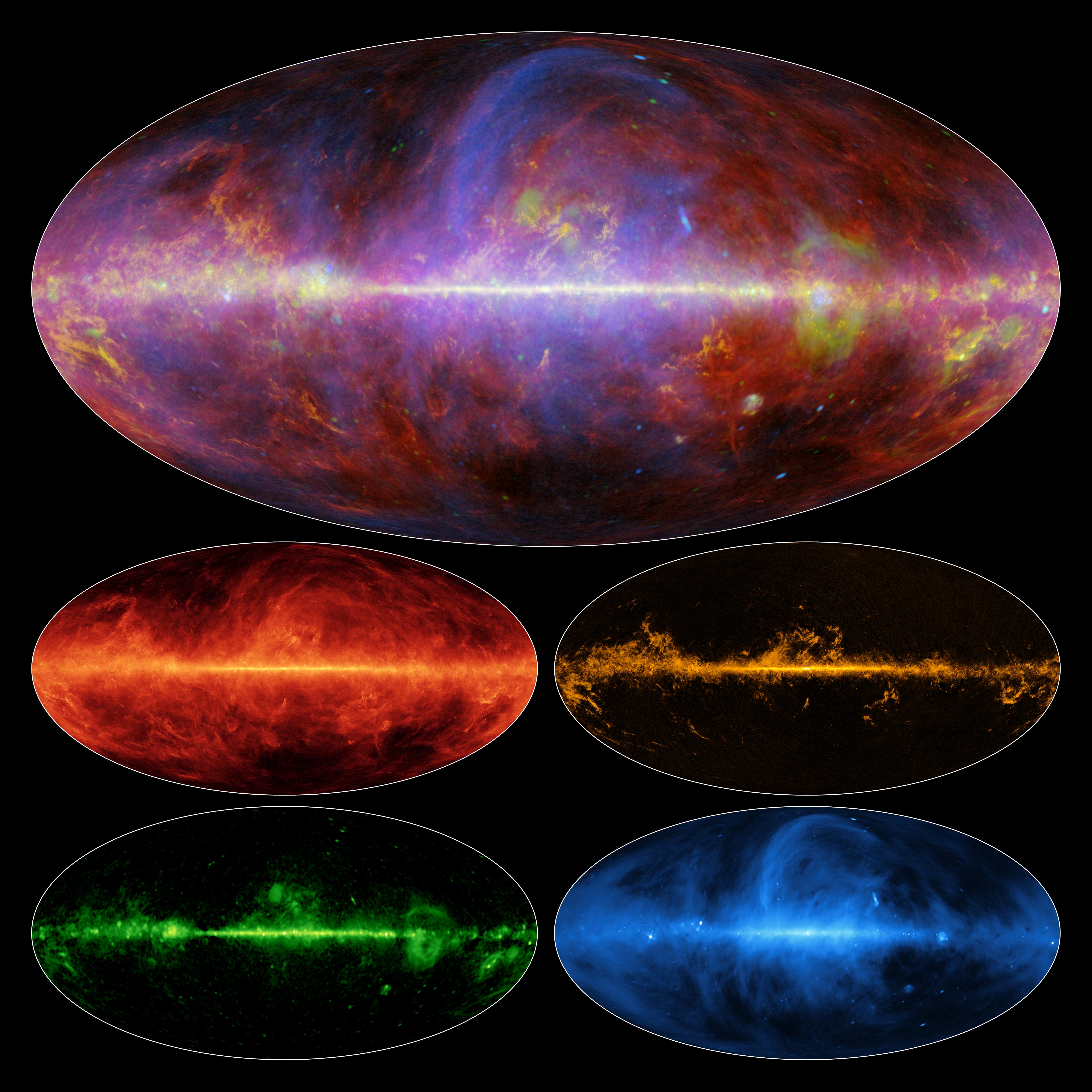
Winter Constellations and Deep-Sky Highlights

January evenings showcase the finest constellations of the year. Orion dominates the southern sky by 9 PM, with the Orion Nebula (M42) visible as a faint fuzzy patch to the naked eye and spectacular through any telescope. Taurus sits overhead with the Pleiades (M45) and the Hyades clusters. Gemini rises in the east with the open cluster M35. Auriga offers three bright open clusters — M36, M37, and M38 — all visible in a single binocular field.

For the best deep-sky experience, use a 6-inch or larger Dobsonian at low magnification (30×–50×). A 25mm or 32mm eyepiece provides the wide field needed to frame large nebulae and open clusters. For detailed recommendations, see our best deep-sky telescope guide.

Sky Calendar — January 2027

DateEventDetails
Jan 1New Year's MoonWaxing crescent, 5% illuminated — sets early, dark evening skies
Jan 3Quadrantids peakZHR ~80, waning crescent Moon, best after midnight
Jan 3Venus greatest elongation47° east of Sun, half-phase visible, sets 4 hours after sunset
Jan 6First quarter MoonBest for lunar surface observing along the terminator
Jan 13Full MoonAvoid for deep-sky — Moon washes out faint objects
Jan 18Mars near MoonConjunction ~3° separation, pre-dawn
Jan 28New MoonBest deep-sky weekend — no moonlight all night
Jan 29Mercury at greatest elongationMorning elongation, visible low in SE before sunrise

Recommended Equipment for January Observing

Cold January nights demand both the right gear and the right preparation:

  • 10×50 binoculars — Ideal for sweeping the winter Milky Way, framing the Pleiades, and scanning Orion's sword for M42.
  • 6-inch or larger Dobsonian — The best tool for deep-sky observing. At 30×–50× with a 25mm eyepiece, M42 fills the field with its wing-like structure and the Trapezium at the centre.
  • Dew prevention — January nights are cold and often humid. A dew shield or heater band is essential for any telescope, particularly SCTs and Maks. See our dew control guide.
  • Red flashlight — Preserves dark adaptation while reading charts. White light ruins 20+ minutes of adaptation instantly.
  • Warm clothing and a chair — Comfort is the most overlooked observing accessory. A zero-gravity chair transforms a cold, short session into a two-hour marathon.

Final Tip: Start Your Observing Year Strong

January 2027 offers something for every level of observer. The Quadrantids are the easiest target — just warm clothes and a dark sky. Venus and Jupiter are accessible in even the smallest telescopes. Mars demands more aperture and patience but rewards you with the promise of a spectacular opposition in February.

Use the New Moon weekend of January 28-30 for deep-sky observing. Mark the Quadrantid peak on January 3-4. And enjoy the longest, darkest nights of the year while they last — by February, the days are noticeably longer and the best evening deep-sky window begins to shrink.

Related Guides

Elena Reyes — Senior Science Editor

Elena Reyes

Senior Science Editor

Covers NASA missions, space science discoveries, and astronomical events for Telescope Advisor. Translates complex astrophysical research into practical insights for backyard observers. Based in the San Francisco Bay Area.

Content reviewed by our editorial team. Research and drafting assisted by AI to ensure unbiased, data-driven analysis. Learn more about our editorial process.