Telescope Advisor Logo Telescope Advisor
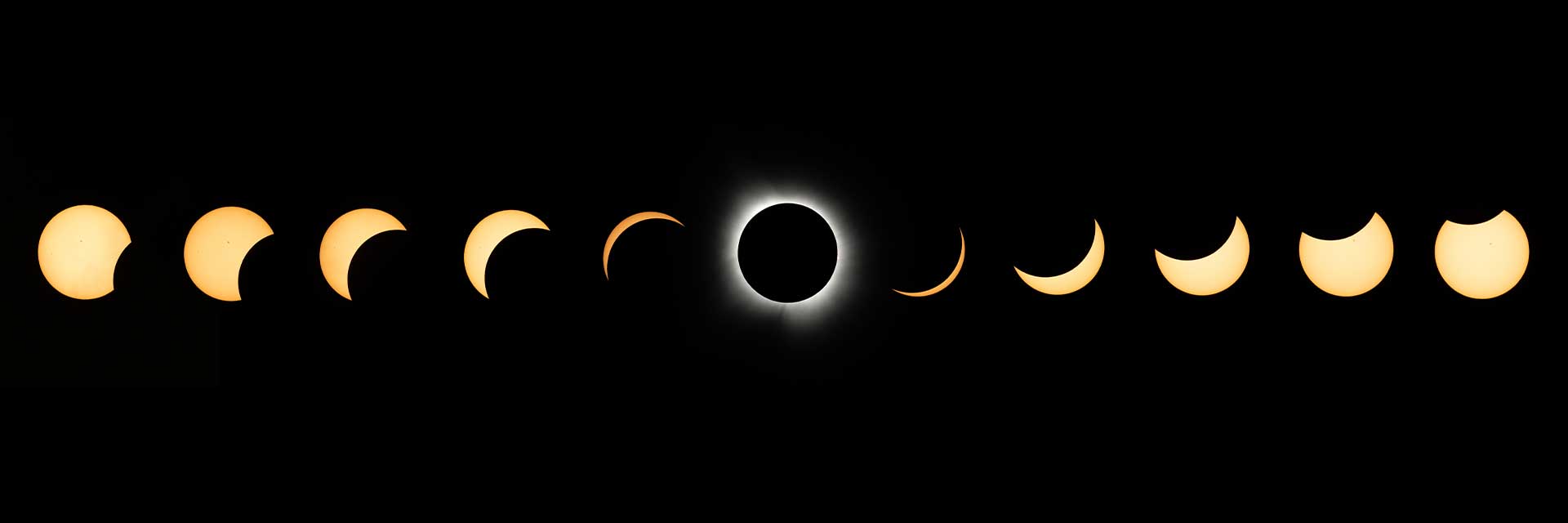
Partial solar eclipse progression composite — Belfast will see an 86% partial eclipse at sunset on August 12, 2026

City Eclipse Guide · Belfast · August 12, 2026

Belfast Eclipse 2026: Partial Solar Eclipse Times & Viewing Guide

Belfast will see a deep 86% partial solar eclipse on the evening of August 12, 2026. The eclipse reaches maximum coverage just before sunset in BST, giving observers across Northern Ireland a spectacular low-horizon event as the crescent Sun drops towards the western horizon over Belfast Lough. The Sun is never fully covered — ISO 12312-2 eclipse glasses are required at all times. This guide covers exact BST timings, the best Belfast viewing spots, the cross-border comparison with Dublin, weather strategy, and all the equipment you need.

Maximum coverage~86%
Maximum time~18:55 BST
Sun altitude~5° at maximum
TimezoneBST (UTC+1)
By Telescope Advisor Editorial Team Published: Updated: Editorial Standards

Belfast Eye Safety Warning

Never look directly at the Sun without ISO 12312-2 certified eclipse glasses. This applies at ALL times during the partial phases. At 86% coverage, the remaining 14% of the Sun is still dangerously bright and can cause permanent retinal damage within seconds of unprotected viewing. The Sun’s low altitude near the horizon does not reduce this danger — ultraviolet and infrared radiation remain harmful. See our eclipse glasses guide for ISO-certified products available for UK delivery.


Quick Answer: Will the Eclipse Be Visible From Belfast?

Yes, Belfast will see a deep 86% partial solar eclipse on the evening of August 12, 2026. The Moon begins crossing the Sun at approximately 17:51 BST, reaching maximum coverage of around 86% at 18:55 BST, when the Sun will be approximately 5 degrees above the western horizon. The partially eclipsed Sun then continues to set as the evening progresses, with sunset around 21:15 BST. Belfast’s slightly higher latitude (54.6°N versus Dublin’s 53.3°N) gives it a marginally later sunset, extending the window for viewing the eclipse in the final low-altitude phase. Belfast does not lie in the path of totality — the totality path crosses Spain some 1,600 km to the south.

A Shared Experience Across the Border

The August 12, 2026 eclipse is one of the few astronomical events that will be shared simultaneously by communities on both sides of the Irish border. Belfast and Dublin observers will watch the same crescent Sun sink toward the same western horizon at essentially the same time (maximum eclipse is just 3 minutes apart). Belfast’s 86% coverage is marginally less than Dublin’s 88%, with the difference attributable to Belfast’s slightly higher northern latitude placing it fractionally further from the centreline of the Moon’s penumbral shadow. Both figures represent deep, dramatic partial eclipses well worth making special plans to observe.

Belfast Eclipse Times (BST)

All times are in British Summer Time (BST = UTC+1). Northern Ireland uses the same time zone as the rest of the United Kingdom in summer. Note that this is also the same offset as Irish Standard Time (IST) used in the Republic of Ireland, so observers on both sides of the border are watching on the same clock.

Event Time (BST) Sun Altitude What to Do
First contact (partial begins)~17:51 BST~16°Don your ISO-certified eclipse glasses. A small dark notch appears on the upper limb of the Sun.
50% coverage~18:25 BST~9°The Sun appears as a clear crescent. Daylight dims visibly and takes on a flatter, silver quality.
Maximum eclipse (~86%)~18:55 BST~5°Peak coverage. The crescent Sun sits only 5° above the western horizon — spectacular through eclipse glasses.
Sunset (eclipse ongoing)~21:15 BSTThe still-eclipsed Sun sets below the horizon. Belfast’s higher latitude grants a slightly later sunset than Dublin.

The 5-Degree Window

At maximum eclipse (~18:55 BST), the Sun will be approximately 5 degrees above the horizon — roughly the width of four fingers held together at arm’s length. This is an extremely low angle, meaning that any building, hill, or tree to the west will entirely block the view. Belfast’s urban landscape makes this particularly challenging in the city centre. Cave Hill Country Park and the elevated Belfast Hills offer the best escape from urban obstructions. The earlier you arrive at your chosen location, the better your chance of finding an optimal unobstructed line of sight to the west.

Best Belfast Viewing Locations

Finding a clear western horizon is the single most important factor for viewing the Belfast eclipse. With the Sun only 5 degrees above the horizon at maximum, even a gentle suburban roofline will obstruct the view. Here are the best locations, ranked by horizon quality and accessibility:

1. Cave Hill Country Park

Cave Hill, rising 368 metres on the northern edge of Belfast, is the premier eclipse viewing location in the city. The summit (McArt’s Fort) offers a 360-degree panorama, with an entirely unobstructed western view across Belfast Lough and towards the hills of County Down and County Antrim. The elevated position also means you are above any low-lying urban haze that might obscure the horizon from ground level. Allow 45 minutes to one hour to reach the summit from the main car park at Belfast Castle — aim to be at the top no later than 18:00 BST. The walk is moderately challenging but suitable for most fitness levels. Bring warm layers as hilltops in Northern Ireland can be surprisingly cool even in August, particularly as the Sun drops and temperature falls near maximum eclipse.

2. Divis and Black Mountain (Belfast Hills)

The Belfast Hills, running along the city’s western and northern flank, offer multiple elevated positions with panoramic western views. Divis Mountain (478m) is the highest point on the Belfast Hills and provides spectacular views west across County Antrim towards Lough Neagh and the distant Sperrin Mountains. Black Mountain (390m), slightly lower but closer to the city, is accessible via a gentle walk from the Colin Glen forest park. These locations face west and northwest, exactly the direction the eclipse will be visible. The National Trust manages Divis and Black Mountain as open access land, so there is no admission charge. Parking is available at the Divis and Black Mountain car park off the A55 Glider corridor road.

3. Bangor Marina, County Down

Bangor, on the south shore of Belfast Lough, is approximately 20 kilometres east of Belfast city centre and offers an excellent north-western horizon over the open waters of the lough. The marina area and the seafront promenade provide a flat, accessible viewing platform with the Lough as a foreground element. Looking north-west from Bangor, the horizon over the water is completely clear of obstructions. Bangor is reached by rail (the Bangor Line from Belfast Central, approximately 30 minutes) or by the A2 coastal road. This is a particularly good option for those who want an accessible, flat viewing platform rather than a hilltop. The Ballyholme area, slightly east of Bangor town, offers even cleaner horizon views.

4. Titanic Quarter Waterfront

The Titanic Quarter, on the eastern edge of Belfast city centre beside the River Lagan and Belfast Lough, offers an accessible waterfront viewing point with an open western horizon along the River Lagan towards the city centre. The iconic Titanic Belfast museum provides a striking silhouette for eclipse photography. From the waterfront area near the SS Nomadic, looking west along the river, the horizon is relatively clear. This is the most accessible central Belfast option, easily reached on foot from the city centre or by short taxi/bus from Belfast Lanyon Place station. Arrive early as this area is popular for evening walks and may be busy.

Planning Tip: Use a compass app to check your horizon

The Sun will set at approximately 300–310° azimuth (west-northwest) from Belfast in mid-August. Use a compass app on your phone to check this direction from any potential viewing location. Stand at your chosen spot and look towards 300–310° — if there is any building, hill, or tall vegetation blocking that direction below about 10° altitude, find a better position. Visiting your chosen location on a clear evening a few days before August 12 gives you the best opportunity to identify any hidden obstructions.

Dublin vs Belfast: How Eclipse Coverage Compares

The small difference in latitude between Dublin and Belfast (approximately 1.3 degrees) translates into a meaningful difference in eclipse coverage. Because the Moon’s penumbral shadow is projected onto the Earth at an angle, locations further north see progressively less of the Sun covered. Here is a detailed comparison of what each city can expect:

City Latitude Max Coverage Max Time (local) Sun Altitude Sunset
Cardiff51.5°N~92%~19:02 BST~2°~20:47 BST
London51.5°N~91%~19:13 BST~2°~20:54 BST
Dublin53.3°N~88%~18:58 IST~4°~21:10 IST
Belfast54.6°N~86%~18:55 BST~5°~21:15 BST
Edinburgh56.0°N~85%~19:35 BST~10°~21:25 BST

Key insight: Belfast’s slightly higher altitude compensates

Although Belfast sees 2% less coverage than Dublin, its maximum eclipse occurs at a slightly higher solar altitude (5° vs 4°). This means the Sun is marginally less affected by atmospheric extinction and horizon haze at the moment of maximum coverage. In practice, the difference between 86% and 88% coverage is almost imperceptible to the naked eye — both cities will see a dramatic crescent Sun and comparable light-dimming effects. The choice of viewing location within each city has far more impact on the experience than the 2% difference in coverage.

Historical Context: Solar Eclipses and Northern Ireland

Northern Ireland’s eclipse history broadly mirrors that of the island of Ireland as a whole. The August 11, 1999 total solar eclipse — the most celebrated astronomical event in Britain and Ireland in living memory — saw the path of totality pass over the south coast of England (Cornwall and Devon), while Belfast experienced a significant partial eclipse with roughly 90% coverage around midday. Those who were outside at the time recall the unusual silvery dimming of the light and the strange silence that fell as birds momentarily stopped singing.

For the March 20, 2015 eclipse, Northern Ireland achieved approximately 95% coverage at maximum — actually higher than Dublin or London due to Belfast’s more northerly position placing it closer to the totality path, which passed between Iceland and the Faroe Islands. The 2015 eclipse occurred during the working day at approximately 09:30 GMT, and many Northern Ireland schools organized outdoor observation sessions.

The August 12, 2026 eclipse is unique because it is an evening event near sunset — a geometry that has not produced a deep partial eclipse in Northern Ireland since the 18th century. The interplay of the deep partial eclipse, the Atlantic sunset, and the long summer evening creates visual conditions that generations of Belfast observers have not experienced. For Northern Ireland’s astronomy community, it is one of the most anticipated events of the decade. The next total solar eclipse crossing the British Isles is not predicted until 2090.

Belfast Weather in August & Cloud-Out Strategy

Belfast’s weather in August reflects its maritime Atlantic location. Historical data from the Met Office for Northern Ireland indicates approximately 55% average cloud cover on August evenings, with roughly a 60% probability of at least some clear sky near sunset. This is similar to Dublin but slightly cloudier on average due to Belfast’s more northerly position.

Weather monitoring resources for Belfast

  • BBC Weather Northern Ireland — bbc.co.uk/weather for localised NI forecasts
  • Met Office NI — metoffice.gov.uk for professional forecasts
  • Clear Outside app — astronomy-specific multi-layer cloud forecast
  • Sat24.com — real-time satellite cloud imagery for Ireland and the UK
  • Windy.com — detailed cloud layer modelling over Northern Ireland
  • Begin monitoring from August 9; update every 6 hours on eclipse day

Cloud-out strategy from Belfast

  • Drive east to the Ards Peninsula (Strangford Lough, Portavogie) — coastal eastern locations often have different cloud patterns to Belfast itself
  • Head to the North Antrim coast (Giant’s Causeway area) — 70 min drive, often clearer when westerly weather systems affect Belfast
  • Cross the border into Donegal — if conditions are very cloudy across Northern Ireland, the Donegal coast on the Republic side offers Atlantic exposure and potentially clearer evening skies
  • Cave Hill gives altitude advantage — it may be above low-level stratus cloud that covers the city floor

One particularly useful strategy for the Belfast eclipse is watching the movement of cloud fronts from the west. If a frontal system has passed through during the afternoon, the trailing edge of the front often produces clearing skies in the early evening — exactly the window needed for the eclipse. Monitor the Met Office satellite loop starting at around 15:00 BST on eclipse day and look for any westward clearing progressing towards Northern Ireland.

Photography Tips for the Belfast Eclipse

Belfast’s dramatic combination of industrial heritage, coastal scenery, and the iconic Cave Hill silhouette creates outstanding photographic possibilities for the eclipse. The key is planning your composition in advance around the Sun’s position in the sky at the time of maximum eclipse.

Iconic Compositions from Belfast

From the Titanic Quarter waterfront, frame the crescent Sun against the silhouette of Titanic Belfast or the twin yellow cranes Samson and Goliath — two of Northern Ireland’s most recognisable landmarks. At 5 degrees altitude, both cranes will be visible above the skyline in the direction of the setting Sun. Use the PhotoPills app (set for Belfast’s latitude 54.6°N, longitude −5.93°W) to confirm your exact positioning. From Cave Hill, frame the crescent Sun above the Belfast city skyline with Belfast Lough as a reflective foreground — this is one of the most dramatic compositions available from anywhere in Northern Ireland.

Camera Settings for Low-Sun Eclipse

Start with a solar filter over your lens and use ISO 100, f/8, 1/500 second as a baseline. As the Sun drops below 5 degrees altitude, atmospheric extinction will dim it considerably. You may find you can reduce or remove the solar filter as the Sun approaches the horizon and turns orange-red. Test carefully and never remove the filter while the Sun’s brightness is uncomfortable to look at directly, even through the camera screen. Always use live view (rear screen) rather than the optical viewfinder. A 200–400mm telephoto on a solid tripod will give you the best results for the crescent Sun detail.

Smartphone Eclipse Photography

Hold an ISO-certified eclipse glasses lens over your phone camera. Use the 2x or 3x optical zoom if available. Tap the Sun to lock focus and exposure, then reduce the exposure slider to prevent overexposure. At maximum eclipse, the thin crescent is particularly striking and easy to photograph with a steady hand. Rest your elbows on a wall, railing, or the roof of your car for stability. The Portrait mode on newer smartphones can sometimes give attractive background blur with the crescent Sun as the subject, but standard photo mode usually produces more accurate colours.

Safety note for photographers

Never look through an optical camera viewfinder at the Sun without a solar filter on the lens. Camera sensors can be permanently damaged by pointing a long lens at the unfiltered Sun. Use rear-screen live view throughout, and keep exposures brief. Only attempt filter removal when the Sun is within one degree of the horizon and visibly dimmed to an orange disc comfortable to view with the naked eye — and even then, keep your own ISO eclipse glasses on throughout.

Eclipse Glasses & Safety Gear

ISO 12312-2 certified eclipse glasses are the essential piece of equipment for every Belfast observer. They protect your eyes throughout all partial phases and are needed for the entire duration of the visible eclipse. Here are the best options:

Editor’s Pick — Best Eclipse Glasses for Belfast Families
Helioclipse ISO 12312-2 eclipse glasses 12-pack

Helioclipse Solar Eclipse Glasses (12-Pack)

ISO 12312-2 & CE certified 12 pairs Phone filter included

The Helioclipse 12-pack offers excellent value for Northern Ireland families and groups. With 12 pairs per pack and a separate phone filter for safe smartphone photography, it covers everything a household needs. Each pair meets ISO 12312-2 certification and blocks 99.999% of harmful solar radiation. The lightweight cardboard frame design fits comfortably over regular prescription glasses, which is important for the many observers who need them. At around £1.50 per pair at typical Amazon UK prices, they are the most cost-effective eclipse safety solution.

Check Price on Amazon UK

Affiliate link — we may earn a commission at no extra cost to you.

Lunt Solar eclipse glasses 5-pack

Lunt Solar Eclipse Glasses (5-Pack)

Lunt Solar Systems specialises in solar observation equipment and their eclipse glasses represent the premium end of certified solar viewers. The 5-pack suits couples and small groups heading to Cave Hill or Bangor Marina. ISO 12312-2 and CE certified, with a wide frame that accommodates prescription glasses. Individually packaged for hygiene and convenience.

Check Price on Amazon UK

Affiliate link.

Solar Binoculars & Telescopes for the Belfast Eclipse

Eclipse glasses give you a beautiful naked-eye view, but solar binoculars elevate the experience significantly. The magnified view reveals the detailed profile of the Moon’s limb as it crosses the solar disk, and the thin crescent at 86% coverage is particularly dramatic through 10× or 12× magnification.

Celestron EclipSmart 10x25 Solar Binoculars

Celestron EclipSmart 10×25 Solar Binoculars

Compact and portable, ideal for carrying up Cave Hill or to Bangor Marina. The permanently integrated ISO-certified solar filter means no risk of accidentally viewing the Sun unsafely. 10× magnification shows the crescent shape clearly.

Celestron EclipSmart 12x50 Solar Binoculars

Celestron EclipSmart 12×50 Solar Binoculars

The 50mm objectives gather more light, which is particularly valuable for the low-altitude, atmospherically-dimmed Sun visible from Belfast at maximum eclipse. Best used with a tripod at this magnification. Reveals fine detail in the crescent shape and the irregular lunar limb profile.

Celestron SkyMaster 15x70 Binoculars

Celestron SkyMaster 15×70 Binoculars

For post-eclipse stargazing from Cave Hill or the Belfast Hills. The August 12, 2026 eclipse falls near new Moon, so the nights around the eclipse are excellent for deep-sky observing. These large-aperture binoculars reveal star clusters, nebulae, and the Milky Way brilliantly from dark-sky sites just outside Belfast. Note: Never use these to look at the Sun without a properly fitted solar filter.

See our complete solar binoculars buying guide and telescope solar filter guide for the full range of options.


🔭

Not sure which telescope actually fits your goals?

Answer 5 quick questions about your budget, observing targets, and experience level — our Telescope Finder Tool recommends a specific model in under 2 minutes.

Find My Telescope →

FAQ — Belfast Eclipse 2026

What time is the eclipse in Belfast on August 12, 2026?
The partial eclipse begins at approximately 17:51 BST, reaches maximum coverage (~86%) at 18:55 BST, and the Sun sets while still partially eclipsed at around 21:15 BST. Belfast’s higher latitude gives it a slightly later sunset than Dublin (21:10 IST), extending the low-altitude viewing window by a few minutes.
Does Northern Ireland use BST or IST during summer 2026?
Northern Ireland, as part of the United Kingdom, uses British Summer Time (BST = UTC+1) in summer. The Republic of Ireland uses Irish Standard Time (IST = UTC+1) in summer. Crucially, both are identical in their UTC offset — BST and IST are the same clock time — so observers on both sides of the border are watching the same eclipse at the same time on their respective clocks.
Where is the best place to watch the eclipse in Belfast?
Cave Hill Country Park summit (McArt’s Fort) is the single best location — elevated, panoramic, and with a completely clear western horizon. Divis and Black Mountain offer similar elevation from the other side of the city. Bangor Marina provides excellent low-altitude western views over Belfast Lough. Titanic Quarter waterfront is the most accessible option from Belfast city centre, with the iconic cranes Samson and Goliath as potential foreground landmarks.
Why does Belfast see less coverage than Dublin?
Belfast (54.6°N) is approximately 1.3 degrees of latitude further north than Dublin (53.3°N). Because the Moon’s penumbral shadow projects across the Earth at an angle from the south, locations further north see progressively less of the Sun covered. Belfast sees ~86% versus Dublin’s ~88%. The difference is small in practice — both cities will see a dramatically thin crescent Sun and similar light-dimming effects.
What was the last major eclipse visible from Belfast?
The most recent major eclipse was the March 20, 2015 eclipse, which reached approximately 95% coverage from Belfast. Before that, the August 11, 1999 eclipse produced around 90% coverage from Northern Ireland at midday. The 2026 eclipse at 86% is the third in this sequence of deep partial eclipses for Belfast in the 21st century, and the only one occurring near sunset.
Will it be dark during the Belfast eclipse?
No. Even at 86% coverage, the remaining 14% of the Sun still provides enough light to keep the sky relatively bright. You will notice a distinct dimming of daylight — roughly equivalent to the light level when a large, thick cloud passes over the Sun — and the quality of light will shift to an unusual flat, silvery tone. Stars will not become visible, and the sky will not darken to twilight levels. The combination with the actual approaching sunset does make the lighting progressively more dramatic as maximum eclipse approaches.
What are the weather prospects for the eclipse in Belfast?
Historical data suggests approximately a 60% chance of at least partially clear skies around sunset in mid-August in Belfast. This is not guaranteed — Atlantic weather systems can arrive with little notice. Monitor BBC Weather NI and the Met Office from August 9 onward. If Belfast looks cloudy, consider driving east to the Ards Peninsula coast, north to the Antrim coast, or south across the border into County Donegal, where different local cloud patterns may offer clearer skies.
Should I travel to Spain for totality instead of watching from Belfast?
If you have the means, yes — totality in Spain is incomparably more dramatic. The 2 minutes 38 seconds of totality on the Costa del Sol or in the Pyrenees region offers the solar corona, Baily’s Beads, the 360-degree sunset glow on the horizon, and the sudden darkness — none of which are visible from Belfast. However, for those who cannot or prefer not to travel, Belfast’s 86% partial eclipse at sunset is a genuinely spectacular event and well worth making special plans to observe. The light quality, crescent shape, and atmospheric effects of a deep partial eclipse are memorable in their own right.