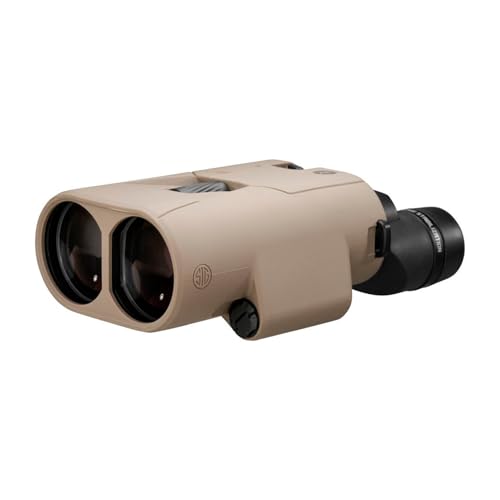
Best Image Stabilized Binoculars 2026 for Stargazing
Telescope Advisor Logo Telescope Advisor
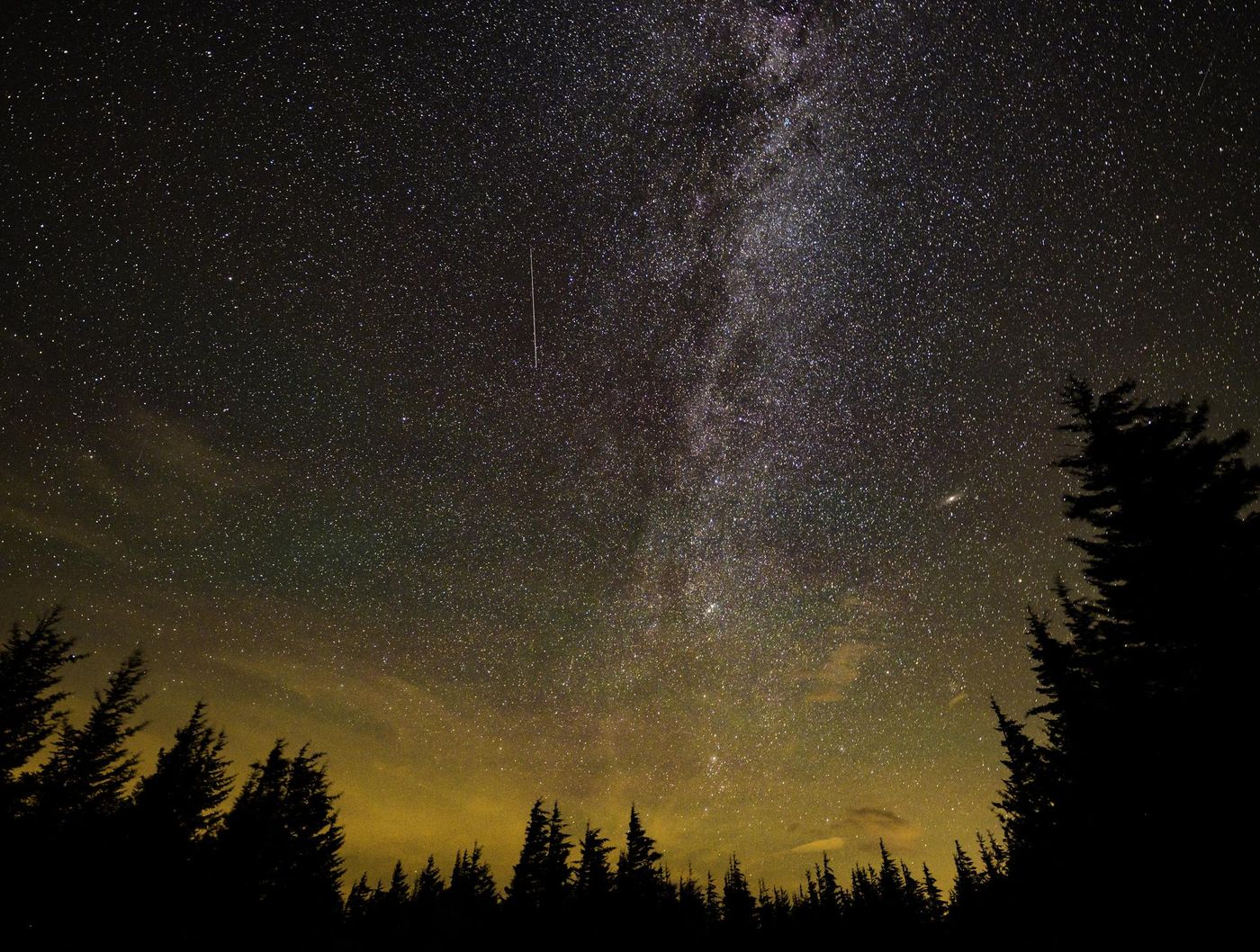
The Milky Way and a Perseid meteor over Spruce Knob, West Virginia, the kind of sky stabilized binoculars sweep without a tripod

Binoculars Buying Guide · 2026

Best Image Stabilized Binoculars for Stargazing (2026): Canon vs Fujinon vs Nikon vs Sig

Press a button and the stars stop dancing. Image stabilized binoculars let you hand-hold 12x to 18x views that would normally need a tripod. We compared the current stabilized models from Canon, Fujinon, Nikon and Sig Sauer sold in the US on the specs that matter after dark, and matched them to what expert reviewers found.

Best overallCanon 10x42L IS WP
Best high-powerCanon 18x50 IS
Best valueCanon 12x36 IS III
Longest batterySig Zulu6 HDX PRO

Hero image: the Milky Way and a Perseid meteor over Spruce Knob, West Virginia, August 2021. Credit: NASA/Bill Ingalls.

By Telescope Advisor Editorial Team Published: Updated: Reviewed & approved by Juhi Sahni, Senior Editor Editorial Standards

Affiliate disclosure: Telescope Advisor earns a commission from qualifying Amazon purchases made through links on this page, at no extra cost to you. It never affects our recommendations.

How this guide was made: this is a research-based guide. We have not run our own hands-on tests of these binoculars. The picks come from the makers’ published specifications, the conclusions of named expert reviewers (Space.com and BBC Sky at Night Magazine), and simple optics arithmetic such as exit pupil. Where a figure comes from a single source, we say so.

Quick Answer: Which Image Stabilized Binoculars Should a Stargazer Buy?

  • Best overall for astronomy: Canon 10x42L IS WP. The brightest view of any stabilized pair here (4.2 mm exit pupil), a wide 6.5° field, 16 mm eye relief and a waterproof body. Space.com rates it the best image stabilized binocular overall.
  • Best high-power: Canon 18x50 IS All-Weather. Enough magnification for lunar detail, Jupiter’s moons and tight star clusters, with lenses large enough for night use. The Canon 15x50 IS is the slightly brighter, wider sibling.
  • Best value for astronomy: Canon 12x36 IS III. The lowest price tier that still gives a useful 12x view and a 3 mm exit pupil, at about 660 g.
  • Best compact: Nikon STABILIZED 12x25 S. About 395 g and pocketable, for travel and casual sky-watching; too small for faint deep-sky targets.
  • Best for eyeglass wearers and battery life: Sig Sauer ZULU6 HDX PRO. Up to 40 hours on two AA batteries, IPX7 waterproofing and 16 mm-plus eye relief.
  • Best waterproof high-power pick: Fujinon Techno-Stabi TS-L1640. A gimbal-mounted gyro system that Space.com rates the strongest stabilizer in its guide, up to 30 hours of battery life and an IPX7 rating.

Buying during the holiday sales?

Amazon’s Black Friday Week sale runs from November 19 to Cyber Monday, November 30, 2026. Stabilized binoculars are among the most expensive binoculars you can buy, so a sale can make a real difference, but discounts vary by model and seller. The price shown under each button comes live from Amazon, so it reflects the current offer whenever you read this. For more sale picks, see our binocular Black Friday 2026 guide.

Our Picks: The Best Image Stabilized Binoculars for Stargazing

At night, two numbers decide most of what you will see: the size of the front lenses and the exit pupil (lens size divided by magnification). Stabilization changes the rest of the equation, because a steady image at 15x shows detail a shaking image at 10x cannot. These picks balance all three.

Best Overall for Astronomy
Canon 10x42L IS WP

Canon 10x42L IS WP

Magnification: 10x
Objective: 42 mm
Exit pupil: 4.2 mm
True field: 6.5°
Eye relief: 16 mm
Weight: about 1.1 kg (39 oz)
Power: 2 × AA
Water: Waterproof

Canon’s flagship stabilized binocular combines L-series optics with ultra-low dispersion glass, a 6.5° true field and the biggest exit pupil of any model in this guide, so star fields look bright and wide. Its vari-angle prism stabilizer is the system Canon uses on its large models, and the body is waterproof to 1 metre for 5 minutes, per Canon. Space.com names it the best image stabilized binocular overall, and says it kept that verdict after re-testing in 2025. The catch is power: Canon’s manual quotes about 2.5 hours on alkaline AAs at 25 °C and about 8 hours on lithium AAs, so lithium cells are the sensible choice for cold nights.

Pros

  • Brightest stabilized view here
  • Wide field for star fields
  • Fully waterproof
  • Long eye relief

Cons

  • Heaviest 42 mm pair here
  • Short alkaline battery life
  • Highest price tier
Canon 18x50 IS All-Weather

Canon 18x50 IS All-Weather

Magnification: 18x
Objective: 50 mm
Exit pupil: 2.8 mm
True field: 3.7°
Eye relief: 15 mm
Weight: about 1.2 kg (42 oz)
Power: 2 × AA

At 18x, hand-held binoculars are normally useless, but with the stabilizer on this pair shows lunar craters, Jupiter’s moons and close double stars steadily. Space.com picks it as its best high-magnification model and singles out Canon’s 15x50 and 18x50 as the stabilized pairs with lenses sized for astronomy. Canon describes it as all-weather (usable in heavy rain), not waterproof. The 3.7° field is narrow, so finding targets takes a little practice.

Pros

  • Highest useful power hand-held
  • UD glass, field flatteners
  • Rain-resistant body

Cons

  • Narrow field
  • Heavy
  • Not waterproof
Brighter High-Power Alternative
Canon 15x50 IS All-Weather

Canon 15x50 IS All-Weather

Magnification: 15x
Objective: 50 mm
Exit pupil: 3.3 mm
True field: 4.5°
Eye relief: 15 mm
Weight: about 1.2 kg

The same body and stabilizer as the 18x50, traded for a wider 4.5° field and a larger 3.3 mm exit pupil. For star clusters and sweeping the Milky Way, many observers will find 15x the easier magnification to live with.

Best Value for Astronomy
Canon 12x36 IS III

Canon 12x36 IS III

Magnification: 12x
Objective: 36 mm
Exit pupil: 3 mm
True field: 5.0°
Eye relief: 14.5 mm
Weight: about 660 g

The most affordable way into a genuinely useful astronomy magnification. At about 660 g it is light enough to hold for a long session, and the 3 mm exit pupil works well under suburban skies. Space.com recommends it as the cheaper alternative to the 10x42L; BBC Sky at Night Magazine has also reviewed it. Not water resistant, per Canon.

Best for Eyeglass Wearers and Battery Life
Sig Sauer ZULU6 HDX PRO 16x50

Sig Sauer ZULU6 HDX PRO 16x50

Magnification: 16x
Objective: 50 mm
Exit pupil: 3.1 mm
True field: 3.7°
Eye relief: 16.4 mm
Weight: about 34 oz
Battery: up to 40 h (2 × AA)

Sig’s 50 mm PRO line (14x, 16x and 18x) is built for hunters, but the numbers suit stargazers too: SIG SAUER quotes up to 40 hours on two AA batteries, an IPX7 waterproof rating, ED glass and 16.4 mm of eye relief on the 16x50. Its OmniScan mode eases off the stabilization while you pan and tightens it when you hold still, which suits sweeping and then stopping on a target.

Fujifilm Fujinon Techno-Stabi TS-L1640

Fujinon Techno-Stabi TS-L1640

Magnification: 16x
Objective: 40 mm
Exit pupil: 2.5 mm
True field: 4.2°
Eye relief: 15.7 mm
Weight: 856 g
Battery: up to 30 h (2 × AAA)

Fujifilm stabilizes the whole prism assembly on a gyro-controlled gimbal, which handles bigger movements than lens-based systems. Space.com calls its stabilization the strongest in its guide. Fujifilm lists an IPX7 rating, up to 30 hours on two AAA cells and 856 g. The 40 mm lenses give a modest 2.5 mm exit pupil, so it is better on bright targets than on faint galaxies.

Best Compact
Nikon STABILIZED 12x25 S

Nikon STABILIZED 12x25 S

Magnification: 12x
Objective: 25 mm
Exit pupil: 2.1 mm
True field: 4.5°
Eye relief: 12.3 mm
Weight: 395 g

Nikon’s folding roof-prism pair weighs 395 g and runs about 12 hours on two AA batteries, per Nikon, which rates the shake reduction at about 80%. Space.com picks it as its best compact model. With 25 mm lenses it is a travel and Moon binocular rather than a deep-sky one, and the 12.3 mm eye relief is short for glasses.

Best Mid-Size, Expert-Rated
Canon 14x32 IS

Canon 14x32 IS

Magnification: 14x
Objective: 32 mm
Exit pupil: 2.3 mm
True field: 4.3°
Weight: 775 g
Battery: about 10 h (2 × AA)

BBC Sky at Night Magazine gave the 14x32 IS five stars in a review by binocular astronomer Stephen Tonkin, who found it showed more stars in clusters such as M35 and the Pleiades than without stabilization. It uses Canon’s lens-shift system with a panning mode and a stronger hold mode. Canon quotes about 10 hours on two AA batteries.

Image Stabilized Binoculars Compared: Every Current Model

All specs are the makers’ published figures. Exit pupil is the lens diameter divided by the magnification. Price tier is relative to other stabilized binoculars, all of which cost more than ordinary binoculars of the same size.

ModelExit pupilTrue fieldWeight*StabilizerPower / rated lifeWaterPrice tier
Canon 10x42L IS WP4.2 mm6.5°about 1.1 kgVari-angle prism2 AA; about 2.5 h alkaline, 8 h lithiumWaterproof (1 m, 5 min)High
Canon 18x50 IS AW2.8 mm3.7°about 1.2 kgVari-angle prism2 AAAll-weatherHigh
Canon 15x50 IS AW3.3 mm4.5°about 1.2 kgVari-angle prism2 AAAll-weatherMid–High
Canon 12x36 IS III3.0 mm5.0°660 gCanon IS2 AANoLow–Mid
Canon 10x30 IS II3.0 mm6.0°600 gCanon IS2 AA; about 9 hNoLow
Canon 10x32 / 12x32 / 14x32 IS3.2 / 2.7 / 2.3 mm6.0 / 5.0 / 4.3°775–780 gLens shift2 AA; about 10 hNoMid
Canon 10x20 IS / 8x20 IS2.0 / 2.5 mm5.3 / 6.6°430 / 420 gLens shift1 CR123A; about 12 hNoLow
Fujinon TS-L1640 / TS-L20402.5 / 2.0 mm4.2 / 3.4°856 / 853 gGyro gimbal2 AAA; up to 30 hIPX7Mid
Fujinon TS-X14402.9 mm4.0°1,300 gGyro gimbal, ±6°4 AA1 m, 5 minMid–High
Fujinon TS16x28WP / TS12x28WP1.8 / 2.3 mm4.0 / 4.2°550 / 485 gGyro, ±3°1 CR2; up to 30 hIPX7Low
Nikon STABILIZED 10x25 S / 12x25 S2.5 / 2.1 mm5.4 / 4.5°405 / 395 gNikon optical system2 AA; about 12 hNot ratedLow
Sig ZULU6 HDX PRO 14x50 / 16x50 / 18x503.6 / 3.1 / 2.8 mm3.7° (16x)about 34 oz (16x)Gyro-stabilized OIS, 2°2 AA; up to 40 hIPX7High
Sig ZULU6 HDX PRO 42 mm (12x–20x)3.5 mm (12x)4.3° (12x)30 oz with batteries (12x)4th-gen OIS, 3°2 AA; up to 40 hIPX7Mid–High

*Weights exclude batteries unless stated. Canon’s 15x50, 18x50 and 10x42L figures come from Canon’s brochure and spec pages, cross-checked with Space.com; Canon’s regional sites differ slightly on the 10x42L’s weight, so we round it. “All-weather” means usable in heavy rain, per Canon, not waterproof. Rated battery life is the maker’s figure at room temperature; expect less in the cold. Canon does not list a battery life for every model on the pages we checked, so those cells show only the battery type.

How Image Stabilization Works: Prism, Lens Shift and Gimbal

Every stabilized binocular has the same three parts: motion sensors (gyros or accelerometers), a small processor, and a motor that moves something in the light path to cancel the shake. What gets moved is where the brands differ.

Vari-angle prism (Canon’s large models)

Two gyros measure horizontal and vertical shake, and variable-angle prisms in each barrel change their angle to bend the light back onto the same spot. Canon uses it on the 10x42L, 15x50 and 18x50. It works very well, but on Canon’s figures the 10x42L gets through alkaline AAs in about 2.5 hours.

Lens shift (Canon’s compact models)

A lens group slides sideways to steer the image. Judging by Canon’s own battery ratings it is far more frugal: the 20 mm and 32 mm lens-shift models are rated for 10 to 12 hours. Nikon and Sig Sauer describe their systems only as optical stabilization driven by motion sensors. The trade-off is a smaller correction range: BBC Sky at Night Magazine reports about 1° for the Canon 14x32 IS.

Gyro gimbal (Fujinon Techno-Stabi)

The erecting prism sits in a gimbal held steady by an electronic gyro. Fujifilm quotes a correction range of up to ±6° on the TS-X1440 and ±3° on its compact models, enough to steady a view from a moving boat or car.

Most models also offer two behaviours. A panning mode removes jitter but lets you sweep across the sky, while a hold mode (Canon calls it Powered IS, Sig calls it OmniLock) locks harder onto one spot. Sig’s OmniScan blends the two automatically. For astronomy, the hold mode is the one you will use on the Moon, a planet or a double star.

Why Stabilization Matters for Astronomy

Your hands are not still. Through a 7x binocular the tremor is barely visible, but every step up in magnification enlarges it by the same amount as the view, which is why most people reach for a tripod above 10x. Stars are the hardest test of all: a point of light that wobbles smears into a short line, so you lose both sharpness and faint stars.

Turn the stabilizer on and that wobble mostly disappears. In practice that means:

  • Jupiter’s moons become steady points lined up beside the planet instead of sparks lost in its glare. Jupiter is climbing into the evening sky this winter and reaches opposition on February 10–11, 2027; our Jupiter’s moons observing guide explains how to tell them apart.
  • The Moon shows crater rims, mountain ranges and the shadows along the terminator at 12x to 18x, the kind of detail that is otherwise hard to hold in hand-held binoculars.
  • Star clusters and faint stars: in BBC Sky at Night Magazine’s review of the Canon 14x32 IS, the stabilizer revealed extra stars in M35, the Pleiades and Kemble’s Cascade, roughly a quarter of a magnitude deeper, and split the close double star Iota Cancri.
  • Double stars such as Albireo in Cygnus or Mizar and Alcor in the Big Dipper are easy to hold and compare.

What stabilization cannot do is add light. A 25 mm or 28 mm pair is still a small binocular, so for faint galaxies and nebulae the 42 mm and 50 mm models are the ones to buy.

How to Choose Image Stabilized Binoculars for Stargazing

  1. Aperture first. For the night sky, 36 mm is a practical minimum and 42 mm to 50 mm is better. The 20 mm to 28 mm compacts are fine for the Moon, Jupiter and bright clusters, and excellent for travel, but they gather much less light.
  2. Pick a magnification you can aim. 10x to 12x gives a wide, forgiving field (5° to 6.5°). 14x to 18x shows more detail but narrows the field to about 3.5° to 4.5°. If you are new to the sky, a wider field makes finding things much easier.
  3. Check the exit pupil. Under dark skies, a bigger exit pupil means a brighter background-to-star view: 4.2 mm on the Canon 10x42L is the brightest here, while 2 mm or less (20x40, 16x28) suits the Moon and planets better than faint fuzzies. See what binocular numbers mean for the maths.
  4. Battery type and life. Ratings range from about 2.5 hours (Canon 10x42L on alkalines) to 40 hours (Sig ZULU6 HDX PRO). Common AA cells are easiest to replace; CR123A and CR2 cells last well but are harder to find. Cold nights cut alkaline life sharply, so use lithium cells in winter where the maker allows it.
  5. Weight. The 50 mm models weigh about 1.2 kg (around 34 to 42 oz). That is fine for 20 minutes at a time, but if you will hold them for a long session, the 600 g to 860 g models are much kinder on the arms.
  6. Eye relief if you wear glasses. Aim for 15 mm or more. The Sig PRO models (16.4 to 18.1 mm), Canon 10x42L (16 mm) and Fujinon TS16x28WP (16 mm) lead here.
  7. Water and dew. Dew is part of observing. A waterproof (IPX7, or Canon’s WP) body shrugs it off; Canon’s all-weather 15x50 and 18x50 handle rain but are not sealed.

The Rest of the Current Lineups

Every model below was listed on Amazon US with an offer when we checked on November 18, 2026, and appears in its maker’s current range.

Canon

  • 10x30 IS II: the lowest-priced 30 mm Canon, 600 g with a 6° field; Canon quotes about 9 hours per set of AAs. A good all-rounder, a little small for faint targets. Amazon →
  • 10x32 IS and 12x32 IS: the newer lens-shift models with the two-mode stabilizer, about 780 g and about 10 hours on two AAs, per Canon. 10x32 on Amazon → · 12x32 on Amazon →
  • 10x20 IS: 430 g with a single CR123A cell (about 12 hours at room temperature, per Canon). Space.com found it usable for casual stargazing despite the small lenses. Amazon →
  • 8x20 IS: Canon’s smallest and lightest stabilized model (420 g, 6.6° field). It had no Amazon offer when we checked, so we have not linked it.

Fujinon (Fujifilm) Techno-Stabi

  • TS-L2040: the 20x version of the TS-L1640, 853 g, 3.4° field and a 2 mm exit pupil. Best for the Moon and planets. Amazon →
  • TS-X1440: a 14x40 marine design with Fujifilm’s widest ±6° correction, a non-sinking body and four AA cells; at 1,300 g it is heavy for its aperture. Amazon →
  • TS16x28WP and TS12x28WP: compact IPX7 models, 485 to 550 g, up to 30 hours on one CR2 cell. The 16x28’s 1.8 mm exit pupil is dim for deep-sky work. TS16x28WP on Amazon →

Sig Sauer ZULU6

  • ZULU6 HDX PRO 50 mm (14x, 16x, 18x): 2° compensation, IPX7, up to 40 hours on two AAs. The 14x50 has the biggest exit pupil (3.6 mm). 14x50 on Amazon → · 18x50 on Amazon →
  • ZULU6 HDX PRO 42 mm (12x, 14x, 16x, 20x): Sig’s newest version with fourth-generation stabilization, a 3° compensation angle and the new OmniLock hold mode; the 12x42 lists 18.1 mm of eye relief. 12x42 on Amazon → · 14x42 on Amazon →
  • ZULU6 HDX (non-PRO) 12x, 16x, 20x42: the earlier generation, still on sale and usually in a lower tier than the PRO. 16x42 on Amazon →
  • Note: Sig’s ZULU10 and ZULU8 HDX are conventional binoculars without stabilization, despite the similar names.

Nikon and others

  • Nikon STABILIZED 10x25 S: the wider-field twin of our compact pick (5.4°, 14 mm eye relief). Nikon’s current stabilized range lists only these two models; the older StabilEyes binoculars are no longer in its lineup. Amazon →
  • Kenko VCsmart: a Japanese-market line; on Amazon US we found only third-party import listings, so we have not included it.
  • Zeiss 20x60 S: a mechanical, battery-free stabilized binocular that astronomers have long admired. Zeiss still shows it on its specials page, but several US and UK retailers list it as unavailable, so check stock before planning around it. It is not sold on Amazon US.
  • Kite Optics APC: Kite’s stabilized 12x42, 16x42 and 50 mm ED models are listed on Amazon US. We have not yet cross-checked their specs against two sources, so they are not in our picks.

IS Binoculars vs a Tripod vs Giant Binoculars

Stabilized binoculars are not the only way to get a steady, magnified view of the sky. Here is how the three approaches compare.

ApproachStrengthsWeaknessesBest for
Image stabilized (12x–18x)Steady in seconds, no setup, travels anywhere, comfortable near the zenithHighest cost, batteries, smaller lenses than giant binocularsGrab-and-go observing, travel, observers who will not carry a tripod
10x50 or 12x50 on a tripodLow cost, steady, no batteriesSetup time, awkward overhead, less magnificationBudget backyard observing
Giant 15x70 to 25x100 on a tripodFar more light for faint galaxies and nebulae, lowest cost per millimetre of apertureHeavy, needs a sturdy tripod or parallelogram mount, slow to set upDeep-sky observing from home

If you already own a pair of giant binoculars such as the Celestron SkyMaster 15x70 and find them too heavy to hold, stabilized binoculars are the natural companion rather than a replacement. If you are starting out, our best binoculars for stargazing guide covers the classic 10x50 route, and best astronomical binoculars compares the giant 70 mm to 100 mm pairs. Holding big binoculars steady is covered in our best tripod for binoculars guide, and the current sale picks are in binocular Black Friday deals 2026.

Image Stabilized Binoculars: FAQ

Are image stabilized binoculars worth it for astronomy?
For many stargazers, yes. Hand shake is what limits most hand-held binoculars at night, and it gets worse as magnification goes up. With the stabilizer on, a 12x to 18x pair can be held still enough to show fine detail that would otherwise be a blur, without carrying a tripod. The trade-offs are cost, weight and batteries. If you mostly observe from one spot in the backyard, a conventional 15x70 on a good tripod shows more for far less money.
What magnification is best for stargazing with stabilized binoculars?
Between 10x and 15x suits most people. 10x keeps a wide field for sweeping the Milky Way, while 12x to 15x shows the Moon, Jupiter's moons and star clusters in more detail. 18x and 20x pairs are steady with the stabilizer on, but the field of view becomes narrow, so finding targets takes more practice.
How does image stabilization work in binoculars?
Motion sensors detect the shake and a small motor moves part of the optics to cancel it. Canon's larger models use vari-angle prisms whose angle is changed to bend the light back on target, while Canon's compact models shift a lens group instead. Nikon and Sig Sauer use their own optical systems. Fujinon's Techno-Stabi models hold the prism assembly on a gyro-controlled gimbal, which can correct larger movements, such as the roll of a boat.
How long do the batteries last in image stabilized binoculars?
It varies widely. Fujifilm quotes up to 30 hours for the TS-L1640 on two AAA cells, and SIG SAUER quotes up to 40 hours for the ZULU6 HDX PRO on two AA cells. Nikon quotes about 12 hours for its STABILIZED 10x25 and 12x25. Canon's manual for the 10x42L IS WP gives about 2.5 hours on alkaline AAs at 25 C and about 8 hours on lithium AAs, and alkaline life drops sharply in the cold, so lithium AAs and a spare set are worth carrying on winter nights.
Can you see Jupiter's moons with image stabilized binoculars?
Yes. Jupiter's four large moons are bright enough for any binocular, and the hard part is holding the view steady enough to separate them from the planet's glare. A stabilized 12x to 18x pair makes that easy. Jupiter climbs higher in the evening sky through the winter and reaches opposition on February 10 to 11, 2027, when it is at its brightest.
Are Canon image stabilized binoculars waterproof?
Only the 10x42L IS WP is waterproof; Canon rates it for 1 metre for 5 minutes. The 15x50 and 18x50 are all-weather models that Canon says can be used in heavy rain, but they are not waterproof. The compact Canon models are not water resistant. For full waterproofing, the Fujinon TS-L1640 and the SIG SAUER ZULU6 HDX PRO are rated IPX7.
Which image stabilized binoculars are best for eyeglass wearers?
Look for eye relief of about 16 mm or more. The SIG SAUER ZULU6 HDX PRO 12x42 lists 18.1 mm and the 16x50 lists 16.4 mm, and the Canon 10x42L IS WP and Fujinon TS16x28WP list 16 mm. Some compact models are much shorter: the Nikon STABILIZED 12x25 S lists 12.3 mm.
Should I buy stabilized binoculars or a tripod and big binoculars?
It depends on how you observe. Stabilized binoculars win for grab-and-go viewing, travel, observing from a deck chair, and people who find a tripod a chore. A 15x70 or 20x80 on a sturdy tripod collects much more light for a fraction of the cost and shows faint galaxies and nebulae better, but it takes longer to set up and is awkward near the zenith.
Are image stabilized binoculars cheaper on Black Friday?
Sometimes. Amazon's 2026 Black Friday Week sale covers November 19 to November 30, and other retailers set their own dates. Discounts on stabilized binoculars vary by model and seller, so compare the sale price with the model's recent price history rather than its list price. The button under each pick shows the current Amazon price.
Do image stabilized binoculars work without batteries?
The optics still work, so you can look through them, but you lose the stabilization and they behave like ordinary binoculars of the same size. BBC Sky at Night Magazine's review of the Canon 14x32 IS notes that it can be used without power. Most models also have an auto-off timer to save the batteries.
How We Chose and Sources

This guide is based on research, not on our own hands-on testing. We started from each maker’s current US or regional lineup, took specifications from the makers’ own spec sheets, and checked them against at least one independent source (a review or a retailer listing). Where sources disagreed, we used the maker’s figure or rounded it. Picks reflect those specs, the verdicts of the reviewers named below, and exit-pupil and field-of-view arithmetic. Amazon listings were checked on November 18, 2026; prices change daily, so the price under each button comes live from Amazon. This guide was reviewed and approved by Juhi Sahni, Senior Editor.

  • Canon: binocular range brochure and specification table; 8x20 IS and 10x20 IS technical sheets (Canon Australia); 10x30 IS II, 10x32 IS, 12x32 IS, 14x32 IS and 10x42L IS WP specification pages (Canon Asia); 10x42L IS WP instruction manual (battery life)
  • Fujifilm: Fujinon Techno-Stabi series overview and specifications (fujifilm.com/us)
  • Nikon: STABILIZED 10x25 S / 12x25 S specifications (imaging.nikon.com)
  • SIG SAUER: ZULU6 HDX PRO 50 mm and 42 mm product pages and specifications (sigsauer.com)
  • Space.com, “The best image stabilized binoculars 2026,” Harry Bennett with Matt Morris, March 4, 2026
  • BBC Sky at Night Magazine, Canon 14x32 IS review by Stephen Tonkin (originally March 2018 issue)
  • BBC Sky at Night Magazine, “Hold steady: the virtues of image-stabilising binoculars,” May 2025
  • Jupiter opposition date computed with the JPL DE421 ephemeris (Skyfield) and matched with our Jupiter opposition 2027 guide
  • Amazon US product listings for each linked model, checked November 18, 2026