Telescope Advisor Logo Telescope Advisor
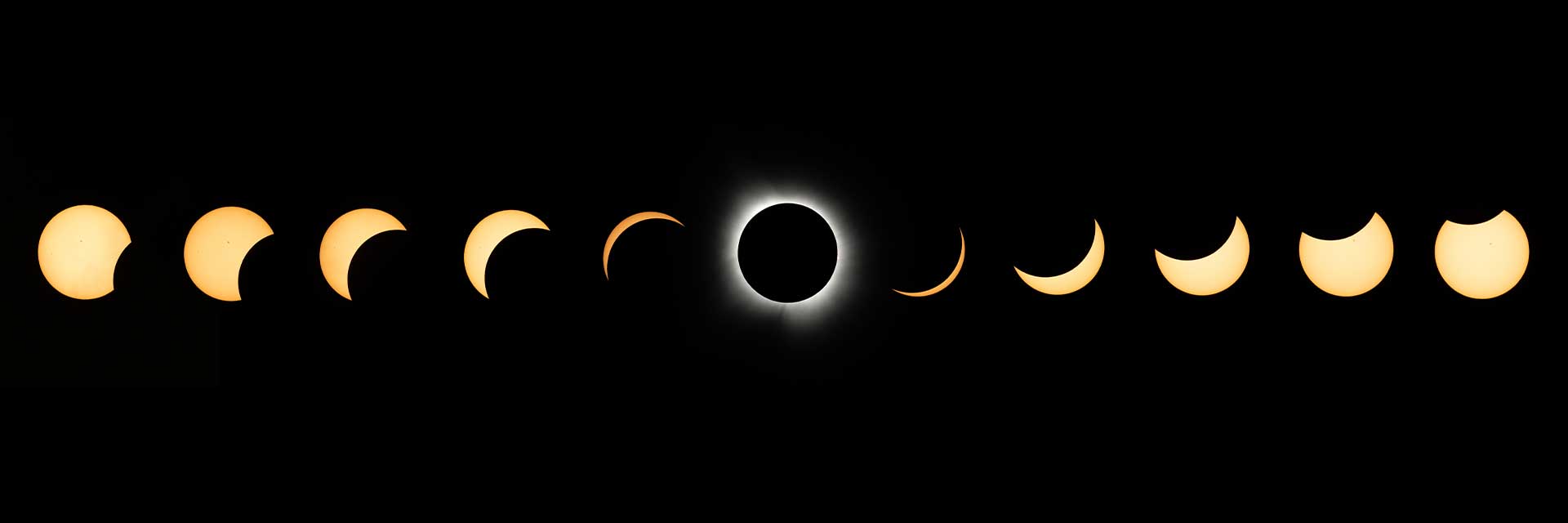
Partial solar eclipse progression composite — Cardiff will see a 92% partial eclipse at sunset on August 12, 2026, the highest coverage of any UK capital

City Eclipse Guide · Cardiff · August 12, 2026

Cardiff Eclipse 2026: Partial Solar Eclipse Times & Viewing Guide

Cardiff will see approximately 92% of the Sun covered during the August 12, 2026 partial solar eclipse — the highest coverage of any UK capital city. The eclipse reaches its dramatic maximum just 2 degrees above the western horizon near sunset, making the Glamorgan Heritage Coast and Cardiff Bay the perfect stage for one of Wales’s most memorable astronomical events. Eclipse glasses are essential throughout all partial phases. This guide covers BST timings, the best viewing spots from Cardiff and South Wales, why Cardiff wins the UK capital comparison, and all the gear you need.

Maximum coverage~92%
Maximum time~19:02 BST
Sun altitude~2° at maximum
TimezoneBST (UTC+1)
By Telescope Advisor Editorial Team Published: Updated: Editorial Standards

Cardiff Eye Safety Warning

Never look directly at the Sun without ISO 12312-2 certified eclipse glasses. This applies at ALL times during the partial phases. Even at 92% coverage, the remaining 8% of the Sun’s disk is still dangerously bright and can cause permanent retinal damage within seconds. The Sun’s extremely low altitude (only 2°) near the horizon does not reduce this risk — ultraviolet and infrared radiation remain harmful regardless of the Sun’s apparent brightness or colour. See our eclipse glasses guide for ISO-certified products.


Quick Answer: Cardiff Will See the Deepest Partial Eclipse of Any UK Capital

Yes, Cardiff will see approximately a 92% partial solar eclipse on the evening of August 12, 2026 — the highest coverage of any UK capital city. The Moon begins crossing the Sun at approximately 17:54 BST, reaching maximum coverage of around 92% at 19:02 BST, when the Sun will be only about 2 degrees above the western horizon over the Bristol Channel. The Sun sets at approximately 20:47 BST while still partially eclipsed, ending the visible portion of the eclipse from Cardiff. The path of totality for this eclipse crosses northern Spain, not Wales — to see totality, travel to Bilbao, Zaragoza, or Valencia is required. Cardiff remains the best-placed capital in the UK for the maximum partial experience.

Why Cardiff Is the Best UK Capital for This Eclipse

Cardiff sits at approximately 51.5°N latitude — the same as London — but its position on the western coast of Britain, facing the Bristol Channel and the Atlantic beyond, gives it a clear natural horizon to the west. More importantly, South Wales lies slightly further south and west relative to the Moon’s penumbral shadow geometry, giving Cardiff fractionally more coverage than London (91%) and significantly more than Edinburgh (85%) or Belfast (86%). The Glamorgan Heritage Coast, just 40 minutes from Cardiff city centre, offers clifftop views over the Bristol Channel with some of the cleanest western horizons available anywhere in the UK.

Cardiff Eclipse Times (BST)

All times below are in British Summer Time (BST = UTC+1), the local time in Cardiff and across Wales on August 12, 2026. The eclipse occurs in the early evening and reaches its peak very close to sunset, making the last 30–40 minutes the most visually dramatic phase of the event.

Event Time (BST) Sun Altitude What to Do
First contact (partial begins)~17:54 BST~16°Put on ISO-certified eclipse glasses. A small dark notch appears at the edge of the solar disk.
50% coverage~18:30 BST~9°The Sun appears as a clear crescent. Light levels drop and the sky takes on an unusual quality.
75% coverage~18:47 BST~5°A very thin crescent Sun. The Bristol Channel will show atmospheric colours as the Sun drops lower.
Maximum eclipse (~92%)~19:02 BST~2°Peak coverage. The Sun is an extremely thin crescent just 2° above the western horizon. Watch from coastal cliffs for maximum drama.
Sunset (eclipse ongoing)~20:47 BSTThe partially eclipsed Sun sets below the Bristol Channel horizon. Eclipse still in progress but no longer visible from Cardiff.

The 2-Degree Challenge: Why This Eclipse Is Extreme

At maximum eclipse (~19:02 BST), the Sun will be only about 2 degrees above the western horizon — roughly the width of two index fingers held together at arm’s length. This is the lowest solar altitude at maximum eclipse of any major UK city for this event. At 2 degrees, the Sun is strongly affected by atmospheric refraction and extinction, appearing flattened and deep orange-red in colour. Any obstruction to the western horizon — buildings, trees, even a distant ridge — will completely block the view. A completely clear Atlantic horizon, as available from the Glamorgan Heritage Coast, is essential for seeing maximum eclipse.

Best Cardiff & South Wales Viewing Locations

The critical requirement is a clear western horizon, ideally over the Bristol Channel or the open sea. Cardiff city centre is largely blocked by buildings and the Vale of Glamorgan hills to the west. The most spectacular viewing opportunities are on the Glamorgan Heritage Coast and along the Bristol Channel coast. Here are the best locations, ranked by horizon quality:

1. Penarth Esplanade & Penarth Head

Penarth is just 5 kilometres south-west of Cardiff city centre and offers the best easily accessible eclipse viewing spot in the greater Cardiff area. The Victorian esplanade runs along the clifftop above Penarth Beach, with a clear, open view westward across the Bristol Channel towards the North Devon coast. At Penarth Head, the clifftop gives an unobstructed view in all western and south-western directions. This is also an excellent photography location — the Penarth Pier provides a Victorian foreground element with the eclipsed Sun over the water behind it. The town is accessible by Vale of Glamorgan railway from Cardiff Central (10 minutes) or a 20-minute drive. Parking is available on Plymouth Road near the seafront. Arrive by 18:30 BST to secure the best position on the esplanade.

2. Dunraven Bay, Glamorgan Heritage Coast

Dunraven Bay, approximately 40 kilometres west-south-west of Cardiff in the Vale of Glamorgan, is one of the finest coastal viewpoints in South Wales. The clifftops above the bay (part of the Glamorgan Heritage Coast) reach about 50 metres above sea level and face almost due west across the Bristol Channel. The horizon is completely clear of obstructions in every westward direction, with the expanse of open water providing the ideal viewing platform for a low-altitude eclipse. The elevated position also reduces the effect of low-lying sea haze that can sometimes obscure the horizon at beach level. Drive via the B4265 through St Brides Major. Parking is available in the National Trust car park (charge applies). The clifftop path from the car park to the best viewpoints is well-maintained and takes about 10 minutes. This is our top recommendation for serious eclipse watchers in South Wales.

3. Southerndown (Dunraven Bay village)

The village of Southerndown sits directly above Dunraven Bay and provides slightly easier access to the clifftop area than the bay car park. The cliff edges here are level and grassy, providing a safe, comfortable platform for eclipse watching with young children. The horizon views are nearly as good as the headland further west, and the village has more parking than the National Trust bay car park. Note that the cliff edges at Dunraven Bay and Southerndown require care — do not approach the edge after dark and supervise children at all times. The dramatic limestone cliff stacks and sea arches in this area create outstanding photographic foreground subjects with the setting eclipsed Sun beyond.

4. Cardiff Bay Barrage

The Cardiff Bay Barrage, the long tidal barrage across the mouth of Cardiff Bay, provides an accessible viewing platform within Cardiff itself with wide open views westward along the Severn Estuary towards the Somerset coast. Walking along the top of the barrage places you at water level with an unobstructed western horizon across the water. This location is a 20–30 minute walk from Cardiff Central station or accessible by Cardiff Bus Route 6. The Barrage is open until late in summer. The surrounding Cardiff Bay development offers cafes and facilities for pre-eclipse refreshments. The combination of the barrage, the Senedd building, and the Norwegian Church creates interesting architectural foreground elements for eclipse photography.

5. Sully Island Causeway

Sully Island, about 12 kilometres south-west of Cardiff city centre, is accessed via a tidal causeway from Sully Beach. When the tide permits (check tide tables in advance — the causeway is only safe for 2–3 hours either side of low tide), the island itself provides a completely 360-degree horizon with unobstructed views in all directions. For an eclipse at 2 degrees altitude, this is one of the most dramatic viewing platforms in the region. Check tide tables for August 12, 2026 (low tide is required around 18:00–19:00 BST for safe access); if tides do not cooperate, use Sully Beach itself which still provides a good westward horizon. This is a tidal environment — always check before visiting and do not risk being cut off by the tide.

Bonus: Flat Holm Island (Bristol Channel)

Flat Holm, the small island in the Bristol Channel accessible by boat from Cardiff Bay (seasonal ferry service from Barrage Pontoon), offers the ultimate 360-degree horizon for eclipse watching. No buildings, no trees, no hills — just open sea in every direction. Visibility from Flat Holm would be spectacular at maximum eclipse. The ferry service is seasonal and capacity is limited; check with Cardiff Harbour Authority well in advance as this trip will likely sell out quickly for eclipse day.
Cardiff vs London vs Edinburgh: Why Cardiff Wins the UK Capital Comparison

The August 12, 2026 eclipse creates an interesting geography across the British Isles. Because the Moon’s penumbral shadow approaches from the south (with the path of totality crossing Spain and the Mediterranean), cities further south in the UK receive higher coverage. But the comparison between Cardiff and London reveals something beyond simple latitude.

UK Capital Latitude Max Coverage Max Time (BST) Sun Alt at Max Sunset (BST)
Cardiff51.5°N~92%~19:02~2°~20:47
London51.5°N~91%~19:13~2°~20:54
Belfast54.6°N~86%~18:55~5°~21:15
Edinburgh56.0°N~85%~19:35~10°~21:25

Cardiff’s advantage: western coast location

Cardiff and London share almost identical latitudes (~51.5°N), yet Cardiff receives approximately 1% more coverage than London. The difference arises from Cardiff’s more westerly longitude — it lies about 3 degrees of longitude further west than London. For this eclipse, whose geometry places the penumbral shadow centred on Spain and approaching the UK from the south-west, a more westerly position in the UK receives marginally more coverage. This advantage is compounded by Cardiff’s natural western horizon over the Bristol Channel, which is objectively superior to anything available from central or eastern London.

The coastal cliff advantage

Cardiff’s proximity to the Glamorgan Heritage Coast cliffs gives it a unique observational advantage. The clifftops at Dunraven Bay and Penarth Head provide elevated positions 30–50 metres above sea level with completely open Atlantic horizons. London’s equivalent viewing spots (Parliament Hill, Richmond Park) provide a western horizon over suburban rooftops at best — far more restricted than the open ocean views available from South Wales. For a 2-degree altitude eclipse, this horizon quality difference is arguably more important than the 1% coverage difference.

The practical conclusion: if you are within reasonable driving distance of Cardiff and the Glamorgan Heritage Coast, this is the best eclipse-viewing destination in the UK (outside of travelling to Spain for totality). The combination of the highest partial coverage of any UK capital, superb coastal viewing locations, and the dramatic South Wales clifftop scenery makes Cardiff’s eclipse experience genuinely unique.

Historical Solar Eclipses in Wales

Wales has a surprisingly rich eclipse history. The August 11, 1999 total solar eclipse — the most widely observed eclipse in British history — saw the path of totality clip the southern tip of England, with South Wales receiving approximately 98% coverage. Cardiff in 1999 experienced a dramatic near-total eclipse at 11:14 BST, with the sky dimming to deep twilight and the temperature dropping several degrees in minutes. Many Cardiff residents who remember 1999 describe it as the most striking natural phenomenon they have ever witnessed, despite not being technically in the path of totality.

The path of totality for the 1999 eclipse was so close to Wales that some observers in Pembrokeshire and on Caldey Island may have experienced fleeting moments of totality as the Moon’s umbral shadow grazed the extreme southwest of the country. Reports from that era suggest that parts of the Pembrokeshire coast came within seconds of total eclipse — one of the closest near-totality events in Welsh recorded history.

The March 20, 2015 partial eclipse reached approximately 90% coverage in Cardiff at 09:31 GMT. It was widely photographed from the city’s many parks and waterfront areas. The 2015 eclipse occurred on a morning of partly cloudy skies over South Wales, with many observers catching glimpses of the crescent Sun through gaps in the cloud — a familiar Welsh eclipse experience that 2026 observers should mentally prepare for.

Looking forward, the August 12, 2026 eclipse at 92% is the deepest partial eclipse Cardiff will see until the early 2030s. Wales does not experience another total solar eclipse until August 12, 2026 in the path of totality — which does not cross Wales. The next total solar eclipse whose path crosses or comes very close to Wales is expected in the 22nd century. The 2026 partial eclipse is, for all practical purposes, the most spectacular eclipse available to Welsh observers for generations.

South Wales Weather Outlook for August

South Wales has a maritime climate with prevailing south-westerly winds bringing Atlantic moisture. August is among the more settled months, but cloud cover remains a genuine risk. Historical Met Office data for the Cardiff and Vale of Glamorgan area shows approximately 45–55% cloud cover on August evenings, with roughly a 55–65% probability of at least some clear sky near sunset. The good news is that the South Wales coast often clears earlier than inland areas as sea breezes moderate the cloud cover.

Monitoring resources for eclipse day

  • Met Office Wales — metoffice.gov.uk provides detailed localised forecasts for the Vale of Glamorgan
  • Clear Outside app — multi-layer cloud forecasting for astronomy, distinguishing between low, medium, and high cloud
  • BBC Wales Weather — bbc.co.uk/weather/cardiff for straightforward city forecasts
  • Sat24.com — real-time satellite imagery showing cloud movement across the Bristol Channel region
  • Begin monitoring from August 9; commit to your final location by 14:00 BST on eclipse day

Cloud-out strategy from Cardiff

  • Best plan B: Pembrokeshire coast — about 90 minutes drive west, the far west Wales coast often has clearer evening skies when fronts are further east
  • North Somerset coast — cross the Severn Bridge to Clevedon or Brean Down (45 min) for a different local cloud pattern
  • Glamorgan coast moves west: if Cardiff Bay is cloudy but Penarth is partly clear, Dunraven Bay 40 km further west may have open sky
  • Elevated coastal positions (Dunraven Bay clifftops) are often above low coastal stratus that closes in over the water

One practical advantage Cardiff observers have over London is the speed at which cloud patterns change along the Bristol Channel coast. Strong westerly winds can clear the coastal strip in under an hour, and thin cirrus that obscures the Sun at 20 degrees altitude often thins near the horizon as the Sun sets due to the lower angle of sunlight through the atmosphere. Monitor the cloud movement carefully in the two hours before maximum eclipse and be ready to relocate if your primary spot looks marginal.

Photography Tips — Coastal Cliffs & Cardiff Bay

Cardiff and the South Wales coast offer some of the most spectacular eclipse photography settings in the UK. The combination of the Glamorgan Heritage Coast’s dramatic limestone cliffs, the open Bristol Channel, and the deep 92% partial eclipse at maximum creates extraordinary compositional possibilities.

Cliff Photography from Dunraven Bay

At Dunraven Bay, position yourself on the clifftop with the sea horizon directly in front and the limestone rock stacks framing the composition below. At 2 degrees altitude, the crescent Sun will appear just above the water line — use a telephoto lens (300–500mm) to show both the crescent shape and the reflections on the water. The afternoon light in August gives a warm golden tone that complements the orange-red of the low eclipsed Sun. Plan your position using PhotoPills (set for Dunraven Bay: 51.43°N, −3.58°W) to calculate the Sun’s exact azimuth at 19:02 BST.

Cardiff Bay and Urban Compositions

From Cardiff Bay, use a wide-angle lens to capture the eclipsed Sun as a small but distinctive crescent above the Barrage, with the Senedd building and the Wales Millennium Centre reflected in the bay water. The Penarth Marina across the water provides a natural frame. As the Sun sets through 2 degrees, the long-exposure reflections on calm bay water can produce stunning results. Keep your eclipse glasses on at all times when not actively looking through the camera viewfinder, and use live view exclusively — never the optical viewfinder.

Equipment Recommendations for Coastal Eclipse Photography

Bring a sturdy tripod — clifftop locations in August can be breezy, and at telephoto focal lengths even light wind vibration will blur your images. A remote shutter release prevents camera shake from pressing the shutter button. A polarising filter (separate from the solar filter) can help reduce glare off the water when shooting towards the Sun near the horizon. Solar filter film cut to size can be used over camera lenses throughout the partial phases; remove it only when the Sun is within 1 degree of the horizon and visibly dimmed to a comfortable orange.

Cliff safety for photographers

The Glamorgan Heritage Coast clifftops can have unstable edges, particularly after wet weather. Stay well back from cliff edges and never position a tripod near the cliff edge. Keep one eye on the sea horizon and one on your surroundings — do not become so absorbed in the eclipse that you lose awareness of your position. Children must be supervised at all times. The eclipse is a once-in-a-generation event, but no photograph is worth risking your safety.

Eclipse Glasses & Safety Gear

ISO 12312-2 certified eclipse glasses are essential for all observers throughout the partial phases. At 92% coverage, the remaining 8% of the Sun produces light intense enough to cause permanent eye damage. The Sun’s near-horizon position makes it appear deceptively manageable, but ultraviolet and infrared radiation are not diminished by the low altitude. Here are the best products for Cardiff observers:

Editor’s Pick — Best Eclipse Glasses for South Wales
Helioclipse ISO 12312-2 eclipse glasses 12-pack

Helioclipse Solar Eclipse Glasses (12-Pack)

ISO 12312-2 & CE certified 12 pairs per pack Phone camera filter included

The Helioclipse 12-pack is the best value eclipse glasses option for South Wales families and groups heading to Dunraven Bay or Penarth Esplanade. With 12 pairs per pack, you have enough to supply a group outing plus spares for unprepared fellow observers who arrive without eye protection. The included phone filter is particularly useful for the dramatic coastal photography opportunities available from the Glamorgan Heritage Coast. ISO 12312-2 and CE certified, independently tested, with lightweight cardboard frames that fit over spectacles.

Check Price on Amazon UK

Affiliate link — we may earn a commission at no extra cost to you.

Lunt Solar eclipse glasses 5-pack

Lunt Solar Eclipse Glasses (5-Pack)

Lunt Solar Systems is a leading solar optics manufacturer. Their eclipse glasses 5-pack is ideal for small groups heading to the Glamorgan coast. The wide frame design accommodates prescription spectacles and each pair is individually certified to ISO 12312-2. The premium Lunt optical film provides a slightly warmer colour rendering of the solar disk compared to standard eclipse film, which many observers prefer for the dramatic sunset colouration of the low Sun.

Check Price on Amazon UK

Affiliate link.

Solar Binoculars & Telescopes for the Cardiff Eclipse

For Cardiff’s 92% partial eclipse, the magnified view through solar binoculars is extraordinary — the crescent Sun appears very thin and dramatic through 10× or 12× magnification. Dedicated solar binoculars are safer than using regular binoculars with improvised filters. Here are our recommended options:

Celestron EclipSmart 10x25 Solar Binoculars

Celestron EclipSmart 10×25 Solar Binoculars

Compact and lightweight — easy to carry on the cliff walk to Dunraven Bay. The 10× magnification gives a clear view of the extreme crescent shape at 92% coverage, with the irregular lunar limb beautifully defined against the thin sliver of solar disk.

Celestron EclipSmart 12x50 Solar Binoculars

Celestron EclipSmart 12×50 Solar Binoculars

The 50mm large objectives are particularly effective for the dim, low-altitude Sun at maximum eclipse — they gather significantly more light than the 25mm version. Best on a tripod or monopod for stability at 12× magnification, especially on exposed clifftops where wind can cause image shake.

Celestron EclipSmart Universal Solar Filter for telescopes

Celestron EclipSmart Universal Solar Filter

Converts a small-to-medium telescope (60–90mm aperture) into a safe solar instrument. Reveals sunspot groups on the thin crescent of exposed solar disk at 92% coverage. An excellent tool for watching the Moon’s limb advance across the solar surface in fine detail.

Celestron SkyMaster 15x70 Binoculars for post-eclipse stargazing

Celestron SkyMaster 15×70 Binoculars

For post-eclipse stargazing from dark-sky sites on the Glamorgan Heritage Coast or the Brecon Beacons (an International Dark Sky Reserve). The August 12 eclipse falls near new Moon — perfect for deep-sky observing after the eclipse. Note: Never use these to look at the Sun.

See our complete solar binoculars buying guide and telescope solar filter guide for more options, including larger aperture solar binoculars for serious observers.


🔭

Not sure which telescope actually fits your goals?

Answer 5 quick questions about your budget, observing targets, and experience level — our Telescope Finder Tool recommends a specific model in under 2 minutes.

Find My Telescope →

FAQ — Cardiff Eclipse 2026

What time is the solar eclipse in Cardiff on August 12, 2026?
The partial eclipse begins at approximately 17:54 BST, reaches maximum coverage (~92%) at 19:02 BST, and the Sun sets while still partially eclipsed at approximately 20:47 BST. Cardiff has one of the earlier sunsets among UK cities on this date, but the excellent western horizon over the Bristol Channel more than compensates.
Is Cardiff really the best UK capital for the 2026 eclipse?
Yes. Cardiff sees approximately 92% coverage — the highest of any UK capital city, slightly more than London’s 91%, and significantly more than Edinburgh (85%) or Belfast (86%). Cardiff’s western coastal position also gives it access to superb natural viewing horizons over the Bristol Channel, which are objectively superior to the urban and suburban horizons available in other UK capitals. The Glamorgan Heritage Coast clifftops combine the highest coverage with the most dramatic natural viewing environment in the UK.
Where should I watch the eclipse in Cardiff?
Penarth Esplanade is the best option within easy reach of Cardiff city centre (5 km, accessible by train). Dunraven Bay and Southerndown on the Glamorgan Heritage Coast (40 km, 40-minute drive) offer the most dramatic clifftop views over the Bristol Channel. Cardiff Bay Barrage is the most convenient city centre option. For the ultimate experience, the Flat Holm island ferry from Cardiff Bay provides a 360-degree horizon, but book well in advance.
Why is the Sun only 2 degrees above the horizon at maximum?
The geometry of the August 12, 2026 eclipse means that maximum eclipse coincides with the Sun being very low in the western sky for all of the British Isles. The eclipse’s maximum point occurs late in the day from the perspective of UK cities. Cardiff’s relatively southerly latitude means its maximum occurs slightly earlier (19:02 BST) than London (19:13 BST), when the Sun is still marginally higher — but both cities face the challenge of a near-horizon maximum. Coastal locations are the solution: at sea level facing the ocean, 2 degrees altitude is still clearly visible above the water line.
Do I need special eclipse glasses for a 92% partial eclipse?
Yes — standard ISO 12312-2 certified eclipse glasses are required throughout. The certification level is the same whether the eclipse is 10% or 99% partial. At 92% coverage, the remaining 8% of the Sun’s disk still produces enough ultraviolet and infrared radiation to cause permanent retinal burns within seconds of unprotected viewing. The very low Sun near the horizon does not make viewing safer — only properly certified eclipse glasses do.
What happened during the 1999 eclipse in Wales?
The August 11, 1999 total solar eclipse saw the path of totality pass over southern England (Cornwall and Devon), with South Wales receiving approximately 98% coverage — the highest partial coverage in Welsh eclipse history until now. Cardiff experienced dramatic near-totality conditions at 11:14 BST, with the sky dimming to deep twilight, temperature dropping several degrees, and birds ceasing to sing. Many Cardiff residents consider it one of the most memorable natural events they have ever witnessed. The 2026 eclipse at 92% will be less dramatic but still significant, especially with the unique sunset geometry.
What is the weather forecast for the eclipse in Cardiff?
South Wales in August has roughly a 55–65% chance of at least partially clear skies around sunset on any given August evening. Monitor the Met Office (metoffice.gov.uk) and BBC Wales Weather from August 9 onward. If Cardiff Bay is cloudy, the Glamorgan Heritage Coast (40 km west) often has different cloud patterns. For a major cloud-out backup, the Pembrokeshire coast (90 min drive) has the best statistical chance of clear evening skies in South Wales due to its exposed position on the far western tip of Britain.
Can I get to the Glamorgan Heritage Coast from Cardiff without a car?
Penarth (the closest good viewing spot) is accessible by Vale of Glamorgan railway from Cardiff Central (10 minutes). Dunraven Bay and the Glamorgan Heritage Coast clifftops are more difficult without a car — the nearest bus stops require a significant walk. If you are planning to watch from the Heritage Coast without a car, consider sharing transport with other eclipse watchers or booking a coach/minibus tour organised by local astronomy societies (the Cardiff Astronomical Society may organise an eclipse trip — check their website). Cardiff Bay Barrage remains the best car-free option within the city itself.