Telescope Advisor Logo Telescope Advisor
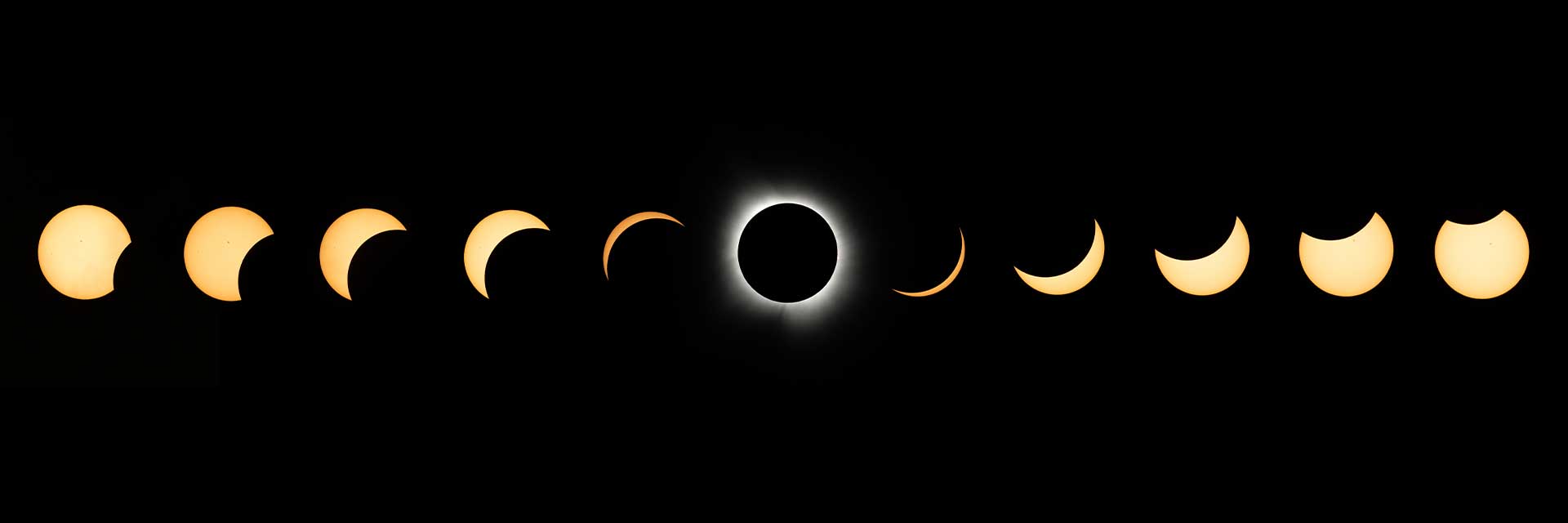
Partial solar eclipse progression composite — Dublin will see an 88% partial eclipse at sunset on August 12, 2026

City Eclipse Guide · Dublin · August 12, 2026

Dublin Eclipse 2026: Partial Solar Eclipse Times & Viewing Guide

Dublin will experience a deep 88% partial solar eclipse on the evening of August 12, 2026. The eclipse occurs near sunset in Irish Standard Time, creating a spectacular low-horizon event as the crescent Sun sinks towards the western Atlantic horizon. Since Ireland lies outside the path of totality, the Sun is never fully blocked — ISO 12312-2 eclipse glasses are required at all times. This guide covers exact IST timings, Dublin’s best viewing spots, weather strategy, and all the gear you need.

Maximum coverage~88%
Maximum time~18:58 IST
Sun altitude~4° at maximum
TimezoneIST (UTC+1)
By Telescope Advisor Editorial Team Published: Updated: Editorial Standards

Dublin Eye Safety Warning

Never look directly at the Sun without ISO 12312-2 certified eclipse glasses. This applies at ALL times during the partial phases — including when the Sun is very low near the horizon. Even at 88% coverage, the remaining sunlight is intense enough to cause permanent retinal damage. The Sun’s low altitude near sunset does not reduce the danger — infrared and ultraviolet radiation remain at harmful levels. See our best eclipse glasses guide for ISO-certified products.


Quick Answer: Will the Eclipse Be Visible From Dublin?

Yes, Dublin will see a deep 88% partial solar eclipse on the evening of August 12, 2026. The Moon will begin crossing the Sun at approximately 17:52 IST, reaching maximum coverage of around 88% at 18:58 IST when the Sun will be only about 4° above the western horizon. The partially eclipsed Sun will then set below the horizon at approximately 21:10 IST — meaning the eclipse does not fully end before sunset. Dublin is not in the path of totality for the 2026 eclipse; the path of totality crosses northern Spain (Bilbao, Zaragoza, Valencia) and the Balearic Islands. To experience totality, travel to Spain is required.

Why This Eclipse Is Special for Dublin

The 2026 eclipse at 88% coverage is the deepest partial solar eclipse Ireland has seen since August 11, 1999, when the path of totality passed over southwest England. At maximum, the Sun will be a dramatically thin crescent just 4 degrees above the Atlantic horizon — the combination of the partial eclipse, the low Sun, and the orange twilight glow creates an unmissable spectacle. The eclipsed Sun setting into the Irish Sea makes Dublin’s west-facing viewing spots uniquely valuable. The next comparable event for Dublin will not arrive until the 2030s.

Dublin Eclipse Times (IST)

All times are in Irish Standard Time (IST = UTC+1), which is the local time in Dublin on August 12, 2026. Note that IST is the same offset as British Summer Time (BST) — Dublin and London are on the same clock time throughout the summer.

Event Time (IST) Sun Altitude What to Do
First contact (partial begins)~17:52 IST~16°Put on ISO-certified eclipse glasses. The first small notch appears on the Sun’s edge.
50% coverage~18:27 IST~9°The Sun now appears as a distinct crescent. Light levels begin to drop noticeably.
Maximum eclipse (~88%)~18:58 IST~4°Peak coverage. A razor-thin crescent Sun sits very low in the west. Spectacular through eclipse glasses.
Sunset (eclipse still ongoing)~21:10 ISTThe partially eclipsed Sun sets. The eclipse has not officially ended but is no longer visible from Dublin.

The 4-Degree Challenge

At maximum eclipse (~18:58 IST), the Sun will be only about 4 degrees above the western horizon — roughly the width of three fingers held together at arm’s length. Even a modest building, hedgerow, or gentle hill to the west will entirely block the view. An absolutely clear western horizon is non-negotiable for seeing the most dramatic portion of this eclipse. Locations facing directly west over the Irish Sea or open parkland are the only viable choices.

Best Dublin Viewing Locations

The critical requirement is an unobstructed western horizon. Dublin’s city centre is largely blocked by buildings and trees, making park edges and coastal spots essential. The Sun sets in a west-northwest direction from Dublin in mid-August, so you need a clear sightline in that direction. Here are the best locations ranked by horizon quality:

1. Phoenix Park — Western Edge

Phoenix Park is one of the largest enclosed urban parks in Europe and offers large sections of flat, open ground with a genuinely unobstructed western horizon. The western perimeter of the park, near the Knockmaroon Gate, provides particularly good sightlines across the farmland and open countryside of County Kildare. The scale of the park means you can position yourself on a slight rise to see well above the park boundary walls. Arrive by 18:00 IST to secure a good spot and acclimatise before the eclipse reaches its most dramatic phase. The park is easily accessed by the 37, 39, and 70 bus routes, and there is ample car parking.

2. Howth Head

Howth Head, the dramatic cliff peninsula north of Dublin Bay, offers an elevated position with clear Atlantic horizon views both north and west. The cliff walk between the summit and the East Pier provides multiple vantage points. Looking west from the summit, you have a clear view over Dublin Bay and towards the Wicklow Mountains and beyond to the western horizon. The elevation (171m at the summit) means you are above any low-lying coastal haze. Howth is accessible by DART rail (30 minutes from Dublin city centre) and the cliff paths are well-maintained. The western face of the headland offers the best eclipse sightline.

3. Bull Island and Dollymount Strand

Bull Island, the barrier island in Dublin Bay, provides a flat, completely open viewing platform with unobstructed horizons in almost every direction. The long sandy beach of Dollymount Strand faces westward across the bay towards Dublin city centre’s quays, but the northern end of the island faces the open Irish Sea with a clear north-western horizon. This is one of the most accessible eclipse viewing spots — it is reachable by bus (from Clontarf Road) and by car via the wooden toll bridge. The flat terrain and openness of the island make it ideal for groups and families. Bring windbreaks as August evenings on exposed coastal strips can be breezy.

4. Killiney Hill

Killiney Hill, south of Dublin city, offers panoramic views from an elevation of 153 metres. The obelisk at the summit provides a dramatic landmark, and the views from the hilltop encompass the south, west, and north. The western and north-western horizon is clear across Dublin Bay and the suburbs of south Dublin. For the eclipse, position yourself on the north-western face of the hill to maximise the western horizon. Killiney Hill Park is accessible by DART (Killiney station) and by car, with parking available near the entrance. This location also offers excellent photography opportunities with Dublin Bay as a foreground element.

Planning tip: Scout your location in advance

Visit your chosen location on a clear evening a few days before August 12 to confirm the western horizon is unobstructed. The Sun will set approximately 10–15 degrees further north in mid-August than it does in the depths of winter, so use a compass app to identify the exact azimuth (roughly 300–310 degrees west-northwest) and check for obstructions in that direction. What looks clear at ground level may have a distant hill or stand of trees you haven’t noticed.
Historical Context: Dublin’s Eclipse History

The August 11, 1999 total solar eclipse was the last event comparable in scale to what Dublin will see in 2026. In 1999, the path of totality crossed France and Germany before reaching southern England, bringing totality to Cornwall and Devon. Dublin saw a deep partial eclipse on that occasion — roughly 90% coverage — which briefly dimmed the afternoon sky and caused widespread excitement across Ireland. Many Dubliners remember the eerie silvery light and the sudden chill that accompanied the deep partial phase.

Between 1999 and 2026, Ireland has seen only minor partial eclipses: a 35% partial in March 2015 and smaller events that were barely noticeable without optical aids. The 2026 eclipse at 88% coverage is therefore the most significant Irish eclipse event in 27 years. The island of Ireland as a whole does not lie in the 2026 path of totality — the totality path enters Spain at Bilbao, crosses to Valencia, Palma de Mallorca and the Balearic Islands, and then heads toward North Africa. The closest point of the totality path to Ireland is the northern coast of Spain, roughly 1,500 kilometres south of Dublin.

Looking ahead, what comes next for Dublin? The next solar eclipses of note visible from Ireland include a partial eclipse in 2028 (approximately 75% from Dublin) and the remarkable September 23, 2090 total solar eclipse, whose path of totality crosses Ireland from west to east — the first total eclipse on Irish soil in modern recorded history. The 2026 partial is therefore likely the best solar eclipse event within living memory for most Dubliners today.

Cross-border comparison: Dublin vs. Belfast

Dublin (53.3°N) will see approximately 88% coverage, while Belfast (54.6°N) will see around 86%. The small difference in latitude means Dublin gets marginally more coverage. Both cities will see the eclipse reach maximum very close to sunset — Dublin at ~18:58 IST and Belfast at ~18:55 BST (effectively the same moment on the same clock). For the most dramatic views, Dublin’s lower latitude and the open Atlantic horizon available from coastal locations like Howth Head make it arguably the better Irish city for eclipse watching.

Dublin Weather in August & Cloud-Out Strategy

Ireland’s Atlantic climate means cloud cover is always a consideration. August is one of Dublin’s more settled months, but historical data from Met Éireann shows approximately 50–60% average cloud cover during August evenings in the Dublin area. The probability of at least some clear sky around the 19:00 IST window is roughly 65% — better odds than spring, but far from guaranteed.

The dominant cloud pattern in August comes from Atlantic weather systems tracking northeast. These systems typically bring multiple cloud layers with breaks between them. The key insight for eclipse watchers is that coastal and elevated locations are frequently clearer than the city centre in the evening, as the sea breeze can push cloud inland while the coastal strip remains clearer. Howth Head and Bull Island in particular benefit from this effect.

Monitoring tools for eclipse day

  • Met Éireann (met.ie) — Ireland’s national weather service, most accurate for Irish conditions
  • Clear Outside app — astronomy-specific cloud forecast showing low/medium/high cloud separately
  • Sat24.com — real-time satellite cloud imagery to assess gaps in cloud cover
  • Windy.com — excellent for visualising cloud movement across Ireland
  • Check forecasts from August 9 onward; update every 6 hours on eclipse day

Cloud-out strategy: drive west

  • Primary plan B: Head west along the M4 towards Athlone (90 min drive) — midland Ireland often clearer than the coast when Atlantic fronts are nearby
  • Secondary plan B: Drive to the Wicklow coast (Brittas Bay, Wicklow Head) — 45–60 min south of Dublin, often different cloud cover
  • Inland option: The Bog of Allen in County Kildare offers flat terrain with a clear western horizon at about 50 minutes from Dublin city centre
  • Any location more than 30 km from your starting point gives you a meaningful change in sky conditions

Even partially cloudy conditions can provide a spectacular view. Thin cirrus or scattered cumulus clouds near the horizon can actually enhance the visual drama of a low sunset eclipse, adding atmospheric colour and texture around the crescent Sun. The worst scenario is thick stratus (a flat grey ceiling) covering the entire western horizon — but this type of cloud typically shows clearly on satellite imagery hours in advance, giving you time to reposition.

Photography Tips for Dublin Eclipse Viewing

The combination of Dublin’s dramatic coastal scenery and the low-Sun eclipse creates outstanding photographic opportunities. The key challenge is the Sun’s very low altitude at maximum (only 4°), which means you need both a clear horizon and careful exposure handling.

Smartphone Photography

Hold a solar filter (or the lens from ISO-certified eclipse glasses) over your phone’s camera lens. Use the telephoto option (2x or 3x) for a closer view of the crescent Sun. Tap on the Sun in the camera viewfinder to lock focus and exposure, then drag down on the exposure slider to avoid overexposing the crescent. Near sunset, the atmosphere often dims the Sun enough that you may be able to shoot without a filter — but only attempt this when the Sun is within one degree of the horizon and visibly orange-red, and always judge safety by eye first with your eclipse glasses before removing the camera filter.

DSLR and Mirrorless Camera

A telephoto lens in the 200–400mm range on a sturdy tripod is the standard setup. Use a solar filter sheet over the front of the lens throughout the partial phases. Expose for the solar disk at around ISO 100, f/8, 1/500 second as a starting point and bracket from there. Near sunset, as the Sun dims and turns orange, you can reduce filtration or even remove it entirely to capture the sunset colours. Shoot in RAW to give yourself full latitude in post-processing.

Landscape Compositions from Dublin

From Howth Head, frame the crescent Sun above the Dublin Bay skyline with the city lights beginning to appear in the blue twilight. From Bull Island, use the wooden causeway bridge as a leading line towards the setting eclipsed Sun. The Martello towers scattered along the Dublin coast (at Seapoint, Sandycove, and Balbriggan) make evocative foreground subjects. Use the PhotoPills app (set for Dublin’s latitude 53.33°N, longitude −6.25°W) to plan your exact position relative to the Sun’s azimuth at 18:58 IST.

Safety reminder for photographers

Never look through an optical camera viewfinder at the Sun without a solar filter fitted to the front of the lens. Use your camera’s live view (rear screen) instead. Ensure your eye protection (eclipse glasses) is in place whenever you are not actively behind the camera. Camera sensors can also be damaged by prolonged direct exposure to the Sun — keep exposures short and only remove solar filters near the very end when the Sun is on the horizon.

Eclipse Glasses & Safety Gear

ISO 12312-2 certified eclipse glasses are mandatory for all partial phases of the Dublin eclipse. Even at 88% coverage, the 12% of the Sun still exposed is capable of causing permanent eye damage — the Sun’s low altitude near sunset does not reduce this risk. Here are the best options:

Editor’s Pick — Best Eclipse Glasses for Dublin Families
Helioclipse ISO 12312-2 eclipse glasses 12-pack

Helioclipse Solar Eclipse Glasses (12-Pack)

ISO 12312-2 & CE certified 12 pairs Phone filter included

The Helioclipse 12-pack is the ideal choice for Dublin families, school groups, and anyone planning to watch the eclipse in a group. Each pair is independently certified to ISO 12312-2 and CE standards, blocking 99.999% of harmful solar radiation. The included phone filter allows safe smartphone photography of the crescent Sun. At roughly €1.50–€2.00 per pair at typical Amazon prices, they are affordable enough to give extras to friends and neighbours who haven’t prepared.

Check Price on Amazon

Affiliate link — we may earn a commission at no extra cost to you.

Lunt Solar eclipse glasses 5-pack

Lunt Solar Eclipse Glasses (5-Pack)

Lunt Solar Systems is a trusted name in dedicated solar optics. Their 5-pack is perfect for couples or small family groups heading to Phoenix Park or Howth Head. ISO 12312-2 and CE certified, individually sealed, and the wide frame design fits comfortably over prescription spectacles — an important consideration for the many people who wear glasses full-time.

Check Price on Amazon

Affiliate link.

Solar Binoculars & Telescopes for the Dublin Eclipse

For a magnified view of the 88% partial eclipse, solar binoculars are the best option. Unlike ordinary binoculars (which must never be pointed at the Sun), dedicated solar binoculars have integrated ISO-certified filters that make them safe for direct solar viewing at all times.

Celestron EclipSmart 10x25 Solar Binoculars

Celestron EclipSmart 10×25 Solar Binoculars

Compact and lightweight, ideal for travel to Howth Head or Killiney Hill. The 10× magnification clearly shows the crescent shape and the irregular lunar limb profile.

Celestron EclipSmart 12x50 Solar Binoculars

Celestron EclipSmart 12×50 Solar Binoculars

The larger 50mm objective lenses gather more light — important for the dimmer, low-altitude Sun near the horizon. 12× magnification provides a detailed view of the eclipse progression. Best used on a tripod or monopod for stability at this magnification.

Celestron EclipSmart Universal Solar Filter for telescopes

Celestron EclipSmart Universal Solar Filter (for telescopes)

If you own a telescope and want to view the eclipse with maximum detail, the Celestron EclipSmart Universal Solar Filter fits most telescopes with apertures from 60mm to 90mm. It converts your telescope into a safe solar instrument, allowing you to watch the Moon’s limb move across the solar disk in fine detail, revealing sunspot groups and the irregular landscape of the lunar edge.

See our full best solar binoculars guide and solar filter guide for more options.


🔭

Not sure which telescope actually fits your goals?

Answer 5 quick questions about your budget, observing targets, and experience level — our Telescope Finder Tool recommends a specific model in under 2 minutes.

Find My Telescope →

FAQ — Dublin Eclipse 2026

What time is the solar eclipse in Dublin on August 12, 2026?
The partial eclipse begins at approximately 17:52 IST, reaches maximum coverage (~88%) at approximately 18:58 IST, and the Sun then sets while still partially eclipsed at around 21:10 IST. The eclipse technically continues after sunset but is no longer visible from Dublin once the Sun drops below the horizon.
Is IST the same as BST? How does Dublin compare to London?
Yes. Irish Standard Time (IST = UTC+1) is exactly the same offset as British Summer Time (BST = UTC+1) in summer. Dublin and London are on the same clock time throughout summer 2026. The eclipse will reach maximum in Dublin at approximately 18:58 and in London at approximately 19:13 — London’s slightly further east location means maximum eclipse occurs around 15 minutes later. London sees approximately 91% coverage versus Dublin’s 88%.
Can you see the total eclipse from Ireland in 2026?
No. Ireland does not lie in the path of totality for the August 12, 2026 eclipse. The totality path enters Europe at the northern Spanish coast (Bilbao) and sweeps south-east through Spain before reaching the Mediterranean. The closest point of totality to Dublin is approximately 1,500 km away in northern Spain. To experience totality, you would need to travel to Spain.
Do I need eclipse glasses in Dublin?
Yes — absolutely essential. ISO 12312-2 certified eclipse glasses are required throughout the entire partial phase. Even when the Sun is 88% covered, the remaining 12% is bright enough to cause permanent retinal damage within seconds of unprotected viewing. The Sun’s low altitude near the horizon does not reduce this danger. Keep your glasses on throughout the eclipse and only remove them once the Sun has set.
What will the eclipse look like from Dublin?
Through ISO-certified eclipse glasses, you will see the Sun as a very thin, bright crescent low in the western sky. At 88% coverage, the Moon covers 88% of the Sun’s diameter, leaving a dramatic sliver of the solar disk visible. The light levels will dim noticeably and the quality of light will take on a silvery, flat character. Animals may behave unusually. The sky will not go fully dark and stars will not appear, but the effect of this deep partial eclipse near sunset is genuinely striking.
What is the best place to see the eclipse in Dublin?
The best locations are those with a completely clear western horizon. Phoenix Park’s western edge is the most accessible. Howth Head offers elevation and an open Atlantic horizon. Bull Island (Dollymount Strand) is excellent for groups and families, with a flat open beach. Killiney Hill provides elevated panoramic views from the south side of the city. All require arriving by 18:00 IST to secure a good position.
What is the weather forecast for Dublin on August 12, 2026?
August is one of Dublin’s more settled months, but cloud is always a possibility given Ireland’s Atlantic climate. Historical averages suggest roughly a 65% chance of at least partial clear sky around sunset. Monitor Met Éireann (met.ie) from August 9 onward, and use the Clear Outside app for astronomy-specific forecasts. If Dublin looks cloudy, consider driving west along the M4 towards Athlone or south to the Wicklow coast, where cloud patterns may differ.
When is the next total solar eclipse visible from Ireland?
The next total solar eclipse with the path of totality crossing Ireland is the September 23, 2090 eclipse — one of the most eagerly anticipated astronomical events in Irish history, as it will bring totality directly across the island from west to east. Until then, the 2026 partial eclipse at 88% coverage is by far the most spectacular solar event available from Irish soil. A 75% partial eclipse is predicted for 2028, but the 2026 event is the highlight of the 21st century for most Irish observers.