Telescope Advisor Logo Telescope Advisor
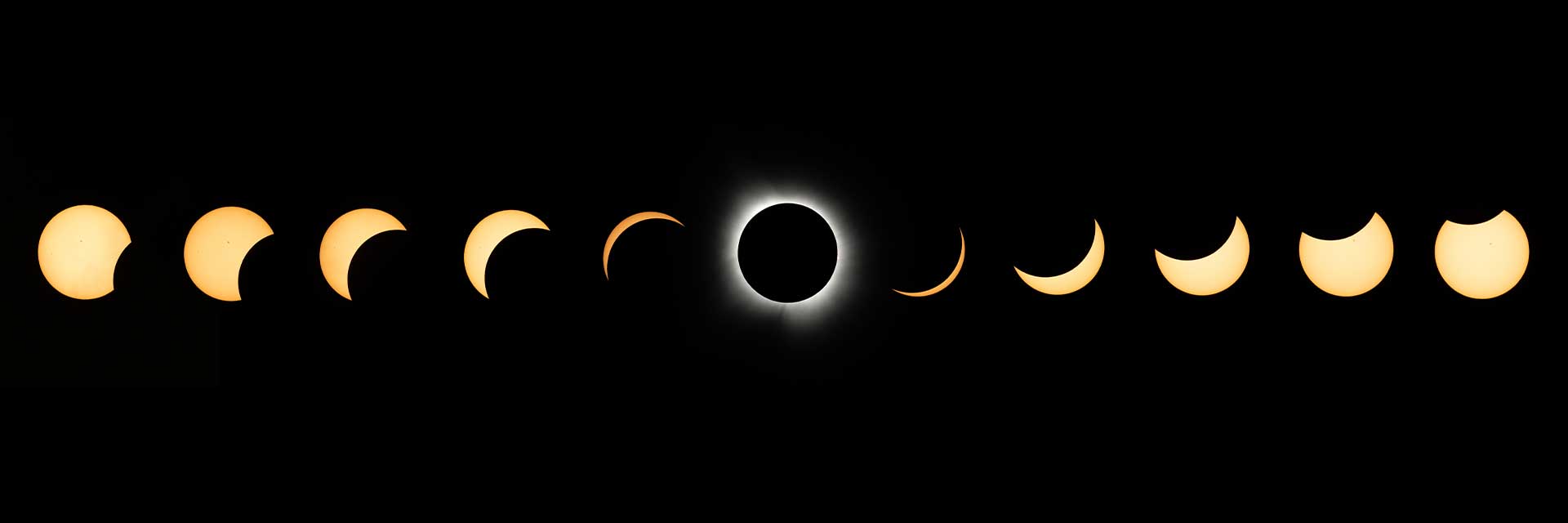
Solar eclipse progression composite — Lisbon will see a 94-95% partial eclipse at sunset on August 12, 2026

City Eclipse Guide · Lisbon, Portugal · August 12, 2026

Lisbon Eclipse 2026: Solar Eclipse Times & Viewing Guide

Lisbon will experience one of the deepest partial solar eclipses visible from any major Atlantic city on August 12, 2026 — approximately 94–95% of the Sun's diameter covered by the Moon at maximum. Occurring close to sunset, this creates a dramatic twilight-like darkening over the Tagus estuary and Atlantic coast. With Portugal's famously clear August skies giving a 70–75% chance of success, Lisbon stands out as one of the best locations in Western Europe to observe this rare event outside the path of totality.

Maximum coverage~94%
Maximum time~18:53 WEST
Sky darkeningNoticeable
TimezoneWEST (UTC+1)
By Telescope Advisor Editorial Team Published: Updated: Editorial Standards

Lisbon Eye Safety Warning

Never look directly at the Sun during any phase of a partial solar eclipse without ISO 12312-2 certified eclipse glasses. At 94–95% coverage, the remaining 5–6% of sunlight is still intense enough to cause instant, permanent retinal damage. The low evening Sun may seem gentler, but ultraviolet and infrared radiation remain at full strength regardless of altitude. See our best eclipse glasses guide for certified products.


Quick Answer: What Will Lisbon See on August 12, 2026?

Lisbon will see a 94–95% partial solar eclipse at sunset on August 12, 2026 — the deepest partial coverage of any major Atlantic European city outside the path of totality. The Moon begins crossing the Sun at approximately 17:47 WEST, reaching its maximum coverage of around 94% at 18:53 WEST with the Sun sitting just 6 degrees above the west-southwest horizon. The Sun will set before the eclipse formally ends, meaning Lisbon observers will watch a crescent Sun sink into the Atlantic. The sky will noticeably darken near maximum, creating a twilight-like atmosphere unlike anything most Lisbon residents have experienced.

Why This Eclipse Is Remarkable for Lisbon

The path of totality for the August 12, 2026 eclipse cuts through northern Spain — passing through Galicia, Santander, and the Basque Country — just several hundred kilometres north of Lisbon. This proximity means Lisbon sits deep inside the Moon's penumbral shadow, receiving far more coverage than UK cities or the rest of Western Europe. Combined with Portugal's world-class summer weather, Lisbon is arguably the finest city in Western Europe for observing this eclipse without committing to the totality path.

Lisbon Eclipse Times (WEST — Western European Summer Time)

All times are in WEST (Western European Summer Time = UTC+1), the standard time in Portugal during August. The eclipse unfolds in the early evening, with the Sun descending toward the Atlantic as the Moon's shadow deepens. This creates one of the most visually dramatic partial eclipse scenarios possible.

Event Time (WEST) Sun Altitude What to Observe
First contact (partial begins)~17:47 WEST~18°First notch appears on the Sun's upper limb. Eclipse glasses required.
50% coverage~18:25 WEST~11°The Sun becomes a half-disc. Surrounding light begins to take on a different quality.
Maximum eclipse (~94%)~18:53 WEST~6°Peak coverage. Sun is a thin crescent low over the WSW horizon. Sky noticeably darkens.
Sunset (eclipse sets with Moon)~20:43 WESTThe eclipsed crescent Sun sinks below the Atlantic horizon. A unique visual finale.

The 6-Degree Challenge — and Opportunity

At maximum eclipse, the Sun will be just 6 degrees above the horizon — roughly the width of three fingers held together at arm's length. Any buildings or hills to the west will block the view. However, this low angle is also what makes the visual so compelling: the Sun will appear deep orange-red, flattened by atmospheric refraction, and shaped into an impossibly thin crescent. Lisbon's flat Atlantic-facing viewpoints are perfect for exploiting this geometry. Miradouros facing west or southwest are ideal.

Why Lisbon Is Special: Proximity to the Totality Path

The August 12, 2026 total solar eclipse follows a path that crosses northern Spain from west to east — entering the Iberian Peninsula through Galicia, sweeping through the Cantabrian coast, and continuing through Catalonia into the Mediterranean. Lisbon lies roughly 400–450 km south of this path's northern edge, placing it inside the Moon's deep penumbral shadow. The result is 94–95% coverage: more than any UK city, more than Paris, and more than most of continental Europe outside Spain itself.

At 94% coverage, the visible solar disk is reduced to a thin crescent barely 6% of the full Sun. The light reaching the ground drops to approximately 6–8% of normal noon sunlight — comparable to a heavily overcast day or deep twilight. This is enough to trigger genuine perceptual darkness: the sky noticeably dims in the west, the horizon develops unusual colours, brighter planets may become visible, and the temperature drops by a few degrees. Animals, birds, and insects may respond as if evening has arrived unexpectedly early.

What makes Lisbon uniquely positioned is the sunset geometry. Maximum eclipse occurs just 90 minutes before sunset, with the Sun only 6 degrees high. This means the Sun is already a warm orange-amber colour before any eclipse begins, and as the Moon's shadow deepens, the combined atmospheric and eclipse dimming creates an otherworldly visual: a vivid orange crescent Sun descending toward the Atlantic horizon, embedded in a darkening sky. This is a scenario that will not repeat for Lisbon for decades.

The 2026 eclipse will be the deepest partial solar eclipse ever observed from Lisbon in living memory. The most recent comparable event was the 1999 eclipse, which reached only 73% coverage from Lisbon's latitude. No eclipse before 2040 will approach this depth from Portuguese soil outside the totality path.

Best Lisbon Viewing Locations

Because maximum eclipse occurs with the Sun only 6 degrees high, an unobstructed western or west-southwest horizon is essential. Lisbon's famous miradouros (viewpoints) and its Atlantic-facing coastline make it unusually well-equipped for this challenge. Here are the best locations, ranked by horizon quality and accessibility.

1. Miradouro de São Pedro de Alcântara

One of Lisbon's most beloved viewpoints, São Pedro de Alcântara overlooks the Tagus River estuary and offers a sweeping panoramic view to the west and southwest. The upper terrace provides an elevated position above the Baixa district, with the Tagus glittering in the distance and the distant Atlantic beyond. This is one of the most accessible top-tier eclipse viewing spots in central Lisbon. Take the Glória funicular from Restauradores, or walk up from Chiado. Arrive by 18:00 WEST to secure space — this will be very popular on eclipse day.

2. Cabo da Roca (45 km west of Lisbon)

For the ultimate eclipse experience, Cabo da Roca is the westernmost point of continental Europe — a dramatic cliff-top headland jutting into the Atlantic with a completely unobstructed 270-degree ocean horizon. There is nothing between you and the setting crescent Sun except open water. The drive from central Lisbon takes approximately 45 minutes via the A5 motorway. Parking is available, but the site will be extremely busy on eclipse day. This is arguably the single finest natural viewing spot in Portugal for the 2026 eclipse and should be the first choice for anyone willing to leave the city.

3. Costa da Caparica (Atlantic Beaches South of Lisbon)

The Costa da Caparica is a 30km stretch of Atlantic beach directly south of the Tagus estuary. Any point on this beach offers a flat, completely unobstructed western horizon over the open ocean — ideal for watching the eclipse as the Sun sinks toward the water. The beach is accessible via the Transpraia coastal tram from the ferry terminal at Cacilhas (cross from Cais do Sodré). August is peak beach season, so expect company, but the long coastline means you will find space.

4. Cristo Rei Sanctuary (South Bank)

The Cristo Rei monument stands on the south bank of the Tagus at Almada, with a panoramic viewing platform offering uninterrupted views across the river to Lisbon and westward toward the Atlantic. At approximately 110 metres above sea level (plus the statue), this elevated position gives an excellent western horizon. Take the ferry from Cais do Sodré to Cacilhas (10 minutes), then bus 101 or a taxi. The platform may charge entry; check opening hours closer to the date.

5. Sintra Hills (30 km Northwest)

The Sintra mountain range rises to 528 metres and offers spectacular elevated positions with views stretching to the Atlantic. From Cruz Alta or the park near Pena Palace, you can see from the Tagus estuary to the open ocean. However, the western slopes are forested, so choose a viewpoint that is explicitly open to the west. The drive from central Lisbon takes 35–40 minutes. Sintra's slightly higher elevation may give a marginally better horizon angle for the 6-degree Sun.

Transport Tip: August 12 Is a Wednesday

August 12, 2026 falls on a Wednesday — a midweek evening. Lisbon's transport network will be running normally. The Cascais line train (from Cais do Sodré) can take you to Cascais in 40 minutes for a good western beach horizon. Ferries cross the Tagus every 15–20 minutes throughout the evening. For Cabo da Roca, a rental car or taxi is the most practical option as public bus services are infrequent in the evening.

Lisbon Weather in August: Sky Odds for the Eclipse

Lisbon's August weather is the single most compelling reason to watch the 2026 eclipse from Portugal rather than further north. Lisbon has one of the sunniest Augusts of any major European capital. The Azores High — a persistent subtropical high-pressure system that dominates the North Atlantic from June to September — positions itself to suppress Atlantic cloud over Portugal throughout summer, producing reliably hot, dry, cloudless days and evenings.

Historical climatological data shows average August afternoon cloud cover in Lisbon of just 25–35%. In contrast, London averages 55–65% cloud cover on August afternoons, Dublin exceeds 70%, and Edinburgh approaches 75%. For an eclipse that occurs at 18:53 WEST, these statistics translate directly to eclipse-watching odds:

City Coverage % Est. Clear Sky Chance Notes
Lisbon94–95%~70–75%Best major city for weather in Western Europe
Porto96–97%~65–70%Slightly cloudier due to Atlantic proximity
MadridNear totality~80%Totality path — best overall experience
London87–91%~25–30%Typical British August uncertainty
Dublin~85%~20%High summer cloud cover probability

For observers based in the UK or Ireland who are considering travelling specifically for this eclipse, Lisbon represents an exceptional combination of high coverage and reliable weather. Even if London is cloudy, a flight to Lisbon on August 12 puts you at a location with a 70–75% chance of clear skies and 94% coverage — a dramatically different experience. Budget flights from London and Dublin to Lisbon are typically under £80–€100 when booked in advance.

If Lisbon is unexpectedly overcast on eclipse day (an uncommon but not impossible August scenario), drive south toward the Alentejo coast, or north along the N1 toward Santarém — cloud breaks are common in Portugal's dry summer interior. The Algarve, 280km south, has even lower August cloud cover (~15–20%) but receives slightly less eclipse coverage (~90%).

Why Lisbon Is One of the Best Eclipse Viewing Cities in Western Europe

When astronomers and eclipse chasers evaluate where to watch a partial solar eclipse, they weigh two key factors: how much of the Sun is covered and what are the weather odds. Lisbon scores near the top of both categories for the August 12, 2026 eclipse among cities outside the totality path.

Coverage: At 94–95%, Lisbon sees a deeper eclipse than any UK city, any Irish city, and most French cities. Only cities in northern Spain (and obviously the totality path itself) achieve greater coverage. Porto, 300km north, edges ahead to 96–97% due to its closer latitude to the Spanish path, but Lisbon's superior weather odds make the comparison genuinely competitive.

What 94% coverage actually looks like: Many people underestimate how dramatic a 94% eclipse is. At this coverage, only a thin solar crescent remains. The illuminance at ground level falls to roughly 7–8% of normal — similar to the light level 20–30 minutes after sunset. The sky will visibly darken in the west, the horizon will develop unusual colours, and the Sun will appear as an impossibly delicate crescent embedded in an orange-amber sky. Bright Venus may become visible. Shadows will look strange and sharper than normal. This is not a subtle event.

The Lisbon sunset combination: Unlike inland Iberian cities where the eclipse occurs at higher elevation (Madrid sees maximum at approximately 12° altitude, making it a purely high-sun event), Lisbon's maximum occurs at just 6° altitude. This means the eclipse is simultaneously at maximum depth AND at sunset, combining the deep shadow with the warm orange tones of evening light and the spectacular Atlantic backdrop. This is a once-in-a-generation visual experience for Lisbon.

Should You Travel to Spain for Totality Instead?

If you can travel, totality in Spain (A Coruña, Santander, Bilbao, Zaragoza, Barcelona) is categorically different from any partial eclipse. The two minutes of totality — with the corona, chromosphere, Baily's Beads, and diamond ring effect — cannot be replicated by even a 99% partial eclipse. However, if travel to Spain is not possible or you simply prefer to watch from Lisbon, the 94–95% experience in Lisbon with 70–75% clear-sky odds is genuinely spectacular and absolutely worth experiencing. See our guide to Spain eclipse locations for full details on the totality path.

Photography Tips: Sunset Crescent Sun Over the Atlantic

Lisbon's eclipse photography potential is extraordinary. A deep crescent Sun at 6 degrees altitude, descending into the Atlantic, with Lisbon's famous terracotta rooftops and azulejo tiles in the foreground — this is a composition that photographers will travel across continents to capture. Here is how to make the most of it.

Lens selection

Use a telephoto lens of 300–600mm (or equivalent on a crop sensor) to render the crescent Sun large enough in the frame to show its shape. A 200mm lens will produce a visible crescent but it will be small; 400mm or above makes the thin solar arc the clear focal point of the image. If you do not have telephoto equipment, attach your smartphone to the eyepiece of a solar telescope using an eyepiece adapter — even a small 60mm refractor with a solar filter and a 10mm eyepiece will give a beautiful, large crescent image on a phone screen.

Exposure and solar filters

A full solar filter (like the Celestron EclipSmart filter) is mandatory for cameras and telescopes pointed at the Sun during all partial phases. As the Sun drops to 6 degrees and the eclipse reaches maximum, the solar disk will be extremely dim through a full solar filter — you may need to increase your ISO or open the aperture. Use an intervalometer to bracket exposures from 1/500s to 1/60s to find the right exposure for the crescent at this low altitude. Shoot in RAW format to maximise recovery range in post-processing.

Composition ideas for Lisbon

From Miradouro de São Pedro de Alcântara, position the crescent Sun above the Tagus with Lisbon's red-roofed buildings in the foreground. From Cabo da Roca, a wide shot showing the lighthouse silhouetted against the orange sky with the crescent Sun above the ocean horizon creates a world-class travel photograph. Use the PhotoPills app to calculate the exact solar azimuth at 18:53 WEST on August 12 from your planned shooting position — this will tell you which direction to face and where the Sun will appear in relation to your chosen landmark.

Smartphone photography

Use the phone filter that comes with the Helioclipse eclipse glasses pack to cover your smartphone lens. Set your phone to manual or pro mode: dial the exposure down, set white balance to daylight, and lock focus. Brace the phone against a wall or use a small tabletop tripod. As the Sun nears maximum and drops to 6 degrees, remove the filter only briefly and shoot quickly — at this extreme low altitude the disk may be dim enough without a filter for a fraction of a second, but err on the side of caution and keep the filter on.

Eclipse Glasses & Safety Gear for the Lisbon Eclipse

ISO 12312-2 certified eclipse glasses are non-negotiable for all partial phases. At 94% coverage, the Sun remains extremely dangerous to view with the naked eye. The equipment below is appropriate for observing the eclipse from Lisbon and is available for delivery across Portugal and Europe.

Editor's Pick — Best Eclipse Glasses for Lisbon
Helioclipse ISO 12312-2 eclipse glasses

Helioclipse Solar Eclipse Glasses (12-Pack)

ISO 12312-2 & CE 12 pairs Phone filter included

Perfect for families and groups watching from Lisbon's miradouros or Atlantic beaches. Each pair independently tested to ISO 12312-2 and CE certified. The included phone filter lets you capture safe smartphone photos of the crescent Sun over the Tagus. At less than €2 per pair, bring extras to share with neighbours at your chosen viewpoint.

Check Price on Amazon →

Affiliate link — commission helps support this site at no extra cost to you.

Lunt Solar eclipse glasses 5-pack

Lunt Solar Eclipse Glasses (5-Pack)

Lunt Solar Systems is one of the world's most respected names in solar optics. Their 5-pack of eclipse glasses is ideal for couples or small groups at Cabo da Roca or Costa da Caparica. Individually wrapped, ISO 12312-2 and CE certified, and wide enough to fit over prescription glasses — an important consideration for extended sunset viewing.

Check Price on Amazon →

Affiliate link.

Celestron EclipSmart 10x25 solar binoculars

Celestron EclipSmart 10x25 Solar Binoculars

Solar binoculars are the most rewarding way to watch a 94% partial eclipse. The 10x magnification reveals the crisp, sharp lunar limb cutting across the solar disk in extraordinary detail, and the two-eye viewing gives a three-dimensional sense of depth. Built-in front solar filters are ISO-rated and cannot be accidentally removed. Compact and portable — ideal for Cabo da Roca or a miradouro.

Check Price on Amazon →

Affiliate link.

Celestron EclipSmart 12x50 solar binoculars

Celestron EclipSmart 12x50 Solar Binoculars

The larger 50mm objective lenses gather more light than the 10x25 model — an advantage as the Sun sinks lower and light levels fall. At 12x50 the detail visible on the solar limb during a 94% eclipse is remarkable: the thin crescent is bright and perfectly defined. Best used with a tripod adapter for the extended viewing session at Cabo da Roca or a stationary viewpoint.

Check Price on Amazon →

Affiliate link.

Celestron EclipSmart Universal Solar Filter

Celestron EclipSmart Universal Solar Filter

Fits telescopes and camera lenses from 54mm to 100mm. Essential if you plan to photograph or observe through a telescope during the partial phases. The Celestron EclipSmart filter delivers a neutral white solar image with excellent clarity. A must-have for astrophotographers setting up at Cabo da Roca or the Sintra hills.

Check Price on Amazon →

Affiliate link.

See our full review: Best Eclipse Glasses 2026Best Solar Binoculars 2026


🔭

Not sure which telescope actually fits your goals?

Answer 5 quick questions about your budget, observing targets, and experience level — our Telescope Finder Tool recommends a specific model in under 2 minutes.

Find My Telescope →

FAQ — Lisbon Eclipse 2026

What percentage of the Sun will be covered during the Lisbon eclipse?
Approximately 94–95% of the Sun's diameter will be covered by the Moon at maximum eclipse from Lisbon. This makes Lisbon one of the highest-coverage locations in Western Europe outside Spain's totality path. Only a thin solar crescent will remain visible through eclipse glasses at peak.
What time does the eclipse start in Lisbon and when is maximum?
The partial eclipse begins at approximately 17:47 WEST (Western European Summer Time = UTC+1) when the Moon first touches the Sun's limb. Maximum eclipse of ~94% occurs at approximately 18:53 WEST. The Sun sets before the eclipse formally ends, so Lisbon observers will see the eclipsed Sun set into the Atlantic at approximately 20:43 WEST.
Will the sky actually darken during the Lisbon eclipse?
Yes. At 94% coverage, the illuminance at ground level drops to roughly 6–8% of full sunshine — comparable to deep twilight or a heavily overcast winter day. The sky will visibly darken in the west, unusual colours will appear on the horizon, and the temperature may drop briefly. At 6 degrees solar altitude near maximum, this effect is amplified by the low Sun already being naturally dimmed by the atmosphere. This will be a genuinely noticeable phenomenon for anyone outdoors.
Is Lisbon in the path of totality for the 2026 eclipse?
No. The path of totality for the August 12, 2026 eclipse passes through northern Spain (entering via Galicia, passing through the Cantabrian coast and the Basque Country) and continues through the Mediterranean. Lisbon is approximately 400–450 km south of the totality path's closest point. To experience totality, you would need to travel to cities such as A Coruña, Santander, Bilbao, or Zaragoza in Spain. See our guide to Spanish eclipse locations.
What is the best miradouro in Lisbon to watch the 2026 eclipse?
Miradouro de São Pedro de Alcântara is the most accessible top-tier location within central Lisbon, offering panoramic views toward the Tagus and west. For the very best unobstructed horizon, Cabo da Roca (45 km west) offers an open Atlantic view from the westernmost point of continental Europe — this is the ideal site if you are willing to leave the city. Costa da Caparica beach and Cristo Rei on the south bank are excellent alternatives within 30 minutes of central Lisbon.
What are the weather odds for the eclipse in Lisbon on August 12?
Historical climatological data for Lisbon in August gives approximately 70–75% probability of clear or mostly clear skies during the eclipse window. This is significantly better than UK cities (London ~25–30%) and makes Lisbon one of the best large European cities for eclipse weather certainty outside Spain itself. The Azores High typically suppresses Atlantic cloud over Portugal throughout August, producing hot, dry, sunny evenings.
Do I need eclipse glasses for the Lisbon partial eclipse?
Yes, absolutely. ISO 12312-2 certified eclipse glasses are required at all times during the partial phases. Even at 94% coverage, the remaining 6% of exposed solar disk emits enough radiation to cause permanent retinal damage in seconds. The low altitude of the Sun near maximum does not make it safer to view unfiltered. Eclipse glasses must be worn whenever looking at the Sun. Only during totality (which does not occur in Lisbon) is it safe to remove glasses briefly.
When was the last deep solar eclipse visible from Lisbon?
The most comparable eclipse seen from Lisbon was on August 11, 1999, which reached approximately 73% coverage — still a dramatic event remembered by many in the city. Before that, the February 26, 1979 eclipse reached around 62% from Lisbon. The 2026 eclipse at 94–95% is substantially deeper than either of those events and will produce noticeably more sky-darkening and a more dramatic visual experience. No eclipse before 2040 will approach this coverage level from Lisbon.