Telescope Advisor Logo Telescope Advisor
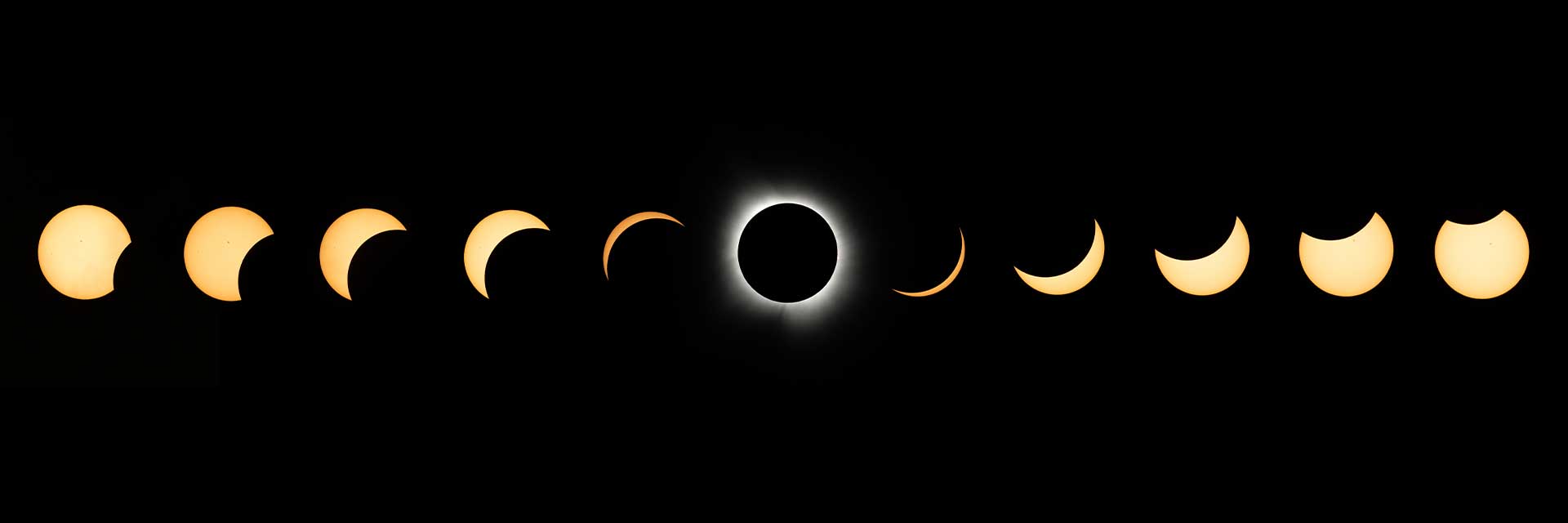
Solar eclipse progression composite — Porto will see a 96-97% partial eclipse at sunset on August 12, 2026

City Eclipse Guide · Porto, Portugal · August 12, 2026

Porto Eclipse 2026: Solar Eclipse Times & Viewing Guide

Porto is one of the highest-coverage eclipse viewing cities outside the totality path in all of Western Europe. On August 12, 2026, the Moon will cover approximately 96–97% of the Sun's diameter at maximum — just 120 km south of the closest point of totality in Spain. The eclipse occurs at sunset over the Atlantic, producing a rare combination of dramatic sky darkening, unusual horizon colours, and a thin crescent Sun descending into the ocean. Porto's excellent summer weather gives observers a 65–70% chance of clear skies for this once-in-a-generation event.

Maximum coverage~97%
Maximum time~18:51 WEST
Sky darkeningDramatic
TimezoneWEST (UTC+1)
By Telescope Advisor Editorial Team Published: Updated: Editorial Standards

Porto Eye Safety Warning

Even at 97% coverage, the remaining 3% of the Sun's disk emits radiation intense enough to cause irreversible retinal damage in under one second. ISO 12312-2 certified eclipse glasses are mandatory for the entire partial eclipse — from first contact through sunset. The Sun is never fully blocked from Porto. Regular sunglasses, stacked sunglasses, or camera filters are all dangerously inadequate. See our eclipse glasses guide for certified products.


Quick Answer: What Will Porto See on August 12, 2026?

Porto will see a 96–97% partial solar eclipse at sunset on August 12, 2026 — making it one of the deepest partial eclipse experiences available anywhere in Western Europe outside the path of totality. The Moon begins crossing the Sun at approximately 17:46 WEST, reaching its maximum coverage of around 97% at 18:51 WEST with the Sun only about 7 degrees above the west-southwest horizon. Porto sits closer to the Spanish totality path than Lisbon, which is why it receives higher coverage. The sky will darken dramatically near maximum, temperature will drop, and observers may see planets appear in the early twilight sky.

Porto's Unique Eclipse Position

Porto is approximately 120 km south of the nearest point of the totality path in Spain. At 96–97% coverage, Porto comes closer to the total eclipse experience than virtually any other city in Portugal or the British Isles. Driving north just 60 km to Braga, or 90 km to Viana do Castelo, nudges coverage toward 98–99%. For totality itself, another 30–50 km north into Galicia, Spain, would suffice — but Porto's 97% eclipse is already extraordinary.

Porto Eclipse Times (WEST — Western European Summer Time)

All times are in WEST (Western European Summer Time = UTC+1), the local time in Porto during August. The eclipse unfolds over the early evening as the Sun descends toward the Atlantic. Note that times in Porto are very similar to Lisbon — the two cities share the same time zone and the eclipse maximum differs by only about 2 minutes.

Event Time (WEST) Sun Altitude What to Observe
First contact (partial begins)~17:46 WEST~19°First notch appears on the Sun's limb. Eclipse glasses required from this moment.
50% coverage~18:23 WEST~12°Sun appears as a half-disc. Light quality noticeably changes. Shadows sharpen.
Maximum eclipse (~97%)~18:51 WEST~7°Peak: Sun is a razor-thin crescent. Sky darkens dramatically. Temperature drops.
Sunset (eclipse sets with Moon)~20:49 WESTThe eclipse continues after sunset; the crescent Sun sinks below the Atlantic horizon.

Porto's Slightly Higher Sun vs. Lisbon

At maximum, Porto's Sun will be approximately 7 degrees high compared to 6 degrees in Lisbon. While this small difference has little practical impact on the viewing experience, it does mean Porto observers have a slightly easier time finding a clear horizon compared to Lisbon, where every degree of altitude matters more. Porto also has a slightly longer sunset time (~20:49 vs ~20:43 in Lisbon), giving a few extra minutes to observe the eclipsed sunset.

Why Porto Gets More Coverage Than Lisbon: The Eclipse Geometry

The path of totality for the August 12, 2026 eclipse enters the Iberian Peninsula from the northwest, crossing into Galicia in northern Spain. The centre line of totality passes through A Coruña, then sweeps southeast through Lugo and Ourense. The southern edge of the totality path — the boundary between totality and the partial shadow — runs roughly parallel to and just north of the Portuguese border.

Porto, at latitude 41.1°N, sits closer to this southern edge of totality than Lisbon (38.7°N). The difference of approximately 2.4 degrees of latitude translates directly into higher eclipse coverage: approximately 96–97% in Porto versus 94–95% in Lisbon. As you travel north from Porto through Braga (41.5°N), Viana do Castelo (41.7°N), and across the border into Galicia, the coverage increases further: 98% in Braga, 99% in Viana, and totality just across the Spanish border near Salvaterra de Mino.

This gradient means that Porto observers who drive just 60–90 km north can access dramatically higher coverage — potentially even totality — without a major travel commitment. We discuss this option in detail in the section below on driving to the totality path.

Location Distance from Porto Eclipse Coverage Notes
Porto0 km~96–97%Your base — already exceptional
Braga~55 km N~98%Easy day trip; very high coverage
Viana do Castelo~85 km N~99%Atlantic coast; approaching totality limit
Tui / Salvaterra (Spain)~120–140 km NTotality2 min+ of totality; corona visible
A Coruña (Spain)~200 km NTotalityMajor city; totality ~2.5 min

What Does 97% Eclipse Coverage Actually Look Like?

Many people who have never experienced a deep partial eclipse underestimate how dramatic 97% coverage can be. At this level of coverage, the visual and environmental effects become genuinely striking, particularly in combination with Porto's sunset geometry.

The thin solar crescent

Through ISO-certified eclipse glasses, the Sun will appear as an incredibly thin arc — a crescent so narrow it looks like the waxing crescent Moon at its thinnest, but rendered in brilliant white against a black sky. This is the residual 3% of the solar disk: the thin rim that the Moon cannot cover. The sharpness of the lunar limb cutting across the Sun is one of the most beautiful sights in observational astronomy, and at 10x magnification through solar binoculars it is breathtaking.

Sky darkening and horizon colours

At 97% coverage, the illuminance at ground level falls to approximately 3–5% of full sunshine — similar to the light level 15 minutes after sunset, or the interior of a room lit by a single candle. The sky will noticeably darken toward the west and northwest. The horizon may develop a 360-degree "sunset-like" redness as the outer edge of the Moon's shadow creates a false twilight in all directions simultaneously. This is a phenomenon that can genuinely be mistaken for an approaching storm by those who are unaware of the eclipse.

Temperature drop

The sudden loss of solar radiation causes a measurable temperature drop during deep partial eclipses. At 97% coverage, surface temperatures in Porto may fall by 2–5°C during the eclipse maximum. Given that Porto in August averages 25–30°C, this cooling will be perceptible but not dramatic. The drop will feel sudden and unexpected if you are not prepared for it — bring a light layer.

Animal and bird behaviour

At 97% coverage, animal behaviour changes are frequently reported. Birds may roost, returning to trees as if evening has arrived. Insects that are active during daylight hours may cease activity. Nocturnal insects may begin chirping. Domesticated animals such as dogs and cats may become confused and agitated. If you are watching from a park or coastal area, keep a close eye on the behaviour of wildlife around you — it is one of the most memorable aspects of a deep partial eclipse.

Planets and bright stars

During the 97% maximum, the sky darkening may be sufficient for bright planets to become visible. Venus, if above the horizon, can sometimes be seen with the naked eye during very deep partials. Jupiter and Saturn, if present in the sky, may be detectable with binoculars. Check a planetarium app for the positions of bright planets on August 12, 2026, in case any are visible during maximum.

Best Viewing Locations in Porto and Along the Coast

At maximum eclipse, the Sun will be approximately 7 degrees high in the west-southwest. Any westward-facing open area or elevated position will work well. Porto's Atlantic coastline and elevated parks offer some excellent options.

1. Foz do Douro (Mouth of the Douro River)

Foz do Douro is Porto's seaside neighbourhood where the Douro River meets the Atlantic. The boardwalk and sea wall along Avenida do Brasil provide an unobstructed view over the open ocean to the west and southwest. This is among the most naturally suited eclipse-viewing locations in Porto: the flat Atlantic horizon is perfect for watching the eclipsed Sun descend, with the breaking waves and golden late-afternoon light adding to the atmosphere. Walk west from Matosinhos Sul metro station or drive along Avenida da Boavísta. The area will be busy in August — arrive by 18:00 WEST.

2. Matosinhos Beach

Immediately north of Foz do Douro, Matosinhos beach is a wide Atlantic strand with an open western horizon. The Matosinhos Sul metro station (Line A, Linha Azul) delivers you directly to the beach. This is Porto's most accessible beach eclipse-viewing option: flat, open, and with plenty of space even during the busy August season. The famous Matosinhos seafood restaurants will be a short walk away for a post-eclipse dinner.

3. Serralves Museum Gardens

The Serralves Foundation's extensive park and gardens in the residential Boavísta neighbourhood offer elevated positions with some western views. While not as dramatically open as the coastline, the park provides a beautiful, tranquil setting and may appeal to those who prefer to combine the eclipse with a cultural outing. The gardens are open until late in summer and are a 15-minute bus ride from central Porto.

4. Esposende Atlantic Coast (40 km North)

If you are willing to drive 40 km north, the Atlantic coastline around Esposende and Póvoa de Varzim offers a completely flat ocean horizon. Crucially, you will also be about 40 km closer to the totality path, nudging eclipse coverage up to approximately 97.5–98%. The additional coverage is incremental but the drive is straightforward via the A28 motorway.

5. Afife Beach (60 km North, Near Viana do Castelo)

Afife beach near Viana do Castelo, approximately 60 km north of Porto, sits very close to the 99% coverage zone and provides one of the best Atlantic eclipse-viewing positions in Portugal. This is an excellent compromise for observers who want near-totality coverage without crossing the Spanish border. From Afife, the total eclipse zone is only 30–40 km further north into Galicia. Coverage here will be approximately 98.5–99%.

Porto Metro and Transport Tips

The Porto Metro Linha A (Linha Azul) runs from central Porto to Matosinhos Sul and Senhor de Matosinhos in under 30 minutes — ideal for reaching the coast without driving. For Foz do Douro specifically, bus routes 500 and 202 run along the coastal avenue. For northern beaches like Esposende, a hire car is the practical choice as intercity bus services are infrequent on weekday evenings.

Should You Drive North to the Totality Path?

This is the central question for eclipse observers based in Porto: is 97% partial coverage good enough, or is it worth making the drive into Galicia, Spain, to experience totality? The honest answer from experienced eclipse chasers is: if it is logistically feasible, totality is always worth it.

The difference between a 99% partial eclipse and totality is not a matter of degree — it is a qualitative difference. A 99% partial eclipse means the Sun is still 100 times brighter than the full Moon. You must keep eclipse glasses on at all times. You will not see the corona, the chromosphere, Baily's Beads, or the diamond ring effect. You will not experience true eclipse darkness. The sky darkening from Porto's 97% will be dramatic and memorable, but it is genuinely different from the two-minute total blackout that totality delivers.

The Case for Staying in Porto

Porto's eclipse is still exceptional by any measure. The combination of 97% coverage, the Atlantic sunset backdrop, and Portugal's reliable summer weather creates a visually magnificent event. For observers who cannot drive or prefer not to cross into Spain, Porto's eclipse is one of the finest partial eclipse viewing opportunities in Western Europe. The 3-hour drive to Galicia on a Wednesday evening, with potentially thousands of other eclipse-chasers on the same route, may not be practical for everyone.

The Case for Driving to Galicia

The totality path in Galicia is only about 120–140 km from Porto — a 90-minute drive under normal conditions. A Coruña (200 km, 2 hours) offers totality of approximately 2.5 minutes. Closer options just inside Spain — Tui, Salvaterra de Miño, Ponteareas — offer totality in the 2-minute range and are just 90 minutes from Porto on the A3/AP-9. For observers who have never seen a total eclipse, this is a life-changing journey that is entirely feasible from Porto as a day trip or overnight.

Braga: The Compromise Option

Braga, just 55 km north of Porto, offers approximately 98% coverage — an incremental improvement over Porto. Braga is a large city with its own excellent elevated viewpoints and Atlantic-facing positions. The drive from Porto to Braga takes 35–40 minutes on the A3. This is probably the most practical "drive a bit further for more coverage" option if you want to stay in Portugal and avoid the Spain border complexity.

Our Recommendation

If you have a car and are comfortable with driving across the border, we strongly recommend driving to Galicia for totality. The 90-minute drive from Porto to the Tui/Ponteareas area gives you the full totality experience. If you cannot travel, Porto's 97% eclipse is still one of the best partial eclipse events in Western Europe and absolutely worth watching from Foz do Douro or Matosinhos beach. See our Spain eclipse guide for detailed totality locations in Galicia.

Weather in August: Porto vs. Lisbon vs. UK Cities

Porto's August weather is excellent by Northern European standards but slightly cloudier than Lisbon due to its more northerly latitude and closer proximity to Atlantic weather systems. Average August afternoon cloud cover in Porto is approximately 30–40%, compared to 25–35% in Lisbon and 55–65% in London. This translates to an estimated 65–70% probability of clear or mostly clear skies during the eclipse window in Porto — still dramatically better than UK or Irish cities.

Porto's summer climate is influenced by the same Azores High that dominates Lisbon, but marine stratocumulus cloud from the Atlantic occasionally penetrates further inland along the Douro valley and the northern coast. Morning sea fog (ne&boar;ina) can form overnight and burn off by mid-morning, leaving clear afternoons — this is a common pattern in late August. The eclipse occurring in the early evening gives maximum time for any morning cloud to dissipate.

If Porto is unexpectedly overcast on eclipse day, driving inland toward Braga, Guimarães, or Vila Real typically finds clearer skies, as Atlantic cloud rarely penetrates the Minho and Trás-os-Montes highlands. Check the IPMA (Instituto Português do Mar e da Atmosfera) forecast at ipma.pt from 48 hours out, and use satellite imagery (sat24.com) to track cloud on the afternoon of August 12.

City Eclipse Coverage Clear Sky Chance (Aug) Overall Score
Porto96–97%~65–70%Excellent
Lisbon94–95%~70–75%Excellent
London87–91%~25–30%Poor weather odds
Dublin~85%~20%High cloud risk
Edinburgh~83%~15–20%High cloud risk

Photography Tips for the Porto Eclipse

Porto's eclipse photography potential rivals Lisbon's, with its own distinctive visual character: the Douro rivermouth, the granite cliffs at Foz, the Atlantic horizon at Matosinhos, and the city's historic Ribeira district as possible foregrounds for eclipse compositions. Here are the key techniques for capturing the event.

Planning your composition

Use the PhotoPills or Sun Surveyor app to calculate where the Sun will be at 18:51 WEST on August 12, 2026, relative to Porto's landmarks. At 7 degrees altitude, the Sun will be in the west-southwest direction. From Foz do Douro, you can position the crescent Sun above the Atlantic with the coastal rocks in the foreground. From Matosinhos, the wide beach and surf create a sweeping foreground for a wide-angle composition with the eclipsed Sun as a small but striking element near the horizon.

Telephoto for the crescent

To show the thin crescent shape clearly, you need at least 300mm of focal length (or equivalent). A 400–600mm telephoto will render the crescent large and detailed. Always use a full-aperture solar filter on any telephoto lens pointed at the Sun. As coverage reaches 97%, the crescent will be extremely thin: shoot at ISO 400–800 with the solar filter and bracket exposures between 1/500s and 1/125s to find the correct exposure for the dimmed crescent near sunset altitude.

Wide-angle sunset composition

For dramatic atmospheric shots, use a wide-angle lens (16–35mm) to capture the entire western horizon, the darkening sky, and the eclipsed Sun as a small orange crescent near the bottom of the frame. No solar filter is needed for wide shots where the Sun is a small element — but take care not to look through the viewfinder. Use live view on a tilted screen instead. The sky colouration near the horizon during a 97% eclipse at sunset is unlike any normal sunset and will produce unique images.

Time-lapse sequence

A time-lapse from first contact to sunset captures the full story: the gradual thickening of the eclipse, the sky darkening, and the crescent Sun disappearing into the sea. Set your camera on a tripod, use the solar filter for the partial phase shots, and shoot every 30 seconds. An intervalometer is essential. The resulting sequence will show approximately 65 frames from 17:46 to 20:49 WEST — a three-hour story in a few seconds of video.

Eclipse Glasses & Safety Gear for Porto

ISO 12312-2 certified eclipse glasses are essential for every observer in Porto throughout the entire partial eclipse. At 97% coverage the Sun is never safe to view unfiltered, and the exciting visual effects (crescent shape, horizon colours) are best appreciated through proper eclipse glasses or solar binoculars rather than risking naked-eye viewing.

Editor's Pick — Best Eclipse Glasses for Porto
Helioclipse ISO 12312-2 eclipse glasses

Helioclipse Solar Eclipse Glasses (12-Pack)

ISO 12312-2 & CE 12 pairs Phone filter included

The 12-pack is ideal for families at Matosinhos beach or groups watching from Foz do Douro. Each pair is independently ISO 12312-2 and CE certified. At 97% coverage, the included phone filter will capture a beautiful thin crescent Sun over the Atlantic on your smartphone — one of the best eclipse photos possible without dedicated camera equipment.

Check Price on Amazon →

Affiliate link — helps support this site at no extra cost to you.

Lunt Solar eclipse glasses 5-pack

Lunt Solar Eclipse Glasses (5-Pack)

Lunt Solar Systems produces some of the highest-quality consumer solar filters available. Their eclipse glasses 5-pack fits over prescription glasses, which is important for extended comfortable viewing. ISO 12312-2 and CE certified. Perfect for a couple or small group watching from Esposende or Afife beach with a clear northern Atlantic horizon.

Check Price on Amazon →

Affiliate link.

Celestron EclipSmart 10x25 solar binoculars

Celestron EclipSmart 10x25 Solar Binoculars

For Porto's 97% eclipse, solar binoculars transform the experience. The Celestron EclipSmart 10x25 delivers a sharp, magnified view of the impossibly thin crescent Sun with built-in ISO-rated front solar filters. Compact, lightweight, and designed specifically for eclipse viewing. Seeing the lunar limb cutting across the solar disk at 10x magnification during a 97% eclipse is one of the finest visual experiences in amateur astronomy.

Check Price on Amazon →

Affiliate link.

Celestron EclipSmart 12x50 solar binoculars

Celestron EclipSmart 12x50 Solar Binoculars

The 12x50 is the premium choice for Porto beach viewing. The larger 50mm objectives perform better at low solar altitudes when the Sun's disk appears dimmer through the atmosphere. At maximum eclipse when the crescent is at its thinnest, the extra light-gathering is an advantage. Use with a tripod adapter for the three-hour session from first contact to sunset.

Check Price on Amazon →

Affiliate link.

Celestron EclipSmart Universal Solar Filter

Celestron EclipSmart Universal Solar Filter

For photographers with camera telephoto lenses or small telescopes, the EclipSmart Universal Solar Filter fits apertures from 54mm to 100mm. Provides a safe, sharp white-light solar image for the full partial phase. Essential if you plan to photograph the eclipse through a camera lens at Matosinhos or Foz do Douro.

Check Price on Amazon →

Affiliate link.

Full reviews: Best Eclipse Glasses 2026Best Solar Binoculars 2026


🔭

Not sure which telescope actually fits your goals?

Answer 5 quick questions about your budget, observing targets, and experience level — our Telescope Finder Tool recommends a specific model in under 2 minutes.

Find My Telescope →

FAQ — Porto Eclipse 2026

Why does Porto see more eclipse coverage than Lisbon?
Porto is approximately 2.4 degrees further north than Lisbon (41.1°N vs 38.7°N), placing it closer to the path of totality which passes through northern Spain. The Moon's penumbral shadow deepens as you move closer to the totality path, so Porto receives approximately 96–97% coverage compared to Lisbon's 94–95%. The geometry is a simple function of latitude and proximity to the eclipse centreline.
Should I drive from Porto to Spain for the total eclipse?
If you can make the drive, we highly recommend it. The totality path is only 120–140 km from Porto: the Tui and Ponteareas area in Galicia, Spain, is accessible in 90 minutes by car via the A3/AP-9. Total eclipse duration there is approximately 2 minutes. A Coruña offers 2.5 minutes of totality and is 200 km away (2 hours). Totality is qualitatively different from even a 99% partial eclipse — the corona, Baily's Beads, and diamond ring effect cannot be replicated. However, Porto's 97% eclipse is still a spectacular event if you cannot travel.
Will stars be visible during the Porto eclipse maximum?
Possibly. At 97% coverage, the sky darkens significantly — illuminance falls to roughly 3–5% of full sunshine. The sky may darken enough near maximum for bright planets such as Venus (if above the horizon) to become visible to the naked eye. Jupiter and Saturn may be detectable with binoculars. True stars require near-totality conditions and are unlikely from Porto's 97% partial, but very bright planets are possible. Check a planetarium app for planet positions on August 12, 2026.
Is Braga worth visiting instead of staying in Porto for the eclipse?
Braga, 55 km north of Porto, offers approximately 98% eclipse coverage versus Porto's 96–97%. The incremental increase is real but small. Braga does offer some fine elevated viewing positions with western views, and it is a beautiful historic city worth visiting in its own right. If you are driving anyway, Braga is an easy extension. But the difference between 97% (Porto) and 98% (Braga) is far less significant than the difference between either and totality in Spain. If you are driving north, consider going all the way to the Spanish border for totality.
What time does the eclipse start and reach maximum in Porto?
Partial eclipse begins at approximately 17:46 WEST (Western European Summer Time = UTC+1). Maximum eclipse of approximately 96–97% occurs at approximately 18:51 WEST, with the Sun at about 7 degrees altitude in the west-southwest. Porto's sunset is at approximately 20:49 WEST, meaning the eclipse continues (below the horizon) after sunset.
What is the best beach in Porto for watching the eclipse?
Foz do Douro and Matosinhos beach are both excellent choices within Porto. Foz offers the aesthetic advantage of the Douro rivermouth rocks and the coastal character of the neighbourhood. Matosinhos has a wider, more open strand and is marginally easier to reach by metro (Linha Azul to Matosinhos Sul). For a cleaner horizon and slightly higher coverage, consider driving north to Esposende (40 km, 98% coverage) or Afife near Viana do Castelo (60 km, ~99% coverage).
How does Porto's eclipse weather compare to other eclipse destinations?
Porto has approximately 65–70% probability of clear skies on August 12, based on historical August climate data. This compares very favourably to London (25–30%), Dublin (20%), and Edinburgh (15–20%). It is slightly lower than Lisbon (70–75%) due to Porto's more northerly latitude and closer Atlantic exposure. However, Porto's weather is dramatically better than any UK or Irish city, making it one of the top Western European destinations for eclipse weather certainty.
Can I watch the eclipse from central Porto or do I need to go to the coast?
You do not need to be at the coast — any open area with a clear western horizon will work, as the Sun is approximately 7 degrees high at maximum. Porto's Ribeira waterfront on the south bank of the Douro offers views toward the west along the river valley. However, the coast at Foz and Matosinhos provides the most unobstructed horizon and the best combination of sky views plus Atlantic ambience. Central Porto's narrow streets and tall buildings make it harder to find clear horizon views.