Paris Eclipse 2026: Partial Solar Eclipse Times & Viewing Guide | Telescope Advisor
Telescope Advisor Logo Telescope Advisor
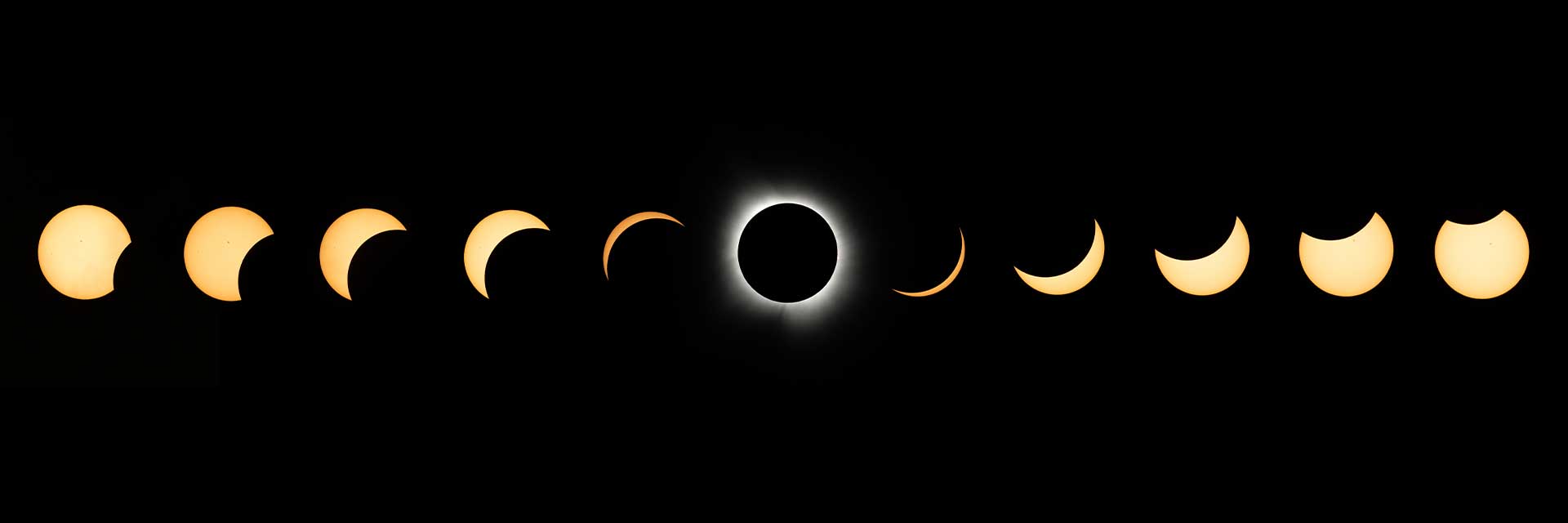
Partial solar eclipse progression — Paris will see a ~92% partial eclipse at sunset on August 12, 2026

City Eclipse Guide · Paris · August 12, 2026

Paris Eclipse 2026: Partial Solar Eclipse Times & Viewing Guide

Paris will experience a deep partial solar eclipse on the evening of August 12, 2026, with approximately 92% of the Sun covered by the Moon at maximum. The eclipse occurs very close to sunset, making this a spectacular low-horizon event against the Parisian skyline. Since Paris is not in the path of totality, the Sun will never be fully blocked, but the combination of deep partial eclipse with iconic Parisian landmarks creates a unique photographic opportunity not seen since 1999.

Maximum coverage~92%
Max time (CEST)21:25 CEST
Sunset21:20 CEST (near max)
Sun altitude5° at maximum
By Telescope Advisor Editorial Team Published: Updated: Editorial Standards

Sécurité Oculaire — Lunettes ISO Obligatoires

Ne regardez jamais le Soleil directement sans lunettes de protection certifiées ISO 12312-2. Même à 92% de couverture, la lumière solaire restante est suffisamment intense pour causer des lésions rétiniennes permanentes. Voir notre guide des lunettes d'éclipse pour les produits disponibles sur Amazon FR.

Quick Answer: Will the Eclipse Be Visible From Paris?

Yes, Paris will see a deep ~92% partial solar eclipse on the evening of August 12, 2026. The Moon will begin crossing the Sun at 19:48 CEST, reaching maximum coverage at 21:25 CEST, just as the Sun is setting in the west-north-west. The partially eclipsed Sun will set shortly after maximum, making this a sunset eclipse — a rare and atmospheric combination. Paris is not in the path of totality, so the Sun will never be fully blocked. To see totality, you would need to travel to Spain, northern Iceland, or Greenland. This guide covers exactly what Parisians can expect, where to watch with an unobstructed horizon, and how to stay safe.

The last time Paris saw a comparable deep partial eclipse was August 11, 1999 (99% coverage), and before that, February 1961. The 2026 event is unique because it occurs at sunset, creating the possibility of photographing the eclipsed Sun next to iconic landmarks like the Eiffel Tower, Arc de Triomphe, or Sacré-Cœur. Unlike the morning 1999 eclipse which was high in the sky, this sunset eclipse requires a clear western horizon but rewards observers with spectacular low-Sun effects.

Paris Eclipse Times (CEST)

All times are in Central European Summer Time (CEST = UTC+2), the local time in Paris. The eclipse runs from early evening until sunset.

EventTime (CEST)Sun AltitudeWhat to Do
First contact (partial begins)19:48 CEST16°Put on ISO-certified glasses. First notch appears on the Sun.
50% coverage20:30 CEST11°The Sun is now a crescent. Notice dimming light and cooling air.
Maximum eclipse (~92%)21:25 CESTPeak coverage. Very thin crescent low in the west. Nearly coincident with sunset.
Sunset (eclipse ongoing)~21:20 CESTThe partially eclipsed Sun sets. Last safe viewing through glasses.

The Low-Sun Challenge

At maximum eclipse, the Sun will be only 5 degrees above the western horizon — about the width of your three middle fingers held together at arm's length. Any buildings, trees, or hills to the west will block the view entirely. A clear western horizon is absolutely critical for seeing this eclipse from Paris. The best locations are elevated areas with a panoramic view toward the west-north-west, such as the buttes, hills, and wide riverbanks of western Paris.

Best Paris Viewing Locations

Finding an unobstructed western view in a dense city like Paris requires planning. Here are the best locations ranked by horizon quality:

1. Montmartre (Place du Tertre & Sacré-Cœur)

The Butte Montmartre is the highest natural point in Paris at 130 metres. The esplanade in front of Sacré-Cœur offers a panoramic view stretching across western Paris. While the foreground contains some buildings, the elevated position gives you a clear line of sight over the rooftops. Arrive by 18:30 CEST to secure a good spot — this will be one of the most popular eclipse-viewing locations in Paris. Take Metro line 2 (Anvers) or 12 (Abbesses) and walk up the stairs or funicular. The hill can be windy, so bring a jacket even if the evening is warm.

2. Tour Montparnasse Rooftop (56th Floor)

The Montparnasse Tower's 56th-floor observation deck offers a 360-degree view over all of Paris, with an unobstructed western horizon. This is arguably the best single location in Paris for the eclipse, as the altitude lifts you well above any building obstructions. The observation deck is open until late in summer, and admission is approximately €18. The deck can hold several hundred people, so expect a crowd. The ticket price is worth it for the guaranteed horizon. Access via Metro Montparnasse-Bienvenüe (lines 4, 6, 12, 13).

3. Parc de Saint-Cloud (West of Paris)

The Parc de Saint-Cloud sits on a plateau west of Paris, offering one of the best western horizons in the Île-de-France region. The park's elevated terraces and the Grande Cascade provide a clear view toward the setting Sun. Take Metro line 10 to Boulogne-Pont de Saint-Cloud, then walk across the bridge. This is a quieter alternative to the Montmartre and Montparnasse locations, with more space to set up equipment. The park closes at dusk, but the eclipse occurs before closing time.

4. La Défense Esplanade

The vast pedestrian esplanade of La Défense, west of Paris, offers a wide-open western view with the Grande Arche as a dramatic foreground element. The esplanade runs east-west, providing a clear corridor toward the setting Sun. Access via Metro/RER La Défense (line 1, RER A). The modern architecture of La Défense creates a striking contrast with the natural eclipse — a uniquely 21st-century Parisian viewing experience.

5. Champ de Mars (Eiffel Tower)

The Champ de Mars park stretching west from the Eiffel Tower offers an iconic foreground for the eclipsed Sun. The Sun will set behind the Trocadéro hill, so positioning yourself at the western end of the Champ de Mars (near the École Militaire side) gives the best line of sight past the tower. This location will be extremely crowded, but for atmosphere and photography, it is unbeatable. The best spot is the central allée at the western end of the park, where the view of the tower with the eclipsed Sun low beside or behind it is one of the most memorable images you can capture.

Paris Weather in August & Eclipse Cloud Cover

August is one of Paris's warmer months, but the city's northern European location means clear skies are never guaranteed. Historical Météo-France data shows approximately 25–30% chance of completely clear skies at sunset on August 12 in Paris, with 35% partly cloudy and 35–40% overcast. The key challenge for this eclipse is that the Sun will be only 5 degrees above the horizon, so even thin cloud on the western horizon could obscure the view entirely.

The best strategy is to be mobile. Check the Météo-France forecast and satellite imagery from 48 hours before the eclipse, and be prepared to relocate. If Paris is cloudy, heading west toward Normandy or Brittany often improves the odds, as maritime areas can have different cloud cover patterns. Locations west of Paris on the A13 motorway (toward Rouen, Caen) are within a 1-2 hour drive and often have clearer western horizons. Within Paris itself, elevated locations (Montmartre, Tour Montparnasse) offer the best chance of rising above any low haze.

Photographing the Eclipse from Paris

Paris offers some of the most iconic eclipse photography opportunities in Europe. The combination of a low sunset eclipse with world-famous landmarks creates compositions that are truly unique. Use a telephoto lens of 200mm or longer to make the eclipsed Sun appear larger in the frame alongside the Eiffel Tower, Arc de Triomphe, or Sacré-Cœur. The PhotoPills app can help you plan the exact position of the Sun relative to Paris landmarks on August 12.

For the Eiffel Tower shot, position yourself at the western end of the Champ de Mars or on the Pont d'Iéna bridge. The Sun will set to the right of the tower as seen from these positions, and a 300mm lens will make both the tower and the eclipsed Sun fill the frame nicely. For the Arc de Triomphe, the Place de l'Étoile offers a direct westward view down the Avenue de la Grande-Armée, with the eclipsed Sun setting on the axis. Smartphone users can brace their phone against a steady surface and use the phone filter included with the Helioclipse glasses for safe partial-phase photography.

Eclipse Glasses & Safety Gear

ISO 12312-2 certified eclipse glasses are essential for all partial phases from Paris. Available on Amazon FR:

Editor's Pick — Meilleures Lunettes d'Éclipse
Helioclipse ISO 12312-2 eclipse glasses

Helioclipse Solar Eclipse Glasses (12-Pack)

ISO 12312-212 pairesCertifié CE

Le lot de 12 paires Helioclipse est parfait pour les familles et les groupes Parisiens. Chaque paire est testée indépendamment selon la norme ISO 12312-2 et certifiée CE. Le filtre pour téléphone inclus permet de photographier les phases partielles en toute sécurité.

Voir le prix sur Amazon FR

Lien d'affiliation.

Lunt Solar eclipse glasses 5-pack

Lunt Solar Eclipse Glasses (5-Pack)

Lunt Solar Systems est un nom de confiance dans l'optique solaire. Leur lot de 5 paires est idéal pour les couples ou les petits groupes. Scellées individuellement, certifiées ISO 12312-2 et CE. La monture large s'adapte confortablement par-dessus les lunettes de vue.

Voir le prix sur Amazon FR

Lien d'affiliation.

🔭

Not sure which telescope actually fits your goals?

Answer 5 quick questions about your budget, observing targets, and experience level — our Telescope Finder Tool recommends a specific model in under 2 minutes.

Find My Telescope →

Historical Eclipses Visible From Paris

Paris has been the vantage point for several notable solar eclipses, each with its own character and historical context. The most recent deep partial eclipse before 2026 occurred on August 11, 1999, when Paris experienced a 99% partial eclipse in the late morning. That eclipse was the most widely observed in French history, with millions of Parisians watching from streets, parks, and rooftops as the Sun narrowed to a hair-thin crescent. The 1999 eclipse was notable for its high solar altitude (approximately 45 degrees), which made it easily visible from any location with a clear sky. Many Parisians still recall the eerie twilight quality that descended over the city at 99% coverage.

Earlier significant eclipses from Paris include the partial eclipse of February 15, 1961 (85% coverage), and the total eclipse of April 17, 1912, which was total in the Paris region (the last totality visible from the city itself). The 1912 eclipse was heavily observed by astronomers at the Paris Observatory and the Institut d'Astrophysique de Paris, contributing to early 20th-century understanding of the solar corona. Before that, the partial eclipse of May 17, 1882 was observed from the newly completed Palais du Trocadéro, with scientific reports published in the Comptes Rendus de l'Académie des Sciences. A comparison with the 2027 eclipse shows that while Paris will not experience totality in either event, the 2026 eclipse is uniquely challenging due to its low altitude at sunset. For those inspired by eclipse history, our 2027 total eclipse guide covers the next great European eclipse event.

Getting to the Viewing Locations: Metro & RER Guide

Paris's excellent public transport network makes all the recommended eclipse-viewing locations easily accessible. However, on the evening of August 12, services may be busier than usual, particularly on lines serving the most popular spots. Here is the detailed transport information for each recommended location:

Montmartre & Sacré-Cœur

Take Metro line 12 to Abbesses station (the deepest station in Paris, with a spiral stairwell) or line 2 to Anvers. From Anvers, the funicular (valid with standard metro ticket) carries you directly to the Sacré-Cœur esplanade in 90 seconds. Walking up the 300 steps from Anvers through the Place Saint-Pierre takes about 10 minutes and offers photogenic views of the basilica. Allow 15 minutes from the metro exit to securing a viewing position. Abbesses station has elevators but Anvers does not, so travellers with limited mobility should use line 12. The Montmartrobus connects Pigalle to the summit via a winding route through narrow streets, but expect heavy traffic on eclipse evening.

Tour Montparnasse Rooftop

The Tour Montparnasse is served by Montparnasse-Bienvenüe station, one of Paris's largest metro hubs. Lines 4, 6, 12, and 13 converge here, plus the RER N and TER Normandy services. The observation deck entrance is on the Rue de l'Arrivée side of the tower. From the metro exit, follow signs for "Tour Montparnasse" or "Observatoire Panoramique" — the dedicated elevator lobby is a 2-minute walk through the shopping gallery. Buy your ticket online in advance to skip the queue, as the eclipse will draw a large crowd. The elevator ride to the 56th floor takes approximately 38 seconds.

Parc de Saint-Cloud

Take Metro line 10 to Boulogne-Pont de Saint-Cloud (the terminus), then walk 10 minutes across the Pont de Saint-Cloud bridge over the Seine. Alternatively, RER C serves Saint-Cloud station directly, with a 5-minute walk to the park's main entrance on the Grande Cascade side. The park's Lower Terrace near the Bassin de la Grande Cascade provides the most unobstructed western view. If you are coming from central Paris, allow 40 minutes total journey time via RER C. Note that the park closes at 21:00 during August, but it is large enough that you can position yourself near the western exit to maximise viewing time.

La Défense Esplanade

La Défense is served by Metro line 1 (La Défense station) and RER A (La Défense Grande Arche). The esplanade is a 5-minute walk from the station exit via the Centre Commercial des 4 Temps shopping mall. Unlike the other locations, La Défense is fully accessible with wide ramps and elevators throughout. The vast pedestrian esplanade provides ample space for crowds, and the modern architecture creates a striking eclipse foreground. This is the best option for anyone with mobility concerns. The tram T2 also serves La Défense from Porte de Versailles and Issy.

Champ de Mars & Eiffel Tower

The nearest metro stations are École Militaire (line 8) or Champ de Mars - Tour Eiffel (RER C). From École Militaire, walk 8 minutes north-west through the Champ de Mars park. From the RER C exit, the park is a 3-minute walk across the Pont d'Iéna. The western end of the Champ de Mars (near the École Militaire side) offers the best line of sight past the Eiffel Tower toward the western horizon. This location will be the busiest, so arrive at least 90 minutes before first contact (18:15 CEST). Buses 42, 69, 82, and 87 also serve the area but will be affected by eclipse traffic.
Seine River Options: Bateaux-Mouches & Bridge Viewing

The Seine River offers a unique viewing perspective for the Paris eclipse. Several bateaux-mouches (river cruise companies) offer evening cruises timed for sunset, and on August 12, the eclipse will provide an extraordinary bonus. Companies such as Bateaux Parisiens, Vedettes de Paris, and Bateaux-Mouches operate open-deck boats that depart from various quays between the Eiffel Tower and Notre-Dame. A sunset cruise that coincides with the eclipse (21:00-22:00) puts you on the water with an unobstructed western horizon, away from the building shadows that plague ground-level viewing. Book your tickets at least a week in advance, as eclipse cruises will sell out.

An alternative is to view from one of Paris's many bridges that cross the Seine with an east-west orientation. The Pont Alexandre III, Pont de l'Alma, and Pont d'Iéna all offer elevated positions directly above the water, with long western views along the river corridor. The river's open channel provides an unobstructed sightline to the horizon, and the bridges' architectural details create beautiful foreground elements for photography. The Pont d'Iéna, connecting the Eiffel Tower to the Trocadéro, is particularly well-aligned for the sunset eclipse. However, bridges will be crowded and traffic will be restricted, so walking or cycling is the only practical way to access them. The Seine's quays (the walkways at water level) also offer excellent viewing, especially the wide quays between the Pont de l'Alma and the Pont Alexandre III. The Vélib' bike-sharing system is an excellent way to move between potential viewing spots along the river, allowing you to chase breaks in the cloud cover.

Cloud-Avoidance Strategy: Where to Go If Paris Is Overcast

The single biggest risk to observing the Paris eclipse is low cloud on the western horizon. With the Sun only 5 degrees above the horizon at maximum, even a thin bank of stratocumulus can completely ruin the view. A proactive cloud-avoidance strategy is essential. Here is a decision framework based on the Météo-France forecast, to be checked 48, 24, and 6 hours before the eclipse:

Forecast ConditionRecommended ActionTravel Time
Clear or mostly clearStay in Paris. Use Tour Montparnasse or Montmartre.N/A
Cloudy west but clear eastGo to western Paris suburbs. Parc de Saint-Cloud or La Défense.15-30 min by RER
Overcast Paris basinTake RER A or A13 motorway west toward Normandy.1-2 hours drive
Widespread cloudTrain to Normandy coast (Caen, Cherbourg) or Brittany.2-4 hours by train

The most practical escape route is west along the A13 motorway toward Rouen and Caen. At 90 minutes' drive from central Paris, the area around Rouen often has different cloud cover than the capital. For a more ambitious escape, the Normandy coast (Deauville, Cabourg, or the Cotentin Peninsula) has maritime weather patterns that can produce clear western horizons even when Paris is cloudy. The train from Paris Saint-Lazare to Caen takes approximately 1 hour 45 minutes, and to Cherbourg about 3 hours. If you drive, hire a car with a full tank the day before — petrol stations on the A13 will be busy on eclipse day. Check satellite imagery from Météo-France's infrared satellite loop in the hours before the eclipse to track cloud movement in real time. A mobile weather app with radar overlay is essential for last-minute decisions. Our Spain eclipse guide covers options if you are willing to travel further for guaranteed clear skies.

FAQ — Paris Eclipse 2026

Is the total solar eclipse visible from Paris?

No, Paris will see a ~92% partial eclipse. Totality requires travel to Spain, northern Iceland, or Greenland.

What time is the eclipse in Paris on August 12, 2026?

Partial begins at 19:48 CEST. Maximum ~92% at 21:25 CEST which coincides with sunset. The eclipsed Sun then sets.

Where is the best place to watch the eclipse in Paris?

Tour Montparnasse rooftop for guaranteed western horizon. Montmartre (Sacré-Cœur), Parc de Saint-Cloud, and La Défense esplanade are also excellent.

Do I need eclipse glasses in Paris?

Yes. ISO 12312-2 certified glasses are required for all partial phases. Even at 92% coverage, the remaining sunlight can cause permanent eye damage.

What are the weather odds for the eclipse in Paris?

~25-30% chance of clear skies at sunset. August is variable. Heading west toward Normandy improves odds.

Can I photograph the eclipse with an Eiffel Tower foreground?

Yes. Use a 200-300mm lens from the Champ de Mars or Pont d'Iéna. The PhotoPills app helps with exact positioning.