
Apertura AD8 vs Sky-Watcher 200P: Which 8-Inch Dobsonian? (2026)
Telescope Advisor Logo Telescope Advisor
The Orion Nebula, a showpiece deep-sky target for any 8-inch Dobsonian telescope

Telescope Comparisons · 2026

Apertura AD8 vs Sky-Watcher 200P: Which 8-Inch Dobsonian Should You Buy?

Both telescopes use an 8-inch f/5.9 parabolic mirror, so they show the same sky. The real difference is what comes in the box, where you can buy each one, and what you would spend in year one to bring the cheaper kit up to the better-equipped one.

203mm

Same aperture

f/5.9

Same focal ratio

52.2 lb

AD8 total weight

~49 lb

200P total weight

By Telescope Advisor Editorial Team Published: Updated: Editorial Standards

Quick Answer: AD8 or 200P?

If you live in the United States and can order from High Point Scientific, the Apertura AD8 is the better-equipped kit for about the same money. It adds a dual-speed focuser, a right-angle correct-image finder, a 2-inch 30mm wide-field eyepiece, a laser collimator, and a mirror-cooling fan. Buying those extras separately for the 200P would add roughly $165 to $435 in year one.

Choose the Sky-Watcher Classic 200P if you want Amazon delivery and returns, live outside the U.S., want a slightly lighter setup, or prefer a straight-through finder. The optics are the same design, and the 200P is sold almost everywhere. In the UK and Europe it is often the only one of the two you can buy.

Choose the AD8 if…

  • You are in the U.S. and want the most complete 8-inch kit
  • You plan to push high magnification on planets (fine focus matters)
  • You want to collimate in two minutes from day one
  • You would rather not shop for upgrades in year one

Choose the 200P if…

  • You are in the UK, EU, or anywhere the AD8 isn’t sold
  • You want Amazon shipping, returns, or a holiday delivery date
  • You would rather upgrade one accessory at a time
  • You want the most common 8-inch Dob, with years of owner guides

How we built this comparison: this is an evidence synthesis, not a side-by-side bench test. Specifications come from the High Point Scientific AD8 listing and Sky-Watcher USA’s Classic 200P page. Weights come from retailer and manufacturer listings. All were checked September 26, 2026. Accessory costs are typical street prices for comparable parts and will change; Amazon buttons show the live price.

🔭

Not sure which telescope actually fits your goals?

Answer 5 quick questions about your budget, observing targets, and experience level — our Telescope Finder Tool recommends a specific model in under 2 minutes.

Find My Telescope →

The Two Telescopes

These are the two most-recommended 8-inch Dobsonians in the English-speaking world, and they come from the same kind of factory: a 203mm parabolic primary mirror with a 1200mm focal length, in a solid steel tube on a rocker-box base. Point either one at the Orion Nebula, the Hercules globular cluster, or Saturn and, if both are well collimated and cooled, you will see the same detail. So don’t pick on optics alone. Decide on how complete each kit is, how it moves, and whether you can actually buy it where you live.

The Apertura AD8 is High Point Scientific’s house brand. It is sold directly by that U.S. retailer, not on Amazon, and it is designed as a “nothing else to buy” package. The Sky-Watcher Classic 200P (sold in the U.S. as the 8-inch Traditional Dobsonian, model S11610, and in the UK as the Skyliner 200P) is the global benchmark. It is stocked by Amazon and by most astronomy dealers worldwide, and it ships as a solid, deliberately simple starter kit.

Best for Amazon Buyers & Outside the U.S.
Sky-Watcher Classic 200P Dobsonian

Sky-Watcher Classic 200P Dobsonian

Aperture: 203mm
Focal length: 1200mm (f/5.9)
Focuser: 2" single-speed
Weight: ~49 lb total

The worldwide 8-inch benchmark: parabolic mirror, 2-inch Crayford focuser, 9x50 finder, and two eyepieces. Simple, proven, and easy to buy and return.

Pros

  • Available almost everywhere
  • Amazon delivery and returns
  • Slightly lighter than the AD8

Cons

  • Single-speed focuser
  • No collimation tool or fan
Best-Equipped Kit (U.S. Only)

Apertura AD8 Dobsonian

Aperture: 203mm
Focal length: 1200mm (f/5.9)
Focuser: 2" dual-speed 10:1
Weight: 52.2 lb total

The same optical formula with a far fuller box: dual-speed focuser, 8x50 right-angle correct-image finder, 30mm 2-inch and 9mm eyepieces, laser collimator, and cooling fan. Sold only by High Point Scientific.

Pros

  • Most complete 8-inch kit at its price
  • Fine focus for high-power planets
  • Laser collimator included

Cons

  • Not on Amazon; U.S. retailer only
  • Fan needs 8 AA batteries (not included)

Not an affiliate link. We earn nothing if you buy the AD8.

Verified Specs Side by Side

Every line below comes from the manufacturer or the selling retailer, checked on September 26, 2026. The rows that matter most for your decision are the included accessories, since the optics are the same design.

SpecificationApertura AD8Sky-Watcher Classic 200P
Primary mirror203mm parabolic203mm parabolic
Focal length / ratio1200mm, f/5.91200mm, f/5.9
Focuser2" Crayford, dual-speed 10:12" Crayford, single-speed, 1.25" adapter
Finder8x50 right-angle, correct-image9x50 straight-through
Low-power eyepiece30mm 68° SuperView, 2" (40x)25mm, 1.25" (48x)
High-power eyepiece9mm 52° Plössl, 1.25" (133x)10mm, 1.25" (120x)
Collimation toolLaser collimator includedNone included
Mirror cooling fanYes (8 AA batteries, not included)No
Altitude motionSealed ball bearings, adjustable tension knobsBearings with patented tension-control handle
Azimuth motionTurntable-style baseTeflon pads
Tube weight24.5 lb~24 lb
Base weight27.7 lb~25 lb
WarrantyApertura 2-year, plus 3-year “Sharp” optics warrantySky-Watcher USA limited warranty (check your dealer’s terms)
Where soldHigh Point Scientific (U.S.)Amazon and dealers worldwide
List price (Sept 26, 2026)$699.95 at High Point Scientific$725 Sky-Watcher USA list; see live Amazon price

Magnifications are calculated as 1200mm divided by the eyepiece focal length. Sky-Watcher does not list weights on its U.S. product page, so the 200P weights are retailer-published figures and are approximate.


Next Best Step

Need the fastest next step?

Pick the path that matches where you are right now: get a recommendation, compare buyer guides, or narrow by budget.

Open Finder Tool →

🎄 Holiday season: Telescope Christmas Gift Guide 2026 · Smart telescope Black Friday deals

First-Year Cost: The Comparison That Actually Matters

At list price the two telescopes are within about $25 of each other, so the sticker is not the useful number. The useful number is what each one costs once it has the accessories most owners end up buying anyway. The table below prices the 200P upgrades you would need to match the AD8’s box. It uses typical street prices for comparable parts in September 2026.

To match the AD8, a 200P owner adds…Typical costDo you really need it?
Laser collimator$25–$30Yes. Every Newtonian needs periodic collimation, and a collimation tool is the first thing most owners buy.
2-inch wide-field eyepiece$55–$110Strongly recommended. It shows about 1.7° of sky versus roughly 1.1° with the stock 25mm, which is enough to frame the Pleiades or all of M31’s core.
Right-angle correct-image finder$55–$75Personal preference. It saves your neck near the zenith, but many observers prefer a straight-through finder or a zero-power reflex sight.
Mirror cooling fan$15–$30 (DIY kit)Helpful in cold climates. It shortens the wait for sharp planetary views after carrying the scope out of a warm house.
Dual-speed focuser$100–$200 (aftermarket)Optional. It matters most above about 150x on planets, and most owners never replace the stock focuser.
Total to reach AD8 spec~$165–$435About $165–$235 without the focuser, or $265–$435 with it.

The takeaway: in the U.S., at list price, the AD8 delivers somewhere between $165 and $435 more kit for slightly less money. That is why it is the value pick on paper. The 200P closes the gap in three ways. Amazon sale pricing can undercut the AD8 (the Amazon buttons on this page show the current price). Amazon’s return window is easier if you are buying a gift or are unsure. And you don’t have to buy the upgrades at all: a 200P with its stock accessories is a complete, satisfying telescope.

Shipping belongs in the first-year cost too. Both scopes arrive in two large boxes, and a Dobsonian delivered after the holidays is worth less as a gift than one that arrives on time. If a delivery date matters, compare the shipping estimate from each retailer before you order, not just the price.

Focuser, Finder, and Eyepieces: Where the Kits Differ

Focuser

Both scopes use a 2-inch Crayford focuser, a big step up from the rack-and-pinion focusers on cheaper reflectors. The AD8 adds a 10:1 fine-focus knob. At 40x on a galaxy you will never notice. At 200x to 250x on Jupiter during a moment of steady air, the fine knob lets you nudge focus without shaking the tube. Owners who plan to spend most nights on planets will value it, while deep-sky observers can live happily without it.

Finder

The AD8’s 8x50 right-angle correct-image (RACI) finder shows the sky the right way up and lets you look down into it rather than craning under the tube. The 200P’s 9x50 straight-through finder shows an inverted view and puts your head in awkward positions near the zenith. That said, many experienced observers prefer a straight-through finder because it points where you look. Some remove both and fit a zero-power reflex sight (a Telrad or red-dot finder) instead. Neither finder is a reason on its own to pick one telescope over the other.

Eyepieces

The AD8’s 30mm 68° 2-inch eyepiece is the single most useful thing in its box. At 40x it shows about 1.7° of sky, a wide, immersive field that makes star-hopping easier and fits large targets like the Double Cluster, the Pleiades, and the core of the Andromeda Galaxy. The 200P’s 25mm gives 48x and a narrower field of about 1.1°. At the high-power end the two kits are close: 133x with the AD8’s 9mm and 120x with the 200P’s 10mm. Both are fine starting points, and a 2x Barlow doubles either set.

What each stock eyepiece set gives you

Widest viewAD8: ~1.7° at 40x
200P: ~1.1° at 48x
Highest stock powerAD8: 133x
200P: 120x
Useful maximum (good seeing)Both: roughly 250–300x

Base Motion, Weight, and Carrying

A Dobsonian lives or dies by how smoothly it moves. You push the tube by hand to follow a planet across the field, and any stiction (the stick-then-jump motion of a poorly balanced base) makes high-power viewing frustrating. The two designs solve this differently.

The AD8 uses sealed ball bearings for altitude, a turntable-style azimuth base, and aluminum tension knobs. Owners can dial in exactly enough friction to hold the tube steady when a heavier eyepiece goes in. The 200P uses Teflon pads in azimuth and Sky-Watcher’s tension-control handle, which works as both a carrying handle and an altitude clutch. The 200P’s traditional Teflon-on-laminate motion is proven and very smooth when the surfaces are clean. Owner reports suggest the AD8’s tension system is easier to fine-tune when you swap between light and heavy eyepieces.

On weight, the AD8 is about 3 lb heavier in total (52.2 lb versus roughly 49 lb). The tubes are nearly identical at about 24–25 lb each, so the difference is mostly in the AD8’s heavier base. For most people both are a two-trip carry, tube first and then base. Neither is a telescope for a third-floor walk-up without an elevator. If portability is your main concern, look at the collapsible alternatives further down this page rather than choosing between these two.

Tube length

Both are roughly 47–48 inches. Check your car’s back seat before you buy.

Heaviest single piece

AD8 base at 27.7 lb, versus about 25 lb for either the 200P tube or base.

Setup time

Both take a few minutes: set the base down, drop the tube in, and insert an eyepiece.

Collimation and Cool-Down: The Hidden Differences

Every Newtonian reflector needs its mirrors aligned (collimated) from time to time, especially after a car trip. A telescope that is slightly out of collimation still works, but planets look soft and stars refuse to snap into points. The AD8 ships with a laser collimator, so a new owner can check alignment on the first night. A 200P owner needs to buy a tool, either a laser collimator or a simple Cheshire eyepiece. Either takes a few minutes once you have learned it. Our step-by-step Dobsonian collimation guide works for both scopes.

Cool-down is the other hidden factor. An 8-inch mirror brought out of a 70°F house into a 35°F night takes time to reach outdoor temperature. Until it does, warm air rising off the glass blurs high-power views. The AD8’s rear fan speeds this up noticeably. The 200P’s open tube still cools faster than a closed Schmidt-Cassegrain, but it has no fan, so on cold nights expect to wait roughly 30 to 45 minutes before planetary detail sharpens. Two simple fixes help either scope: store it in a garage or cool room, or carry it out an hour before you plan to observe.

Laser collimator caveat

A laser collimator is only as accurate as the laser itself. Budget lasers can be slightly off-axis, so check yours by rotating it in the focuser: the red dot should stay put on the primary mirror. Many owners pair a laser with a Cheshire eyepiece for a final check.

Verdicts by Scenario

Here is how we would decide in the situations readers ask us about most.

Your situationOur pickWhy
Backyard observer in the U.S.Apertura AD8Same optics, fuller kit, similar price. You won’t need to shop for upgrades this year.
Observer in the UK or EuropeSky-Watcher 200PThe AD8 isn’t sold locally. The 200P (Skyliner 200P) is the regional standard.
Complete beginnerEither, slight edge to AD8The included collimator and wide-field eyepiece remove two early frustrations.
Buying as a giftSky-Watcher 200PEasier returns and exchanges, often faster delivery, and gift receipts.
Planetary-focused observerApertura AD8Dual-speed focus and faster cool-down pay off at high power.
Accessory upgrader who enjoys tinkeringSky-Watcher 200PBuy the base kit, then pick your own finder, eyepieces, and collimator.
Transporting to dark sitesNeither; see alternativesBoth are about 50 lb in two long pieces. A collapsible 8-inch is kinder to your car.

Bought the 200P? Upgrading It to AD8 Spec

If the 200P is the right choice for you, these are the upgrades that close most of the gap with the AD8, in the order we would buy them. Start with the collimator, which fixes the most common cause of soft views, then add the wide-field eyepiece. The finder is a matter of taste.

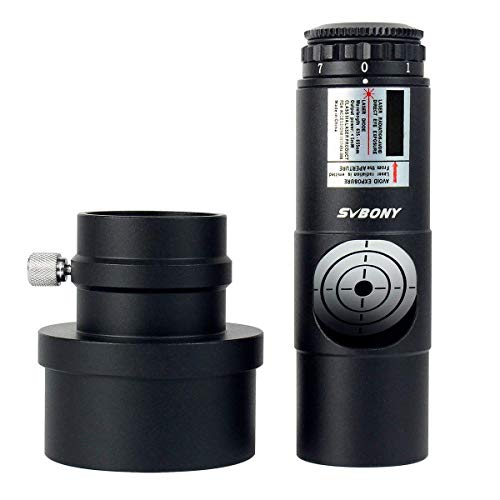
SVBONY Laser Collimator (1.25"/2")

SVBONY Laser Collimator (1.25"/2")

Upgrade 1: a 1.25-inch/2-inch laser collimator. Collimation checks take two minutes, and it fits the 200P focuser directly.

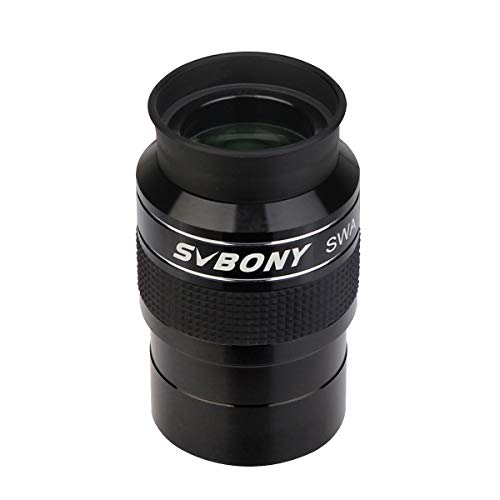
SVBONY SV154 2" Wide-Angle Eyepiece

SVBONY SV154 2" Wide-Angle Eyepiece

Upgrade 2: a 2-inch 70-degree wide-field eyepiece that uses the 200P focuser's full 2-inch barrel for big, immersive fields.

Astromania 9x50 Right-Angle Correct-Image Finder

Astromania 9x50 Right-Angle Correct-Image Finder

Upgrade 3 (optional): a right-angle correct-image finder that shows the sky the right way up and ends neck strain near the zenith.

Prefer a simpler check? The Celestron Cheshire collimation eyepiece has no batteries and nothing to go out of alignment, and it is a good partner to a laser.

Alternatives Worth Considering

If neither telescope quite fits, these are the three most common alternatives readers weigh against an 8-inch solid-tube Dobsonian.

Best If Storage or Car Space Is Tight
Sky-Watcher Flextube 200P Dobsonian

Sky-Watcher Flextube 200P Dobsonian

Aperture: 203mm
Tube: Collapsible struts
Focuser: 2" Crayford
Best for: Small homes, car trips

The same 8-inch aperture in a collapsible strut tube that shrinks to about half its length for storage and transport. It usually costs more than the solid-tube 200P.

Sky-Watcher Heritage 130P

Sky-Watcher Heritage 130P

Aperture: 130mm
Focal length: 650mm (f/5)
Mount: Tabletop Dobsonian
Weight: ~7 lb

A 130mm collapsible tabletop Dobsonian at well under half the price. It gathers about 40% as much light as an 8-inch, but you can carry it with one hand.

If what you really want is automatic object-finding, a manual Dobsonian may be the wrong category altogether. Our NexStar 8SE vs 200P comparison covers the GoTo trade-off, and the best Dobsonian telescopes guide ranks every size from 6 to 12 inches.

What Either 8-Inch Dobsonian Shows You

Because the optics are the same design, this section applies to both. An 8-inch mirror collects about 840 times more light than a dark-adapted eye, which is the reason these two scopes dominate “best first serious telescope” lists. Under suburban skies, expect the following.

  • Saturn: the rings and the Cassini Division on steady nights, several moons, and faint banding on the globe.
  • Jupiter: two main cloud belts plus finer festoons in good seeing, the Great Red Spot when it faces Earth, and moon shadows crossing the disk.
  • Globular clusters: M13 and M22 resolve into hundreds of individual stars toward the core.
  • Nebulae: the Orion Nebula shows wings and structure, and the Ring Nebula is an obvious smoke ring.
  • Galaxies: the cores of M31, M81, and M82 are easy, and dozens of fainter galaxies become visible from darker sites.

What neither will show is Hubble-style color. Faint nebulae and galaxies look gray to the eye through any backyard telescope. For a realistic preview, see what you can see with an 8-inch telescope.

Frequently Asked Questions

Do the Apertura AD8 and Sky-Watcher 200P have the same optics?
They share the same optical specification: a 203mm parabolic primary mirror with a 1200mm focal length (f/5.9). With both scopes well collimated and cooled, expect the same views. Unit-to-unit variation matters more than brand at this level.
Can I buy the Apertura AD8 on Amazon?
No. Apertura is High Point Scientific’s own brand, and the AD8 is sold through that U.S. retailer. If you need Amazon delivery or returns, the Sky-Watcher Classic 200P is the closest equivalent.
Is the Sky-Watcher 200P the same as the Skyliner 200P?
Essentially yes. Sky-Watcher sells the same 8-inch solid-tube Dobsonian as the Classic 200P, the 8-inch Traditional Dobsonian in the U.S., and the Skyliner 200P in the UK. Included accessories can vary slightly by region.
Which is better for a beginner?
Both are excellent first serious telescopes. The AD8 has a slight edge because its included laser collimator and wide-field eyepiece remove two early frustrations. The 200P is the better choice when easy returns, gift delivery, or availability outside the U.S. matter most.
Does the 200P need upgrades out of the box?
No, it is a complete telescope as shipped. The one accessory we would buy soon is a collimation tool, because every Newtonian needs occasional mirror alignment. A 2-inch wide-field eyepiece is the most rewarding second purchase.
Can either telescope be used for astrophotography?
Only in a limited way. Phone snapshots of the Moon and quick planetary video captures work well, but a manual Dobsonian cannot track the sky for long-exposure deep-sky imaging. For that, look at a tracking mount or a smart telescope.


Continue Exploring

Keep the session going with the next useful answer

Choose the next page based on whether you need a recommendation, a comparison, or a practical observing plan.

Use Finder Tool →

🎄 Holiday season: Telescope Christmas Gift Guide 2026 · Black Friday deal tracking