How We Scored It: 8.5 / 10
Our overall score is a weighted average across six categories, based on a real-world lunar imaging session. We deliberately tested the SV545 the way many first-time buyers actually use a telescope-as-lens: a stock Canon EOS R100 mirrorless camera attached through a William Optics M48-to-RF adapter, mounted on a static Manfrotto photo tripod with no tracking. Focusing was manual, using the camera's 10× Live View magnification. This is not a cooled-astro-camera, guided-EQ-mount lab test — it's how most people will genuinely first point this scope at the sky. Weighting still reflects what matters most for an astrograph's core use case, with optical performance and image quality carrying the most weight.
| Category | Weight | Score | Why |
|---|---|---|---|
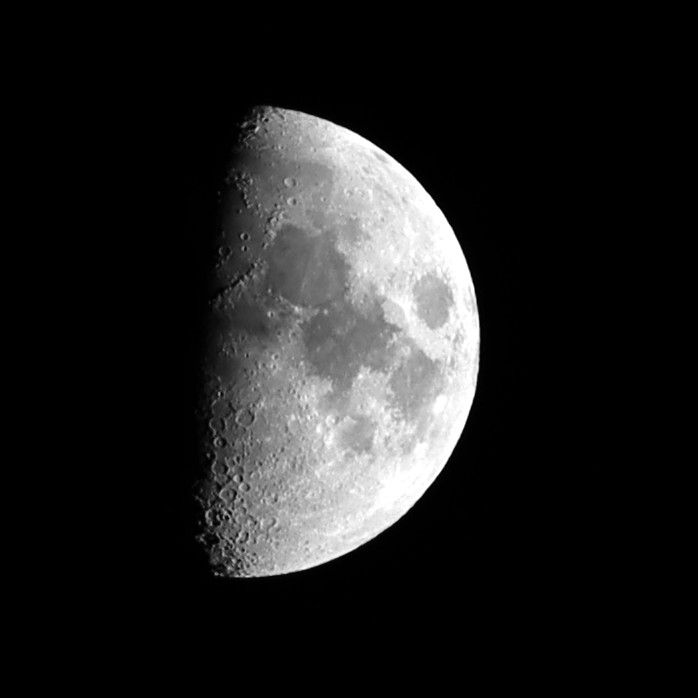
| Optical Performance | 35% | 9.0 | The Petzval APO design formed a clean, well-corrected lunar image with a round disc, a sharp limb at correct focus, and visible maria and terminator crater detail. No chromatic fringing was visible on the bright limb. |
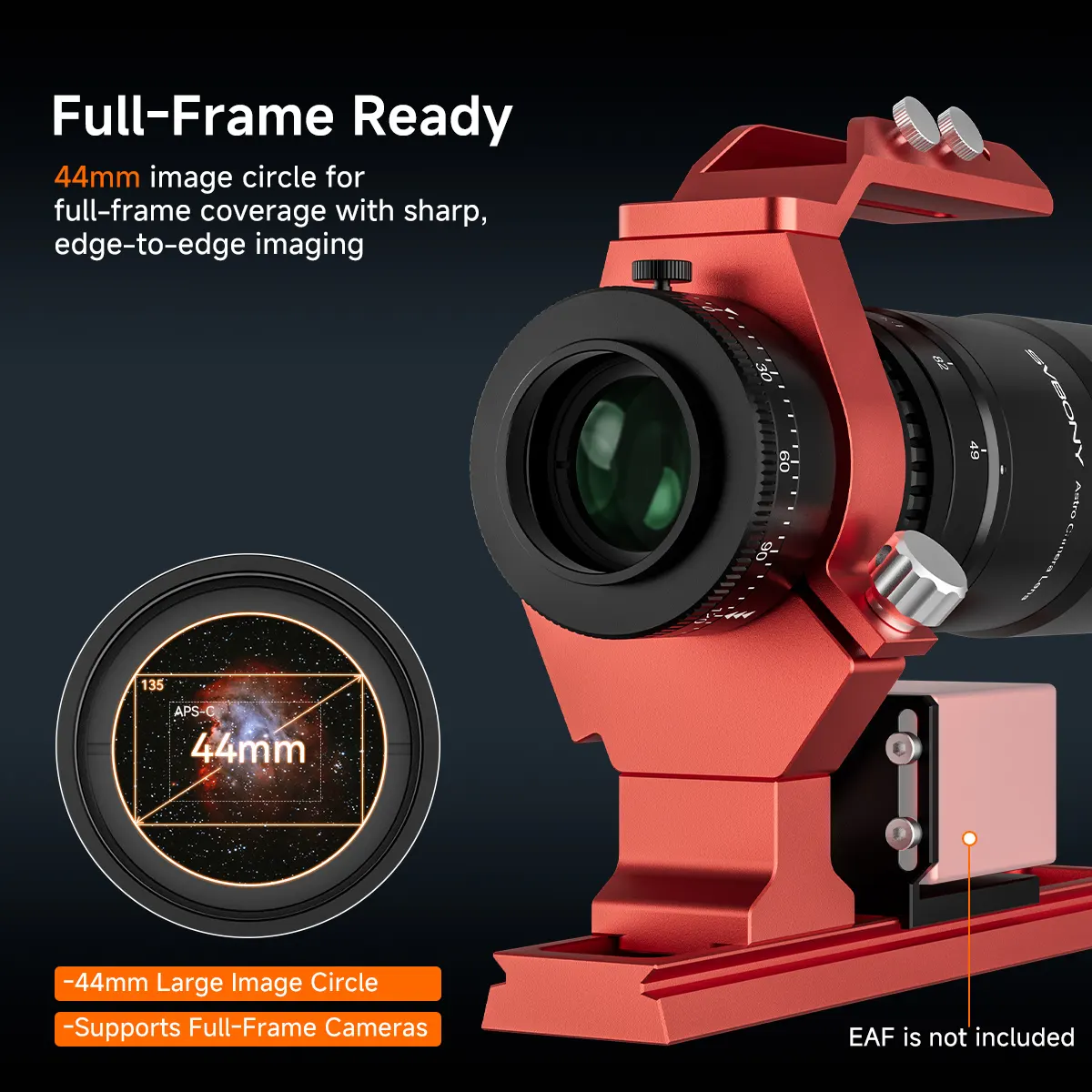
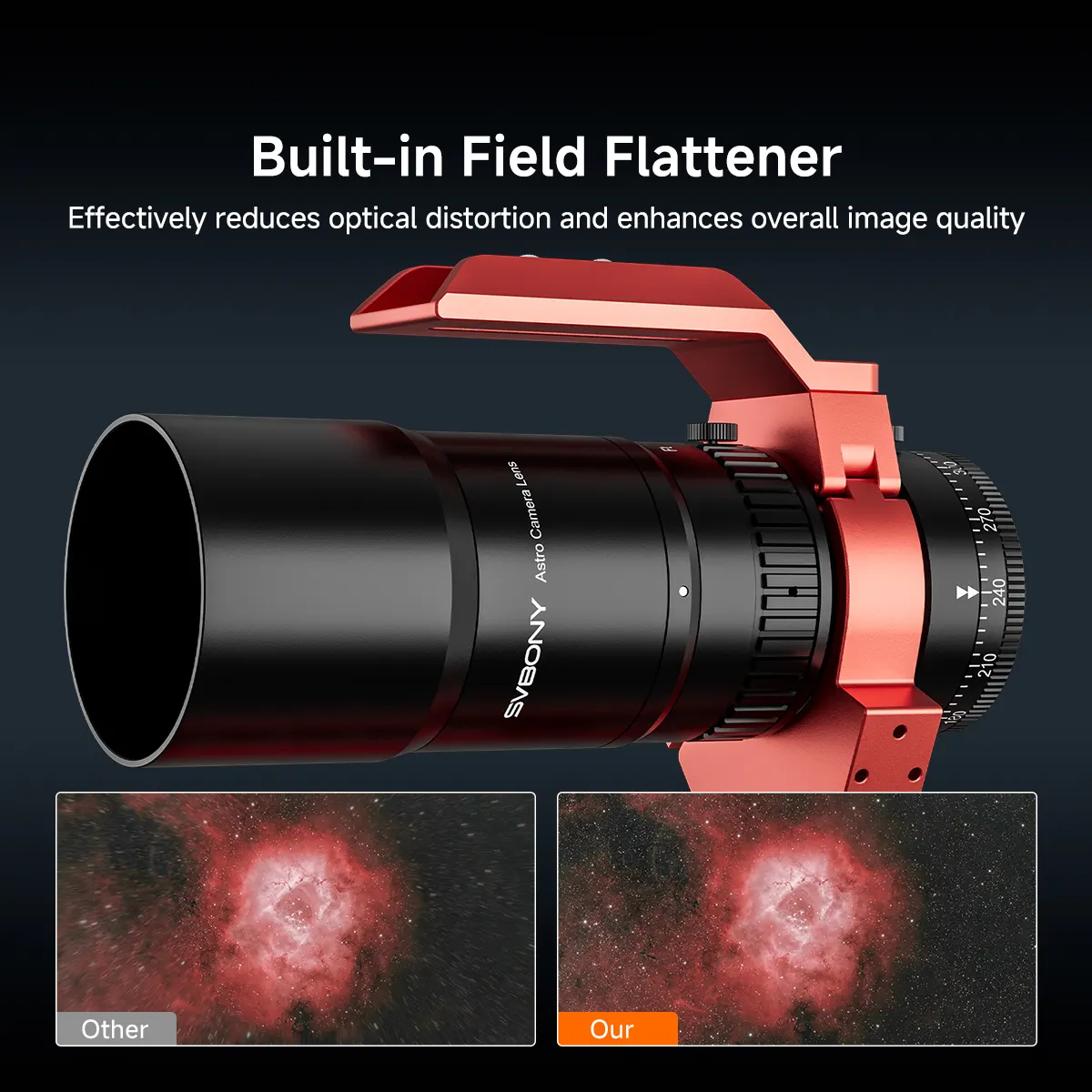
| Flat Field / Star Shapes | 20% | 8.5 | The built-in flat field held the lunar disc sharp across the APS-C frame with no obvious edge distortion. (Full deep-sky star-shape testing was outside the scope of this lunar-only session.) |
| Focuser & EAF Readiness | 15% | 8.0 | Manual focusing via 10× Live View worked reliably. The helical focuser turned smoothly and precisely enough to hit the sharpest focus, though it is single-speed. |
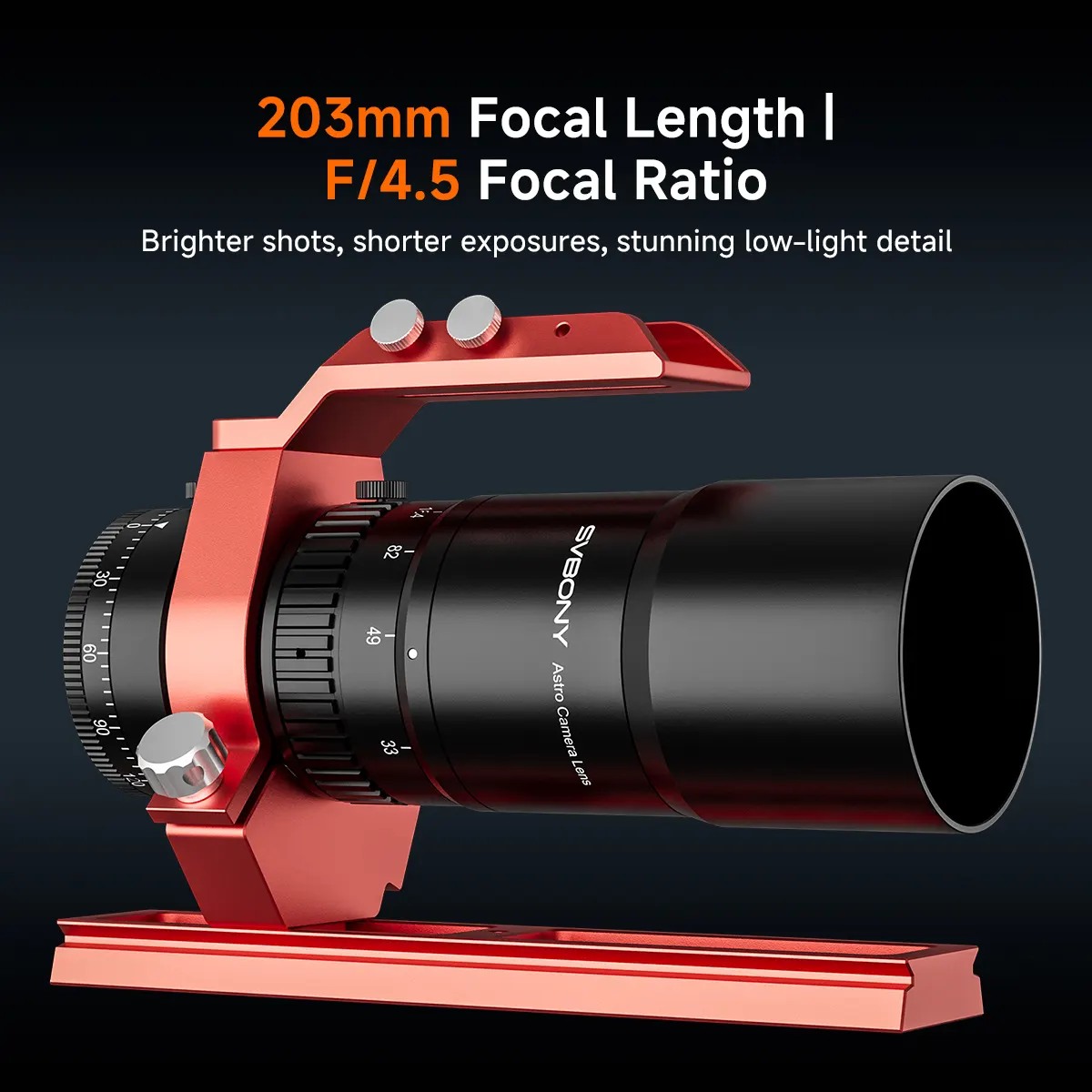
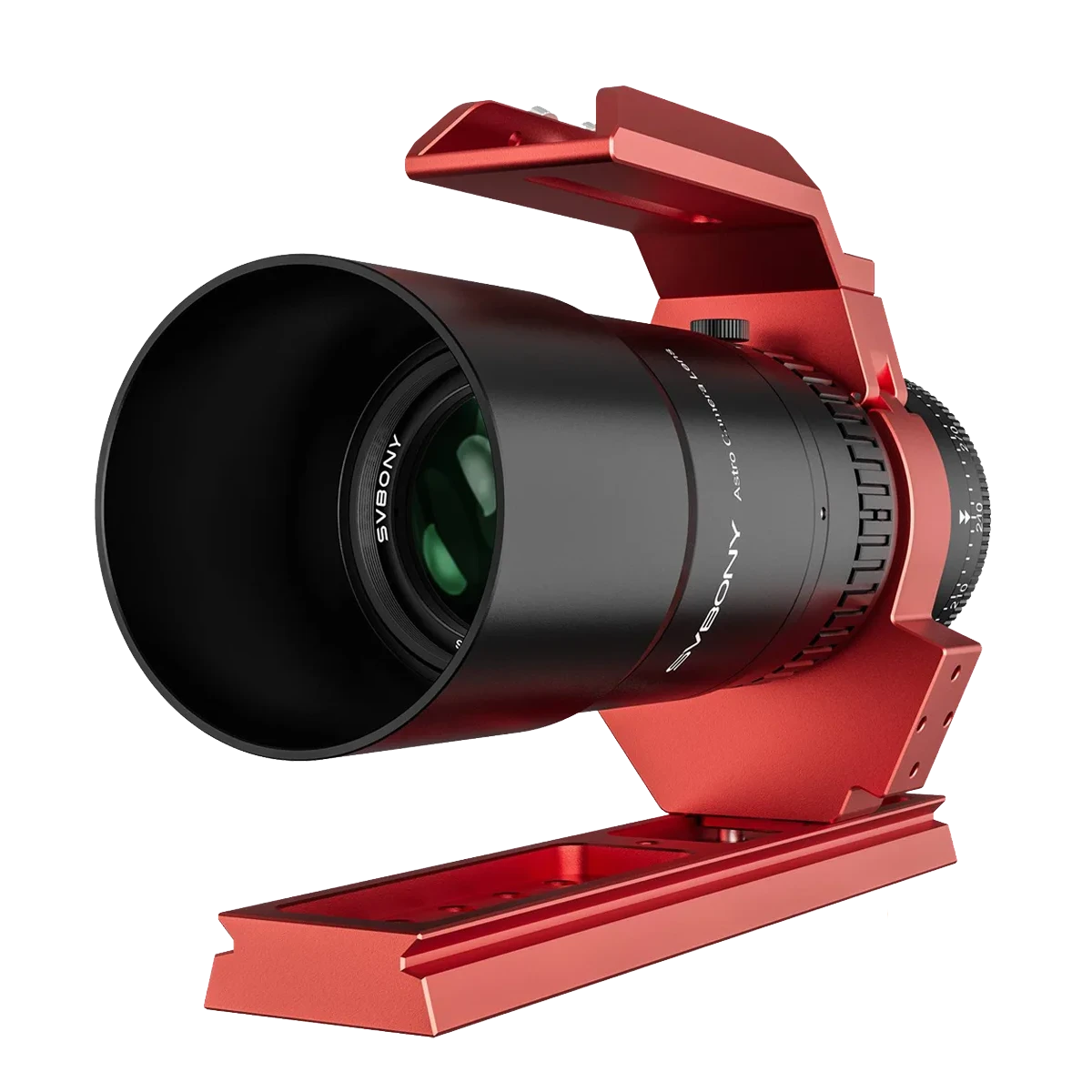
| Build & Handling | 10% | 8.5 | Solid all-metal construction at 2,750g. The native M48 thread made the camera connection genuinely simple — one adapter, no stacking. Lockable 360° rotator is a thoughtful touch. |
| Compatibility & Integration | 10% | 8.0 | M48 back-end threaded cleanly onto a William Optics M48-to-Canon-RF adapter and clicked into the R100's RF mount with no intermediate rings. No electronic connection, as expected for any telescope used as a lens. |
| Value for Money | 10% | 9.5 | At $499, it undercuts comparable Petzval astrographs (APO, Sharpstar, Askar) by 30–50% with similar optical quality — and it works with a camera and tripod you may already own. |
| Weighted Total | 8.5 | Rounded to one decimal place. |
Category scores reflect our independent testing and judgment; they are not provided or approved by SVBONY. Our lunar test confirms optical quality and camera integration; deep-sky/nebula imaging was not part of this review session, so those claims are not made here. See our Editorial Standards for how we handle review units and affiliate relationships.