Portland Stargazing: Dark Sky Spots Near the Rose City
Telescope Advisor Logo Telescope Advisor
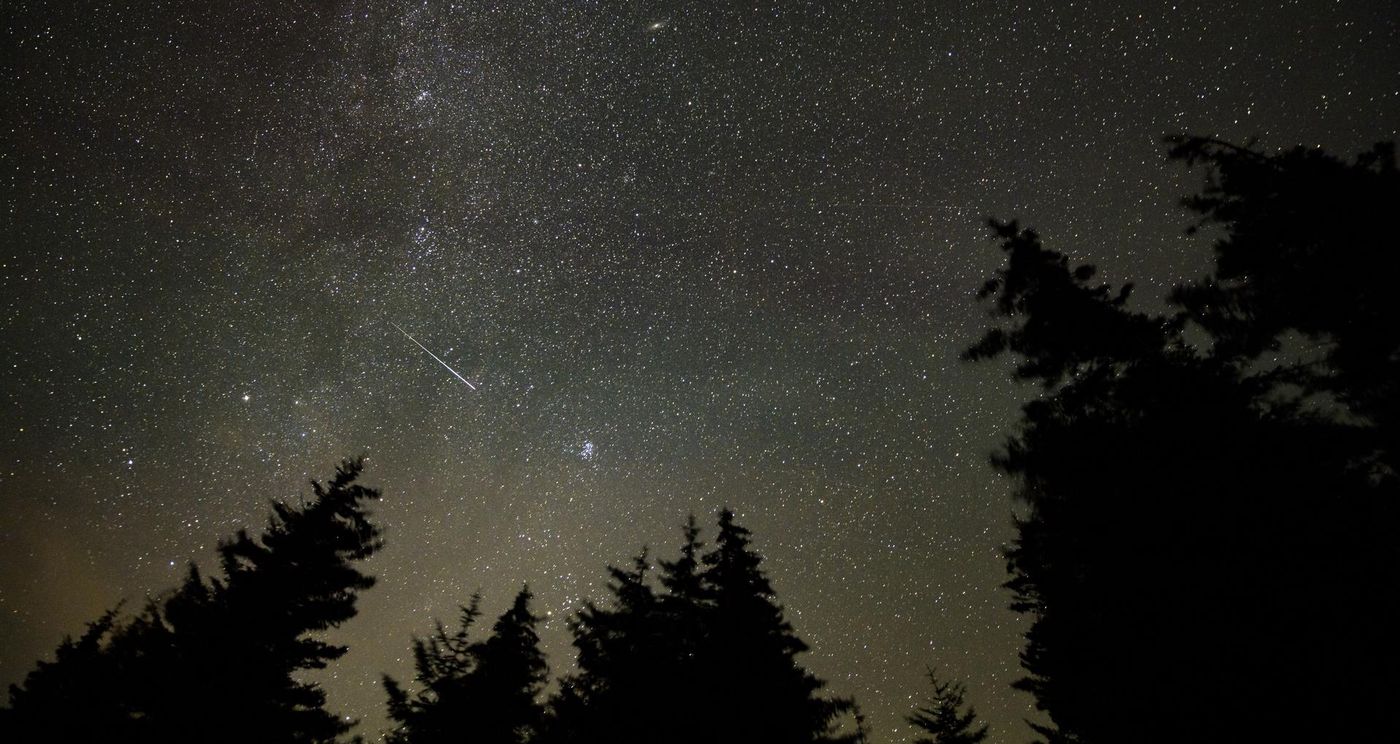
The Milky Way and a Perseid meteor above a dark forested ridge, the kind of sky the hills and mountains around Portland show on a clear summer night

Stargazing Destination Guide · Portland, Vancouver and the Willamette Valley

Portland Stargazing: The Best Dark Sky Spots Within Three Hours of the Rose City (2026)

Portland sits where two rivers meet, at the bottom of a valley that holds cloud for much of the year. But it is closer to genuinely dark country than any other big city in the Northwest. Forty-five minutes west, a state park lets you stargaze after hours with a free permit. An hour and a half east, Mount Hood rises above the valley cloud. Past the Cascades, the Columbia Gorge opens onto a dry plateau with a certified Dark Sky Park. This guide to stargazing near Portland, Vancouver and Salem covers all three, plus the free observatory nights in the metro and the summer window when everything lines up.

Sky in the CityBortle 8
Closest After-Hours SiteStub Stewart, 45 min west
Darkest Within 3 HoursBortle 1–2 (Cottonwood Canyon)
Best SeasonJuly to September

Photo: a Perseid meteor and the Milky Way over Spruce Knob, August 2021. NASA/Bill Ingalls

By Telescope Advisor Editorial TeamPublished: Updated: Reviewed & approved by Juhi Sahni, Senior Editor Editorial Standards

Stargazing Near Portland at a Glance

Drive times are from downtown Portland; from Vancouver add ten minutes to anything south or west, and from Salem add an hour to anything north. Bortle figures combine light-pollution maps with what the Rose City Astronomers report from the sites they use. The access column matters as much as the sky: Oregon state parks close their day-use areas in the evening, so the list marks which sites you can legally stay at after dark.

LocationBortleFrom Downtown PortlandNight AccessBest For
OMSI Kendall Planetarium8–910 minPlanetarium showsA rainy-night introduction
Haggart Observatory, Clackamas Community College6–730 min southFree public viewings, spring to summerA 24-inch telescope in a dome
Rooster Rock State Park, Columbia Gorge530 min eastDay-use; occasional club star partiesRiver horizon in the Gorge
L.L. Stub Stewart State Park, Hilltop445 min westAfter hours with a free stargazing permitThe closest legal dark site
Trillium Lake, Mount Hood National Forest31 hr 20 min eastForest Service campground, summerMount Hood over the water
Goldendale area, Washington2–32 hr eastObservatory grounds close at dusk for nowThe dry side of the Gorge
Cottonwood Canyon State Park1–22 hr 40 min eastCampground and cabins, year-roundOregon's newest Dark Sky Park
Antelope, Central Oregon1–23 hr south-eastTown streetsOregon's first Dark Sky Community

Rivers, Valley Cloud and the Gorge

Portland grew up where the Willamette meets the Columbia, and the metro now fills the floor of the northern Willamette Valley from Hillsboro to Gresham and across the river into Vancouver. The valley is ringed by hills: the Tualatin Mountains and the Coast Range to the west, the Cascade foothills to the east. That shape works for and against stargazers. The glow spreads out across the flat valley floor, but the hills block it quickly, so a short drive west into the Coast Range forests already reaches Bortle 4.

Weather is the bigger obstacle. From October to June, Pacific storms and low cloud fill the valley for days at a time, and in winter fog can sit in it while the mountains are clear. Then, usually from July to September, the pattern flips to long, dry, clear spells that are as reliable as anywhere on the West Coast. The Columbia Gorge is the other escape. The Cascades block the marine air, and within an hour east of Hood River the climate changes from wet forest to dry grassland. By The Dalles, the sky is often clear when Portland is grey, and beyond it lies some of the darkest country in the Pacific Northwest.

Latitude limits the season too. At 45.5° north, the nights around the June solstice have only a couple of hours of full darkness, so the best combination of dry weather and long nights comes in August and September. For Oregon's farther dark-sky destinations, from Prineville Reservoir to the Oregon Outback, see our Oregon stargazing guide.

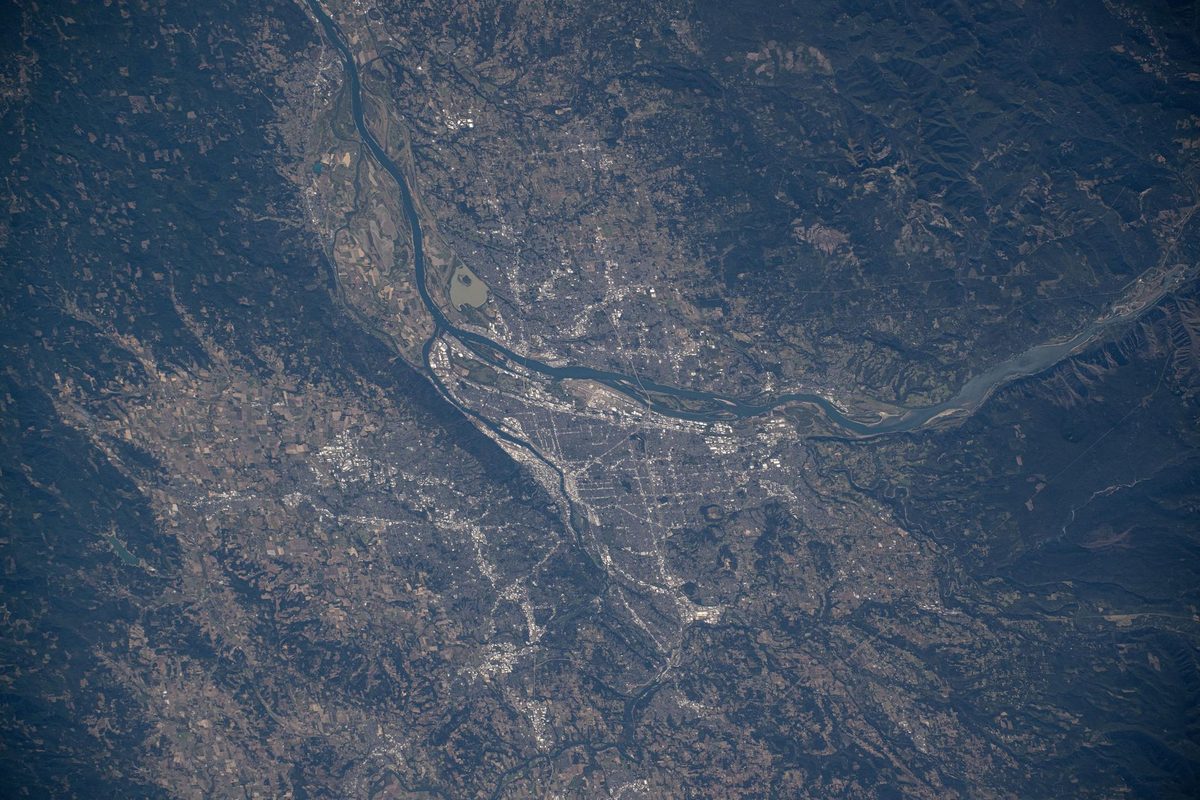
Portland, Oregon, at the junction of the Willamette and Columbia rivers, photographed from the International Space Station

Portland at the junction of the Willamette and Columbia rivers, from the International Space Station in October 2024. The forested hills on either side of the valley are where the sky starts to darken. Photo: NASA, Expedition 72.

Observatory Nights and Star Parties in the Metro

Almost all public observing around Portland runs through one partnership: the Rose City Astronomers, one of the largest amateur clubs in the country, working with the Oregon Museum of Science and Industry and Oregon State Parks.

Haggart Observatory, Oregon City

At the Environmental Learning Center on the north-east side of the Clackamas Community College campus, 19600 Molalla Avenue in Oregon City, the Haggart Observatory houses a 24-inch Newtonian reflector, the largest telescope regularly open to the public in the metro. Rose City Astronomers volunteers run a series of free public viewings there each season, with portable telescopes on the deck alongside the dome, ending with the college's annual star party in August. Admission is first come, first served with no registration, and the easiest way in is the back entrance off Beavercreek Road. The sky is Bortle 6 to 7, ideal for the Moon, planets and bright clusters. Cloud cancels sessions, so check before you drive.

OMSI Star Parties and the Kendall Planetarium

The OMSI star parties are the region's big free events: on scheduled summer evenings OMSI, the Rose City Astronomers and Oregon State Parks set up telescopes at state parks outside the city, with a presentation at dusk and viewing from about 9 to 11 pm. Stub Stewart has been the anchor venue, and Rooster Rock in the Gorge has hosted them in other years. The events are free, but day-use parking needs a $10 Oregon State Parks permit or an annual pass, and OMSI posts weather cancellations on the day. Back in the city, OMSI's Kendall Planetarium on the east bank of the Willamette runs planetarium shows that make a good rainy-night substitute. Jim Todd, OMSI's director of space science education, is also president of the Rose City Astronomers, which is why the two organisations work so closely.

Top Pick: The Closest Legal Dark Site

L.L. Stub Stewart State Park, Hilltop

Forty-five minutes west of downtown near Buxton, L.L. Stub Stewart State Park does something few parks near a big city do: it lets you stargaze after hours. The rule is simple. Drive up to the Hilltop Day-use Area, display a daily or annual Oregon State Parks parking permit, and fill in the free Star Gazing Permit from the kiosk at the Hilltop. Then you can stay after the day-use area's normal closing time. Overnight camping is not allowed at the Hilltop itself, but campers staying in the park's campgrounds, open year-round, may walk up to it.

The hilltop is not a certified dark-sky place, but the forest around it screens the lights of the valley towns and the sky reaches about Bortle 4. On a clear summer night the Milky Way is plainly visible, which is why OMSI and the Rose City Astronomers use it for their summer star parties. There are accessible picnic tables and restrooms with flushing toilets a few steps from the car, rare luxuries for a dark site. Use red light only and dim your headlights when arriving after dark, because other observers will be set up.

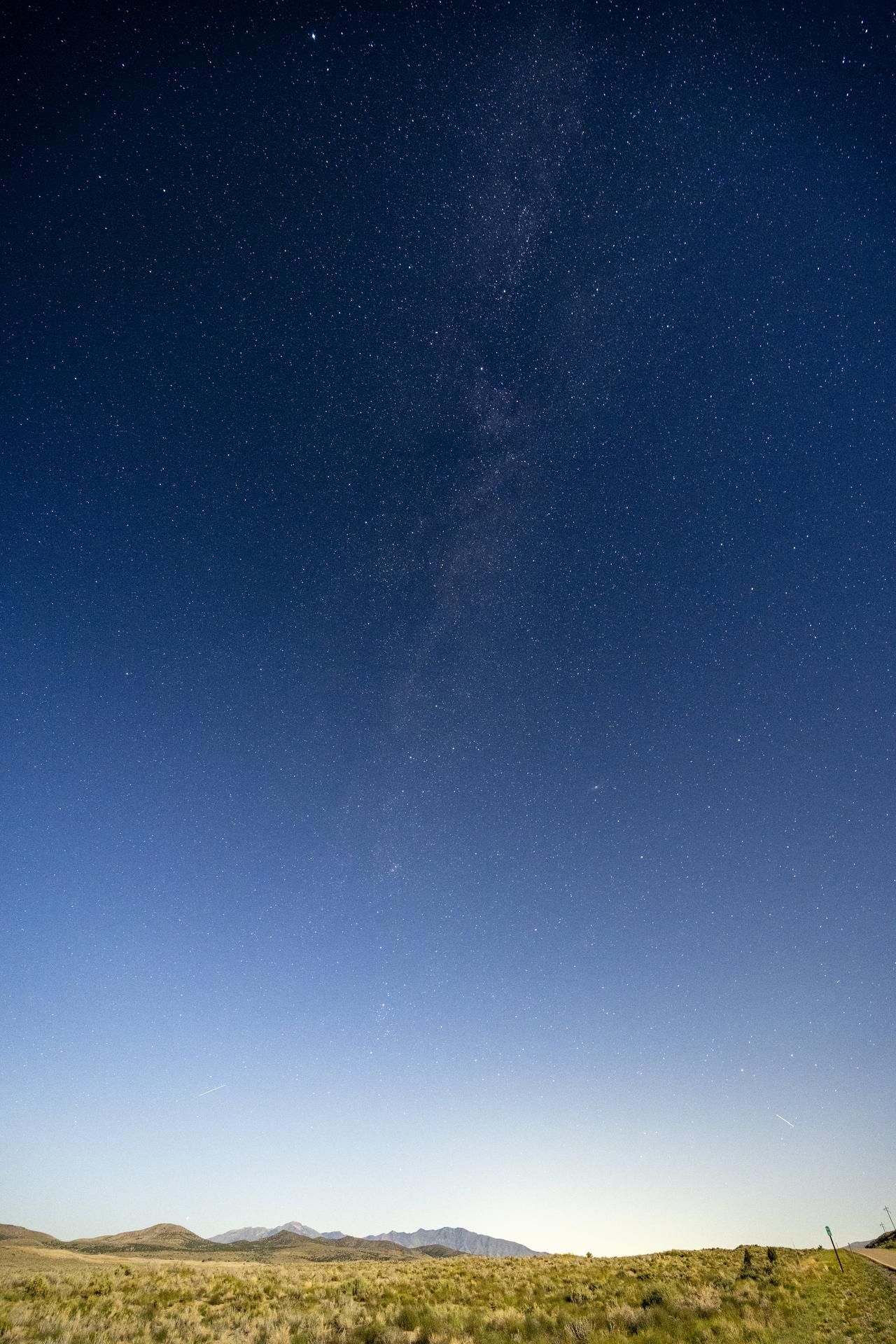
The Milky Way arching over a dark landscape on a clear summer night

Photo: NASA/Keegan Barber

East: Mount Hood and the Columbia Gorge

Mount Hood, at 11,249 feet the highest peak in Oregon, stands an hour and a half east on US 26, and its southern slopes are the darkest country within easy reach of the city. Trillium Lake, a small non-motorised lake below Government Camp, is the classic spot: a Forest Service campground among old-growth firs with the mountain reflected in the water to the north. The sky is about Bortle 3, though Portland's glow shows low in the west. The campground is a summer operation, and the trees around many sites limit the view, so walk to the shore or the dam to see the whole sky. The Mount Hood National Forest has many other forest-road pullouts and campgrounds at similar elevations; carry a Northwest Forest Pass where trailheads require one.

Closer in, Rooster Rock State Park, half an hour east on Interstate 84, puts the Columbia River horizon in front of you and has hosted club star parties, but it is a day-use park and the sky is only Bortle 5 with the metro behind it. The Gorge's real value is as a route: keep driving east past Hood River and The Dalles and the weather and the darkness both improve with every mile.

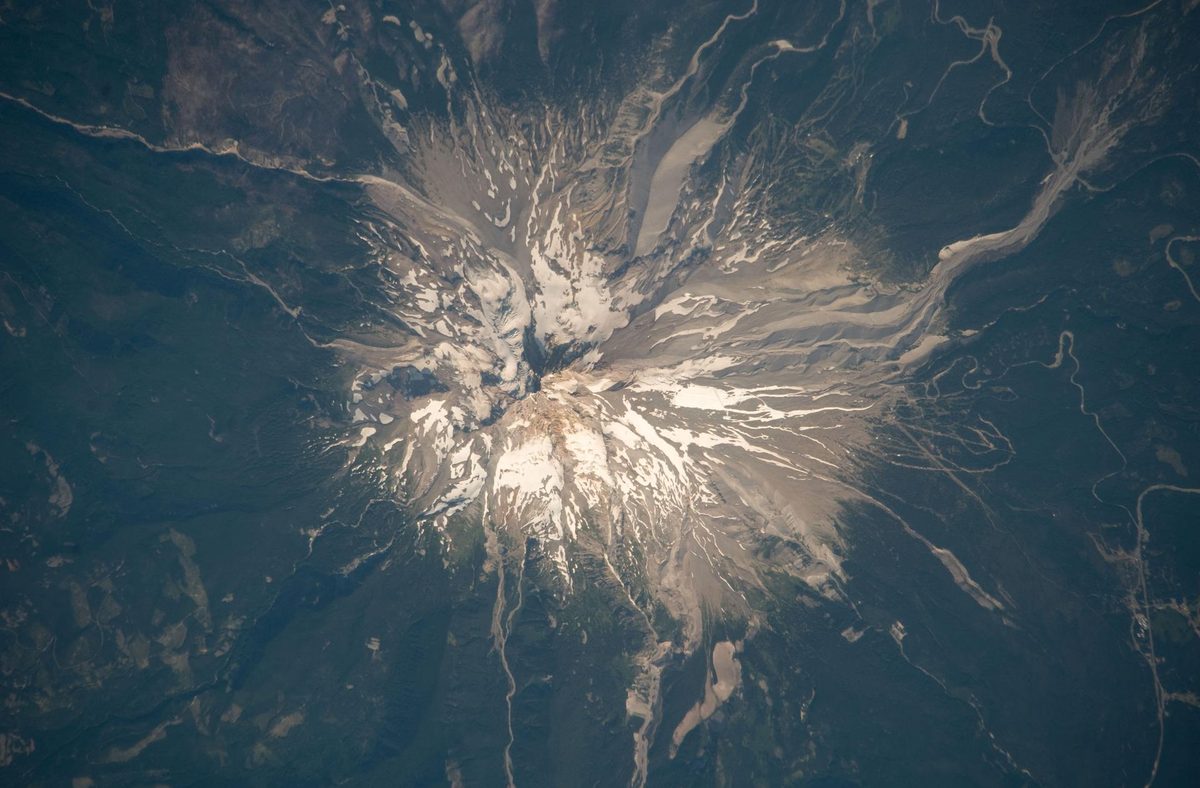
Snow-capped Mount Hood and its glaciers surrounded by dark forest, photographed from the International Space Station

Mount Hood from the International Space Station in August 2009, the dark forest of the national forest spreading around it. Photo: NASA, Expedition 20.

Worth the Drive: Cottonwood Canyon, Antelope and Goldendale

Two and three-quarter hours east, Cottonwood Canyon State Park follows the John Day River through a basalt canyon about 23 miles south of Wasco. It was certified as an International Dark Sky Park in December 2024 after years of reworking its lighting, and its Lone Tree Campground and four rustic cabins, open year-round by reservation, put you under it. The sky is Bortle 1 to 2, there is no cell signal, and on a clear night the canyon walls frame a Milky Way bright enough to see your shadow by. It is the best overnight trip from Portland for anyone who wants a truly dark sky.

South of there, the tiny town of Antelope became Oregon's first International Dark Sky Community at the end of 2024; its motto is that you can see the Milky Way from Main Street. North across the Columbia, the dry hills around Goldendale, Washington, two hours from Portland, have long been the city's traditional astronomy destination. Goldendale Observatory State Park's solar and evening programs have been cancelled since August 2026 because of staffing, though, and its grounds now close at dusk, so check the Washington State Parks page before planning a night there. Prineville Reservoir and the Oregon Outback Dark Sky Sanctuary, three hours and more away, are covered in our Oregon guide.

When to Go: Portland Stargazing Through the Year

Portland's clear season is short and predictable. Plan the big trips for late summer and keep the club and observatory nights for the rest of the year.

MonthsConditionsWhere to GoWhat to See
July – SeptemberThe dry season; OMSI star parties; nights lengthen from August; wildfire smoke possibleStub Stewart, Trillium Lake, Cottonwood CanyonThe Milky Way core, the Perseids August 12–13
October – NovemberRains return; clear spells between fronts; long nightsThe Gorge and the east side when the valley is greyAndromeda, Saturn, the Orionids and Leonids
December – FebruaryWettest months; valley fog; occasional cold, clear high-pressure spellsStub Stewart on clear nights; east of the Cascades with traction tyresThe Orion Nebula, the Pleiades, the Geminids December 13–14
March – JuneShowers easing; Haggart viewing season begins; very short nights by JuneHaggart Observatory, Rooster RockThe Moon, Jupiter and galaxy season in Leo and Virgo

Choose a night near new Moon with our 2026 astronomy events calendar. In late summer, check the smoke forecast as well as the cloud forecast; a wildfire hundreds of miles away can wash out the Milky Way.

What to Bring Around Portland

  • A parking permit and the stargazing form. Stub Stewart needs both after hours, and the OMSI star parties need the day-use permit.
  • Dew control. The valley's damp air fogs optics fast; a dew shield is the minimum.
  • Warm layers in August. Mount Hood and the high desert drop to near freezing on clear nights even in summer.
  • A Northwest Forest Pass for Mount Hood trailheads, and reservations for Trillium Lake and Cottonwood Canyon in summer.
  • Offline maps. There is no cell signal at Cottonwood Canyon and patchy coverage in the Gorge.
  • Fire-season awareness. Campfire bans and closures are common in August; check before you go.

Best Telescopes and Binoculars for Portland Skies

With clear nights scarce for much of the year, the best telescope for Portland is one that sets up in minutes and fits in a car for the drive to the Hilltop or the Gorge. Save the big aperture for summer trips east.

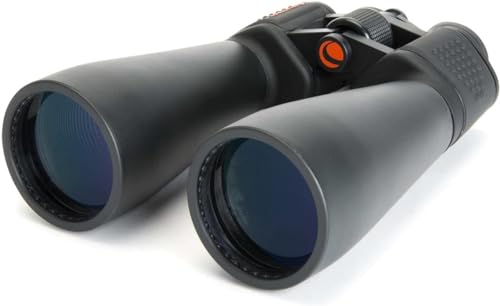
Celestron SkyMaster 15x70 binoculars

Celestron SkyMaster 15x70

For star parties and clear breaks

Grab them when a gap opens over the valley, and bring them to Haggart or the OMSI star parties, where the club supplies the telescopes.

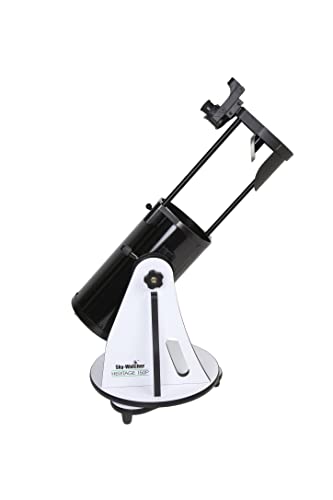
Sky-Watcher Heritage 130P tabletop Dobsonian

Sky-Watcher Heritage 130P

For the Hilltop picnic tables

A collapsible 5-inch Dobsonian that sets up on a Stub Stewart picnic table in two minutes and stores in a closet the rest of the wet season.

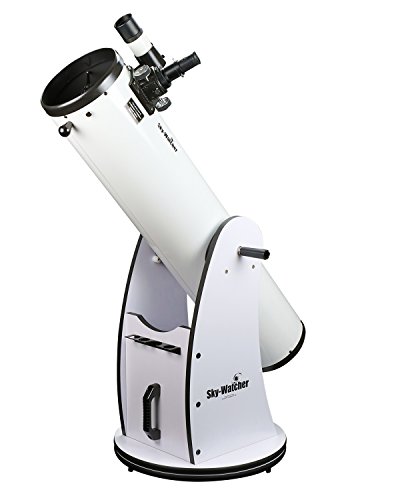
Sky-Watcher Classic 200P 8-inch Dobsonian

Sky-Watcher Classic 200P (8")

For Cottonwood Canyon weekends

Under a Bortle 1 to 2 canyon sky an 8-inch shows galaxy structure, faint nebulae and globular clusters resolved to the core.

Stuck with a Pearl District balcony or a Beaverton backyard on weeknights? Our picks of the best telescopes for urban stargazing suit a Bortle 8 sky, and our explainer on whether dew is bad for a telescope deals with the valley damp.


🔭

Which telescope suits a damp Portland backyard and a dry canyon weekend?

Tell the Finder Tool your budget, whether you observe at home or drive east, and what you want to see. It recommends a specific model in under two minutes.

Find My Telescope →

Astronomy Clubs Around Portland

The Rose City Astronomers are the region's main club and run, or staff, almost every public event on this page: the Haggart Observatory viewings, the OMSI star parties at Stub Stewart and Rooster Rock, and outreach at schools and libraries. OMSI partners with the club on the summer star parties and runs the Kendall Planetarium. Clackamas Community College owns the Haggart Observatory and hosts its August star party. Clubs in Salem, Vancouver and the Columbia Gorge run their own events. Our national astronomy club directory lists them by state; Northwest clubs not yet included can add themselves here.


Continue Exploring

Keep the session going with the next useful answer

Choose the next page based on whether you need a recommendation, a comparison, or a practical observing plan.

Use Finder Tool →

🎄 Holiday season: Telescope Christmas Gift Guide 2026 · Black Friday deal tracking

Portland Stargazing FAQ

Where can I stargaze near Portland at night?

L.L. Stub Stewart State Park, 45 minutes west near Buxton, allows stargazing after hours at its Hilltop Day-use Area if you display a parking permit and a free Star Gazing Permit from the kiosk. The sky there is about Bortle 4. For darker skies, Trillium Lake on Mount Hood is about 80 minutes east, and Cottonwood Canyon State Park is under three hours away.

Do you need a permit to stargaze at Stub Stewart State Park?

Yes. After hours at the Hilltop Day-use Area you must display a daily or annual Oregon State Parks parking permit and complete and display the free Star Gazing Permit available at the Hilltop kiosk. Overnight camping is not allowed at the Hilltop, but campers in the park's campgrounds may walk up to stargaze.

Where is the darkest sky near Portland?

Cottonwood Canyon State Park on the John Day River, about two and three-quarter hours east, which was certified as an International Dark Sky Park in December 2024 and has a Bortle 1 to 2 sky. The town of Antelope, Oregon's first Dark Sky Community, is about three hours away. Closer, Mount Hood's southern slopes reach about Bortle 3.

Can the public use the Haggart Observatory?

Yes, on scheduled public viewing nights. The Rose City Astronomers run free viewings through the 24-inch telescope at Clackamas Community College in Oregon City each season, first come, first served with no registration, ending with an annual star party in August. Cloudy nights are cancelled.

When is the best time for stargazing in Portland?

August and September. July to September is Portland's dry season, and by August the nights are long enough for several hours of full darkness. The rest of the year brings frequent cloud, so use clear spells for local sites and head east through the Columbia Gorge, where the sky is often clear when the valley is grey.

Is Goldendale Observatory open at night?

Not at present. Washington State Parks cancelled Goldendale Observatory's solar and evening programs on August 5, 2026 because of staffing, with no date to resume, and the grounds are open only from 6:30 am to dusk. Check the park's page before planning a visit.

Related Guides