
DWARFLAB Draco Smart Telescope: Price, Specs & Release Date
Telescope Advisor Logo Telescope Advisor
A smart telescope set up under a starry sky, the kind of automated deep-sky imaging the DWARFLAB Draco is built for

Launch Coverage · Smart Telescope

DWARFLAB Draco: Price, Specs, Release Date and Who It's For

The Draco is DWARFLAB's biggest step yet: a 90mm smart telescope with a cooled 50-megapixel sensor, built-in guiding and 300-second exposures. It costs $1,399, more than twice the price of the Dwarf 3. Here is what DWARFLAB has confirmed, when you can actually get one, and whether it's worth waiting for.

Aperture90mm, 340mm f/3.8
Price$1,399 Standard / $1,599 SHO
StatusPre-order (Standard sold out)
ShipsFrom about Dec 2026
By Telescope Advisor Editorial Team Published: Updated: Reviewed & approved by Juhi Sahni, Senior Editor Editorial Standards
Elena Reyes — Senior Science Editor

Elena Reyes

Senior Science Editor

Covers NASA missions, space science discoveries, and astronomical events for Telescope Advisor. Translates complex astrophysical research into practical insights for backyard observers. Based in the San Francisco Bay Area.

Content reviewed by our editorial team. Research and drafting assisted by AI to ensure unbiased, data-driven analysis. Learn more about our editorial process.

Quick Answer

DWARFLAB announced the Draco on September 8, 2026. It is a 90mm smart telescope with a 340mm f/3.8 folded optical design, an actively cooled 50MP main sensor, a separate guide camera, exposures up to 300 seconds, and a built-in dual-band filter. It costs $1,399 (Standard) or $1,599 (SHO Edition) and is not sold on Amazon. As of October 28, 2026, the Standard Edition is sold out at DWARFLAB's US store and at Astronomics, the SHO Edition is on pre-order, and Starizona quotes early December 2026 for new pre-orders. No independent hands-on review has been published yet.

Already imaging with a Dwarf 3 or Seestar?

This is the upgrade path DWARFLAB built for you: more than six times the light grasp of a Dwarf 3, a cooled sensor and long guided exposures. Wait for the first real reviews before paying $1,399.

Buying your first smart telescope?

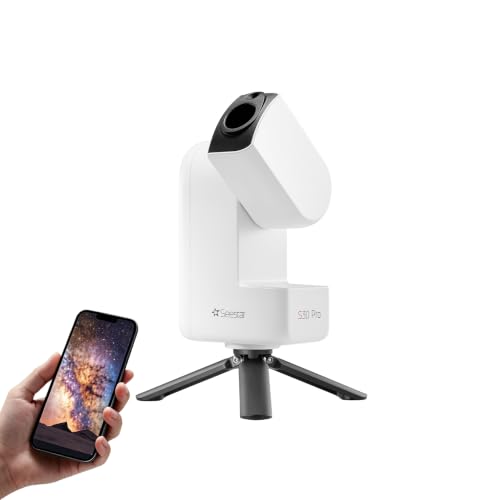
Start smaller. The Dwarf 3 ($549) and Seestar S30 Pro ($699) ship now, weigh under 2kg, and show you whether you enjoy the hobby before you spend Draco money.

Need it for the holidays?

Don't count on it. With a three-month shipping window and the Standard Edition sold out, a Draco ordered today may not arrive by Christmas. See in-stock alternatives.

What DWARFLAB Announced

DWARFLAB's earlier telescopes, the Dwarf 3 and Dwarf Mini, are small, light, and built around lenses of 35mm and 30mm. The Draco is a different kind of instrument. It moves to a 90mm aperture and adds three features that until now you mostly found in traditional astrophotography rigs: a cooled camera, autoguiding and very long exposures.

  • 90mm folded optics: 340mm focal length at f/3.8, in a body about 386mm long. It uses a secondary mirror with a central obstruction, so it is not a refractor. DWARFLAB has not published the exact design.
  • Cooled 50MP main sensor: an OmniVision OV50Q40 (1/1.3-inch, 50.3MP). For deep-sky work it bins 2×2 to about 12MP with 2.4µm pixels. Active cooling cuts thermal noise in long exposures.
  • Built-in guiding: a separate 4MP monochrome guide camera keeps stars round during long exposures.
  • Exposures up to 300 seconds: in alt-az mode the sensor physically rotates to cancel field rotation, and there is also an EQ mode.
  • Wide-angle camera: a 50MP OV50E40 with an 85.7° diagonal field for framing targets and shooting nightscapes.
  • Built-in filters: astronomy, dark, and a 13nm H-alpha/OIII dual-band filter. The SHO Edition adds an SII/OIII filter.

Full Specifications

We checked every figure below against at least two sources: DWARFLAB's US store and dealer spec sheets (Astronomics), plus launch coverage from Notebookcheck, IT Brief and ScopeTrader. The focal length comes from launch materials and dealer listings; it is not on DWARFLAB's product page.

Specification DWARFLAB Draco
Aperture90mm
Focal length340mm, f/3.8 (folded design with central obstruction)
Main sensorOmniVision OV50Q40, 1/1.3″, 50.3MP; about 12MP with 2.4µm pixels when binned for deep sky
CoolingActive main-sensor cooling (temperature drop not published)
Field of viewAbout 2.06° diagonal per frame (dealer spec); mosaic mode for larger targets
Wide-angle cameraOmniVision OV50E40, 50MP, 5.56mm, 85.7° diagonal
Guide camera4.09MP monochrome, built-in guiding
MountAlt-az with sensor rotation for field derotation; EQ mode
Exposure range1/10,000s to 300s
FiltersStandard: astro, dark, Hα/OIII dual-band (13nm), built-in ND. SHO: adds SII/OIII; ND becomes external magnetic
Battery10,000mAh (77Wh), about 5 hours
Storage128GB
Weight5.5kg telescope; tripod about 480g
Weather protectionIP56
In the boxStandard: telescope, tripod, USB-C cable, cleaning cloth. SHO: adds external ND filter and protective case
Warranty2 years (DWARFLAB)
US price$1,399 Standard; $1,599 SHO Edition

What the Specs Mean in Practice

No one outside DWARFLAB has published a full review of a production unit yet, so treat the points below as what the specifications should deliver, not measured results.

More aperture means fainter targets in less time

Light grasp scales with the area of the aperture. A 90mm opening collects about 6.6 times the light of the Dwarf 3's 35mm lens, 9 times that of the Seestar S30 Pro's 30mm, and 3.2 times that of a 50mm Vespera 3. The secondary mirror blocks part of that, and DWARFLAB hasn't said how much, so the real gain is somewhat lower. Even so, small galaxies and faint nebulae that take hours on a 30–50mm smart telescope should come through much faster.

Cooling, guiding and 300-second exposures

Most smart telescopes stack many exposures of 10 to 30 seconds and have no camera cooling, so thermal noise builds up on warm nights. The Draco cools its sensor, guides on a separate camera, and can expose for up to five minutes per frame. Those are the same tools people use with dedicated astronomy cameras on equatorial mounts. Together they should give cleaner faint detail, especially through the narrowband filters, where each frame collects very little light.

A narrower field than the Dwarf 3

At about 2° diagonal, the Draco frames a smaller patch of sky than the Dwarf 3 (about 3°) or the Seestar S30 Pro (4.6°). That suits galaxies, planetary nebulae and the cores of bigger nebulae. For the whole Andromeda Galaxy or the North America Nebula you would use the mosaic mode.

It's no longer a grab-and-go telescope

At 5.5kg the Draco weighs about four times as much as a Dwarf 3. The rated battery life is about 5 hours, which won't cover a long winter night unless you add external USB-C power. If portability was why you wanted a smart telescope, this is the main trade-off.

Draco vs Dwarf 3 vs Seestar S30 Pro vs Vespera 3

  DWARFLAB Draco DWARFLAB Dwarf 3 ZWO Seestar S30 Pro Vaonis Vespera 3
Aperture90mm35mm30mm50mm
Focal length340mm f/3.8150mm f/4.3160mm f/5.3245mm f/4.9
Main sensor50MP, cooledSony IMX678, 8.3MPSony IMX585, 8.3MPSony IMX585, 8.3MP
Field of view~2.06° diagonal~3°4.6°2.6° × 1.4°
Weight5.5kg1.3kg1.65kg5kg
Battery~5 hours—~6 hours11 hours
US price$1,399 / $1,599$549.00$699.00$2,490.00
AvailabilityPre-orderIn stockIn stockIn stock

Prices for the Dwarf 3, S30 Pro and Vespera 3 are live Amazon prices where available. Draco prices are DWARFLAB's US store prices on October 28, 2026.

More on the smaller scopes: Dwarf 3 review, Seestar S30 Pro review, and the full best smart telescopes of 2026.

Should You Pre-Order the Draco?

🟢 Yes, if you've outgrown a small smart telescope

If you already image with a Dwarf 3 or Seestar and want fainter galaxies, cleaner narrowband images and longer exposures, without building a mount, camera and guiding rig yourself, the Draco is the most direct upgrade announced so far. The SHO Edition is the one to get if you want full narrowband color.

🟡 Wait, if you can

This is a new optical design, a new sensor and new firmware, and no independent reviews are out yet. Some early buyers on the Cloudy Nights forum have called the launch messy. First units should reach owners around December. Waiting a few weeks for real images and reports costs you nothing.

🔵 No, if this is your first telescope or you travel

At $1,399 and 5.5kg, with about 5 hours of battery, the Draco asks a lot of a beginner. A Dwarf 3 or Seestar S30 Pro costs less than half as much, ships today and fits in a backpack.

In-Stock Alternatives You Can Buy Today

The Draco isn't sold on Amazon and won't ship for weeks. If you want a smart telescope sooner, these three are available now.

Same Maker, Smaller DWARFLAB Dwarf 3 smart telescope

DWARFLAB Dwarf 3

$549.00

35mm apochromatic lens, 8.3MP Sony sensor and a 1.3kg body. It uses the same DWARFLAB app, so anything you learn carries over if you move up to a Draco later.

Widest Field ZWO Seestar S30 Pro smart telescope

ZWO Seestar S30 Pro

$699.00

30mm quadruplet apochromat with a 4.6° field and ZWO's beginner-friendly Seestar app. It's light enough for travel and frames big nebulae in one shot.

Premium, Ships Now Vaonis Vespera 3 smart telescope

Vaonis Vespera 3

$2,490.00

50mm apochromatic quadruplet, 8.3MP IMX585 sensor and an 11-hour battery. It costs more than the Draco but is a finished, shipping product.

Affiliate links: we may earn a commission at no cost to you. Prices via Amazon Creators API where shown.

What DWARFLAB Hasn't Said Yet

  • The optical design: it uses a secondary mirror, but DWARFLAB hasn't said what type, how many elements, or how big the central obstruction is.
  • Cooling performance: there's no figure for how far below ambient the sensor cools.
  • Firm ship dates: the official wording is "within three months of order date," and the Standard Edition is sold out with no restock date.
  • Image quality: there are no independent sample images from production units yet. We'll update this page when there are.


Next Best Step

Need the fastest next step?

Pick the path that matches where you are right now: get a recommendation, compare buyer guides, or narrow by budget.

Open Finder Tool →

🎄 Holiday season: Telescope Christmas Gift Guide 2026 · Smart telescope Black Friday deals

FAQ: DWARFLAB Draco

How much does the DWARFLAB Draco cost?

The Standard Edition is $1,399 and the SHO Edition is $1,599 at DWARFLAB's US store. Both were $100 cheaper during a launch offer that ended on September 14, 2026, which is where the $1,299 and $1,499 figures you may see come from.

When does the Draco ship?

DWARFLAB says orders ship within three months of the order date. Starizona lists new pre-orders as shipping in early December 2026. As of October 28, 2026 the Standard Edition shows as sold out at DWARFLAB's US store and at Astronomics, and the SHO Edition is on pre-order.

Is the Draco sold on Amazon?

Not in the US as of October 28, 2026. It is sold through DWARFLAB's own store and astronomy dealers including Astronomics, Agena, Starizona and Telescopes.net.

What is the aperture of the DWARFLAB Draco?

90mm. That collects about 6.6 times the light of the Dwarf 3's 35mm lens and about 3.2 times that of a 50mm smart telescope such as the Vaonis Vespera 3, before allowing for the Draco's central obstruction.

Is the Draco a refractor?

No. It uses a folded optical design with a central secondary obstruction, which keeps a 340mm focal length in a body about 386mm long. DWARFLAB has not published the exact optical type or element count.

What is the difference between the Draco Standard and SHO editions?

Both have the same telescope. The Standard Edition has a dual-band H-alpha and OIII filter plus a built-in ND filter. The SHO Edition adds an SII and OIII filter for full SHO narrowband imaging, swaps the built-in ND filter for an external magnetic one, and includes a protective case.

Does the Draco have a cooled camera?

Yes. The main sensor is actively cooled, which reduces thermal noise in long exposures. DWARFLAB has not published how far below ambient temperature it cools.

How long can the Draco expose for?

Up to 300 seconds per frame. It has a separate guide camera for built-in guiding, rotates its sensor to cancel field rotation in alt-az mode, and also offers an EQ mode.

How heavy is the Draco?

The telescope weighs about 5.5kg and the included tripod about 480g. That is roughly four times the weight of a Dwarf 3 and about the same as a Vaonis Vespera 3.

Should I buy the Draco or the Dwarf 3?

The Dwarf 3 costs $549 and weighs 1.3kg, so it is the better first smart telescope and the better travel scope. The Draco is for people who already know they want more aperture, longer exposures and narrowband imaging, and who can wait for delivery and early reviews.

Update Log

  • Oct 28, 2026Page published. Specs checked against DWARFLAB's US store, Astronomics, Notebookcheck, IT Brief and ScopeTrader. Standard Edition sold out at DWARFLAB US and Astronomics; SHO Edition on pre-order.